
Electrical safety equipment mistakes that raise downtime
Author
Date Published
Reading Time
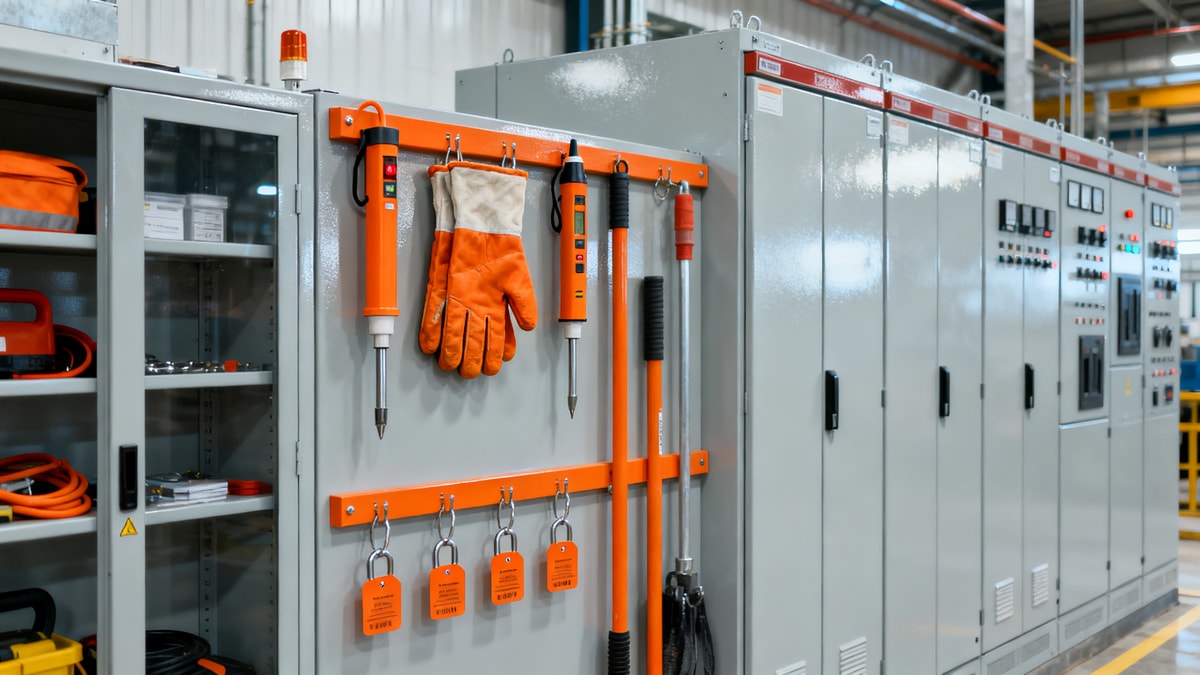
Small mistakes with electrical safety equipment can trigger shutdowns, damage assets, and put operators at risk. From using the wrong protective gear to skipping inspections or relying on non-compliant devices, these errors often go unnoticed until production stops. This article highlights the most common pitfalls and shows how operators can reduce downtime through safer, smarter equipment practices.
For operators in production plants, utilities, workshops, logistics facilities, and process environments, the issue is rarely a single catastrophic error. More often, downtime starts with a small gap: a damaged insulated glove, an untested voltage detector, a mismatched lockout device, or a replacement part that meets price targets but not application demands. In industrial settings where even 15–30 minutes of interruption can delay upstream and downstream tasks, electrical safety equipment is not just protective gear; it is a control layer that supports continuity.
The operational challenge is practical. Teams need equipment that is compliant, available, easy to inspect, and suitable for real working conditions such as dust, vibration, heat, moisture, confined spaces, and high switching frequency. When selection, storage, inspection, or training falls short, the result is often the same: unsafe intervention, unplanned shutdown, rework, and avoidable maintenance pressure.
Why Small Electrical Safety Equipment Errors Cause Large Downtime Events
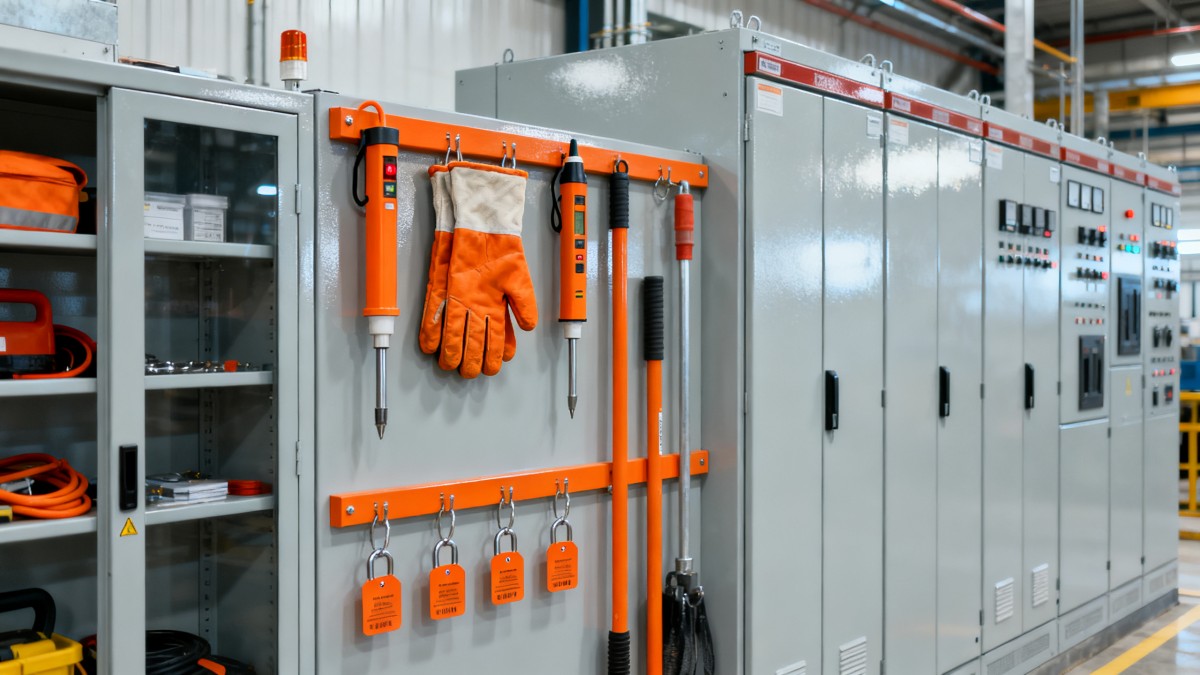
In many industrial environments, electrical safety equipment is expected to perform under stress with no second chance. Operators rely on insulated tools, arc-rated PPE, lockout/tagout devices, voltage indicators, grounding accessories, signage, and barrier systems during routine switching, emergency isolation, and preventive maintenance. If one item is missing, out of date, or unsuitable, a 3-minute verification step can turn into a 3-hour stoppage.
Downtime risk rises when electrical hazards are treated as occasional events rather than daily operational variables. A facility may have 4–6 key electrical intervention points per shift, yet inspection routines for safety equipment are often weekly or monthly. That mismatch creates hidden exposure. Operators may assume the device in hand is ready, even though seals, insulation, battery status, labeling, or calibration checks were not completed before use.
The Most Common Failure Pattern
The typical sequence is predictable. First, an operator encounters a live-work boundary, isolation task, or fault check. Second, the available electrical safety equipment does not fully match voltage class, environment, or task. Third, work pauses while a supervisor is called, replacement equipment is sourced, or the task is deferred. In high-throughput operations, that pause can trigger queue buildup, line imbalance, and delayed restart checks across multiple assets.
Operational consequences operators see first
- Delayed equipment isolation during planned maintenance windows of 30–90 minutes
- Extended troubleshooting time when voltage presence cannot be verified immediately
- Repeated lockout attempts because devices do not fit disconnect handles, breakers, or valves correctly
- Restart delays caused by incomplete documentation, missing tags, or damaged barriers
The table below maps common mistakes with electrical safety equipment to the most likely downtime effect and the operator-level correction. These are broad industrial patterns that apply across manufacturing, utilities, warehousing, and heavy engineering sites.
The key lesson is that downtime often begins before maintenance starts. The first line of control is not the repair itself but whether electrical safety equipment is available, verified, and suitable for the exact task. Operators who build simple checks into shift routines can reduce lost time without adding heavy administrative burden.
Why Non-Compliance Creates Hidden Delays
Non-compliant equipment does more than raise safety exposure. It interrupts permits, sign-off procedures, and restart authorization. In facilities working to CE, UL, ISO, or site-specific electrical rules, one missing certificate reference or unclear label can force a full stop. Procurement teams may focus on unit cost, but operators feel the real cost when a low-visibility item delays access to energized or recently isolated systems.
This is especially relevant where replacement cycles are short, such as gloves, face shields, batteries for test devices, disposable seals, or temporary barriers. If the site consumes 20–50 small safety items per month and inventory control is weak, substitutes enter circulation fast. Once substitutes are normalized, downtime risk becomes systematic rather than occasional.
The Mistakes Operators Make Most Often With Electrical Safety Equipment
Most operator-side errors are not reckless behavior. They come from time pressure, unclear visual cues, mixed storage, poor equipment compatibility, and inconsistent refresher training. The most effective response is to identify repeatable mistakes, define simple control points, and make correct use easier than incorrect use.
1. Choosing Equipment by Habit Instead of Task
A glove, visor, detector, or insulated hand tool that worked on yesterday’s panel may be wrong for today’s motor control center, transformer bay, cable tray, or outdoor disconnect. Electrical safety equipment must match the task environment, not operator routine. Common variables include nominal voltage, possible transient energy, working distance, access angle, humidity, and contamination level.
A practical rule is to check at least 4 items before intervention: voltage exposure, isolation method, required PPE level, and test/verify method. That review can take under 2 minutes, yet it prevents much longer delays caused by task reassessment after work has already started.
2. Skipping Inspection Because the Equipment “Looks Fine”
Visual familiarity often creates false confidence. Insulated gloves may have pinholes, face shields may be scratched enough to limit visibility, and non-contact or two-pole testers may have low battery output. Electrical safety equipment should be checked before every use and reviewed more formally at defined intervals such as weekly, monthly, or per shutdown cycle depending on site risk.
For operators, pre-use inspection should focus on visible damage, expiration or test date, cleanliness, readability of markings, and functional status. If any one of these 5 checks fails, the item should be removed from use immediately rather than carried “just in case.”
3. Poor Storage and Mixed Inventory
Storage errors are a major source of degraded electrical safety equipment. Gloves folded under heavy tools, testers stored in hot cabinets, and lockout kits mixed with general maintenance hardware all shorten service readiness. Even when equipment is technically compliant, poor storage can make it unusable at the moment it is needed.
Operators benefit from storage rules that separate live-work items, lockout items, and verification devices. Labeling by zone or asset group also reduces retrieval time. In facilities with 3 shifts, shared kits should be checked at both shift start and shift end to avoid passing defects forward.
4. Assuming One Lockout/Tagout Kit Fits Every Isolation Point
This is one of the most common sources of frustration during maintenance. Breaker lockouts, hasps, tags, and cable devices vary widely in fit. If an operator reaches a panel and discovers the available device does not secure the actual hardware, isolation is delayed and permit time is wasted. On complex sites with legacy and new equipment mixed together, compatibility mapping is essential.
A strong operator practice is to group electrical safety equipment by application family: miniature breakers, molded case breakers, disconnect switches, plugs, and multi-energy isolation points. This turns lockout from an improvised step into a predictable one.
5. Using Test Devices Without Verification Routine
Voltage testers and proving methods are critical to safe confirmation of de-energization. But a tester that is not verified before and after use can create dangerous uncertainty. Operators should follow a basic live-test-live sequence where required by site practice: test on a known source, test the target circuit, then recheck on a known source. The process adds only a few minutes but avoids false-negative assumptions.
How to Select and Manage Electrical Safety Equipment for Lower Downtime
Reducing downtime does not always require a major capital upgrade. In many cases, the fastest improvement comes from better specification, clearer compatibility rules, tighter inspection intervals, and more disciplined replenishment. Operators and supervisors should work with maintenance and procurement to define what “ready for use” means for each equipment type.
Key Selection Criteria for Operators and Site Buyers
When reviewing electrical safety equipment, the question should not be “Is it available?” but “Is it right for this task, this environment, and this site standard?” The matrix below gives a practical selection framework that supports both field use and purchasing decisions.
The strongest purchasing outcome usually comes from combining technical suitability with operational usability. A device that meets formal requirements but is awkward to store, hard to inspect, or easy to confuse with another item will still create downtime. Field feedback should therefore be part of the sourcing cycle every 6–12 months.
A 5-Step Implementation Routine
- Map the top 10–20 electrical intervention points by task type and hazard level.
- Define the required electrical safety equipment for each intervention category.
- Set inspection frequency: pre-use, weekly visual review, and scheduled formal checks.
- Standardize storage by zone, panel family, or maintenance route.
- Track rejection reasons for 8–12 weeks and adjust procurement specifications accordingly.
This routine helps sites move from reactive replacement to managed readiness. It also gives procurement teams clearer criteria than price alone, especially for frequently replaced items and mixed-asset facilities.
Maintenance and service intervals that matter
Not every site needs the same interval, but a practical structure includes pre-use checks, weekly condition reviews for shared kits, monthly inventory reconciliation, and documented periodic testing where applicable. For shutdown-intensive sites, a dedicated check 24–48 hours before planned maintenance can prevent a large share of avoidable delays. The exact interval should reflect asset criticality, environmental severity, and use frequency.
Frequently Overlooked Questions From Operators
Operators often know what safe practice should look like, but they still face uncertainty in fast-moving environments. These short questions are useful for toolbox talks, permit preparation, and shift handovers.
Can compliant equipment still be the wrong choice?
Yes. Electrical safety equipment can be compliant in general terms but still unsuitable for the task, location, or asset. Examples include correct-rated gloves used after poor storage, testers without recent verification, or lockout devices that do not fit the actual switchgear geometry.
What is the fastest improvement if downtime is already a problem?
Start with the top 3 recurring interruptions: usually lockout fit issues, missing verification devices, or failed pre-use inspections. These can often be improved within 2–4 weeks through better kit layout, replacement discipline, and short operator retraining sessions.
Should operators be involved in procurement reviews?
Absolutely. Operators can identify whether electrical safety equipment is practical in real access conditions, whether labels stay readable, and whether items survive repeated handling. Their feedback reduces mismatch between catalog specification and field performance.
Downtime linked to electrical safety equipment is rarely random. It usually comes from preventable gaps in selection, inspection, storage, compatibility, and replenishment. For operators, the goal is simple: make the right equipment easy to find, easy to verify, and correct for the exact task every time. For industrial buyers and site leaders, that means treating electrical safety equipment as an operational reliability asset, not just a compliance purchase.
Global Industrial Core supports industrial teams with practical insight into safer sourcing, fit-for-purpose equipment selection, and risk-aware operational planning across electrical and safety-critical environments. If you need help evaluating electrical safety equipment, refining site standards, or improving readiness for maintenance and shutdown work, contact us to get a tailored solution, discuss product details, or explore more industrial safety strategies.
Technical Specifications
Expert Insights

Chief Security Architect
Dr. Thorne specializes in the intersection of structural engineering and digital resilience. He has advised three G7 governments on industrial infrastructure security.
Related Analysis
- May 04, 2026When Components & Metals bulk order pricing stops being cheaperAuthor :Heavy Industry Strategist
- May 04, 2026What makes an Instruments & Measurement supplier dependableAuthor :Precision Metrology Expert
- May 04, 2026How to assess an Environment & Ecology exporter by documentationAuthor :Environmental Engineering Director
Core Sector // 01
Security & Safety
- Construction safety gaps often missed before site auditsAuthor :Safety Compliance Lead

- Electrical safety equipment mistakes that raise downtimeAuthor :Safety Compliance Lead

- Vietnam Enforces QCVN 16:2026/BCT for Respiratory PPE from July 2026Author :Safety Compliance Lead

- Safety Barricades Wholesale: Which Specs Matter Most?Author :Safety Compliance Lead

- JIS T 8201-2026 Enforced: Fire Respirator Masks Require -30°C Impact ResistanceAuthor :Safety Compliance Lead

- 2026 Foshan Tanzhou Auto Show: Smart Cockpit Optics, EV PPE Systems Highlight China’s Supply Chain ShiftAuthor :Safety Compliance Lead

- Custom high visibility clothing without long lead time problemsAuthor :Safety Compliance Lead

- Reflective safety vests bulk: color fading can become a safety issueAuthor :Safety Compliance Lead