Security & Safety supplier red flags before long-term contracts
Author
Date Published
Reading Time
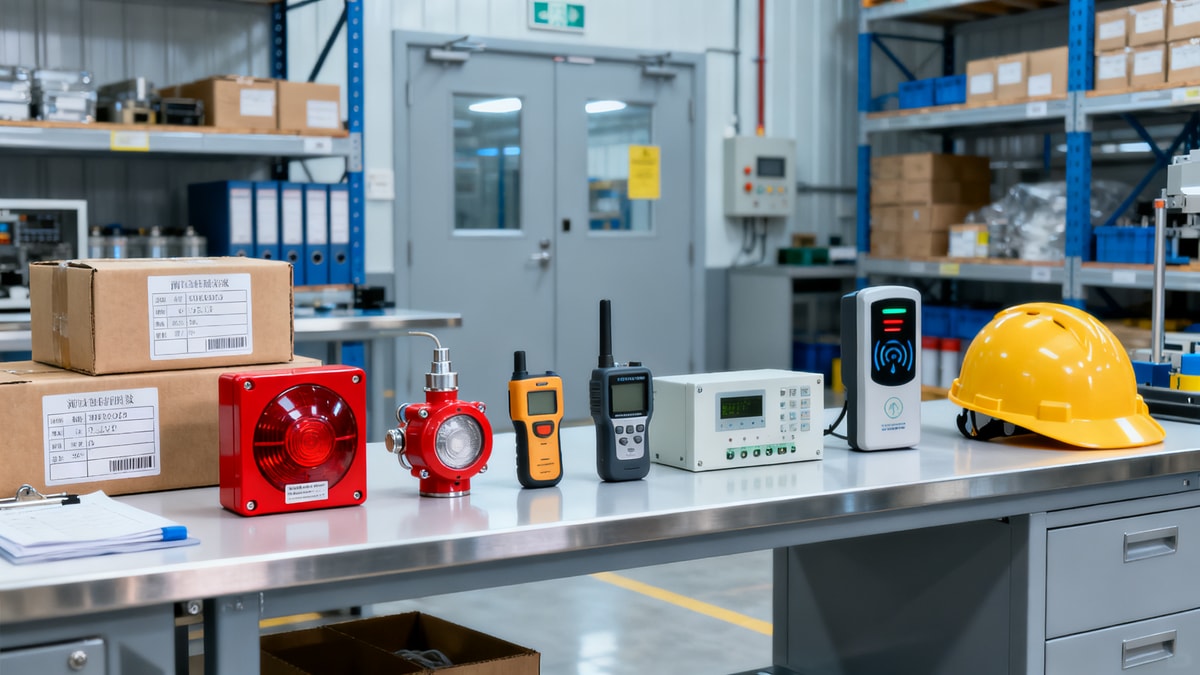
Choosing a Security & Safety supplier for a long-term contract is a high-stakes decision for procurement teams. Beyond pricing and lead times, hidden risks such as weak compliance records, inconsistent product quality, poor traceability, and limited technical support can create costly operational failures. This guide highlights the key red flags buyers should identify early to protect safety performance, contract value, and long-term supply chain resilience.
Why do long-term contracts with a Security & Safety supplier require deeper scrutiny?
A short-term purchase error can often be corrected with a replacement order. A long-term agreement with a Security & Safety supplier is different because the supplier may become embedded in your operational risk profile for years. Their products can affect worker protection, fire prevention, site access control, emergency response, alarm reliability, and compliance performance across multiple facilities or projects.
For procurement professionals, this means supplier evaluation cannot stop at unit price, payment terms, and shipping speed. A supplier that looks competitive in a quotation may still expose your organization to certification disputes, failed audits, delayed maintenance, inconsistent spare parts, or warranty conflicts. In industrial environments, even minor defects in detectors, PPE, lockout systems, emergency lighting, signage, barriers, or monitoring devices can trigger much larger losses through downtime, rework, injury claims, or regulatory penalties.
The biggest red flag is often not one dramatic failure but a pattern of weak controls. If a Security & Safety supplier cannot demonstrate stable processes, documented compliance, and responsive technical support before the contract starts, those gaps rarely disappear after signing. They usually grow under the pressure of volume, customization, and urgent delivery schedules.
What are the earliest warning signs that a Security & Safety supplier may be risky?
Early warning signs usually appear during sourcing, prequalification, and technical review. Buyers who know where to look can detect them before negotiating contract length or exclusivity. The following signals deserve immediate attention.
- Incomplete or inconsistent certification records, especially for CE, UL, ISO, or product-specific approvals.
- Vague answers on testing methods, material grades, operating limits, or product lifecycle data.
- Frequent changes in quotations, specifications, model numbers, or lead times without clear engineering justification.
- Poor document control, including outdated datasheets, missing revision history, or mismatched labels.
- Limited transparency on factory ownership, subcontracting, or component sourcing.
- Weak after-sales structure, such as no clear service contact, no escalation path, or no local technical support.
These signs matter because they indicate process instability. In the security and safety field, instability can translate into nonconforming products, inspection failure, or inconsistent performance in actual operating conditions. A capable Security & Safety supplier should be able to provide evidence, not only assurances.
How can procurement teams verify compliance claims instead of trusting marketing language?
One of the most common mistakes is accepting compliance statements at face value. Many suppliers use terms such as “tested to,” “designed according to,” or “similar to certified products,” which are not the same as holding valid approvals. Procurement teams should ask for the exact certificate, issuing body, scope, expiration date, and product model coverage.
A reliable Security & Safety supplier should clearly map certifications to specific SKUs or assemblies. If a fire alarm panel is certified, that does not automatically mean every accessory, enclosure, or software revision is covered. The same applies to helmets, gloves, emergency shutdown devices, gas detectors, and industrial signage systems. Contracting on the assumption that the entire portfolio is compliant can create a hidden liability.
Buyers should also confirm whether certifications are issued to the manufacturing entity, the trading company, or another affiliate. Misalignment between the certificate holder and the contractual supplier may complicate product traceability and post-incident accountability. It is wise to cross-check approval data with public registries where possible and request recent test reports when products are revised or customized.
Another red flag is a supplier that treats compliance documentation as confidential to the point of non-disclosure. While some technical details may be sensitive, a professional Security & Safety supplier should still provide sufficient verification for procurement, legal, and quality teams to assess risk.
What quality-control gaps should raise concern before signing a multi-year agreement?
Quality consistency matters more in long-term sourcing than isolated product performance. A sample may pass initial evaluation while future batches drift in material composition, dimensions, calibration accuracy, or assembly quality. That is why procurement should review the supplier’s quality system, not only the sample itself.
Ask how incoming materials are inspected, how nonconforming units are segregated, how batch records are stored, and how corrective actions are implemented. If the Security & Safety supplier cannot explain lot traceability or change-control procedures, long-term reliability is uncertain. This is particularly important for products exposed to heat, moisture, chemicals, vibration, UV, or heavy use.
A useful procurement test is to request evidence from previous quality incidents. Strong suppliers can show root-cause analysis, CAPA records, and preventive actions. Weak suppliers tend to blame logistics, operators, or end users without showing system-level improvement. That behavior suggests future claims will be difficult to resolve.
Be cautious if a supplier offers aggressive price reductions without explaining how they protect quality. Cost savings can come from design optimization or scale efficiency, but they can also come from thinner materials, lower-grade electronics, reduced testing frequency, or outsourced production with weaker oversight. A low-cost Security & Safety supplier is not necessarily a bad choice, but unexplained cost compression is a reason for deeper audit.
How do traceability and supply chain transparency affect supplier risk?
Traceability is often underestimated until a recall, incident, or site audit occurs. When a safety component fails, procurement teams need to know exactly which batch was delivered, what raw materials were used, what standards applied, and whether other projects are affected. Without that visibility, containment becomes slow and expensive.
A trustworthy Security & Safety supplier should be able to identify product lineage through serial numbers, production dates, and test records. They should also disclose critical subcontractors for molded parts, electronic boards, coatings, or calibration services when those inputs materially affect safety performance. If your supplier refuses to discuss upstream dependencies, you may be exposed to hidden single-source risks.
Procurement directors should pay special attention to substitution risk. Some suppliers change subcomponents after contract award due to shortages, cost pressure, or redesign. If change notification rules are weak, the product you re-order next year may not be functionally identical to the item you originally approved. This is a major red flag for any Security & Safety supplier serving regulated or hazardous environments.
Which commercial and service terms often reveal hidden supplier weakness?
Commercial language can expose operational weakness long before a failure occurs. Procurement teams should read beyond price schedules and focus on clauses that control response quality over time. A supplier may offer favorable pricing while restricting liability, narrowing warranty coverage, or avoiding measurable service commitments.
Watch for warranty terms that exclude “normal industrial use,” “environmental exposure,” or “installation conditions” so broadly that most claims become invalid. Review lead-time commitments for spare parts, replacement units, and technical troubleshooting. If the Security & Safety supplier cannot define response times for urgent failures, they may not be structured for industrial support.
Also assess engineering support depth. For many buyers, the real test begins after purchase: commissioning guidance, installation checks, training, firmware updates, maintenance advice, and audit support. A supplier with only sales coverage but no technical backbone can become a bottleneck during project execution. This is especially risky in cross-border sourcing where time zones, language precision, and document control already add friction.
What practical red-flag checklist can buyers use during evaluation?
The table below summarizes common warning signs and what they may mean for procurement risk. It can be used during RFQ review, supplier audits, or final bid comparison.
What mistakes do buyers commonly make when selecting a Security & Safety supplier?
A common error is treating all suppliers with valid certificates as equally reliable. Compliance is necessary, but it does not guarantee consistency, responsiveness, or lifecycle support. Another mistake is evaluating the supplier only through the sales team. Strong presentations can hide weak engineering coordination or poor quality execution.
Procurement teams also sometimes skip cross-functional review. The best Security & Safety supplier decision usually involves quality, EHS, operations, maintenance, engineering, and legal stakeholders. Each group sees different risks. Maintenance may notice spare-part concerns. EHS may identify audit exposure. Engineering may detect specification ambiguity. Legal may spot warranty loopholes. When selection is driven by purchasing alone, hidden risks can remain unchallenged.
Finally, some buyers focus too much on current demand and not enough on future change. A long-term contract should anticipate product updates, expansion to new sites, alternate approvals for export markets, and continuity during raw material shortages. If the supplier cannot discuss these scenarios in a structured way, their long-term fit may be weak even if their current offer is acceptable.
How should procurement teams move forward before committing to a long-term deal?
Before awarding a multi-year contract, buyers should turn supplier claims into verifiable checkpoints. That means validating compliance at model level, reviewing quality and traceability controls, checking service depth, and stress-testing commercial terms for real operating conditions. The goal is not to eliminate every risk, but to identify whether the Security & Safety supplier has the systems and culture needed to manage risk responsibly over time.
A practical next step is to create a supplier review pack covering certifications, audit findings, approved drawings, change-control rules, warranty terms, spare-part commitments, and incident escalation contacts. This helps procurement compare suppliers on total operational reliability rather than on price alone. For strategic categories, pilot orders, sample validation under field conditions, and site audits can provide far better insight than a desk review.
If you need to confirm a specific sourcing plan, technical parameter set, service scope, contract cycle, or quotation structure with a Security & Safety supplier, prioritize these questions first: Which exact models and revisions are certified? What traceability exists from raw material to shipment? What changes require customer approval? What support response times are contractually guaranteed? How are failures investigated and corrected? Those answers usually reveal whether a supplier is ready for a long-term partnership or only for a short-term transaction.
Technical Specifications
Expert Insights

Chief Security Architect
Dr. Thorne specializes in the intersection of structural engineering and digital resilience. He has advised three G7 governments on industrial infrastructure security.
Related Analysis
- May 04, 2026When Components & Metals bulk order pricing stops being cheaperAuthor :Heavy Industry Strategist
- May 04, 2026What makes an Instruments & Measurement supplier dependableAuthor :Precision Metrology Expert
- May 04, 2026How to assess an Environment & Ecology exporter by documentationAuthor :Environmental Engineering Director
Core Sector // 01
Security & Safety
- Security & Safety supplier red flags before long-term contractsAuthor :Safety Compliance Lead

- How to read a Security & Safety price without missing riskAuthor :Safety Compliance Lead

- Facility management solutions that cut hidden maintenance costsAuthor :Safety Compliance Lead

- UL 62368-3 Ed.3 Enforceable May 1, 2026 for AV Security DevicesAuthor :Safety Compliance Lead

- 2026 World Intelligent Industry Expo Opens in TianjinAuthor :Safety Compliance Lead

- PTZ dome camera placement mistakes that waste zoom performanceAuthor :Safety Compliance Lead

- Biometric access control systems: where integration gets expensiveAuthor :Safety Compliance Lead

- Facial recognition door lock accuracy drops in these common settingsAuthor :Safety Compliance Lead