Facility management solutions that cut hidden maintenance costs
Author
Date Published
Reading Time
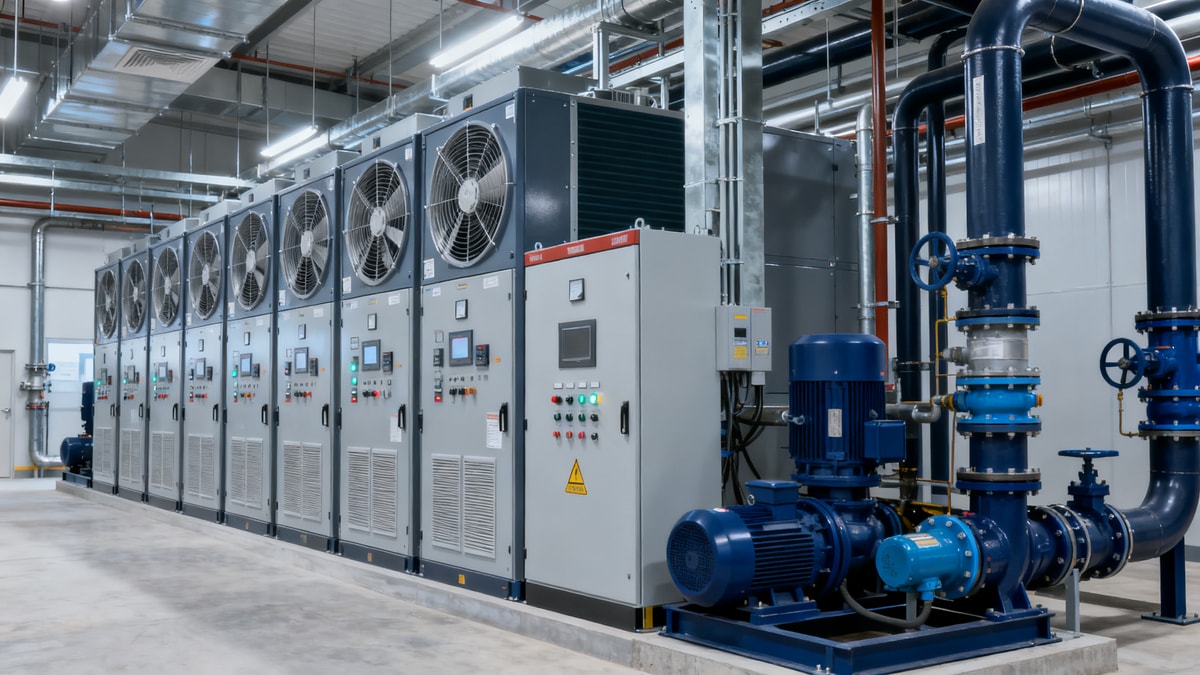
Hidden maintenance costs rarely appear on the first budget line, yet they quietly erode uptime, safety, and long-term profitability. For enterprise leaders responsible for resilient operations, the right facility management solutions can uncover inefficiencies, streamline preventive maintenance, and reduce avoidable spending across complex assets. This article explores how smarter strategies turn maintenance from a cost center into a source of operational control and measurable value.
For enterprise decision-makers overseeing plants, logistics hubs, campuses, utilities, and multi-site industrial portfolios, maintenance spend is rarely limited to spare parts and technician hours. The real cost often sits in unplanned downtime, energy waste, contractor overruns, delayed inspections, duplicated work orders, and compliance exposure. In many operations, even a 2% to 5% improvement in asset uptime can translate into significant annual savings.
That is why facility management solutions have moved beyond basic service scheduling. Today, they connect asset data, maintenance planning, safety workflows, energy controls, and procurement decisions into one operational layer. When deployed correctly, these systems help leaders reduce hidden maintenance costs across mechanical, electrical, environmental, and safety-critical infrastructure.
Why hidden maintenance costs grow in complex facilities
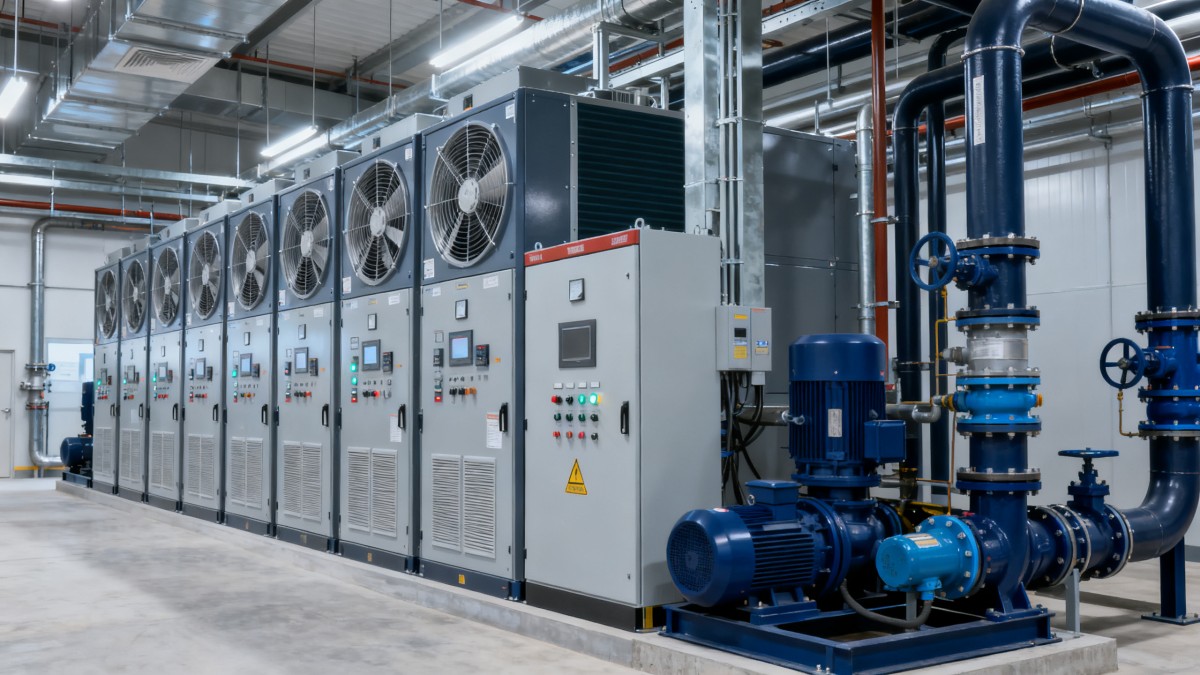
In industrial and commercial environments, maintenance costs rise quietly because they are distributed across departments. Engineering may see replacement parts, operations may track downtime, procurement may review supplier invoices, and EHS teams may handle inspection gaps. Without integrated facility management solutions, these cost signals remain fragmented and difficult to control.
A common example is reactive maintenance. When more than 20% to 30% of work orders are emergency-driven, organizations usually pay more in overtime labor, expedited shipping, temporary shutdowns, and secondary equipment damage. The direct repair may appear manageable, but the indirect cost can be 2 to 4 times higher once production loss and safety risk are included.
The most common hidden cost drivers
Enterprise facilities typically face six recurring sources of avoidable maintenance spend. Each one can remain invisible for months if reporting is limited to annual budget categories rather than asset-level performance.
- Unplanned downtime caused by missed inspections or delayed preventive maintenance
- Duplicate contractor callouts for the same system within 30 to 90 days
- Inventory imbalance, including overstocked low-use parts and stockouts of critical spares
- Energy inefficiency from poorly maintained HVAC, motors, compressors, and lighting controls
- Compliance failures tied to testing intervals, documentation gaps, or calibration drift
- Shortened asset life due to inconsistent service standards across sites
For global portfolios, the problem intensifies when each site uses different maintenance rules, vendor contracts, and reporting formats. A pump replacement cycle of 5 years at one site and 8 years at another may reflect different operating conditions, but it may also reveal inconsistent maintenance execution that drives unnecessary capital expenditure.
Where decision-makers should look first
Before investing in new software or service providers, leaders should identify the maintenance categories with the highest cost volatility. In most portfolios, the first review should cover the top 10 to 20 critical assets by downtime impact, the top 5 outsourced service categories, and the last 12 months of emergency work orders.
The table below shows where hidden maintenance costs usually appear and what type of operational signal indicates a need for stronger facility management solutions.
The pattern is consistent: hidden costs grow where data, service timing, and accountability are disconnected. Effective facility management solutions create visibility not only into what failed, but into why service cycles, contractor performance, and asset condition drifted in the first place.
What modern facility management solutions should include
Not every platform or service model will reduce cost leakage. Enterprise buyers should prioritize facility management solutions that connect maintenance execution with asset criticality, compliance requirements, and procurement workflows. The value comes from integration, not from digitizing old inefficiencies.
Core capabilities that affect cost control
At a minimum, a strong solution should support 5 operational layers: asset registry, preventive maintenance scheduling, work order management, vendor coordination, and reporting dashboards. For larger industrial sites, condition monitoring and energy analytics should be added as a sixth and seventh layer.
- Centralized asset hierarchy with location, age, service history, and criticality ranking
- Preventive maintenance rules based on runtime, calendar interval, or inspection thresholds
- Mobile work orders with timestamped completion records and photo evidence
- Contractor management with response-time tracking, scope control, and service verification
- Dashboards that compare planned versus reactive work, cost per asset, and backlog age
These features are especially important in sectors where electrical reliability, metrology accuracy, environmental controls, and mechanical performance must align. For example, a missed calibration cycle of 6 to 12 months can trigger rework, product quality issues, or compliance delays far beyond the cost of the calibration itself.
The role of asset criticality scoring
A practical way to improve maintenance ROI is to classify assets into 3 tiers: mission-critical, production-supporting, and non-critical. This allows teams to assign different inspection frequency, spare parts policy, and service response targets. A Tier 1 transformer, compressor, or fire suppression loop may require a 4-hour response window, while non-critical assets can be managed on a 24- to 72-hour basis.
Without this structure, teams often over-serve low-risk equipment and under-serve high-risk systems. That imbalance is one of the most persistent hidden cost drivers in large facilities.
Comparing solution models for enterprise environments
The market offers multiple approaches, from standalone maintenance software to integrated facility management solutions with on-site teams and specialist contractors. The right choice depends on site complexity, regulatory burden, internal engineering depth, and the number of assets under management.
For many enterprise buyers, the strongest long-term result comes from combining a digital platform with engineering-led service governance. Software alone cannot correct poor maintenance standards, and outsourced labor alone cannot provide the data visibility required for strategic cost reduction.
How to implement facility management solutions without disrupting operations
A common reason maintenance programs fail is that implementation is treated as an IT rollout rather than an operational change program. Successful facility management solutions are usually introduced in 3 phases over 8 to 24 weeks, depending on the number of sites, asset records, and external vendors involved.
Phase 1: Baseline and asset mapping
The first step is to establish a usable asset register. This does not require perfect historical data, but it does require consistency. At minimum, each critical asset should have location, asset type, manufacturer, install year, service interval, and failure impact rating. Enterprises with 500 to 5,000 maintainable assets often discover that 10% to 25% of their records are incomplete or duplicated.
During this phase, teams should also review maintenance backlog age. Work orders open longer than 30, 60, and 90 days should be categorized by cause: waiting parts, waiting contractor, access restriction, low priority, or unclear scope. That analysis often exposes process delays that are driving hidden costs.
Phase 2: Standardize preventive maintenance and service KPIs
Once the asset base is visible, the next objective is standardization. Similar assets should follow similar task libraries, inspection forms, and escalation rules unless operating conditions clearly differ. This is especially valuable for air handling units, pumps, switchgear, backup power, pressure instruments, safety devices, and wastewater systems.
Leaders should define 4 to 6 core maintenance KPIs, such as preventive maintenance completion rate, reactive work order ratio, mean time to repair, repeat failure rate within 60 days, contractor response compliance, and maintenance cost per asset class. If too many KPIs are tracked, decision quality usually falls rather than improves.
Service governance checklist
- Define who approves emergency callouts above a cost threshold
- Set response targets by asset criticality, such as 4 hours, 12 hours, and 24 hours
- Require completion evidence for inspections, repairs, and safety tests
- Link spare parts planning to failure history and lead times of 7 to 90 days
- Review contractor performance monthly and scope drift quarterly
Phase 3: Use analytics to drive purchasing and capital planning
The highest-value facility management solutions do more than optimize technician activity. They produce decision-grade insight for procurement and capital planning. If a site has repaired the same motor, valve bank, or HVAC component 4 times in 18 months, the issue is no longer maintenance efficiency alone. It becomes a sourcing, lifecycle, or design decision.
This is where organizations like Global Industrial Core are especially relevant. Decision-makers need reliable guidance on compliance-sensitive components, material durability, measurement reliability, electrical resilience, and environmental control strategy. Smarter procurement supported by technical intelligence can reduce long-term maintenance burden even before the asset is installed.
How enterprise buyers should evaluate vendors and long-term value
Selecting facility management solutions is not only about software features or contract price. For enterprise environments, the better question is whether the provider can improve asset reliability, reporting integrity, contractor control, and compliance readiness over a 3- to 5-year horizon. Low initial pricing can easily be offset by poor implementation, weak technical depth, or limited scalability.
Evaluation criteria that matter in procurement
Procurement teams should evaluate at least 5 dimensions: technical coverage, implementation effort, reporting quality, integration capability, and governance model. In industrial settings, it is also important to confirm whether the provider understands CE, UL, ISO-aligned operating environments and the documentation standards required for audits and engineering traceability.
Another practical test is to ask how the provider handles mixed infrastructure. Many sites combine legacy electrical rooms, modern BMS controls, calibrated instruments, environmental treatment systems, and heavy mechanical assets. Facility management solutions that work only for office-style maintenance rarely perform well in these blended industrial settings.
Questions buyers should ask before signing
- How will critical assets be classified within the first 30 to 45 days?
- What percentage of preventive task templates are prebuilt versus site-customized?
- How are repeat failures identified and escalated for engineering review?
- What documentation is provided for safety checks, calibrations, and contractor compliance?
- Can the reporting model compare site performance monthly, quarterly, and annually?
The right answer is rarely a one-size-fits-all package. Enterprise leaders should look for adaptable facility management solutions that can support both immediate cost control and longer-term resilience, especially where uptime, worker safety, and infrastructure integrity are tightly linked.
Hidden maintenance costs usually reflect a visibility problem before they become a budget problem. When facility management solutions connect preventive maintenance, asset criticality, vendor oversight, and technical procurement intelligence, organizations gain measurable control over downtime, energy waste, compliance exposure, and lifecycle spending. For facility managers, EPC stakeholders, and procurement leaders operating in high-stakes environments, the goal is not simply to spend less on maintenance. It is to spend with better timing, better data, and better outcomes.
Global Industrial Core supports that objective by helping enterprise buyers evaluate the systems, components, and operational frameworks that underpin resilient facilities. If you are reviewing infrastructure upgrades, refining maintenance strategy, or comparing sourcing options across safety, measurement, power, environmental, or mechanical systems, now is the right time to get a more tailored plan. Contact us to discuss your requirements, request a customized solution path, or learn more about practical facility management solutions for complex industrial operations.
Technical Specifications
Expert Insights

Chief Security Architect
Dr. Thorne specializes in the intersection of structural engineering and digital resilience. He has advised three G7 governments on industrial infrastructure security.
Related Analysis
- May 04, 2026When Components & Metals bulk order pricing stops being cheaperAuthor :Heavy Industry Strategist
- May 04, 2026What makes an Instruments & Measurement supplier dependableAuthor :Precision Metrology Expert
- May 04, 2026How to assess an Environment & Ecology exporter by documentationAuthor :Environmental Engineering Director
Core Sector // 01
Security & Safety
- Security & Safety supplier red flags before long-term contractsAuthor :Safety Compliance Lead

- How to read a Security & Safety price without missing riskAuthor :Safety Compliance Lead

- Facility management solutions that cut hidden maintenance costsAuthor :Safety Compliance Lead

- UL 62368-3 Ed.3 Enforceable May 1, 2026 for AV Security DevicesAuthor :Safety Compliance Lead

- 2026 World Intelligent Industry Expo Opens in TianjinAuthor :Safety Compliance Lead

- PTZ dome camera placement mistakes that waste zoom performanceAuthor :Safety Compliance Lead

- Biometric access control systems: where integration gets expensiveAuthor :Safety Compliance Lead

- Facial recognition door lock accuracy drops in these common settingsAuthor :Safety Compliance Lead