How to spot a reliable Security & Safety supplier early
Author
Date Published
Reading Time
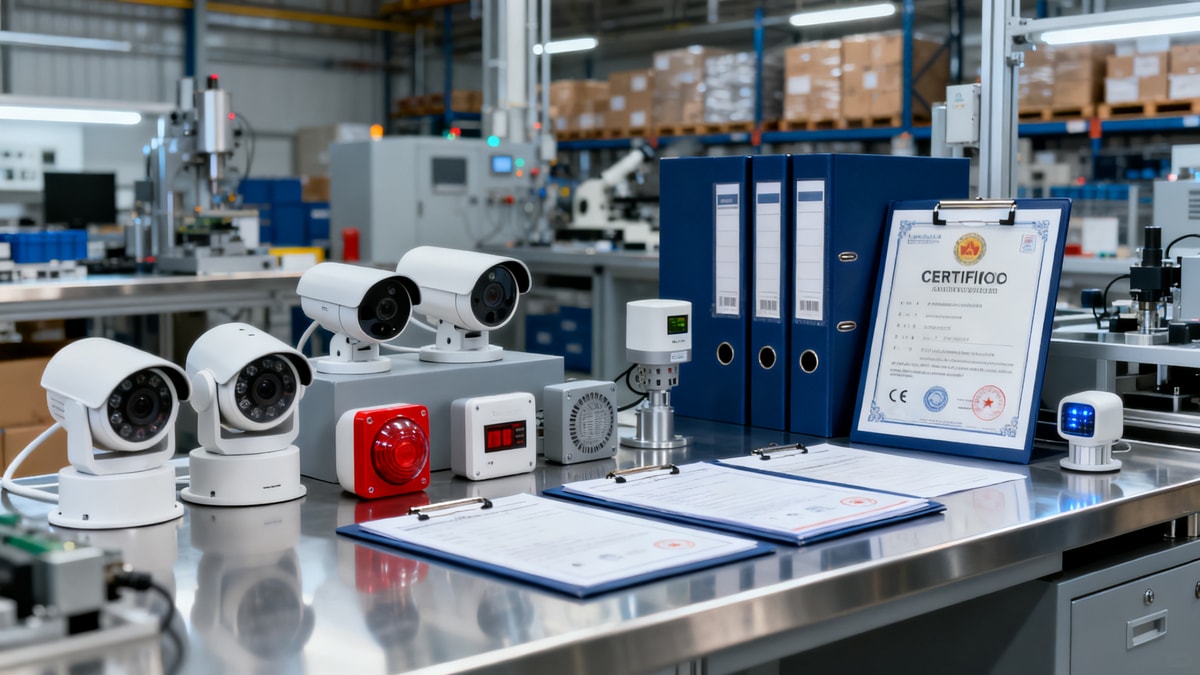
Choosing a reliable Security & Safety supplier early can prevent costly delays, compliance risks, and operational failures. For business evaluators, the challenge is not just comparing prices, but identifying suppliers with proven certifications, stable delivery capacity, and consistent product performance. This guide outlines the early signals that help you assess credibility faster and make more confident sourcing decisions.
Why scenario differences matter when evaluating a Security & Safety supplier
A reliable Security & Safety supplier is not judged the same way in every procurement environment. A supplier that performs well for a commercial building retrofit may not be suitable for an EPC-led industrial expansion, a hazardous plant upgrade, or a multi-site global maintenance contract. For business evaluators, the fastest path to a sound decision is to match supplier capability to the operating scenario before reviewing quotations in detail.
In practical sourcing, the early warning signs and the early trust signals are often visible long before final technical approval. Lead-time discipline, certification traceability, documentation quality, project references, engineering responsiveness, and after-sales structure all reveal whether a Security & Safety supplier is prepared for your actual use case. That is why scenario-based evaluation matters: it helps you avoid selecting a vendor that looks competitive on paper but cannot support the real demands of compliance, installation, commissioning, and lifecycle maintenance.
For procurement directors, facility managers, and commercial evaluators, the key question is not simply “Is this supplier good?” but “Is this supplier reliable for my project type, risk level, geography, and delivery model?”
Common business scenarios where early supplier judgment is critical
Security and safety products appear across many industrial and commercial environments, but the evaluation logic changes depending on deployment risk and operational consequences. Below are the most common sourcing scenarios where identifying a reliable Security & Safety supplier early has a direct impact on project continuity and compliance confidence.
1. New industrial construction and EPC projects
In EPC projects, supplier reliability must be visible from the start because installation schedules are interlocked with civil works, electrical systems, fire protection, control integration, and final inspection milestones. Here, a Security & Safety supplier needs more than product availability. The supplier must demonstrate document discipline, clear technical submittals, compliance with project specs, and the ability to coordinate with consultants, contractors, and site teams.
2. Plant upgrades and brownfield retrofits
Retrofit projects place higher value on compatibility, replacement flexibility, and shutdown-window execution. A reliable Security & Safety supplier in this setting should quickly confirm whether products fit legacy systems, local code requirements, and existing maintenance practices. Slow technical clarification is a major risk in retrofit work because site teams often have limited downtime.
3. Multi-site procurement for facility portfolios
For portfolio buyers managing factories, warehouses, campuses, or distributed infrastructure, the challenge is consistency. The right Security & Safety supplier must prove standardized quality, repeatable packaging, stable inventory, and predictable support across locations. In this scenario, isolated product excellence is less important than scalable delivery performance.
4. High-risk operations and regulated environments
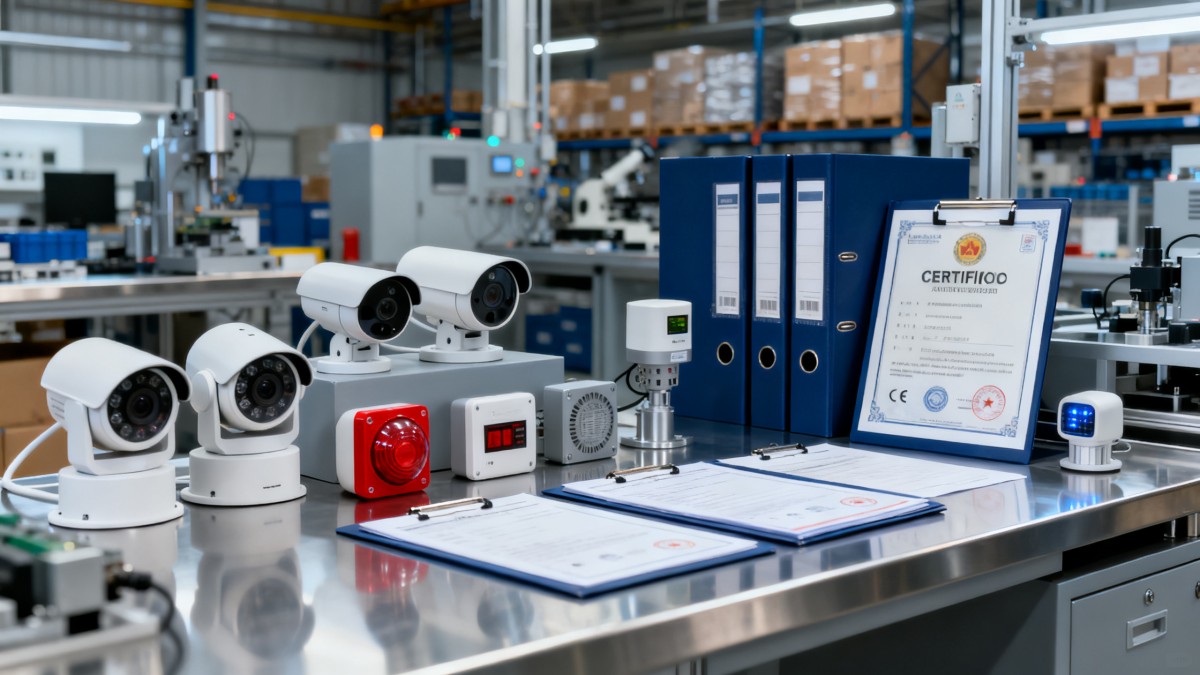
Hazardous zones, critical utilities, transport hubs, data centers, and heavy manufacturing sites require a stricter threshold. A reliable Security & Safety supplier in these settings must show certified products, formal testing records, auditable manufacturing controls, and proven use in comparable environments. Buyers should expect stronger evidence and shorter tolerance for ambiguity.
A scenario comparison table for faster supplier screening
Before deep supplier engagement, business evaluators can use a scenario-based comparison to prioritize what matters most. This reduces the risk of overvaluing price and undervaluing execution capability.
What to check early in different application scenarios
The best early-stage evaluation is not a full audit. It is a focused review of the factors most likely to affect success in your scenario. The following checks can help determine whether a Security & Safety supplier deserves deeper engagement.
Certification fit for the target market
If your products will be installed in regulated environments or exported across regions, verify that the supplier holds relevant certifications such as CE, UL, ISO, or other market-specific approvals. More importantly, confirm that the certificates apply to the exact product family you intend to buy, not only to a related range. A reliable Security & Safety supplier will provide certification files quickly and explain their applicability without confusion.
Operational capacity and delivery discipline
For large projects or repeat supply contracts, ask early about production slots, normal lead times, surge capacity, and order tracking. In many evaluations, the true differentiator is not unit price but whether the supplier can ship on time during demand peaks. Strong suppliers usually give realistic schedules, not just optimistic promises.
Application engineering support
In complex industrial settings, a reliable Security & Safety supplier should be able to discuss environmental conditions, integration points, installation limitations, and lifecycle issues. Evaluators should look for suppliers who ask relevant technical questions rather than immediately pushing a standard SKU. Good questions at the beginning often indicate fewer surprises later.
Document quality and traceability
Professional documentation is one of the clearest early trust signals. Datasheets should be consistent, model numbers should be traceable, and revision control should be visible. If a Security & Safety supplier cannot maintain clean technical records, buyers should question how well the supplier manages quality, testing, and change control.
How needs differ by buyer type and business scale
Different evaluators inside the same company may define reliability differently. Understanding these internal perspectives helps create a stronger supplier assessment framework.
Procurement teams
Procurement teams usually focus first on pricing, lead time, payment terms, and supply continuity. For them, a reliable Security & Safety supplier should provide quotation clarity, stable commercial terms, and low risk of order disruption. Procurement should still avoid selecting a vendor on cost alone when compliance exposure is high.
Engineering and technical reviewers
Engineers look for performance integrity, standards compliance, and fit-for-purpose design. They often identify whether a supplier understands the application or simply sells catalog items. If the technical team has concerns early, commercial attractiveness should not override them.
Operations and maintenance teams
Operations teams care about uptime, replacements, support speed, and parts availability. In long-life assets, a reliable Security & Safety supplier is one that remains dependable after installation, not only during the sales cycle. This makes after-sales structure and spare-part planning critical.
Early red flags that often appear across scenarios
While every project is different, some warning signs are universal. Business evaluators should treat them seriously, especially when several appear together.
- Certificates are outdated, incomplete, or unrelated to quoted models.
- Technical responses are slow, vague, or copied from generic materials.
- Lead times change significantly without explanation.
- No credible reference projects can be shared for similar environments.
- Warranty, testing, and after-sales responsibilities are loosely defined.
- The supplier avoids discussing quality control, factory audits, or traceability.
These red flags do not automatically disqualify a vendor, but they indicate where deeper verification is needed before moving forward.
Common scenario misjudgments that lead to poor supplier selection
One frequent mistake is assuming that a familiar brand or attractive quote equals a reliable Security & Safety supplier for every use case. In reality, project context changes the evaluation standard. Another mistake is relying too heavily on sales responsiveness without testing technical depth. Fast replies are useful, but they are not proof of compliance readiness or delivery resilience.
Evaluators also sometimes under-check lifecycle issues in low-visibility purchases. For example, a supplier may meet the initial need but fail later on replacement availability, documentation updates, or support during inspections. In industrial and infrastructure settings, the hidden cost of a weak supplier often appears months after installation.
Practical fit-check questions before shortlisting a Security & Safety supplier
A simple scenario-fit checklist can improve screening quality quickly. Ask these questions before final comparison:
- Has this supplier served projects similar in scale, risk level, and geography?
- Can it provide the exact compliance documents needed for our approval process?
- Does it show stable lead times and realistic delivery planning?
- Can its products integrate with our existing systems or site conditions?
- Is post-sale support structured enough for maintenance and incident response?
- Does the supplier communicate with evidence, or mainly with claims?
FAQ for business evaluators
How early should I assess a Security & Safety supplier?
Ideally before detailed bid comparison. Early screening helps remove suppliers that are weak in compliance, documentation, or delivery discipline before internal review time is wasted.
Is a lower price ever enough to justify selection?
Only when the application is low risk, technically simple, and easy to replace. In most industrial and business-critical scenarios, the more reliable Security & Safety supplier usually creates lower total risk and better total value.
What is the fastest credibility signal to verify?
Ask for product-specific certifications, recent similar references, and delivery commitments supported by real documentation. The quality and speed of this response reveal a lot.
Conclusion: match supplier reliability to your real operating scenario
The best way to spot a reliable Security & Safety supplier early is to evaluate through the lens of your actual application scenario. New builds demand coordination and documentation rigor. Retrofits require compatibility and speed. Multi-site programs depend on consistency. High-risk environments need strong compliance evidence and traceable quality systems. When business evaluators organize supplier review around these differences, they make faster and more defensible decisions.
If you are building a shortlist, start with scenario fit, certification relevance, delivery capacity, and technical responsiveness. That approach will help you identify the Security & Safety supplier most likely to support safe operations, stable execution, and long-term procurement confidence.
Technical Specifications
- SASO Mandates Dual Energy Label for Industrial Transformers in Saudi Arabia from May 2026Author :Grid Infrastructure Analyst
- EN 61000-4-30:2026 Enforced: Class A Harmonic Traceability Mandatory for EU PQ AnalyzersAuthor :Precision Metrology Expert
- US DOE Level 3 Transformer Efficiency Standard Effective July 1, 2026Author :Grid Infrastructure Analyst
Expert Insights

Chief Security Architect
Dr. Thorne specializes in the intersection of structural engineering and digital resilience. He has advised three G7 governments on industrial infrastructure security.
Related Analysis
- May 06, 2026SASO Mandates Dual Energy Label for Industrial Transformers in Saudi Arabia from May 2026Author :Grid Infrastructure Analyst
- May 06, 2026EN 61000-4-30:2026 Enforced: Class A Harmonic Traceability Mandatory for EU PQ AnalyzersAuthor :Precision Metrology Expert
- May 06, 2026US DOE Level 3 Transformer Efficiency Standard Effective July 1, 2026Author :Grid Infrastructure Analyst
Core Sector // 01
Security & Safety
- DIN SPEC 91492:2026 Released: Safety Light Curtains Must Support Dynamic PL Adjustment in Human-Robot CollaborationAuthor :Safety Compliance Lead

- DIN SPEC 91492:2026 Mandates PL Dynamic Verification for Safety Light Curtains in GermanyAuthor :Safety Compliance Lead

- Security & Safety standards that affect product acceptanceAuthor :Safety Compliance Lead

- Security & Safety solutions that scale from one site to manyAuthor :Safety Compliance Lead

- How to spot a reliable Security & Safety supplier earlyAuthor :Safety Compliance Lead

- DIN SPEC 91492:2026 Released: Safety Light Curtains Must Support Dynamic PL Elevation for Human-Robot CollaborationAuthor :Safety Compliance Lead

- Security & Safety Standards That Often Get Missed in Expansion ProjectsAuthor :Safety Compliance Lead

- Facility Management Standards That Matter Most in Daily OperationsAuthor :Safety Compliance Lead