DIN EN ISO 13849-1:2026 Effective: PLd Dynamic Response for Safety Light Curtains
Author
Date Published
Reading Time
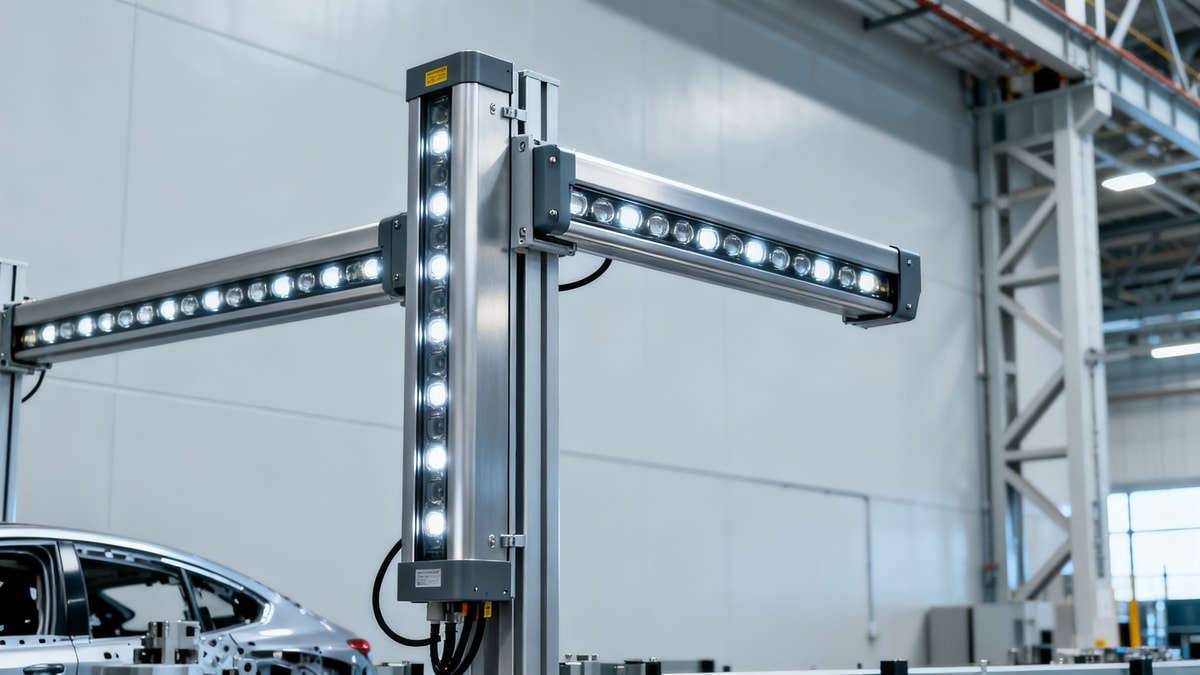
On 2 May 2026, the German Institute for Standardization (DIN) officially implemented DIN EN ISO 13849-1:2026, introducing mandatory performance requirements for safety light curtains and related machine safety systems. This update directly affects manufacturers and exporters supplying to German automotive and mechanical equipment supply chains — particularly those engaged in functional safety-critical applications.
Event Overview
The German Institute for Standardization (DIN) announced on 2 May 2026 that DIN EN ISO 13849-1:2026 is now in force. The standard mandates a Performance Level d (PLd) dynamic response time of ≤20 ms and a diagnostic coverage (DC) ratio of ≥99% for dual-channel safety light curtain systems. Exporters from China must complete full-system PL validation by 31 August 2026 to retain market access to German OEMs and Tier-1 machinery suppliers.
Industries Affected
Direct Exporters (China-based)
Chinese manufacturers exporting safety light curtains or integrated safety subsystems to Germany face immediate compliance deadlines. Non-compliant products will be rejected at procurement review stages by German automotive and industrial machinery buyers.
Component Suppliers & Module Integrators
Suppliers providing optical sensors, control logic units, or interface modules used in light curtain assemblies may be required to supply updated failure rate data, DC validation reports, and traceable test records — even if their components are not sold as standalone safety devices.
OEMs and Machinery Builders (EU-based)
German and EU-based equipment builders must verify PL compliance across entire machine safety architectures — not just individual components. This triggers re-evaluation of legacy designs incorporating pre-2026-certified light curtains, especially where dynamic response timing is critical (e.g., robotic cell guarding, high-speed packaging lines).
What Enterprises and Practitioners Should Focus On
Monitor official technical interpretations from DIN and notified bodies
While the standard is effective, DIN and accredited certification bodies (e.g., TÜV Rheinland, DEKRA) have not yet published harmonized interpretation guidelines on test methodology for dynamic response under real-world environmental conditions (e.g., ambient light interference, vibration). Enterprises should track these updates before finalizing validation protocols.
Prioritize verification for light curtain models deployed in automotive Tier-1 production lines
Given the stated enforcement linkage to German auto supply chains, models currently installed or tendered for use in body shops, paint lines, or battery module assembly cells warrant top-priority revalidation — especially those with claimed but unverified PLd timing behavior.
Distinguish between declaration and certified validation
The deadline requires documented, third-party-verified PL assessment at the complete system level, including controller, interface, and optical array. Self-declared conformity or component-level certificates alone do not satisfy the requirement. Enterprises should confirm whether existing certifications cover full-integration testing per Annex K of ISO 13849-1:2026.
Prepare documentation handover and supplier alignment ahead of August 2026
Supply chain contracts with German customers may require submission of validated PL reports, failure mode tables, and diagnostic coverage evidence by mid-July 2026 to allow internal audit cycles. Early coordination with notified bodies and internal safety engineers is recommended to avoid bottlenecks.
Editorial Perspective / Industry Observation
Observably, this update signals a tightening of functional safety enforcement — not merely a technical revision. Unlike previous editions, DIN EN ISO 13849-1:2026 explicitly ties compliance to measurable dynamic response under operational load, shifting emphasis from static architecture assessment to runtime behavior. Analysis shows it functions less as a new standard and more as an enforcement milestone: the 31 August 2026 deadline reflects a targeted cutoff for supply chain onboarding, rather than a broad transitional period. From an industry perspective, this reflects growing convergence between safety validation and real-time system performance metrics — a trend likely to influence upcoming revisions of IEC 61508 and ISO 26262.
Consequently, the current significance lies not in theoretical compliance, but in procurement gatekeeping: absence of verified PLd-level dynamic response documentation will block entry into specific high-value segments — regardless of prior CE marking or older standard conformance.
Conclusion
DIN EN ISO 13849-1:2026 does not introduce entirely novel safety concepts, but it materially raises the evidentiary bar for market access in key German industrial sectors. Its practical impact centers on enforceable, time-bound verification — making it a compliance checkpoint, not a guidance document. Currently, it is best understood as a supply chain eligibility requirement with defined technical thresholds and a firm deadline — not a general-purpose upgrade recommendation.
Source Attribution
Main source: Announcement issued by the German Institute for Standardization (DIN), effective 2 May 2026.
Points requiring ongoing observation: Official interpretation notes from DIN and technical bulletins from EU notified bodies regarding dynamic response test setup and environmental boundary conditions — not yet publicly released as of publication date.
Technical Specifications
- US DOE Industrial Transformer Efficiency Rule Effective Oct 2026Author :Grid Infrastructure Analyst
- Indonesia BPOM Launches AI Filter Life Algorithm ReviewAuthor :Environmental Engineering Director
- Global Industrial Waste Shredder Lead Times Extend to 22 WeeksAuthor :Environmental Engineering Director
Expert Insights

Chief Security Architect
Dr. Thorne specializes in the intersection of structural engineering and digital resilience. He has advised three G7 governments on industrial infrastructure security.
Related Analysis
- May 04, 2026US DOE Industrial Transformer Efficiency Rule Effective Oct 2026Author :Grid Infrastructure Analyst
- May 04, 2026Indonesia BPOM Launches AI Filter Life Algorithm ReviewAuthor :Environmental Engineering Director
- May 04, 2026Global Industrial Waste Shredder Lead Times Extend to 22 WeeksAuthor :Environmental Engineering Director
Core Sector // 01
Security & Safety
- DIN EN ISO 13849-1:2026 Effective: PLd Dynamic Response for Safety Light CurtainsAuthor :Safety Compliance Lead

- Security & Safety supplier red flags before long-term contractsAuthor :Safety Compliance Lead

- How to read a Security & Safety price without missing riskAuthor :Safety Compliance Lead

- Facility management solutions that cut hidden maintenance costsAuthor :Safety Compliance Lead

- UL 62368-3 Ed.3 Enforceable May 1, 2026 for AV Security DevicesAuthor :Safety Compliance Lead

- 2026 World Intelligent Industry Expo Opens in TianjinAuthor :Safety Compliance Lead

- PTZ dome camera placement mistakes that waste zoom performanceAuthor :Safety Compliance Lead

- Biometric access control systems: where integration gets expensiveAuthor :Safety Compliance Lead