Global Industrial Waste Shredder Lead Times Extend to 22 Weeks
Author
Date Published
Reading Time
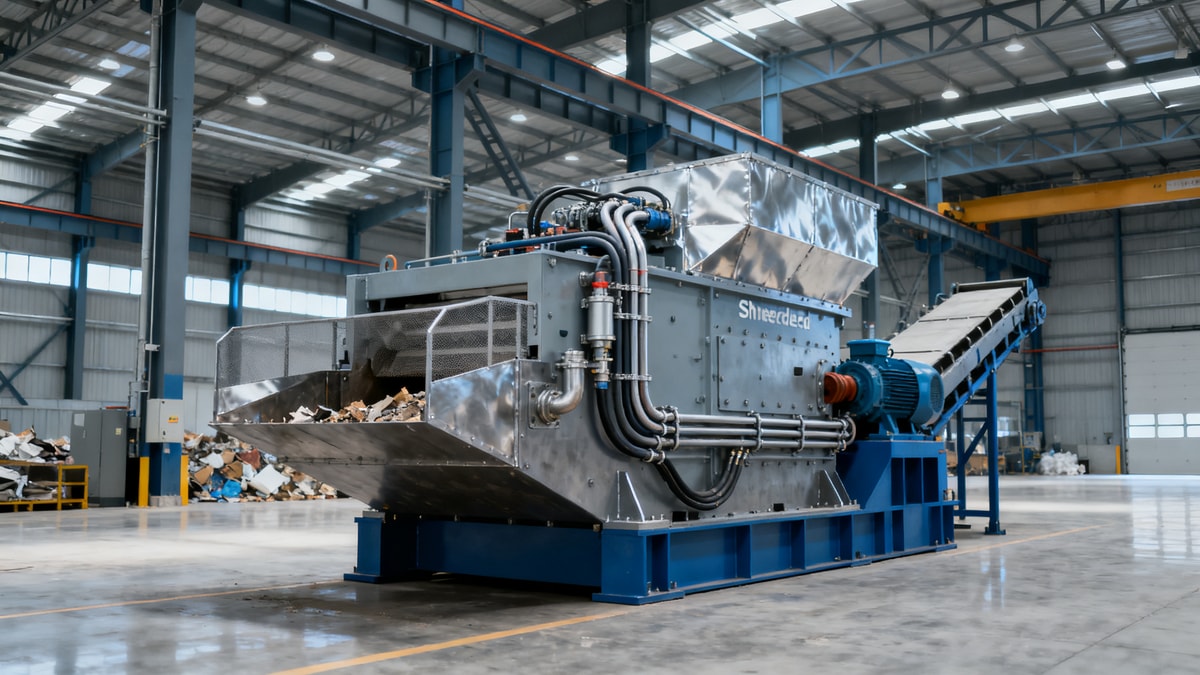
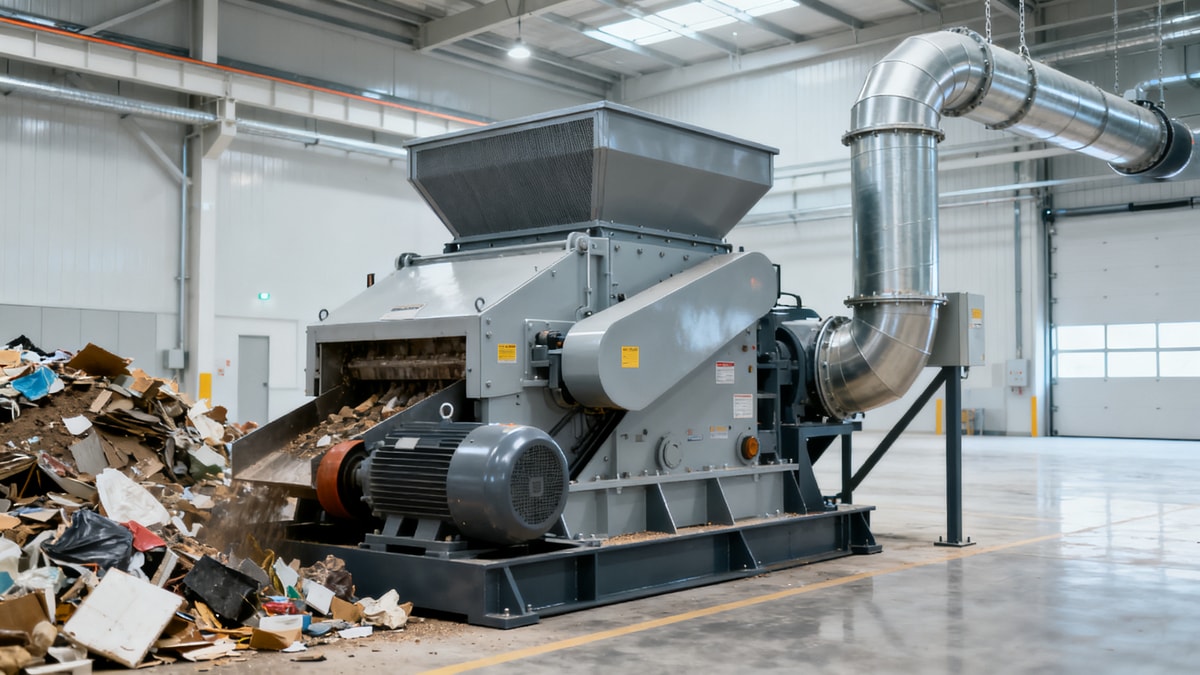
As of May 2, 2026, global lead times for industrial-grade solid waste shredders have extended to 22 weeks — up by six weeks — primarily due to ongoing shortages of hydraulic control chips supplied by Bosch Rexroth in Germany. This development directly affects manufacturers, integrators, and end users in waste management, recycling, and material recovery sectors, where timely equipment deployment is critical for operational continuity and compliance planning.
Event Overview
According to SupplyChainWatch’s report published on May 2, 2026, the average delivery cycle for industrial solid waste shredders worldwide has increased to 22 weeks. The root cause is sustained production constraints affecting custom ECU modules from Bosch Rexroth, widely adopted by Chinese shredder manufacturers. Replacement components would require full re-certification under the EU Machinery Directive (2006/42/EC), delaying alternative sourcing.
Impact on Specific Industry Segments
Equipment Manufacturers (OEMs)
OEMs relying on Bosch Rexroth’s hydraulic control chips face direct production bottlenecks. Since these chips are embedded in proprietary ECU modules, redesign or substitution triggers full CE re-certification — a process typically requiring 8–12 weeks and third-party verification. This extends not only build timelines but also validation cycles for new models.
System Integrators & Turnkey Solution Providers
Integrators delivering complete waste processing lines must now revise project schedules and contractual delivery commitments. Delayed shredder availability cascades into downstream commissioning delays for conveyors, sorting systems, and downstream shredding stages — particularly in EU-compliant installations.
Waste Processing & Recycling Operators
End users planning facility upgrades or capacity expansions face revised capital expenditure timelines. With lead times now exceeding five months, operators may need to adjust maintenance windows, extend use of legacy equipment, or explore rental alternatives — all while managing tighter regulatory deadlines for waste diversion targets.
Supply Chain & Procurement Teams
Procurement functions across global distributors and regional importers must reassess buffer stock strategies. Given the lack of near-term relief signals from Bosch Rexroth, safety stock planning for critical subassemblies — especially control units — becomes operationally urgent rather than optional.
What Stakeholders Should Monitor and Act On
Track official updates from Bosch Rexroth and notified bodies
Monitor Bosch Rexroth’s public communications regarding ECUs and hydraulic control chip allocation. Also watch for guidance from EU notified bodies on potential streamlined pathways for partial re-certification — though no such provision is currently confirmed under 2006/42/EC.
Review CE certification scope for existing inventory and pending orders
Verify whether current shredder models in production or transit already hold valid CE certificates covering the affected ECU configuration. Any deviation — including firmware updates or component swaps — may invalidate existing certification status.
Assess feasibility of phased procurement or modular deployment
Where technically viable, evaluate whether core shredding units can be ordered separately from hydraulic power packs or control cabinets — potentially enabling parallel installation or staged commissioning to mitigate overall project delay.
Document and communicate timeline adjustments transparently with clients and partners
Update delivery forecasts formally, citing the SupplyChainWatch report and referencing the regulatory dependency on CE re-certification. This supports contractual good-faith provisions and helps align stakeholder expectations without speculative escalation.
Editorial Perspective / Industry Observation
Observably, this delay is less an isolated supply shock and more a structural signal: it reflects growing interdependence between high-precision industrial electronics and mechanical compliance frameworks. Analysis shows that certification dependencies — not just component scarcity — now govern equipment availability. From an industry perspective, this highlights how regulatory conformity has become a de facto lead-time driver, equal in weight to raw material or semiconductor supply. Current developments suggest the situation remains fluid, with no indication of near-term resolution; therefore, continuous monitoring of both supplier capacity statements and notified body interpretations is warranted.
Conclusion
This extension in industrial shredder lead times underscores how tightly integrated regulatory compliance and component supply chains have become in the European machinery market. It is best understood not as a temporary bottleneck but as a case study in certification-driven supply chain risk — one where technical substitution is possible in theory, yet constrained in practice by conformity assessment requirements. Stakeholders should treat this as a prompt to strengthen cross-functional alignment between engineering, procurement, and regulatory affairs teams.
Information Sources
Main source: SupplyChainWatch report, published May 2, 2026.
Note: Bosch Rexroth’s internal production capacity outlook and any future CE directive interpretation updates remain under observation and are not yet publicly confirmed.
Technical Specifications
- US DOE Industrial Transformer Efficiency Rule Effective Oct 2026Author :Grid Infrastructure Analyst
- Indonesia BPOM Launches AI Filter Life Algorithm ReviewAuthor :Environmental Engineering Director
- Global Industrial Waste Shredder Lead Times Extend to 22 WeeksAuthor :Environmental Engineering Director
Expert Insights

Chief Security Architect
Dr. Thorne specializes in the intersection of structural engineering and digital resilience. He has advised three G7 governments on industrial infrastructure security.
Related Analysis
- May 04, 2026US DOE Industrial Transformer Efficiency Rule Effective Oct 2026Author :Grid Infrastructure Analyst
- May 04, 2026Indonesia BPOM Launches AI Filter Life Algorithm ReviewAuthor :Environmental Engineering Director
- May 04, 2026Global Industrial Waste Shredder Lead Times Extend to 22 WeeksAuthor :Environmental Engineering Director
Core Sector // 01
Security & Safety
- Global Industrial Waste Shredder Lead Times Extend to 22 WeeksAuthor :Environmental Engineering Director

- How to assess an Environment & Ecology exporter by documentationAuthor :Environmental Engineering Director

- Environment & Ecology cost issues that derail compliance plansAuthor :Environmental Engineering Director

- India BIS Draft IS 17832:2026 Sets Noise & Dust Limits for Waste CrushersAuthor :Environmental Engineering Director

- Eddy Current Separator Performance Drops With the Wrong Feed MixAuthor :Environmental Engineering Director

- Magnetic Separator Machine Buying Traps in Mixed Scrap LinesAuthor :Environmental Engineering Director

- When a Vibrating Screen Separator Starts Losing AccuracyAuthor :Environmental Engineering Director

- Copper Wire Granulator Output Depends on More Than Blade SpeedAuthor :Environmental Engineering Director