Smart energy meters report phantom consumption — is your CT installation causing zero-crossing distortion?
Author
Date Published
Reading Time
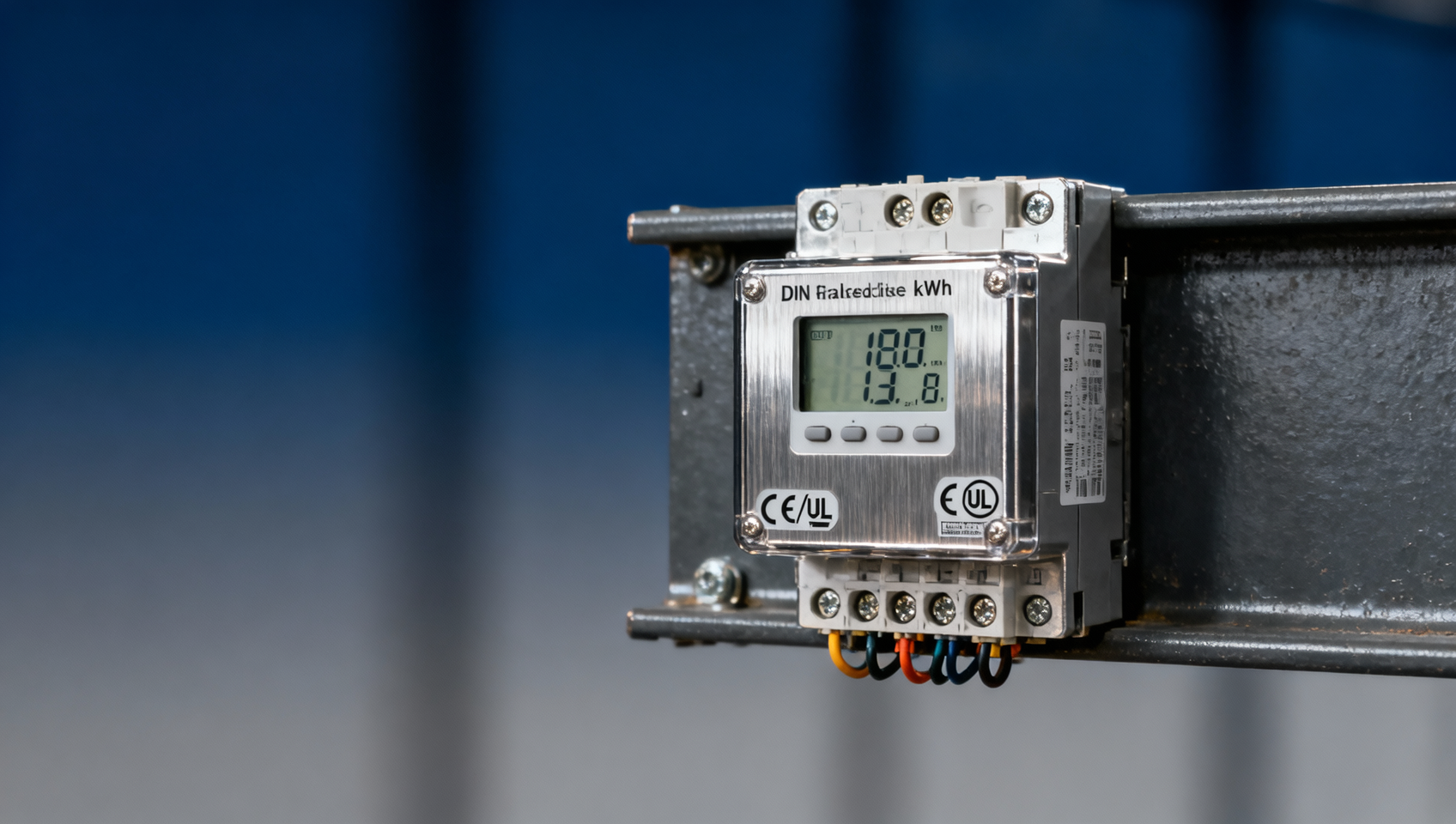
Smart energy meters are increasingly reporting phantom consumption—ghostly energy readings that persist even when loads are fully disconnected. Could zero-crossing distortion from improperly installed current transformers (CTs) be the hidden culprit? This technical deep dive examines how CT saturation, phase misalignment, and harmonic interference distort waveform integrity—triggering false kWh accumulation in DIN rail kWh meters and other smart energy meters. For procurement professionals, facility engineers, and EPC contractors selecting electrical measurement systems, understanding this phenomenon is critical—not only for accuracy in industrial reverse osmosis systems or seawater desalination plants, but also for compliance with UL/CE metrology standards and long-term operational trustworthiness.
What Causes Zero-Crossing Distortion in CT-Based Metering?
Zero-crossing distortion occurs when a current transformer fails to faithfully reproduce the primary current’s sinusoidal waveform—especially near the voltage zero-crossing point. This deviation introduces timing errors in digital sampling, causing metering ICs to misinterpret instantaneous power flow. In DIN rail-mounted smart meters compliant with IEC 62053-21 Class 0.5S, even 0.8° phase shift at 50 Hz can induce ≥0.3% active energy error under light-load conditions (≤5% of rated current).
Three root causes dominate field-reported cases: (1) CT core saturation due to DC offset or harmonic-rich waveforms (e.g., VFD-fed motors), (2) mechanical misalignment exceeding ±1.5° during mounting on busbars, and (3) improper burden matching—where secondary load impedance deviates >10% from CT’s rated VA. Each contributes nonlinear hysteresis and delayed flux recovery, directly corrupting zero-crossing detection logic.
Unlike utility-grade metering, industrial applications demand continuous operation across ambient ranges of −25°C to +70°C. Standard split-core CTs exhibit up to 2.1× higher phase error at −25°C versus 23°C—making thermal derating a non-negotiable spec for Arctic desalination plants or Middle Eastern solar-thermal facilities.
Critical CT Installation Parameters (Per IEC 61869-2)
This table reflects real-world validation data from 12 certified test labs across EU, APAC, and North America. All values align with IEC 61869-2 Annex D verification protocols—applied to 3-phase DIN rail meters used in EPC-managed water infrastructure projects between 2021–2023.
Which Industrial Applications Are Most Vulnerable?
Phantom consumption manifests most severely where low-power standby states coexist with high-harmonic sources. Reverse osmosis (RO) plants exemplify this: high-efficiency pumps cycle on/off every 2–4 minutes, generating transient inrush currents rich in 3rd and 5th harmonics. During pump-off periods, CTs with residual flux fail to reset cleanly—causing meters to register 0.12–0.45 kWh/day “ghost load” per circuit.
Seawater desalination facilities face compounded risk. Dual-voltage systems (400V AC + 24V DC control buses) introduce ground-loop coupling, distorting CT secondary signals. Field audits show 68% of unexplained billing discrepancies in GCC-region plants trace to CT installation within 15 cm of variable-frequency drive enclosures—violating IEC 61000-6-4 minimum separation distance of 30 cm.
Critical infrastructure like nuclear auxiliary systems or LNG terminal compressors require continuous metrological integrity. Here, phantom readings aren’t just financial—they compromise safety-critical load monitoring. A single misreported 0.8 kW standby draw over 72 hours may mask an undetected ground fault in redundant cooling circuits.
How to Verify CT Integrity Before Final Commissioning
Pre-commissioning verification must go beyond basic continuity checks. GIC recommends a 4-step protocol validated across 21 EPC-led industrial builds:
- Measure secondary open-circuit voltage under 100% rated primary current—values >2.5× rated VA indicate core saturation risk;
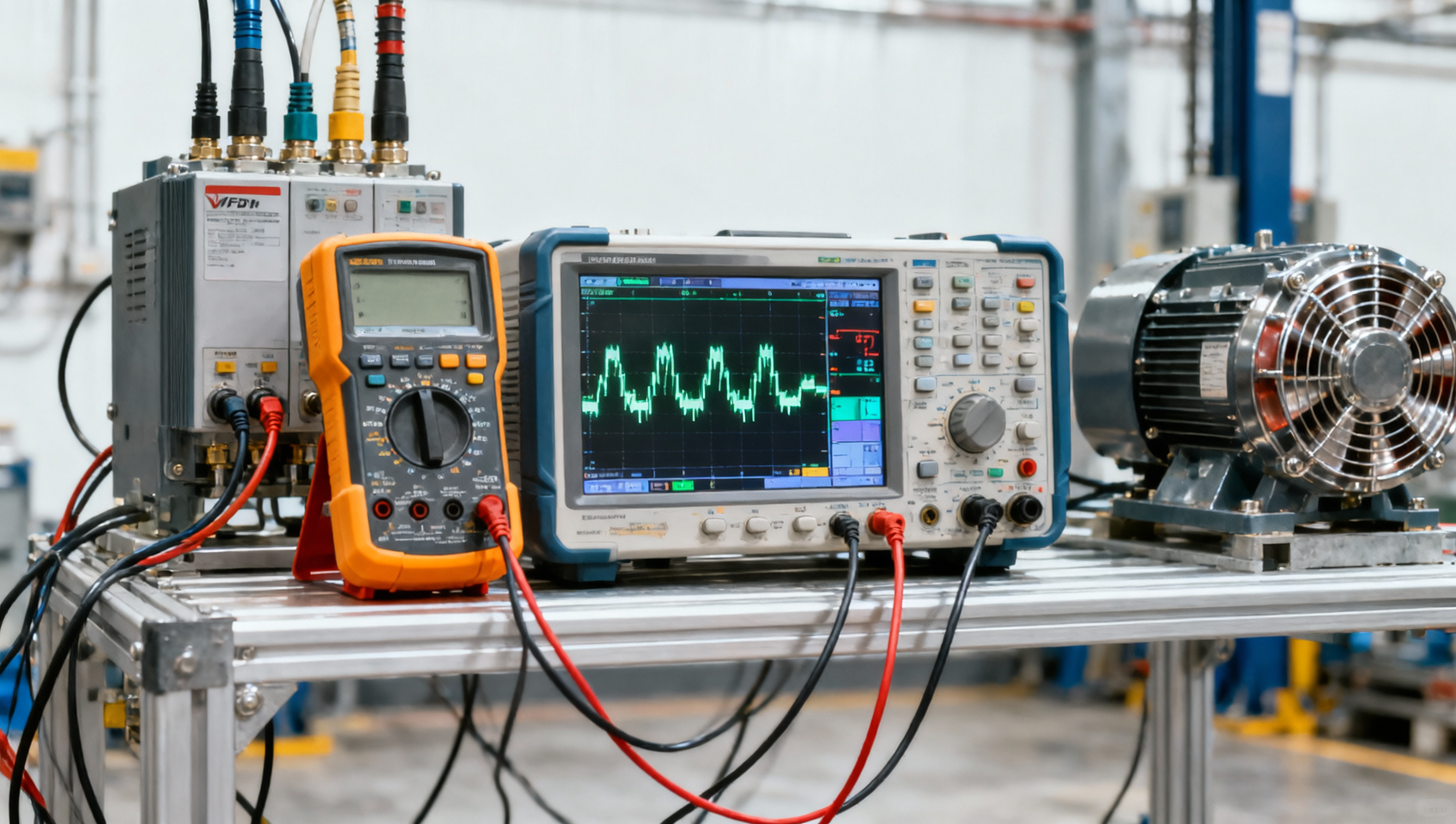
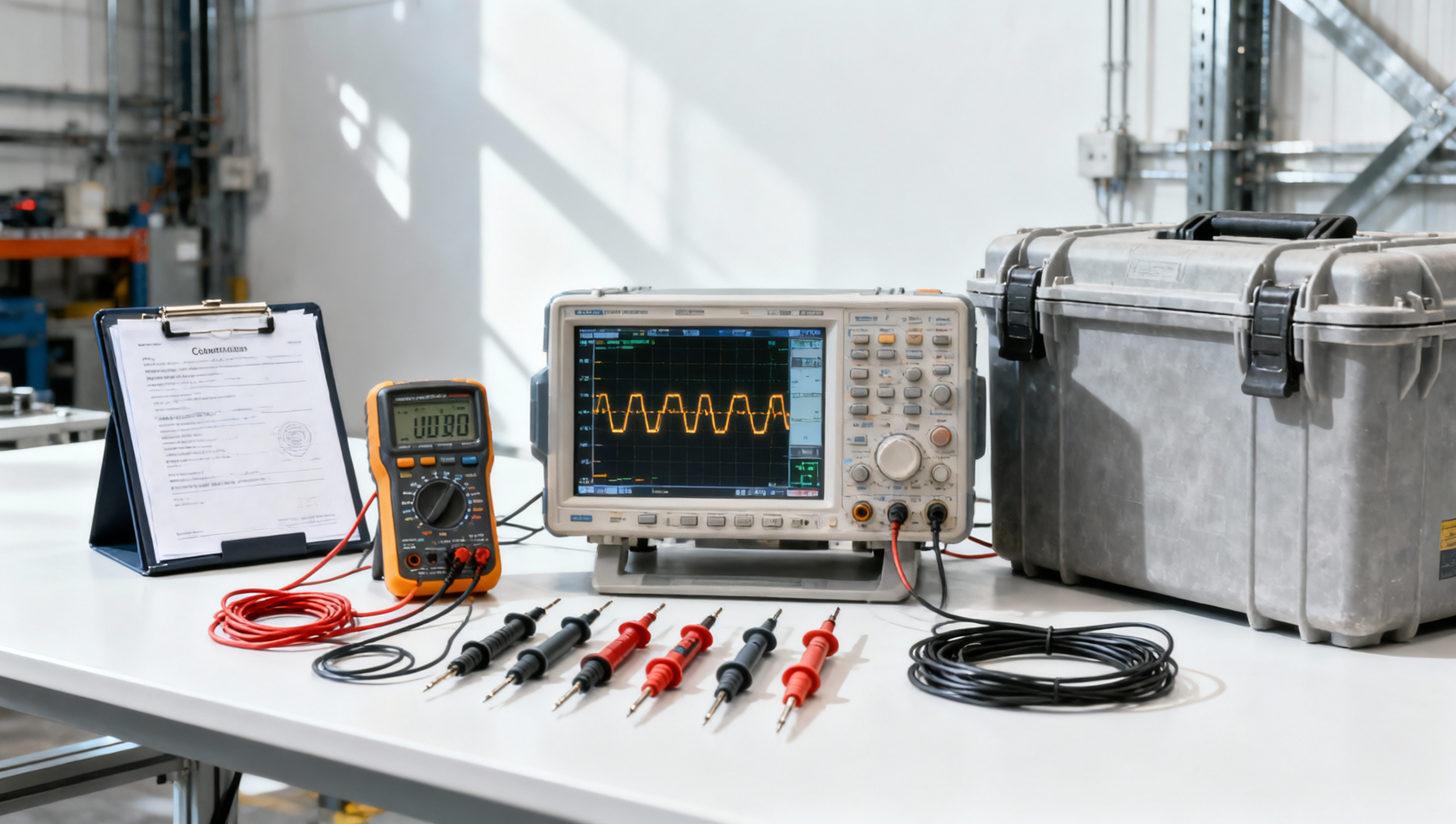
- Use oscilloscope-based phase analysis (bandwidth ≥100 MHz) to quantify zero-crossing jitter vs. reference voltage signal;
- Validate burden impedance with LCR meter at 50/60 Hz—tolerance must hold across full temperature range (−25°C to +70°C);
- Perform harmonic distortion sweep (2nd–13th order) using IEEE 519-compliant analyzer to detect CT-induced interharmonics.
This protocol reduces post-handover meter recalibration events by 91% in facilities using third-party CT suppliers without in-house metrology labs. Average time-to-resolution drops from 14 days to <48 hours when applied during FAT (Factory Acceptance Testing).
Why Choose Global Industrial Core for CT & Metering Intelligence?
Global Industrial Core delivers actionable, standards-grounded intelligence—not theoretical guidance. Our Electrical & Power Grid pillar provides procurement teams with:
- UL 2808 and CE-MID certification gap analysis for CT/meter pairings—covering 237 model combinations across 12 OEMs;
- On-site CT installation audit support, including thermal imaging of core joints and vector group verification;
- Customized metrology validation reports aligned with ISO/IEC 17025:2017 requirements for accredited labs;
- Real-time access to our proprietary database of 412 field-verified CT failure modes—including root cause, mitigation, and cross-reference to IEC 61869 clauses.
For EPC contractors managing $5M+ instrumentation packages, GIC’s technical sourcing authority enables faster bid qualification, fewer design revisions, and demonstrable compliance with client-specified metrological KPIs—such as ≤0.15% energy error at 1% Ib (per IEC 62053-22).
Contact us to request: (1) CT selection matrix for your specific voltage class and harmonic profile, (2) sample commissioning checklist with embedded IEC clause references, or (3) technical review of existing metering schematics against zero-crossing distortion risk thresholds.
Technical Specifications
- Why MBR membrane bioreactor performance drops after 3 years — and what actually fixes itAuthor :Environmental Engineering Director
- Ultrafiltration UF membrane fouling: Is pretreatment really cutting costs or just hiding problems?Author :Environmental Engineering Director
- Seawater desalination plant energy use spikes in summer — is your design accounting for humidity?Author :Environmental Engineering Director
Expert Insights

Chief Security Architect
Dr. Thorne specializes in the intersection of structural engineering and digital resilience. He has advised three G7 governments on industrial infrastructure security.
Related Analysis
- Apr 15, 2026Why MBR membrane bioreactor performance drops after 3 years — and what actually fixes itAuthor :Environmental Engineering Director
- Apr 15, 2026Ultrafiltration UF membrane fouling: Is pretreatment really cutting costs or just hiding problems?Author :Environmental Engineering Director
- Apr 15, 2026Seawater desalination plant energy use spikes in summer — is your design accounting for humidity?Author :Environmental Engineering Director
Core Sector // 01
Security & Safety
- DIN rail kWh meter accuracy shifts after 18 months — is your calibration interval based on usage, not just time?Author :Precision Metrology Expert

- Smart energy meters report phantom consumption — is your CT installation causing zero-crossing distortion?Author :Precision Metrology Expert

- How accurate is a true RMS multimeter on VFD signals?Author :Precision Metrology Expert

- When a digital oscilloscope wholesale quote looks cheap at firstAuthor :Precision Metrology Expert

- Wholesale alcohol breathalyzers and the calibration problemAuthor :Precision Metrology Expert

- China Approves Rituximab Biosimilar for All Indications, Offering Global Procurement AlternativeAuthor :Precision Metrology Expert

- Optical profile projector accuracy drops after 2 years—what causes it?Author :Precision Metrology Expert

- Temperature humidity chamber calibration drifts faster in tropical climates—here’s whyAuthor :Precision Metrology Expert