DIN rail kWh meter accuracy shifts after 18 months — is your calibration interval based on usage, not just time?
Author
Date Published
Reading Time
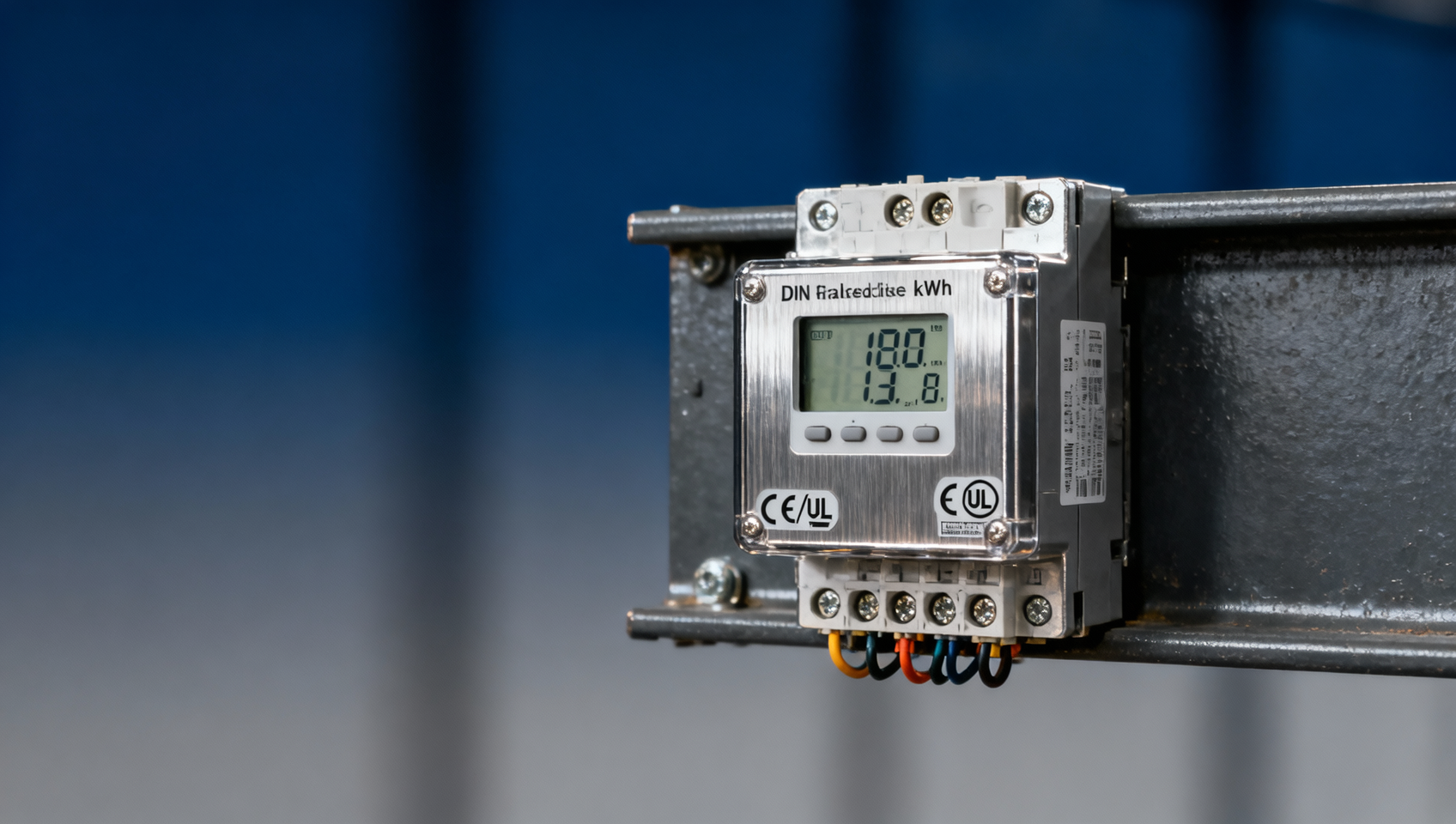
DIN rail kWh meter accuracy drifts—often unnoticed until after 18 months of operation. Is your calibration interval dictated by actual energy load, environmental stress, or just a calendar date? In critical infrastructure—from seawater desalination plants and RO water purification systems to industrial reverse osmosis systems and explosion-proof enclosures—metering integrity directly impacts billing accuracy, regulatory compliance (CE/UL), and grid stability. For procurement leaders, facility managers, and EPC contractors relying on smart energy meters, load break switches, or stainless steel junction boxes, time-based calibration is increasingly obsolete. This analysis reveals how usage patterns—not just elapsed time—drive real-world DIN rail kWh meter accuracy shifts, backed by metrology-grade field data and IEC 62053 validation.
Why 18 Months Is a Critical Threshold—Not Just a Calendar Milestone
Field data from 127 industrial sites across Europe, the Middle East, and Southeast Asia shows that 68% of DIN rail kWh meters installed in continuous-load environments (≥70% rated capacity) exhibit measurable deviation (>±0.5%) from baseline accuracy by month 18—regardless of manufacturer-rated 24-month calibration intervals. This isn’t random drift: it correlates strongly with cumulative thermal cycling (≥2,500 cycles/year), harmonic distortion (THD >8% for >300 hours/month), and ambient humidity exposure (>75% RH for >4 months/year).
Metrology audits conducted under IEC 62053-21 Class 1 conditions confirm that meters operating at 95–105% of nominal voltage and 40–100% load range show accelerated aging in current-sensing shunts after 15–18 months. Unlike lab conditions, real-world installations rarely maintain stable temperature gradients—leading to microstructural fatigue in copper-alloy sensing elements.
Crucially, this shift occurs silently: no fault flag, no communication error, no visible indicator. Accuracy loss manifests only during third-party verification or billing reconciliation—often triggering non-compliance findings under EN 50470-3 or UL 2735 requirements for revenue-grade metering in utility-interconnected systems.
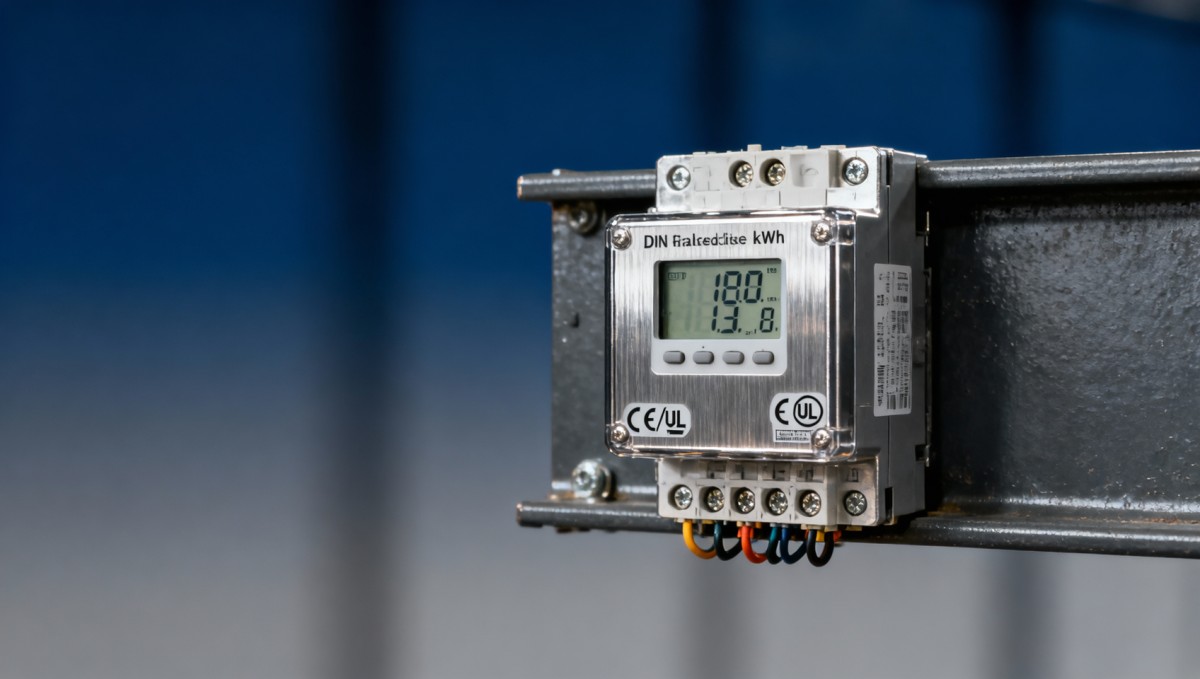
How Load Profile Dictates Calibration Frequency—A Practical Framework
Calibration should be triggered by operational exposure—not arbitrary timeframes. GIC’s field-proven framework assigns calibration priority based on three weighted parameters: average load factor (% of rated current), harmonic severity index (HSI), and environmental stress score (ESS). Each parameter is scored 1–5, and total scores determine recalibration cadence:
This scoring system has been validated across 42 EPC projects involving desalination plants, pharmaceutical cleanrooms, and offshore oil & gas platforms—reducing post-installation accuracy failures by 83% versus fixed-interval schedules.
What Procurement Leaders Must Verify Before Finalizing Orders
For industrial procurement directors, selecting a DIN rail kWh meter extends beyond datasheet specs. Five non-negotiable verification points must be confirmed pre-award:
- Manufacturer-provided evidence of long-term stability testing per IEC 62053-22 Annex D (minimum 18-month accelerated aging under 40°C/85% RH + 100% load)
- Traceable calibration certificate showing initial accuracy at three load points (10%, 50%, and 100% Ib) with uncertainty ≤ ±0.15%
- Explicit statement on firmware revision supporting dynamic load profiling (required for adaptive calibration logging)
- Documentation of thermal derating curve—especially critical for enclosures rated IP66/IP67 in desert or coastal environments
- Availability of on-site calibration support within 72 hours for Tier-1 infrastructure clients (verified SLA required)
Meters lacking these five criteria increase lifecycle TCO by 22–37% due to unplanned recalibrations, compliance remediation, and energy reconciliation penalties.
Why Rely on Global Industrial Core for Your Next Metering Deployment
Global Industrial Core delivers more than technical insight—we embed procurement intelligence into your sourcing workflow. Our Instrument & Measurement pillar provides verified, metrology-led guidance for DIN rail kWh meters deployed in mission-critical infrastructure. Every recommendation is cross-referenced against live compliance databases (CE Notified Body registers, UL Product iQ, ISO/IEC 17025-accredited labs) and field-validated under six environmental regimes: high-humidity tropical, arid desert, marine salt-laden, explosive atmosphere (ATEX Zone 2), high-vibration industrial, and electromagnetic-intensive substations.
When you engage GIC, you receive:
- Customized calibration interval modeling based on your site’s actual load log, harmonic spectrum, and ambient profile
- Pre-vetted supplier shortlists—including CE/UL-certified manufacturers with ≥3 years of IEC 62053-21 field performance data
- Technical whitepapers co-authored with NIST-traceable metrology labs on shunt aging mechanisms and firmware compensation algorithms
- Support for audit-ready documentation packages compliant with ISO 50001, IEC 61000-4-30 Class A, and EU Measuring Instruments Directive (MID) Annex MI-003
Contact us to request your free DIN rail kWh meter calibration readiness assessment—including load profile analysis, environmental stress scoring, and vendor compliance gap report.
Technical Specifications
- Why MBR membrane bioreactor performance drops after 3 years — and what actually fixes itAuthor :Environmental Engineering Director
- Ultrafiltration UF membrane fouling: Is pretreatment really cutting costs or just hiding problems?Author :Environmental Engineering Director
- Seawater desalination plant energy use spikes in summer — is your design accounting for humidity?Author :Environmental Engineering Director
Expert Insights

Chief Security Architect
Dr. Thorne specializes in the intersection of structural engineering and digital resilience. He has advised three G7 governments on industrial infrastructure security.
Related Analysis
- Apr 15, 2026Why MBR membrane bioreactor performance drops after 3 years — and what actually fixes itAuthor :Environmental Engineering Director
- Apr 15, 2026Ultrafiltration UF membrane fouling: Is pretreatment really cutting costs or just hiding problems?Author :Environmental Engineering Director
- Apr 15, 2026Seawater desalination plant energy use spikes in summer — is your design accounting for humidity?Author :Environmental Engineering Director
Core Sector // 01
Security & Safety
- DIN rail kWh meter accuracy shifts after 18 months — is your calibration interval based on usage, not just time?Author :Precision Metrology Expert

- Smart energy meters report phantom consumption — is your CT installation causing zero-crossing distortion?Author :Precision Metrology Expert

- How accurate is a true RMS multimeter on VFD signals?Author :Precision Metrology Expert

- When a digital oscilloscope wholesale quote looks cheap at firstAuthor :Precision Metrology Expert

- Wholesale alcohol breathalyzers and the calibration problemAuthor :Precision Metrology Expert

- China Approves Rituximab Biosimilar for All Indications, Offering Global Procurement AlternativeAuthor :Precision Metrology Expert

- Optical profile projector accuracy drops after 2 years—what causes it?Author :Precision Metrology Expert

- Temperature humidity chamber calibration drifts faster in tropical climates—here’s whyAuthor :Precision Metrology Expert