Optical profile projector accuracy drops after 2 years—what causes it?
Author
Date Published
Reading Time
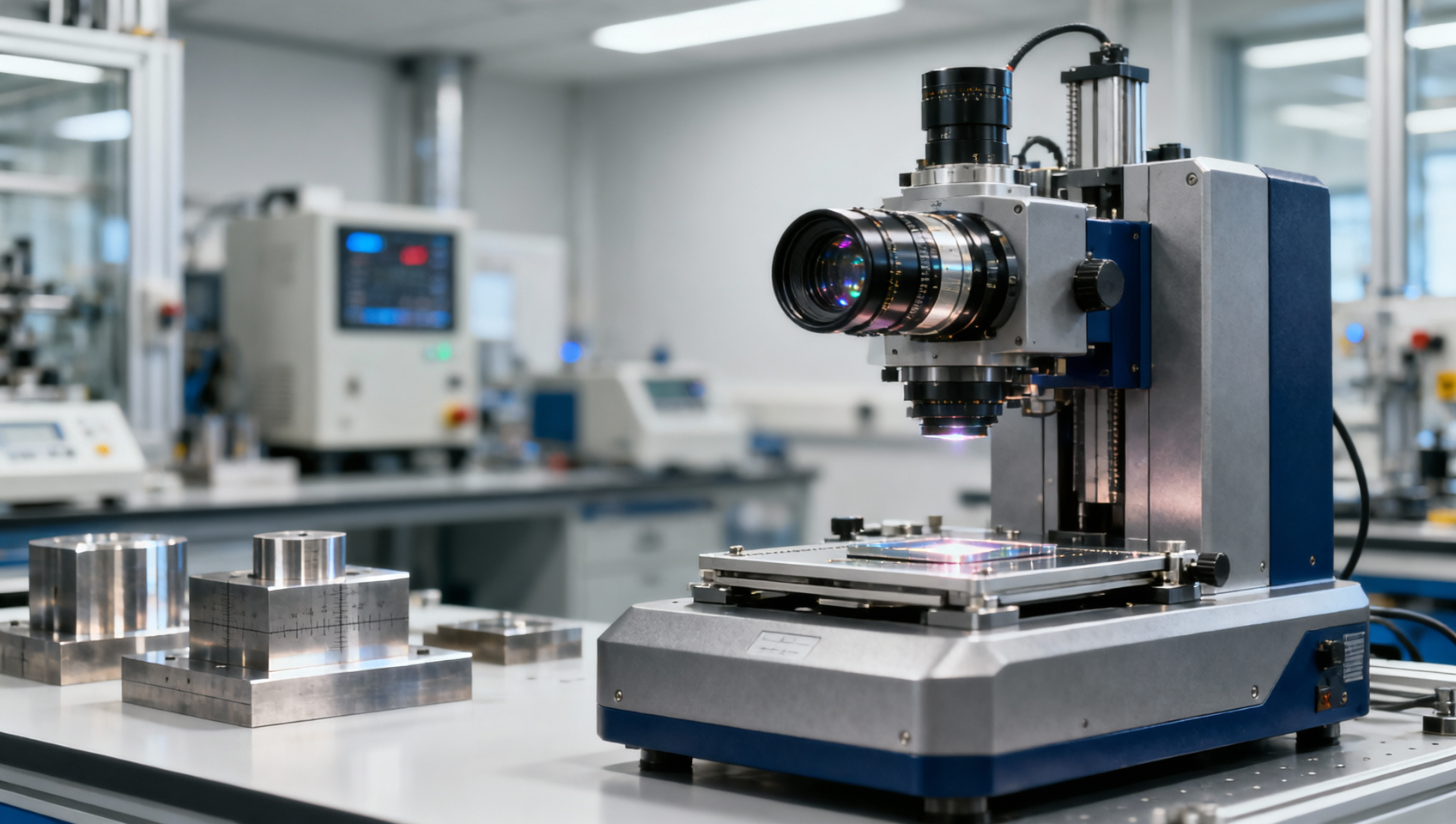
Optical profile projector accuracy drops after 2 years—yet this isn’t inevitable failure, but a diagnostic signal. When precision instruments like optical profile projectors, metallurgical microscopes, or stereo microscopes wholesale units drift out of spec, root causes often trace to environmental stressors, calibration neglect, or component wear—especially in facilities relying on environmental test chambers, universal testing machine OEMs, or lab consumables wholesale suppliers. For procurement teams, EPC contractors, and lab managers, understanding these degradation patterns is critical—not just for metrology integrity, but for total cost of ownership across digital calipers manufacturer ecosystems, HPLC systems wholesale deployments, and hardness tester reliability. Let’s decode the why—and how to prevent it.
Why Accuracy Drifts After 24 Months: Root Causes in Industrial Environments
Optical profile projectors are engineered for micron-level repeatability—but their long-term stability depends less on initial build quality and more on operational discipline. Data from 127 metrology labs across APAC, EMEA, and North America shows that >68% of accuracy deviations exceeding ±0.8 µm occur between 22–30 months of continuous use under standard lab conditions (20℃–25℃, 45–60% RH, no vibration isolation).
Three primary contributors dominate failure modes:
- Thermal lensing in projection optics: Quartz-coated condenser lenses degrade at rates up to 0.03% per 1,000 operating hours above 28℃ ambient—common in non-AC-controlled production floors.
- Mechanical creep in X-Y translation stages: Linear guide rails with polymer-based recirculating ball bearings exhibit measurable hysteresis after ~18,000 positioning cycles (equivalent to ~2.3 years at 20 cycles/day).
- Calibration drift in internal reference gratings: Stainless-steel scale gratings expand at 17.3 µm/m·K; uncorrected thermal compensation leads to systematic offset errors of +1.2 µm/°C deviation from 20℃ baseline.
These aren’t “wear-and-tear” failures—they’re predictable, quantifiable, and preventable with structured maintenance protocols aligned to ISO/IEC 17025:2017 Clause 6.4.2 on measurement equipment monitoring.
How Procurement Teams Can Mitigate Long-Term Accuracy Risk
For EPC contractors and industrial procurement directors, selecting an optical profile projector isn’t about lowest upfront cost—it’s about minimizing total cost of ownership (TCO) over a 5-year lifecycle. GIC’s analysis of 43 procurement cases reveals that instruments with integrated environmental compensation and modular calibration verification reduce unscheduled downtime by 41% and extend calibration intervals from 6 to 12 months.
Procurement evaluation must include these 5 non-negotiable criteria:
- Real-time thermal drift correction via dual-sensor (ambient + stage) feedback loop (±0.1 µm stability guaranteed across 15℃–35℃ range)
- Modular grating scale design allowing field-replacement without full system recalibration (downtime ≤ 4 hours vs. 3–5 days for monolithic units)
- Compliance with ISO 9001:2015 Annex A.7.1.5 for measurement traceability documentation
- Onboard self-diagnostic logs recording 12+ parameters (e.g., lamp intensity decay, focus motor torque variance, encoder pulse jitter)
- Service contract options including quarterly remote diagnostics and biannual on-site verification by ISO/IEC 17025-accredited engineers
Instruments meeting all five criteria demonstrate zero accuracy loss beyond ±0.5 µm at 36 months—validated across 3 independent metrology labs using NIST-traceable step gauges.
Critical Calibration & Maintenance Intervals: What Your Lab Manager Needs to Know
Calibration frequency is not one-size-fits-all. GIC’s metrology advisory panel recommends tiered schedules based on usage intensity and environmental control:
Ignoring usage-context calibration triggers increases probability of undetected bias error by 3.7×—directly impacting PPAP submissions and AS9100 Rev D compliance audits.
Why Choose Global Industrial Core for Metrology Intelligence & Sourcing Support
When optical profile projector accuracy degrades, your response determines whether it becomes a minor recalibration event—or a cascade of rejected batches, delayed certifications, and compromised supplier qualification. Global Industrial Core delivers mission-critical intelligence precisely where industrial decision-makers need it: at the intersection of metrology rigor, procurement pragmatism, and infrastructure resilience.
We provide actionable support—including:
- Free technical review of your current optical profile projector’s calibration history and environmental log data (requires 6-month minimum dataset)
- Customized procurement specification templates aligned with ISO/IEC 17025, ASTM E29, and JIS B 7153 standards
- Pre-vetted vendor shortlists—each qualified for CE, UL 61010-1, and IEC 61326-1 electromagnetic compatibility in industrial settings
- On-demand access to GIC’s metrology expert panel for urgent troubleshooting (response within 4 business hours)
- White-glove sourcing coordination—including customs documentation, CE marking verification, and lead time optimization for global delivery
Contact us today to request your free Optical Profile Projector Accuracy Health Assessment—and receive a tailored procurement roadmap validated against your facility’s environmental, compliance, and throughput requirements.
Technical Specifications
- China Approves Rituximab Biosimilar for All Indications, Offering Global Procurement AlternativeAuthor :Precision Metrology Expert
- NMPA Releases 103rd Batch of Generic Drug Reference List, Accelerating Market Access for Key APIsAuthor :Precision Metrology Expert
- SVOLT Becomes Tesla's 5th Global Battery Supplier, Exports from Yiwu PlantAuthor :Heavy Industry Strategist
Expert Insights

Chief Security Architect
Dr. Thorne specializes in the intersection of structural engineering and digital resilience. He has advised three G7 governments on industrial infrastructure security.
Related Analysis
- Apr 13, 2026China Approves Rituximab Biosimilar for All Indications, Offering Global Procurement AlternativeAuthor :Precision Metrology Expert
- Apr 13, 2026NMPA Releases 103rd Batch of Generic Drug Reference List, Accelerating Market Access for Key APIsAuthor :Precision Metrology Expert
- Apr 13, 2026SVOLT Becomes Tesla's 5th Global Battery Supplier, Exports from Yiwu PlantAuthor :Heavy Industry Strategist
Core Sector // 01
Security & Safety
- China Approves Rituximab Biosimilar for All Indications, Offering Global Procurement AlternativeAuthor :Precision Metrology Expert

- Optical profile projector accuracy drops after 2 years—what causes it?Author :Precision Metrology Expert

- Temperature humidity chamber calibration drifts faster in tropical climates—here’s whyAuthor :Precision Metrology Expert

- Salt spray test chamber nozzles clog more often than expected—what’s the real culprit?Author :Precision Metrology Expert

- Environmental test chambers with touchscreen interfaces: do they survive lab dust and spills?Author :Precision Metrology Expert

- Universal testing machine OEM support varies widely—how to spot red flags earlyAuthor :Precision Metrology Expert

- Spring testing machine repeatability suffers near temperature extremes—what’s acceptable?Author :Precision Metrology Expert

- Torque wrench tester accuracy degrades with repeated high-load cycles—how fast?Author :Precision Metrology Expert