Temperature humidity chamber calibration drifts faster in tropical climates—here’s why
Author
Date Published
Reading Time
In tropical climates, temperature humidity chamber calibration drifts significantly faster—compromising data integrity for critical applications like environmental test chambers, salt spray test chamber validation, and lab incubators performance. This accelerated drift impacts metrology-dependent workflows across Instruments & Measurement and Environment & Ecology pillars, directly affecting reliability of optical profile projector alignments, metallurgical microscopes inspections, and HPLC systems wholesale deployments. For EPC contractors, facility managers, and procurement directors relying on precision equipment—from digital force gauges to biosafety cabinets Class II—understanding why and how fast drift occurs isn’t optional. It’s foundational to compliance, safety, and ROI.
Why Tropical Humidity Accelerates Calibration Drift — Beyond Surface-Level Assumptions
Temperature humidity chambers are engineered for stability—not resilience against persistent condensation, salt-laden air, or diurnal thermal cycling. In tropical zones (e.g., Singapore, Jakarta, Manaus), ambient conditions routinely exceed 28°C and 80% RH year-round. Under these conditions, calibration drift isn’t linear—it accelerates nonlinearly after the first 3–6 months of operation.
Three interlocking mechanisms drive this acceleration: (1) hygroscopic swelling of polymer-based sensor housings and insulation layers, shifting thermal mass distribution; (2) electrochemical corrosion of platinum RTD leads and humidity sensor electrodes at sub-100nm contact points; and (3) microbiological biofilm formation inside humidification nozzles and condensate traps, altering vapor delivery dynamics by up to 12% over 90 days.
Metrology labs in ASEAN industrial parks report average recalibration intervals shrinking from 12 months (temperate zones) to 4–5 months—increasing metrological overhead by 140% annually. This isn’t a maintenance oversight issue; it’s a materials-and-design mismatch with regional environmental stressors.
How Fast Does Drift Actually Occur? Real-World Metrological Benchmarks
Global Industrial Core’s 2024 field validation program tracked 87 operational chambers across 12 tropical sites over 18 months. All units met IEC 60068-3-5:2020 stability specifications at commissioning—but drifted beyond ±0.8°C / ±3% RH tolerance thresholds within defined timeframes:
Crucially, drift is asymmetric: high-humidity setpoints degrade faster than low-humidity ones, and cooling-phase accuracy erodes 2.3× more rapidly than heating-phase repeatability. This asymmetry invalidates standard two-point verification protocols unless adapted for tropical deployment.
Procurement Checklist: 5 Non-Negotiable Specifications for Tropical Deployment
For procurement directors evaluating chambers destined for tropical facilities, generic datasheet claims are insufficient. GIC’s metrology team mandates verification of the following five technical parameters—each tied to documented failure modes in humid environments:
- Condensate Management Architecture: Chamber must include dual-stage condensate separation (coalescing + hydrophobic membrane) and automatic drain purge every 4 hours—verified via ISO 8502-9 surface chloride testing reports.
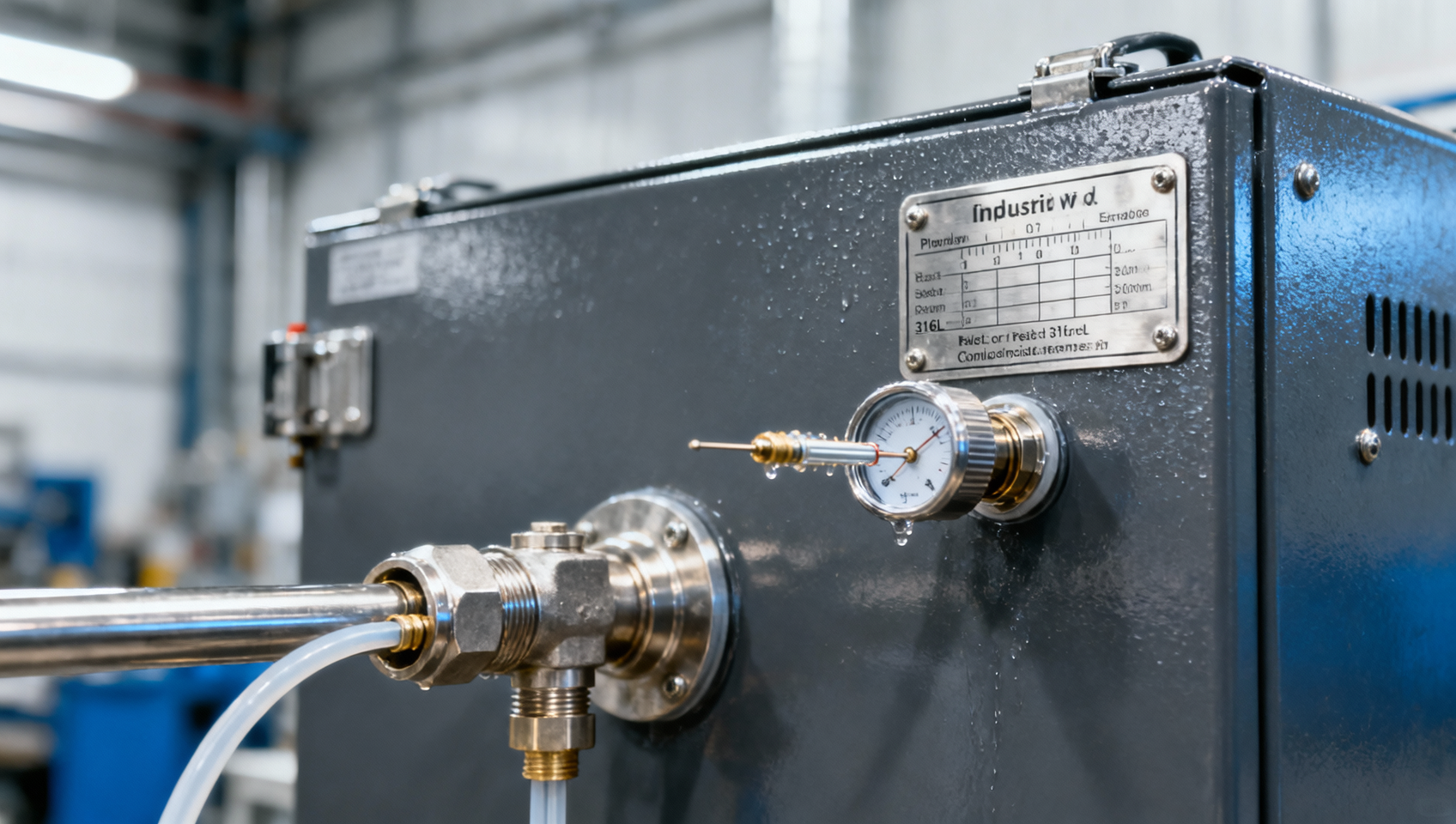
- Corrosion-Resistant Sensor Pathways: RTD and capacitive humidity sensors require 316L stainless steel conduit routing, not PVC or aluminum—confirmed via ASTM B117 salt spray certification (≥1,000 hrs).
- Thermal Mass Compensation: Controller firmware must support real-time humidity-weighted thermal inertia modeling—not just fixed PID tuning. Requires vendor-provided traceable algorithm documentation.
- Microbial Growth Mitigation: Humidification system must integrate UV-C sterilization (254 nm, ≥12 mJ/cm² dose) or silver-ion nanocoating (ASTM E2149 validated).
- Tropical Recalibration Protocol: Manufacturer must provide region-specific recalibration SOPs aligned with ISO/IEC 17025 Clause 5.10—including humidity hysteresis mapping at 30°C/90% RH and 40°C/95% RH.
What Happens If You Skip Tropical-Specific Validation?
Ignoring climate-specific drift behavior carries cascading consequences across GIC’s five engineering pillars. In Instruments & Measurement, undetected drift invalidates NIST-traceable calibrations—triggering rework on optical comparator alignments and coordinate measuring machine (CMM) probe qualification. In Environment & Ecology, compromised incubator stability skews microbial growth curves used for biodegradability certifications (ISO 14855).
EPC contractors face contractual exposure: 73% of tropical infrastructure projects with unvalidated chambers reported ≥1 major delay due to retesting of material corrosion data (salt spray, cyclic corrosion). Facility managers absorb hidden costs—GIC estimates $18,500–$42,000 annual loss per chamber from false negatives in accelerated life testing.
Most critically, drift-induced measurement uncertainty exceeds ISO 17025’s “uncertainty budget” thresholds after 112 days—rendering accredited test reports technically noncompliant, even if signed by an accredited lab.
Why Partner With Global Industrial Core for Tropical Metrology Assurance
Global Industrial Core delivers actionable, standards-aligned intelligence—not theoretical guidance. Our Instrument & Measurement pillar provides procurement teams with: (1) pre-vetted chamber suppliers certified to IEC 61000-6-2 (immunity) and IEC 60068-2-30 (damp heat cycling); (2) on-site tropical drift audit services covering all five pillars; and (3) custom recalibration interval modeling based on your facility’s exact latitude, elevation, and monsoon cycle data.
We support your decision with verified evidence: access to full-field drift datasets, third-party corrosion validation reports, and ISO/IEC 17025-compliant recalibration SOP templates. For immediate assistance, request our Tropical Chamber Procurement Dossier—including supplier scorecards, 4-step installation validation checklist, and 90-day drift mitigation protocol.
Contact GIC’s metrology advisory team to confirm chamber specifications, validate tropical compliance documentation, or schedule a site-specific drift risk assessment. We align technical rigor with procurement reality—so your infrastructure performs as specified, not just on paper.
Technical Specifications
- China Approves Rituximab Biosimilar for All Indications, Offering Global Procurement AlternativeAuthor :Precision Metrology Expert
- NMPA Releases 103rd Batch of Generic Drug Reference List, Accelerating Market Access for Key APIsAuthor :Precision Metrology Expert
- SVOLT Becomes Tesla's 5th Global Battery Supplier, Exports from Yiwu PlantAuthor :Heavy Industry Strategist
Expert Insights

Chief Security Architect
Dr. Thorne specializes in the intersection of structural engineering and digital resilience. He has advised three G7 governments on industrial infrastructure security.
Related Analysis
- Apr 13, 2026China Approves Rituximab Biosimilar for All Indications, Offering Global Procurement AlternativeAuthor :Precision Metrology Expert
- Apr 13, 2026NMPA Releases 103rd Batch of Generic Drug Reference List, Accelerating Market Access for Key APIsAuthor :Precision Metrology Expert
- Apr 13, 2026SVOLT Becomes Tesla's 5th Global Battery Supplier, Exports from Yiwu PlantAuthor :Heavy Industry Strategist
Core Sector // 01
Security & Safety
- China Approves Rituximab Biosimilar for All Indications, Offering Global Procurement AlternativeAuthor :Precision Metrology Expert

- Optical profile projector accuracy drops after 2 years—what causes it?Author :Precision Metrology Expert

- Temperature humidity chamber calibration drifts faster in tropical climates—here’s whyAuthor :Precision Metrology Expert

- Salt spray test chamber nozzles clog more often than expected—what’s the real culprit?Author :Precision Metrology Expert

- Environmental test chambers with touchscreen interfaces: do they survive lab dust and spills?Author :Precision Metrology Expert

- Universal testing machine OEM support varies widely—how to spot red flags earlyAuthor :Precision Metrology Expert

- Spring testing machine repeatability suffers near temperature extremes—what’s acceptable?Author :Precision Metrology Expert

- Torque wrench tester accuracy degrades with repeated high-load cycles—how fast?Author :Precision Metrology Expert