Emission Gas Analyzer for Fast Diagnostics
Author
Date Published
Reading Time
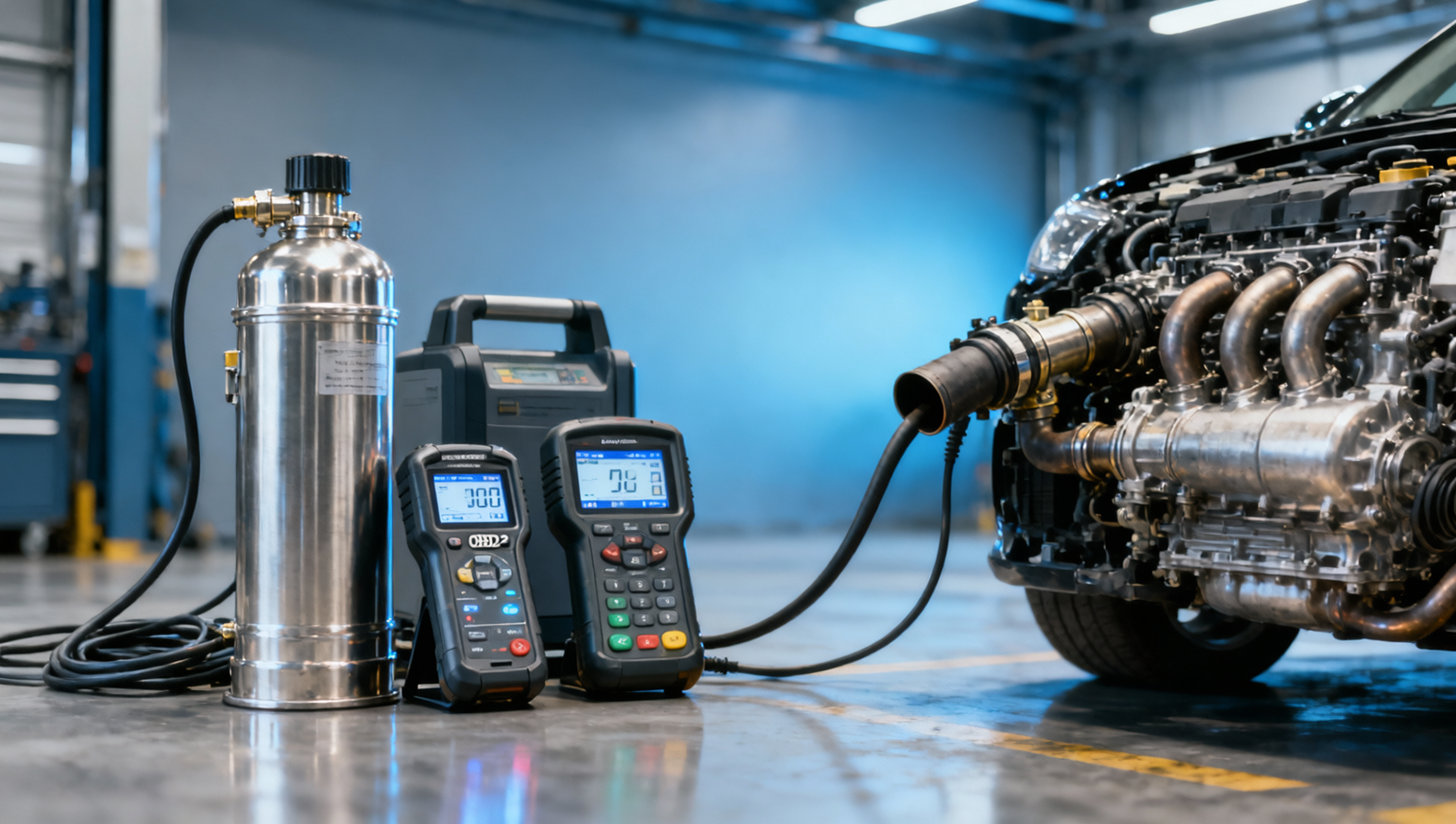
Fast, accurate fault detection is essential in modern industrial and automotive maintenance. An emission gas analyzer, together with OBD2 code readers and an automotive diagnostic scanner, helps operators, buyers, and decision-makers identify performance issues, verify compliance, and reduce downtime. This guide explores how these tools support faster diagnostics, smarter procurement, and more reliable operations across demanding applications.
For most searchers, the real question is not simply what an emission gas analyzer does, but how it helps diagnose faults faster, reduce unnecessary repairs, and support compliance in real operating conditions. The short answer is clear: when used correctly, an emission gas analyzer gives immediate, actionable insight into combustion quality, engine condition, and exhaust-related failures that electronic fault codes alone may miss. For workshops, fleets, industrial maintenance teams, and procurement leaders, that means better troubleshooting accuracy, lower downtime, and more confident equipment decisions.
Why an Emission Gas Analyzer Matters for Fast Diagnostics
An emission gas analyzer is valuable because it turns exhaust chemistry into diagnostic evidence. Instead of guessing whether a problem comes from incomplete combustion, air-fuel imbalance, ignition faults, catalyst inefficiency, or sensor failure, technicians can look at measurable gas values and identify likely root causes more quickly.
In practical terms, this matters because many performance and compliance issues present similar symptoms. Rough idle, poor fuel economy, elevated emissions, failed inspection results, loss of power, and intermittent fault codes can all overlap. An analyzer helps separate these conditions by showing what is actually happening at the exhaust stream.
For example, abnormal levels of CO, CO2, HC, O2, or NOx can indicate different fault patterns:
- High CO often suggests a rich mixture or poor combustion efficiency.
- High HC may point to misfire, incomplete combustion, or ignition issues.
- High O2 can indicate a lean condition, exhaust leak, or sampling issue.
- Unusual CO2 patterns may reveal reduced combustion efficiency.
- Elevated NOx can suggest high combustion temperatures or EGR-related problems.
This is why an emission gas analyzer remains relevant even in systems that already use advanced onboard electronics. It provides physical verification, not just digital fault reporting.
What Users Actually Want to Know Before Using or Buying One
Different readers approach this topic with different priorities, but their core concerns are highly practical.
Operators and technicians usually want to know:
- Will it help me find faults faster than trial-and-error replacement?
- Can it confirm whether the issue is fuel, ignition, air intake, exhaust aftertreatment, or sensor-related?
- How easy is it to use in day-to-day diagnostics?
Procurement teams often focus on:
- What measurement accuracy and sensor technology are required?
- Which models fit our application: automotive, fleet, industrial engine, or facility emissions monitoring?
- What are the calibration, maintenance, and lifecycle costs?
Business decision-makers tend to ask:
- Will this reduce downtime and repeat repairs?
- Does it support compliance documentation and inspection readiness?
- What is the operational return on investment?
The most useful article, therefore, is one that explains not only the technology, but also how to evaluate real-world diagnostic value, purchasing criteria, and operating fit.
How an Emission Gas Analyzer Works with OBD2 Code Readers and an Automotive Diagnostic Scanner
An emission gas analyzer is strongest when it is part of a broader diagnostic workflow rather than used in isolation. In modern maintenance environments, it complements OBD2 code readers and an automotive diagnostic scanner by adding physical emissions evidence to electronic system data.
Each tool answers a different question:
- OBD2 code readers identify stored fault codes and basic system alerts.
- An automotive diagnostic scanner provides deeper access to live data, subsystem behavior, freeze-frame information, and bidirectional tests.
- An emission gas analyzer confirms combustion and exhaust outcomes at the tailpipe or exhaust stream.
Consider a case where a vehicle or engine shows poor performance and an oxygen sensor fault. A code reader may reveal the fault code. A scanner may show unstable sensor readings or fuel trim anomalies. But the emission gas analyzer can help determine whether the sensor is actually faulty, whether the engine is running rich or lean, or whether another upstream problem is creating misleading data.
This combined approach reduces misdiagnosis. It is especially important where replacing parts unnecessarily is expensive, where downtime carries high cost, or where compliance failure has regulatory implications.
Which Faults Can Be Diagnosed Faster with Emission Analysis
One of the main reasons users search for an emission gas analyzer for fast diagnostics is to understand its practical diagnostic range. In real maintenance work, these instruments can significantly accelerate identification of several common fault categories.
- Air-fuel ratio imbalance: Helps detect rich or lean operation that may not be obvious from symptoms alone.
- Ignition and misfire issues: Elevated hydrocarbons can support diagnosis of incomplete combustion.
- Catalytic converter problems: Emission patterns can indicate poor catalyst efficiency or downstream treatment failure.
- EGR system faults: NOx trends may help identify excessive combustion temperature or improper exhaust gas recirculation.
- Fuel delivery issues: Gas composition can support diagnosis of injector imbalance, overfueling, or poor atomization.
- Exhaust leaks or sampling problems: Oxygen readings can reveal conditions that distort diagnosis if left unchecked.
For maintenance teams, the advantage is speed with better confidence. Instead of moving through a long list of possible causes, technicians can narrow the fault path much earlier in the process.
How to Evaluate an Emission Gas Analyzer Before Purchase
For buyers and procurement managers, selecting the right analyzer is less about finding the most feature-rich model and more about matching capability to application. A poor fit can create false confidence, unnecessary cost, or operational inefficiency.
Key evaluation points include:
- Measured gases: Confirm whether the unit measures CO, CO2, HC, O2, and NOx as required for your diagnostic or compliance needs.
- Response time: Faster response supports faster troubleshooting in active service environments.
- Accuracy and repeatability: Essential for reliable diagnostics and compliance documentation.
- Calibration requirements: Understand how often calibration is needed and whether this can be managed in-house.
- Sensor life and replacement cost: A lower purchase price may be offset by higher maintenance costs.
- Data logging and reporting: Important for fleets, regulated facilities, audit trails, and maintenance records.
- Portability and ruggedness: Field teams and industrial environments need durable, easy-to-handle equipment.
- Compliance alignment: Check whether the instrument supports relevant regional or industry standards.
Buyers should also assess whether the analyzer will be used mainly for vehicle diagnostics, engine tuning, fleet maintenance, emissions testing support, or industrial combustion assessment. The right answer depends on workflow, training level, and the cost of diagnostic error.
Business Value: Downtime Reduction, Compliance Support, and Better Repair Decisions
For enterprise users, the value of an emission gas analyzer goes beyond technical measurement. It affects operating efficiency, maintenance quality, and financial performance.
First, faster diagnosis reduces asset downtime. In fleet, workshop, and industrial service contexts, every extra hour spent identifying a fault can delay delivery schedules, disrupt operations, or increase labor cost.
Second, it improves first-time fix rates. When technicians can validate fault causes with exhaust data, they are less likely to replace parts based on assumption. That reduces rework, avoids unnecessary component spending, and improves service consistency.
Third, it supports emissions compliance and inspection readiness. In regulated environments, being able to verify exhaust performance before formal inspection can help organizations avoid failures, penalties, or avoidable maintenance escalation.
Fourth, it creates a stronger basis for procurement decisions. If a business is responsible for large numbers of vehicles, generators, burners, or engine-driven assets, a reliable emissions diagnostic process can inform replacement planning, maintenance intervals, and lifecycle cost analysis.
In other words, the business case is strongest where downtime is expensive, compliance matters, and diagnostic accuracy directly affects operational outcomes.
Common Buying Mistakes and How to Avoid Them
Many organizations underuse or misbuy emission analysis equipment because they focus on headline specifications without considering how the tool will perform in actual workflows.
Common mistakes include:
- Buying a unit with insufficient gas measurement capability for future needs
- Ignoring calibration logistics and ongoing service requirements
- Choosing low-cost devices with poor repeatability
- Failing to train operators on gas interpretation
- Using emission readings without cross-checking scanner or code data
- Assuming all applications require the same analyzer configuration
These issues can be avoided by defining the use case first. Ask:
- What assets will be tested most often?
- Is the main goal diagnostics, compliance, or both?
- Who will use the instrument and what is their skill level?
- What reporting or traceability is required?
- How costly is a missed diagnosis in our operation?
Clear answers to these questions usually lead to a more cost-effective and operationally useful purchase.
Best Practices for Faster and More Reliable Diagnostic Results
Even a high-quality emission gas analyzer only delivers value when it is used consistently and interpreted correctly. For teams that want faster and more dependable results, several best practices make a measurable difference.
- Warm up and stabilize equipment properly before testing.
- Follow calibration schedules to maintain measurement reliability.
- Use emissions data alongside OBD2 code readers and scanner data rather than as a standalone diagnosis.
- Verify sampling integrity to avoid misleading oxygen or dilution readings.
- Build fault pattern references for recurring asset types in your operation.
- Train users on interpretation, not just operation, since raw values only become useful when linked to likely failure modes.
Organizations that formalize these practices typically see better troubleshooting speed, stronger repair consistency, and more confidence in maintenance decisions.
Final Takeaway
An emission gas analyzer is not just an emissions measurement tool. In fast-paced maintenance and industrial service environments, it is a practical diagnostic instrument that helps teams identify faults faster, confirm repair decisions, and support compliance with greater confidence.
For technicians, it adds physical evidence that improves troubleshooting. For procurement teams, it requires careful evaluation of measurement capability, calibration, durability, and lifecycle cost. For decision-makers, its value lies in reduced downtime, fewer repeat repairs, and better operational control.
When paired with OBD2 code readers and an automotive diagnostic scanner, an emission gas analyzer becomes part of a more complete and more reliable diagnostic strategy. That combination is often the difference between guesswork and informed action.
Expert Insights

Chief Security Architect
Dr. Thorne specializes in the intersection of structural engineering and digital resilience. He has advised three G7 governments on industrial infrastructure security.
Related Analysis
Core Sector // 01
Security & Safety
- How to Choose a Total Station in 2026Author :Precision Metrology Expert

- Auto Level Instruments vs Rotary LasersAuthor :Precision Metrology Expert

- GNSS RTK Receiver: Who Needs ItAuthor :Precision Metrology Expert

- Wholesale Moisture Meters Buying GuideAuthor :Precision Metrology Expert

- Wood Moisture Tester for Daily ChecksAuthor :Precision Metrology Expert

- Concrete Test Hammer Accuracy TipsAuthor :Precision Metrology Expert

- Anemometers Wholesale for Field WorkAuthor :Precision Metrology Expert

- Lux Meters Bulk Buying MistakesAuthor :Precision Metrology Expert