GNSS RTK Receiver: Who Needs It
Author
Date Published
Reading Time
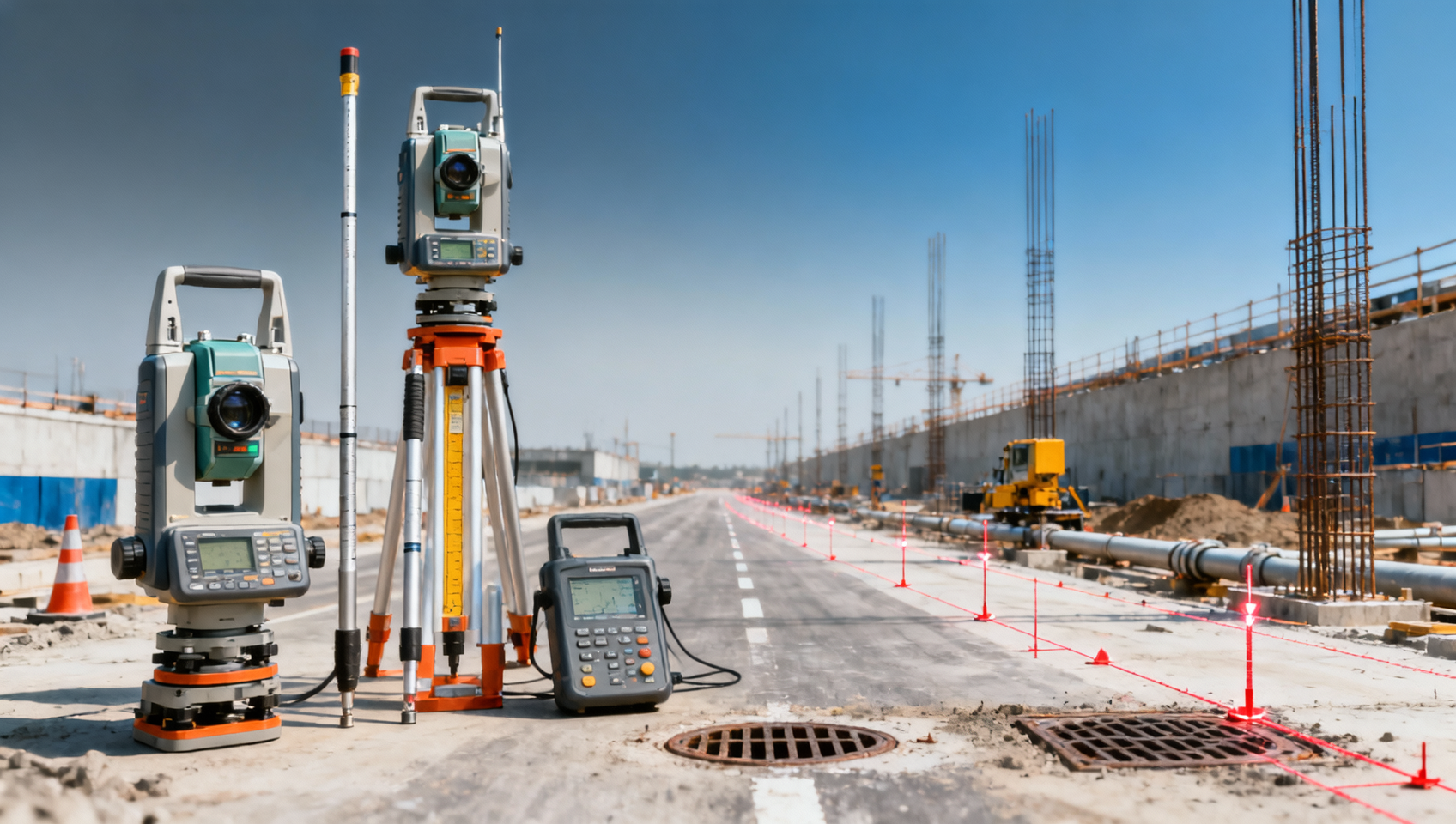
From survey crews and construction managers to procurement teams and industrial decision-makers, a GNSS RTK receiver is essential wherever centimeter-level positioning drives safety, speed, and cost control. Whether comparing auto level instruments, total station surveying tools, or rotary laser levels, buyers need reliable data, workflow efficiency, and long-term value before selecting the right solution.
If the practical question is “who actually needs a GNSS RTK receiver?”, the short answer is this: any team that must position, stake out, map, or verify assets with centimeter-level accuracy in real time can benefit from one. That includes land surveyors, civil contractors, utility teams, machine control operators, GIS professionals, and industrial asset managers. For buyers and decision-makers, the real issue is not whether RTK is advanced technology, but whether its accuracy, speed, and data workflow solve enough operational problems to justify the investment.
Who needs a GNSS RTK receiver most?
A GNSS RTK receiver is most valuable for users whose work depends on precise coordinates rather than visual alignment alone. In the field, this usually means teams that need to locate points, boundaries, structures, or underground assets quickly and with confidence.
The most common user groups include:
- Land surveyors who need high-accuracy positioning for boundary surveys, topographic mapping, control points, and site layout.
- Construction crews and site managers who need faster stakeout, grade checks, as-built verification, and reduced rework.
- Road, rail, and infrastructure contractors working on linear projects where long-distance positioning efficiency matters.
- Utility and pipeline teams that must record, inspect, or relocate assets with dependable coordinates.
- GIS and mapping professionals who need survey-grade or near-survey-grade data instead of consumer GPS accuracy.
- Agriculture and machine control operators who rely on real-time guidance, repeatable lines, and precision operations.
- Mining, quarry, and industrial facility teams responsible for volumetrics, site planning, equipment positioning, and safety-critical spatial records.
If the work only requires rough navigation or basic location tagging, a GNSS RTK receiver may be unnecessary. But if errors of even a few centimeters can create delays, disputes, or costly corrections, RTK becomes highly relevant.
What problems does RTK solve better than standard GPS?
This is usually the real buying trigger. Standard GPS is fine for general navigation, but it often cannot deliver the repeatable precision needed for engineering and construction workflows. A GNSS RTK receiver improves positioning by using correction data from a base station or network, allowing real-time centimeter-level accuracy under suitable conditions.
That matters because it helps teams solve several expensive field problems:
- Rework from incorrect layout caused by inaccurate point placement.
- Slow survey workflows when crews need repeated measurements or manual checks.
- Coordination issues between design data and field execution.
- Poor asset records that make future maintenance or compliance verification harder.
- Safety risks when buried or critical infrastructure is not located accurately.
- Project delays from relying on less efficient measurement methods across large sites.
For many organizations, the value of RTK is less about “better technology” and more about reducing field uncertainty. That reduction in uncertainty often translates into measurable business value.
When is a GNSS RTK receiver a better choice than an auto level, total station, or rotary laser level?
Many buyers compare RTK with other familiar tools. The right choice depends on the job, not on which instrument sounds more advanced.
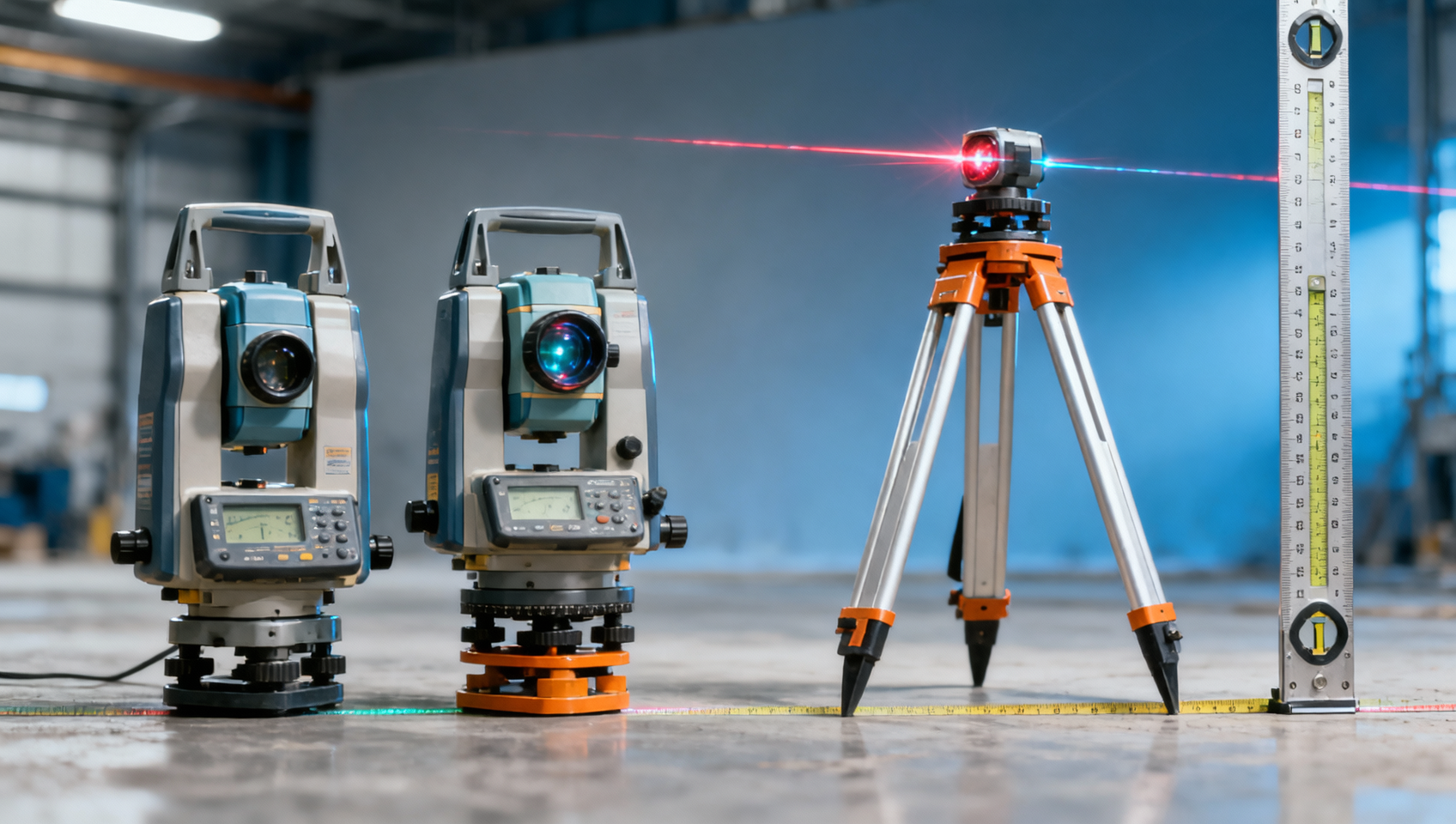
Auto level instruments are still effective for elevation transfer and basic leveling tasks. They are often cost-effective and simple, but they do not provide full coordinate-based positioning. If the job is mostly height control over shorter distances, an auto level may be enough.
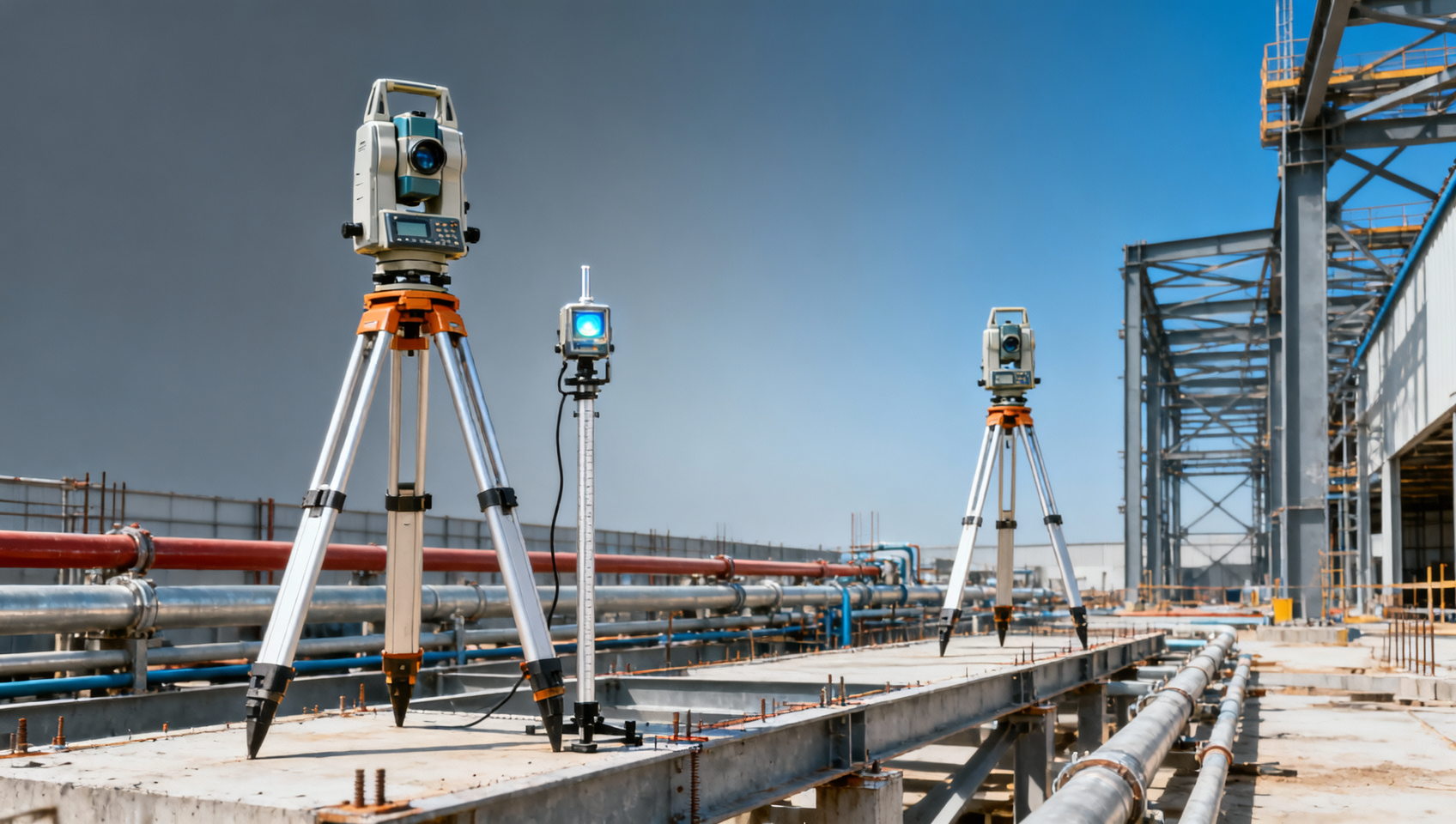
Total station surveying tools remain essential when line of sight is available and very high precision is required, especially in dense urban areas, structures, tunnels, or sites with signal obstruction. Total stations are often the better choice for detailed layout and monitoring where GNSS signal conditions are poor.
Rotary laser levels are practical for general construction leveling and indoor or localized outdoor work. They are easy to use for grading or alignment tasks, but they are not a substitute for georeferenced positioning over large areas.
GNSS RTK receivers become the better choice when:
- The site is large or spread out.
- Crews need fast coordinate-based stakeout.
- Real-time georeferenced data matters.
- Multiple teams need to work from the same coordinate system.
- Productivity gains from mobility outweigh the need for line-of-sight instruments.
In many professional workflows, RTK does not replace every other instrument. It complements them. High-performing teams often use RTK for rapid field positioning and total stations or levels for specific verification and detail work.
Which industries see the strongest return on investment?
For procurement teams and business decision-makers, adoption should be tied to return, not just technical capability. A GNSS RTK receiver tends to deliver the strongest ROI in industries where positioning errors directly affect schedule, material use, compliance, or safety.
High-value use cases include:
- Civil construction: faster layout, fewer staking errors, and quicker progress verification.
- Utility infrastructure: better asset recording, maintenance planning, and outage response.
- Oil, gas, and pipeline projects: accurate corridor work and improved documentation of critical assets.
- Power grid and renewable energy: repeatable placement of towers, poles, panels, and related infrastructure.
- Industrial plant development: improved coordination between design, installation, and inspection teams.
- Environmental and geospatial work: more reliable field data for compliance, restoration, and monitoring projects.
The ROI is often clearest when organizations operate across multiple sites, manage subcontractors, or need traceable field data for quality assurance and regulatory purposes.
What do operators care about in day-to-day use?
End users usually care less about marketing claims and more about whether the receiver performs reliably under real working conditions. For field crews, usability can matter as much as raw specifications.
The most important practical concerns are:
- Initialization speed: how quickly the receiver achieves fixed RTK status.
- Signal tracking: performance under trees, near buildings, or around industrial interference.
- Correction source flexibility: support for network RTK, local base, or radio workflows.
- Battery life: whether the system lasts through a full shift.
- Durability: resistance to dust, water, vibration, and rough handling.
- Controller and software usability: whether stakeout, coding, and export steps are efficient.
- Data compatibility: easy transfer into CAD, BIM, GIS, or project management systems.
If a receiver is technically capable but difficult to operate, training time increases and adoption slows. This is why user workflow should be part of every buying decision.
What should procurement teams and managers evaluate before buying?
A procurement decision should go beyond price and specification sheets. The best GNSS RTK receiver for one company may be the wrong choice for another if the support model, software ecosystem, or field conditions differ.
Procurement and management teams should evaluate:
- Accuracy requirements: what tolerance is actually needed for the intended tasks?
- Operating environment: open sky, urban canyons, industrial yards, vegetation, or remote sites.
- Connectivity model: will users rely on NTRIP/network corrections, UHF radio, or base-rover setup?
- Integration: compatibility with existing survey, CAD, GIS, and machine control systems.
- Total cost of ownership: hardware, software licenses, training, service plans, and calibration.
- After-sales support: local service availability, firmware updates, and technical response time.
- Compliance and reliability: quality assurance, environmental ratings, and documented performance.
For industrial and infrastructure buyers, vendor credibility also matters. A low initial price can become expensive if the system creates data inconsistencies, downtime, or support gaps during critical projects.
Who may not need a GNSS RTK receiver?
Not every team needs RTK, and recognizing that can prevent overbuying. If work is limited to basic leveling, short-range interior layout, rough navigation, or occasional non-critical measurements, simpler tools may be more appropriate.
You may not need a GNSS RTK receiver if:
- Your tolerance for error is measured in meters, not centimeters.
- Your work happens mostly indoors or in signal-obstructed environments where GNSS is unreliable.
- You only perform basic elevation checks that an auto level or rotary laser can handle.
- You need ultra-high precision on obstructed sites where a total station is still the better fit.
In these cases, RTK can still be useful as part of a broader toolkit, but it may not be the first investment priority.
How should buyers decide if RTK is worth it?
A useful decision test is to ask three questions:
- Does field accuracy directly affect cost, safety, or compliance?
- Will faster positioning save enough labor time to matter at project scale?
- Can the data flow into existing operational systems without friction?
If the answer to all three is yes, a GNSS RTK receiver is likely not just useful, but strategically important. If only one answer is yes, the purchase should be examined more carefully against less complex alternatives.
Pilot testing is often the best approach. A short field trial can reveal whether RTK improves layout speed, reduces revisit rates, and fits operator workflows under actual site conditions.
Final takeaway
A GNSS RTK receiver is not for everyone, but it is indispensable for organizations that rely on fast, repeatable, centimeter-level positioning in real-world operations. Surveyors, contractors, utility teams, GIS professionals, and industrial asset managers are among the clearest beneficiaries. For operators, the value lies in faster and more reliable field execution. For procurement teams and decision-makers, the value lies in reduced rework, better documentation, stronger coordination, and lower long-term project risk.
In practical terms, the right question is not simply “who needs a GNSS RTK receiver?” but “where does positioning accuracy create measurable operational value?” Once that is clear, the buying decision becomes much easier and much more defensible.
Expert Insights

Chief Security Architect
Dr. Thorne specializes in the intersection of structural engineering and digital resilience. He has advised three G7 governments on industrial infrastructure security.
Related Analysis
Core Sector // 01
Security & Safety
- How to Choose a Total Station in 2026Author :Precision Metrology Expert

- Auto Level Instruments vs Rotary LasersAuthor :Precision Metrology Expert

- GNSS RTK Receiver: Who Needs ItAuthor :Precision Metrology Expert

- Wholesale Moisture Meters Buying GuideAuthor :Precision Metrology Expert

- Wood Moisture Tester for Daily ChecksAuthor :Precision Metrology Expert

- Concrete Test Hammer Accuracy TipsAuthor :Precision Metrology Expert

- Anemometers Wholesale for Field WorkAuthor :Precision Metrology Expert

- Lux Meters Bulk Buying MistakesAuthor :Precision Metrology Expert