Best OBD2 Code Readers for Daily Use
Author
Date Published
Reading Time
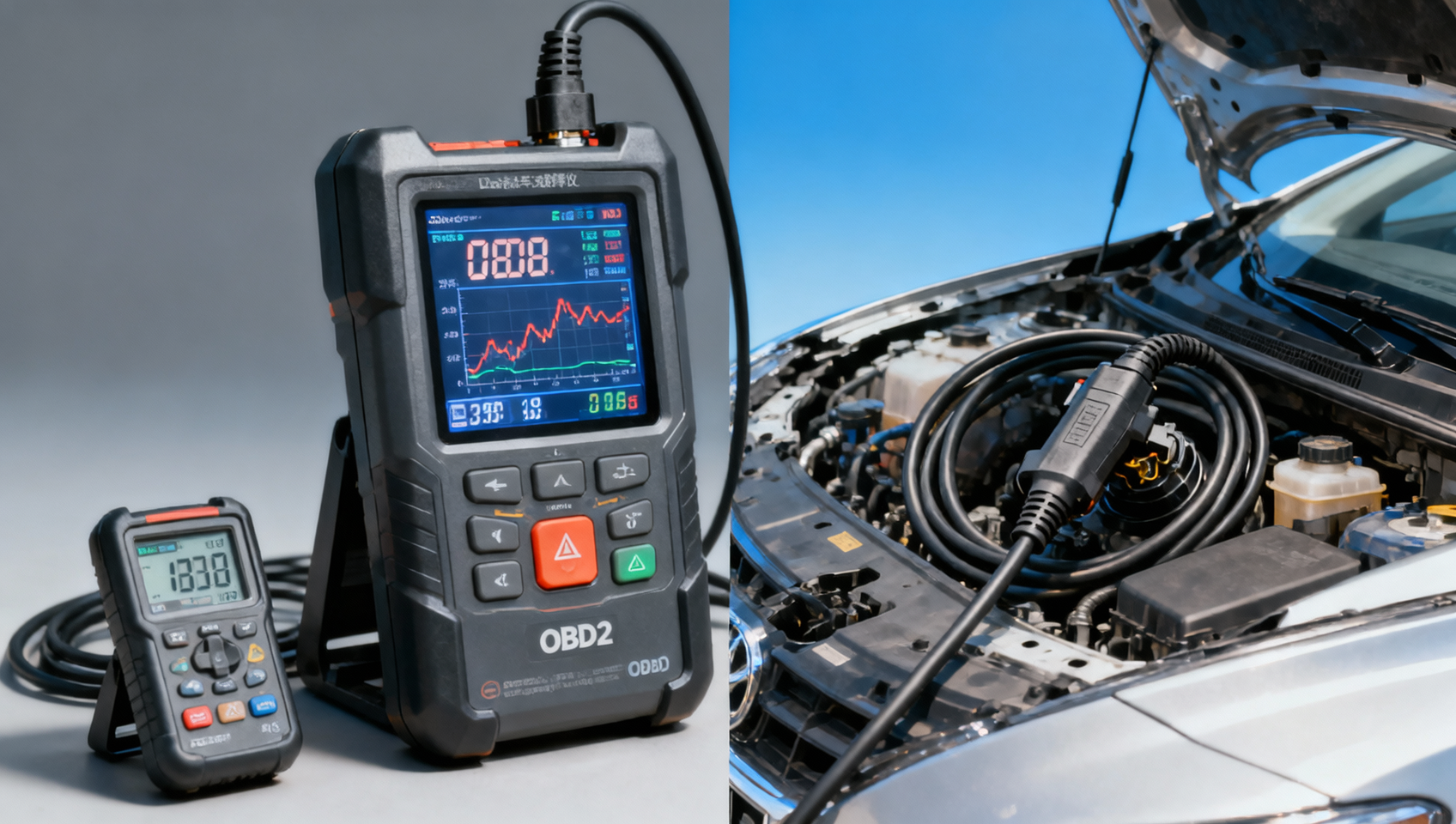
Choosing the best OBD2 code readers for daily use is no longer just about clearing warning lights. From a basic automotive diagnostic scanner to more advanced tools for routine maintenance, buyers today compare speed, accuracy, compatibility, and long-term value. For individual users, procurement teams, and business decision-makers, the right choice depends less on marketing claims and more on how the tool performs in real-world, repeated use. In most cases, the best daily-use OBD2 code reader is one that is fast to connect, easy to understand, reliable across common vehicle brands, and practical enough to support regular diagnostics without unnecessary cost.
What users are really looking for in the best OBD2 code readers for daily use
People searching for the best OBD2 code readers for daily use usually want one of three things: a dependable scanner for personal vehicle maintenance, a practical tool for operators who need quick issue checks, or a cost-effective diagnostic device for fleet, workshop, or procurement use. They are not just asking, “Which tool exists?” They are asking, “Which one is worth buying for repeated, everyday work?”
That means the real buying criteria are straightforward:
- Can it read and clear codes quickly without wasting time?
- Does it work on the vehicle makes and model years that matter most?
- Is the information clear enough for non-specialists to act on?
- Will it remain useful after the first few uses?
- Does it reduce maintenance uncertainty or operating downtime?
For most daily users, the best option is rarely the most expensive scan tool. It is the one that balances usability, code coverage, update support, and durability.
Who should buy a basic scanner, and who needs something more capable?
Not every buyer needs a professional diagnostic tablet. For daily use, it helps to separate tools into practical categories rather than price alone.
Basic OBD2 code readers
These are best for users who mainly want to read and clear check engine light codes, view basic emissions-related trouble codes, and confirm whether a repair solved the problem. They are often enough for private vehicle owners, light-duty operators, and teams that need a simple first-step diagnostic tool.
A basic scanner is usually the right choice when:
- You only need engine-related fault code access
- You want a reliable tool with minimal training
- You prioritize affordability and fast operation
- You are supporting routine checks instead of advanced troubleshooting
Mid-range daily-use diagnostic scanners
These tools often include live data, freeze frame information, I/M readiness status, VIN lookup, battery tests, and sometimes manufacturer-enhanced diagnostics. For regular users, this category often delivers the best value.
They make sense when:
- You maintain multiple vehicles
- You want more context than just a code number
- You need faster fault isolation during maintenance
- You want better long-term usefulness without entering full professional tool pricing
Advanced scanners
These are better suited to workshops, fleet maintenance supervisors, or technical teams that need system-level diagnostics beyond generic OBD2 functions. They may access ABS, SRS, transmission, service reset functions, and bidirectional controls. These can be valuable, but they are often more than what “daily use” buyers actually require.
If the tool will mostly be used for quick checks, maintenance confirmation, and common engine diagnostics, advanced functions may not justify the extra cost.
What matters most when comparing OBD2 code readers
For practical buying decisions, the following factors matter more than long feature lists.
1. Vehicle compatibility
This is the first filter. A code reader must support the vehicle makes, regions, and production years relevant to your use case. Most OBD2-compliant passenger vehicles sold in major markets are supported at the generic level, but deeper functions vary widely by brand and model.
Buyers should check:
- OBD2/EOBD compatibility range
- Coverage for domestic, Asian, and European vehicles
- Support for diesel vehicles if applicable
- Whether key advanced features are generic or manufacturer-specific
2. Speed and connection stability
A daily-use scanner should connect quickly and consistently. Slow boot times, dropped Bluetooth connections, or laggy menus make even a feature-rich tool frustrating. For operators and service teams, that friction adds up over time.
3. Readability of results
A good automotive diagnostic scanner should translate technical fault codes into understandable information. Clear definitions, likely causes, and data presentation are especially important for non-experts and procurement-led environments where the user may not be a trained diagnostic technician.
4. Live data usefulness
Live data is one of the biggest separators between low-value and high-value daily-use tools. Even for routine maintenance, being able to monitor oxygen sensor activity, coolant temperature, fuel trims, or RPM trends helps users move beyond guesswork.
5. Build quality and software support
If the scanner will be used repeatedly in garages, service bays, or field environments, durability matters. So do software updates. A tool with no support path may become outdated faster than expected, especially if vehicle coverage or app compatibility changes.
6. Total cost of ownership
The purchase price is only part of the decision. Buyers should also assess:
- Paid update requirements
- Subscription-based app limitations
- Accessory or cable replacement costs
- Training time for staff or operators
- Expected service life
For procurement teams, this is often the most overlooked factor.
Best types of OBD2 code readers for different daily-use scenarios
Instead of focusing on brand lists alone, it is often more useful to match tool type to user need.
For private vehicle owners
The best choice is usually a compact, easy-to-use code reader with reliable generic OBD2 functions, clear code definitions, and basic live data. The goal is confidence and convenience rather than deep system access.
For operators and maintenance staff
A handheld or app-connected scanner with faster workflow, freeze frame data, emissions readiness, and practical live data is often ideal. These users benefit from tools that reduce unnecessary downtime and support quick decisions in the field.
For fleet or multi-vehicle environments
A mid-range scanner with broad coverage, durable construction, update support, and consistent operation across different vehicles generally delivers the best return. Standardization matters here. A slightly more expensive tool can save time if it works reliably across the fleet.
For buyers and procurement managers
The best daily-use OBD2 code readers are the ones that lower diagnostic uncertainty without driving up training and support burden. Procurement should prioritize compatibility, warranty, software support, and user adoption over feature inflation. A tool that sits unused because it is too complex offers poor value regardless of specifications.
For business decision-makers
The right scanner should support operational continuity, improve maintenance visibility, and reduce avoidable part replacement or workshop outsourcing. In decision terms, the scanner is not just a tool purchase; it is a low-cost diagnostic capability investment.
How to avoid buying the wrong OBD2 scanner
Many poor purchases happen for predictable reasons. Buyers often overpay for functions they will never use or choose the cheapest option without checking its actual limitations.
Common mistakes include:
- Assuming all OBD2 readers provide the same depth of diagnostics
- Ignoring software update policies
- Buying based only on advertised code clearing ability
- Overlooking screen readability and workflow simplicity
- Choosing app-based tools without considering device compatibility or connectivity issues
- Failing to match the tool to the actual user skill level
If the scanner is meant for daily use, ease of repetition matters. A slightly less powerful tool that is consistently used is often more valuable than a technically superior device that users avoid.
A simple evaluation checklist before purchase
Before selecting an OBD2 code reader, buyers should confirm the following:
- Does it support the vehicle types you actually handle most often?
- Can it read, clear, and explain codes clearly?
- Does it provide live data that helps routine diagnosis?
- Is the interface suitable for the expected user?
- Are updates included, limited, or subscription-based?
- Is the hardware durable enough for daily handling?
- Will this tool save time, reduce external diagnostic costs, or improve maintenance decisions?
This checklist is more useful than comparing long specification tables with no operational context.
Final verdict: what is the best OBD2 code reader for daily use?
For most users, the best OBD2 code reader for daily use is not the cheapest and not the most advanced. It is a reliable mid-level diagnostic scanner that offers fast code reading and clearing, clear fault descriptions, useful live data, strong compatibility, and reasonable update support. That combination serves the widest range of daily-use needs, from personal maintenance to operational diagnostics and procurement standardization.
If your needs are basic, a simple and dependable scanner is enough. If you support multiple vehicles or want better maintenance insight, step up to a mid-range tool. If you require system-level diagnostics across many modules, then advanced devices may be justified. The key is to buy for actual use frequency, user capability, and operational value—not for brochure features alone.
In a crowded market, the smartest purchase is the one that delivers repeatable results, reduces uncertainty, and remains useful long after the first warning light appears.
Expert Insights

Chief Security Architect
Dr. Thorne specializes in the intersection of structural engineering and digital resilience. He has advised three G7 governments on industrial infrastructure security.
Related Analysis
Core Sector // 01
Security & Safety
- How to Choose a Total Station in 2026Author :Precision Metrology Expert

- Auto Level Instruments vs Rotary LasersAuthor :Precision Metrology Expert

- GNSS RTK Receiver: Who Needs ItAuthor :Precision Metrology Expert

- Wholesale Moisture Meters Buying GuideAuthor :Precision Metrology Expert

- Wood Moisture Tester for Daily ChecksAuthor :Precision Metrology Expert

- Concrete Test Hammer Accuracy TipsAuthor :Precision Metrology Expert

- Anemometers Wholesale for Field WorkAuthor :Precision Metrology Expert

- Lux Meters Bulk Buying MistakesAuthor :Precision Metrology Expert