Auto Level Instruments vs Rotary Lasers
Author
Date Published
Reading Time
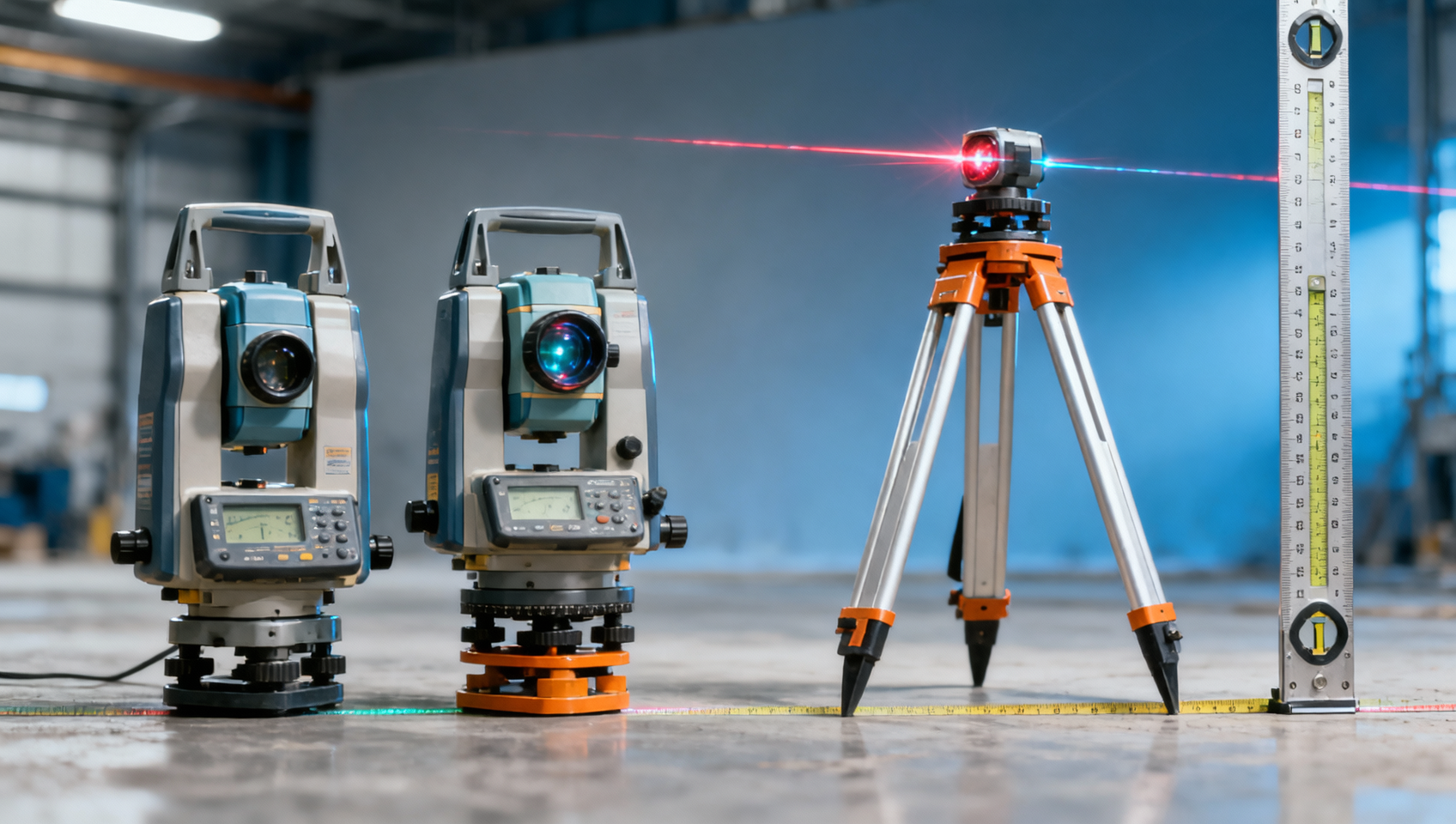
Choosing between an auto level instrument and a rotary laser is not just a matter of preference. It affects measurement accuracy, crew efficiency, training needs, and total equipment cost. In simple terms: if your work depends on long-distance elevation checks with dependable optical accuracy, an auto level is often the better choice. If your team needs faster layout, one-person operation, and visible or detector-based reference planes across a jobsite, a rotary laser is usually more efficient. For industrial contractors, site engineers, operators, and procurement teams, the right decision depends less on brand and more on working range, tolerance requirements, site conditions, and workflow.
Auto Level Instruments vs Rotary Lasers: Which One Is Better for Your Job?
Neither tool is universally better. They solve different leveling problems.
Auto level instruments are best when you need reliable height difference measurements over distance, especially in surveying, foundation work, drainage checks, roadwork, and benchmark transfer. They are widely trusted because they are stable, accurate, and less affected by certain outdoor visibility issues.
Rotary laser levels are better when speed and convenience matter more, especially for grading, interior leveling, concrete work, ceiling installation, and general construction alignment. They create a rotating laser plane that multiple workers can use across a site, often with a receiver.
For many buyers, the practical decision comes down to this:
- Choose an auto level if precision elevation transfer is the main task.
- Choose a rotary laser if productivity, layout speed, and simpler site-wide reference are the priority.
- Use both if your projects span surveying-grade checks and high-speed construction layout.
What Is the Real Difference Between an Auto Level and a Rotary Laser?
The biggest difference is how they establish and read level.
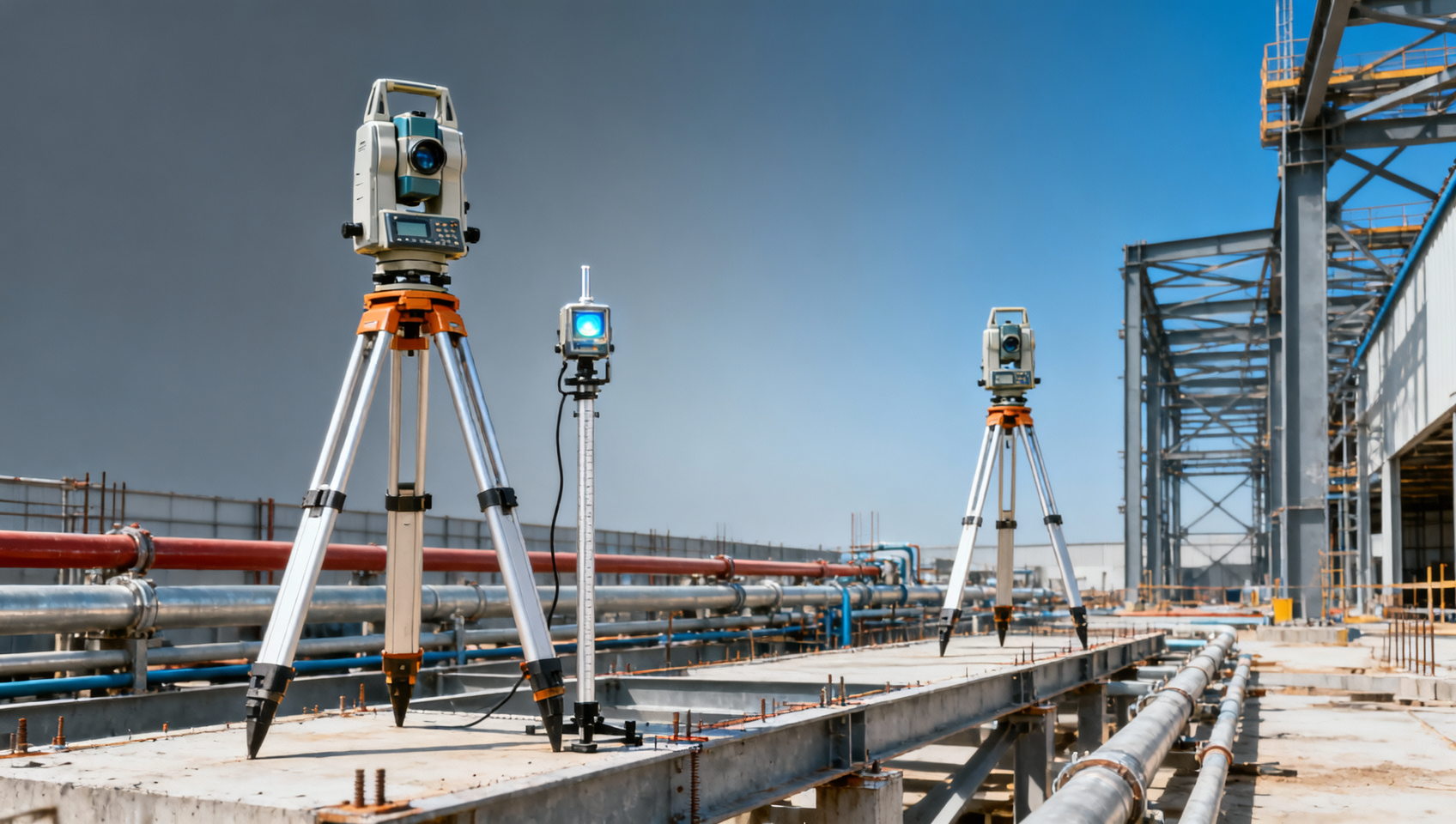
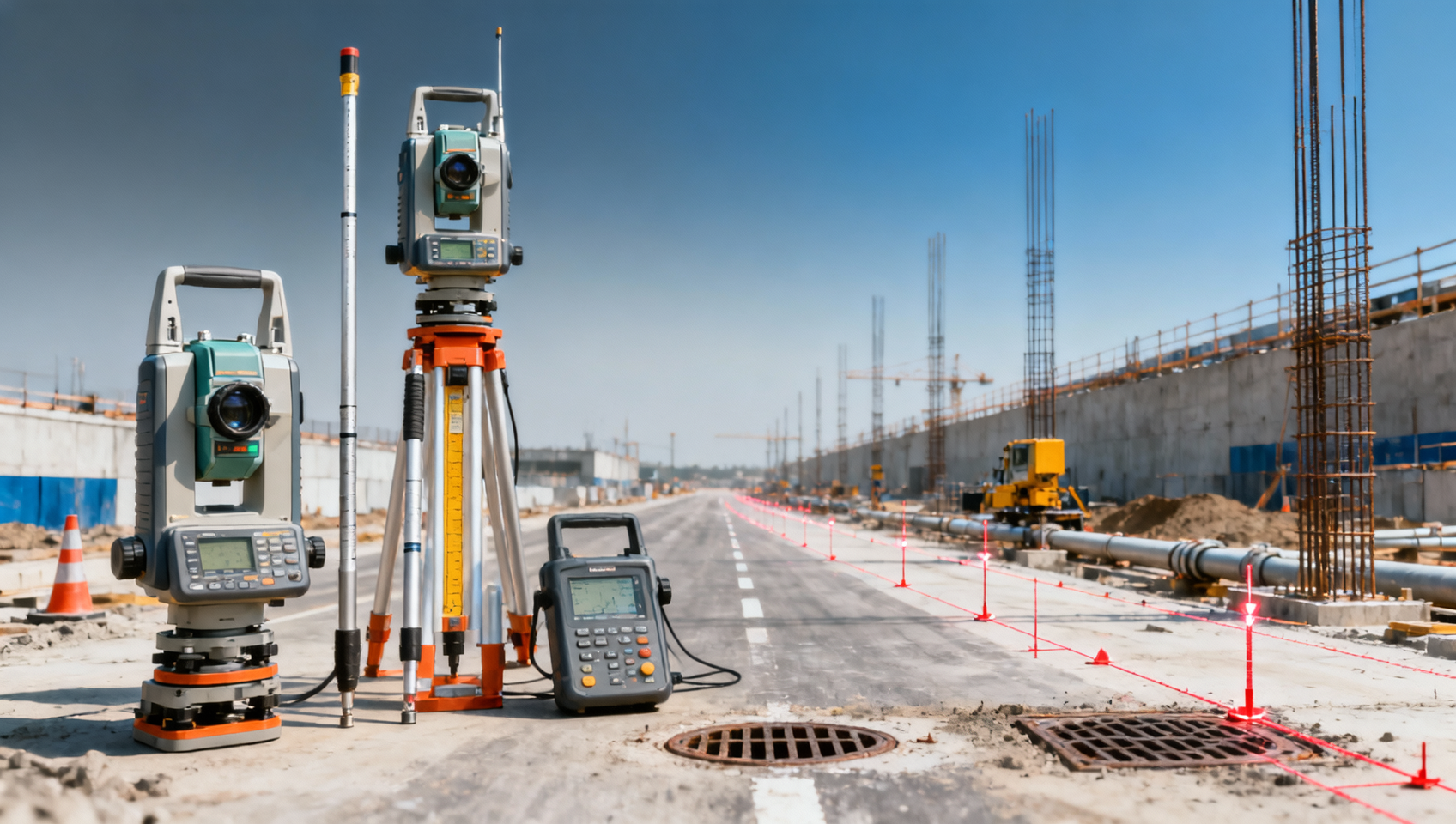
An auto level instrument is an optical tool. The operator looks through a telescope and reads measurements on a leveling staff. An internal compensator automatically corrects small leveling errors, which helps maintain horizontal sight.
A rotary laser projects a 360-degree laser plane. Instead of looking through optics, users detect the level reference visually or with a laser receiver mounted on a grade rod.
This creates major differences in field use:
- Auto level: usually requires two-person operation for efficient work, one at the instrument and one at the staff.
- Rotary laser: can often support one-person operation, depending on the task and receiver setup.
- Auto level: measurement is based on optical reading skill and proper staff handling.
- Rotary laser: measurement is based on the projected reference plane and detector response.
For teams already comparing total station surveying tools, GNSS RTK receiver systems, and laser distance meters wholesale, this distinction matters because auto levels sit closer to traditional elevation control workflows, while rotary lasers fit faster construction execution workflows.
Which Tool Is More Accurate?
In many professional field conditions, auto level instruments deliver higher confidence for precise elevation work, especially over longer distances and for benchmark transfer.
That is why they remain common in civil engineering, surveying support, and infrastructure preparation.
Rotary lasers can also be highly accurate, especially high-quality professional models, but the real-world result depends on factors such as:
- beam stability
- receiver quality
- setup quality
- working range
- vibration and site disturbance
- calibration condition
If your application involves tolerance-sensitive elevation checks, auto levels often provide stronger measurement confidence. If your application focuses on keeping crews moving quickly while maintaining practical construction accuracy, rotary lasers are often the better operational choice.
Procurement teams should avoid asking only “Which is more accurate?” and instead ask “What level of accuracy does this job actually require?” Overbuying ultra-precision equipment for general layout can reduce ROI, while underbuying for control work can create rework, disputes, and compliance risk.
Where Does an Auto Level Perform Better?
Auto level instruments are usually the better fit in the following scenarios:
- Foundation and footing elevation checks
- Road and drainage leveling
- Benchmark transfer on infrastructure sites
- Survey support for cut-and-fill measurement
- Longer-distance outdoor leveling
- Projects where optical precision is prioritized over speed
They are especially valuable on sites where teams already understand rod reading procedures and where visibility, weather, or ambient light can make laser-based work less convenient.
For industrial and EPC environments, auto levels also make sense when documentation discipline and repeatable measurement routines matter more than quick general-purpose layout.
Where Does a Rotary Laser Perform Better?
Rotary lasers are strong in workflows that benefit from a constant reference plane across an active jobsite. They are commonly preferred for:
- Concrete slab work
- Interior fit-out and suspended ceiling installation
- General site grading
- Excavation depth control with receivers
- Alignment tasks for multiple crews
- Fast-paced construction environments where labor efficiency matters
A key advantage is workflow speed. Once set up, a rotary laser can provide a shared site reference that several team members use without constant telescope reading. This can reduce labor dependency and improve productivity on repetitive leveling tasks.
For decision-makers, this often translates into lower time cost per task, particularly on jobs where deadlines and crew coordination matter more than high-order surveying precision.
What Are the Main Buying Factors for Procurement Teams?
For procurement professionals and business decision-makers, choosing between auto level instruments and rotary lasers should involve more than unit price. The better comparison includes operational fit, training burden, maintenance, and lifecycle value.
Key factors to assess include:
- Required accuracy tolerance for the intended application
- Indoor vs outdoor use
- Working range across the actual project footprint
- Number of operators required
- Ease of setup and training
- Calibration and maintenance needs
- Durability under dust, vibration, moisture, and rough handling
- Battery system and runtime for laser-based tools
- Compatibility with rods, tripods, receivers, and accessories
- Availability of service, spare parts, and certification support
In B2B and industrial sourcing, after-sales support is often underestimated. A lower-priced tool with weak calibration service or poor accessory availability can become more expensive over time than a premium model with stable support and traceable quality assurance.
How Do Cost and ROI Compare?
The purchase price alone does not show the full business case.
Auto levels are often cost-effective for teams that already use conventional leveling methods and do not need high-speed, one-person layout. They can offer strong value because of their durability, stable performance, and relatively straightforward operation in established workflows.
Rotary lasers may cost more depending on specification, especially when receivers, batteries, and accessories are included, but they can reduce labor hours and improve site speed. In many construction scenarios, that productivity gain is the real return on investment.
Here is a practical way to think about ROI:
- If the job risk is tied to elevation accuracy and verification, an auto level often delivers better value.
- If the job risk is tied to slow workflow, crew delays, and repetitive setup, a rotary laser often delivers better value.
For companies managing multiple project types, standardizing one tool category for all tasks may not be the most economical strategy. A mixed equipment fleet can often improve both field performance and capital efficiency.
What Common Mistakes Do Buyers Make?
Several avoidable mistakes lead to poor equipment selection:
- Buying based only on price without checking tolerance requirements
- Choosing a rotary laser for work that really requires optical leveling confidence
- Choosing an auto level where labor-saving layout speed is more important
- Ignoring calibration intervals and service availability
- Overlooking environmental protection ratings for outdoor industrial sites
- Failing to assess total accessory cost
- Not matching the tool to operator skill level
Another common mistake is assuming that a tool used successfully in residential construction will scale directly into industrial or infrastructure work. On larger, more regulated sites, tolerance control, documentation, and repeatability become more important, and equipment decisions need to reflect that reality.
How Should You Choose Between Auto Level Instruments and Rotary Lasers?
A practical selection framework is to evaluate the job across five questions:
- What accuracy level does the application truly require?
- Is the main goal precise measurement or faster layout?
- Will the tool be used mostly outdoors, indoors, or both?
- How many trained operators are available?
- What is the cost of downtime, rework, or slow crew movement?
If your answers lean toward precision, control points, and benchmark transfer, select an auto level instrument. If they lean toward speed, flexibility, and broad jobsite usability, select a rotary laser.
For organizations sourcing at scale, it is also wise to compare these tools within a broader measurement ecosystem that may include total stations, GNSS RTK receivers, and laser distance meters. That bigger view helps prevent isolated purchasing decisions that create workflow gaps later.
Final Verdict
When comparing auto level instruments vs rotary lasers, the best choice depends on whether your priority is measurement certainty or workflow efficiency. Auto levels remain the stronger option for precise elevation transfer, surveying support, and long-distance outdoor leveling. Rotary lasers are often the smarter choice for faster construction layout, grading, and multi-crew jobsite coordination.
For operators, the decision should reflect daily job demands. For procurement teams, it should reflect lifecycle value, service support, and risk reduction. For business leaders, the right tool is the one that improves project execution without compromising accuracy where it matters most.
If you approach the purchase based on application, tolerance, environment, and labor efficiency rather than product type alone, you will make a much more reliable investment decision.
Expert Insights

Chief Security Architect
Dr. Thorne specializes in the intersection of structural engineering and digital resilience. He has advised three G7 governments on industrial infrastructure security.
Related Analysis
Core Sector // 01
Security & Safety
- How to Choose a Total Station in 2026Author :Precision Metrology Expert

- Auto Level Instruments vs Rotary LasersAuthor :Precision Metrology Expert

- GNSS RTK Receiver: Who Needs ItAuthor :Precision Metrology Expert

- Wholesale Moisture Meters Buying GuideAuthor :Precision Metrology Expert

- Wood Moisture Tester for Daily ChecksAuthor :Precision Metrology Expert

- Concrete Test Hammer Accuracy TipsAuthor :Precision Metrology Expert

- Anemometers Wholesale for Field WorkAuthor :Precision Metrology Expert

- Lux Meters Bulk Buying MistakesAuthor :Precision Metrology Expert