Concrete Test Hammer Accuracy Tips
Author
Date Published
Reading Time
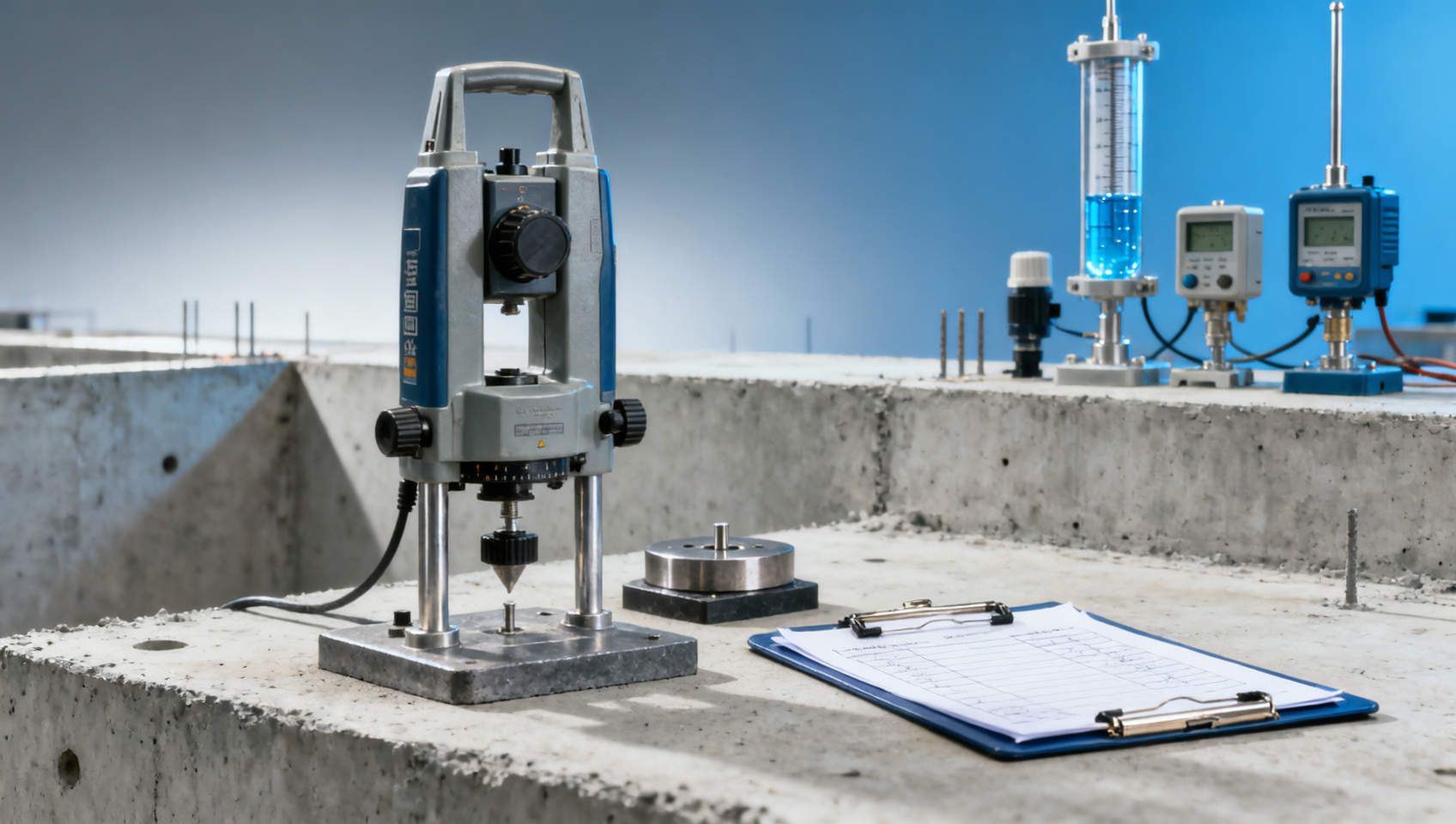
Concrete test hammer accuracy directly affects confidence in on-site concrete strength checks, making proper use, calibration, and interpretation essential for engineers, operators, and buyers. In modern industrial projects, the concrete test hammer works alongside instruments such as ultrasonic level gauge, temperature transmitters, and industrial level sensors, where measurement reliability drives safety, compliance, and procurement decisions.
Why concrete test hammer accuracy matters in industrial decision-making
A concrete test hammer is often treated as a quick field tool, but its reading influences far more than a simple inspection note. On industrial sites, rebound values may affect repair planning, acceptance checks, maintenance scheduling, and even whether a structural area moves to the next construction phase within 24–72 hours. When accuracy is weak, the cost is not limited to retesting. It can trigger wrong procurement quantities, delayed handover, and unnecessary destructive core sampling.
For information researchers, the key issue is interpretation: a concrete test hammer does not directly measure compressive strength. It estimates surface hardness and correlates it to probable strength under defined conditions. For operators, the challenge is repeatability across 10–12 impact points, orientation angles, and surface preparation. For procurement teams, the question becomes whether the selected hammer can maintain stable readings over repeated use cycles and practical calibration intervals.
In heavy industry, measurement tools are rarely evaluated in isolation. EPC contractors and facility managers compare the concrete test hammer with adjacent inspection methods, just as they compare industrial level sensors with process transmitters or verify temperature transmitters against calibration tolerances. The same rule applies: field speed is valuable only when supported by documented accuracy, consistent operation, and traceable verification.
Global Industrial Core supports this decision process by connecting product understanding with procurement logic. Instead of stopping at a generic definition, buyers need to know how a hammer performs in variable site temperatures, rough or carbonated surfaces, and mixed-age concrete. That is where practical accuracy guidance becomes more useful than product-only descriptions.
What accuracy really means in field use
In practice, accuracy has three layers. First is mechanical consistency of the hammer itself. Second is operator consistency in test angle, spacing, and impact count. Third is correlation quality between rebound number and concrete strength for the target mix and curing condition. A tool may be mechanically stable yet still produce misleading conclusions if the testing surface is wet, cracked, highly textured, or carbonated.
- Mechanical consistency: stable impact energy, smooth plunger movement, and low drift between calibration checks.
- Operational consistency: correct angle correction, proper spacing, and removal of outlier impacts from each test area.
- Correlation consistency: appropriate conversion chart or local strength curve for the concrete type being evaluated.
If one of these three layers fails, the reported strength estimate may appear precise while still being unreliable. That is why experienced buyers rarely ask only for the nominal model. They ask how the supplier supports calibration, operator guidance, and method selection over the full service cycle.
What affects concrete test hammer accuracy on real job sites?
Field conditions are the main reason why two teams can test the same structure and get materially different rebound numbers. The most common variables include concrete age, moisture condition, surface smoothness, carbonation depth, aggregate hardness, and test orientation. In many industrial environments, shift pressure pushes crews to complete inspections fast, but skipping surface preparation or angle correction can distort results more than expected.
A practical rule is to view the hammer as a screening and comparison tool first, not as a replacement for every compressive strength test. It performs best when used on sound, clean, and reasonably smooth concrete, with multiple impacts across a defined area. Many teams use 9–16 impacts per zone, discard clear outliers, and then average the remaining readings. This approach improves consistency and reduces the influence of one bad strike.
Environmental and workflow factors also matter. A hammer stored in poor conditions, used continuously without routine checks, or handled by multiple crews with different habits will show larger reading variation. In high-throughput projects, a weekly function check and a formal calibration at planned intervals are often more cost-effective than waiting for disputed results after inspections are complete.
The table below summarizes the most common site variables that influence concrete test hammer accuracy and what users should do before accepting readings as decision-grade data.
For procurement and QA teams, this table shows why accuracy claims should never be read as a stand-alone marketing line. A concrete test hammer can perform well only when the site method is controlled. That is why purchasing decisions should include training support, calibration workflow, and method documentation, not just unit price.
4 site habits that improve repeatability
- Prepare the surface before testing. Remove loose laitance, paint, dust, or weak surface debris so the plunger contacts a representative area.
- Use a fixed impact count per zone. Many teams standardize around 10–12 valid readings to reduce operator variation across shifts.
- Track environmental context. Note whether the concrete is wet, sun-exposed, recently cast, or part of an aging structure.
- Separate screening from acceptance. If readings affect structural acceptance, combine hammer data with more rigorous confirmation methods.
These habits are simple, but on large sites they often determine whether a concrete test hammer becomes a trusted field instrument or a source of repeated disputes between contractors, consultants, and owners.
How to compare models, calibration needs, and procurement value
Procurement teams usually face a three-way tradeoff: budget, traceability, and field usability. A lower-cost hammer may appear suitable for occasional inspection, but if it lacks clear calibration support or robust service documentation, the total cost can rise over 6–12 months through downtime, disputed readings, and replacement cycles. For frequent use in EPC, plant maintenance, or third-party inspection, lifecycle value matters more than initial purchase price.
When comparing options, decision-makers should ask five practical questions. Is the impact mechanism stable over repeated use? How easy is daily verification? Are calibration intervals clearly defined? Is the reading format suitable for field records and reporting? Can the supplier support compliance documentation needed for internal QA or project audits? These questions align more closely with operational risk than headline specifications alone.
The comparison table below is designed for buyers who must evaluate concrete test hammer options across use intensity, service support, and reporting requirements. It does not rank brands. Instead, it organizes the decision criteria that influence measurable value in industrial settings.
The most cost-effective procurement often sits in the middle: not the cheapest tool, and not the most complex package for every use case. If your team tests a few structures per quarter, a straightforward model with reliable verification may be enough. If your organization runs multiple projects or plant assessments every month, documented calibration and reporting capability quickly become high-value features.
Which buyers should prioritize which criteria?
For operators and site supervisors
Focus on ease of handling, consistent rebound action, readable scales, and clear angle-use guidance. If a tool is awkward in confined areas or on vertical surfaces, data quality will suffer regardless of its catalog claims.
For procurement personnel
Focus on delivery lead time, spare part availability, calibration route, warranty terms, and whether the supplier can support pre-purchase technical confirmation within 3–7 working days.
For decision-makers
Focus on risk reduction. Ask how the selected concrete test hammer fits the wider quality workflow, especially where readings may trigger repair scope, contractor claims, or acceptance decisions with financial impact.
How to use a concrete test hammer more accurately: workflow, compliance, and cross-checking
Better accuracy starts with a repeatable workflow. On many sites, the biggest improvement comes not from changing the tool, but from standardizing how it is used. A practical sequence includes surface review, point marking, test execution, outlier removal, average calculation, and result interpretation against the appropriate correlation basis. In projects with tight handover windows, a disciplined 4-step process can reduce rework more effectively than rushing through extra test areas.
Users should also understand method limits. Rebound hammer data is non-destructive and fast, but it is not universally sufficient for every acceptance decision. Where structural criticality is high, or where old concrete shows carbonation or repair overlays, it is prudent to combine rebound testing with complementary methods. This is similar to how industrial plants do not rely on a single level sensor where process risk is high; they use layered verification.
Common industry practice references recognized testing standards and internal QA procedures, even when the exact project method varies. Buyers should confirm whether the selected tool can be integrated into their documentation system, whether calibration records can be retained through annual audits, and whether operating instructions are clear enough for multilingual site teams. A tool that is technically acceptable but operationally unclear often causes avoidable measurement drift.
The following checklist is useful for contractors, plant engineers, and third-party inspectors who need a practical way to improve concrete test hammer accuracy without slowing productivity.
- Check the hammer condition before each shift or testing session, especially if the tool has been transported between sites.
- Use a consistent number of impacts in each test area and keep spacing sufficient to avoid interference from adjacent marks.
- Document orientation, surface condition, age class if known, and any visible cracking or repair layers.
- Remove obvious outliers rather than averaging every strike without judgment.
- Escalate to complementary testing when the result may influence acceptance, rehabilitation scope, or structural safety review.
A realistic calibration strategy depends on usage intensity. A hammer used occasionally for internal screening may follow a lighter service schedule, while a unit used weekly or across multiple crews should be checked more frequently. Procurement teams should ask not only when calibration is due, but how long service turnaround typically takes, whether it is 5–10 working days or longer, and what backup plan exists during that period.
When should hammer results be cross-checked?
Cross-checking is advisable when rebound values are inconsistent across adjacent zones, when the structure is old and potentially carbonated, when surfaces are coated or repaired, or when readings will directly affect contractual acceptance. In such cases, relying on the concrete test hammer alone may create unnecessary dispute risk. A layered inspection decision is usually more defensible for both owner and contractor.
Common mistakes, FAQs, and what to ask before buying
Many field issues come from simple misunderstandings. Teams assume a high rebound number always means high structural strength. Buyers assume all hammers are interchangeable. Managers assume a calibration certificate alone guarantees reliable field results. None of these assumptions is safe. A concrete test hammer is useful because it is fast and practical, but its value depends on method discipline and correct interpretation.
To make this more actionable, the FAQ section below addresses questions that often appear during research, specification writing, and supplier comparison. These questions are especially relevant when a company is building a broader inspection toolkit that also includes process measurement devices, environmental monitors, and plant instrumentation.
How accurate is a concrete test hammer compared with core testing?
It is generally less direct than core testing because it estimates surface hardness rather than measuring compressive strength from extracted material. It is best used for rapid screening, comparative mapping, and trend observation across multiple areas. If the result will determine structural acceptance or major repair scope, a cross-check method is usually advisable.
How often should a concrete test hammer be calibrated?
There is no single interval suitable for every user. A practical schedule depends on use frequency, transport conditions, and internal QA requirements. For regularly used industrial tools, many organizations combine routine function checks with periodic formal calibration, often reviewed every 6–12 months or according to project procedure.
What should buyers check before placing an order?
Confirm the intended concrete age range, expected test frequency, calibration support, documentation format, operator training needs, and service lead time. Also ask whether the supplier can support application guidance for vertical, overhead, or moisture-affected testing areas. These details matter more than a generic “inspection use” label.
Is a lower-cost model suitable for industrial projects?
Sometimes yes, especially for low-frequency internal checks. However, if your team needs traceable records, repeated calibration, or consistent use across multiple crews, the cheaper option can become more expensive over time through retesting, service gaps, and reduced confidence in results.
Can one hammer support all concrete inspection scenarios?
Not always. Different structures, ages, finishes, and risk levels may require different workflows or supplementary methods. A concrete test hammer is valuable as part of a broader inspection strategy, not as a universal substitute for all strength verification tasks.
Why work with Global Industrial Core for sourcing and technical evaluation
For industrial buyers, the challenge is rarely just finding a concrete test hammer. The challenge is confirming whether the selected tool fits the operational environment, inspection frequency, documentation requirements, and wider measurement ecosystem. Global Industrial Core helps bridge this gap by translating technical specifications into sourcing decisions that are practical for EPC contractors, facility managers, and industrial procurement directors.
Our value is strongest when a project team needs more than a catalog description. We help clarify parameter confirmation, model suitability, calibration expectations, compliance documentation, and how a concrete test hammer should be evaluated alongside other measurement instruments used on industrial sites. This is especially important when procurement must balance delivery pressure, budget limits, and audit-ready technical records.
If you are comparing options now, you can contact Global Industrial Core for support on 6 key topics: application matching, usage frequency assessment, calibration planning, delivery cycle expectations, documentation review, and quotation alignment. For many projects, resolving these points before purchase shortens approval time and reduces downstream rework.
Reach out when you need concrete test hammer parameter confirmation, product selection guidance, expected delivery lead time, sample or evaluation support, certification-related document review, or a sourcing discussion tied to your broader industrial inspection workflow. A focused technical conversation at the start usually saves more time and cost than correcting the wrong choice after deployment.
Expert Insights

Chief Security Architect
Dr. Thorne specializes in the intersection of structural engineering and digital resilience. He has advised three G7 governments on industrial infrastructure security.
Related Analysis
Core Sector // 01
Security & Safety
- How to Choose a Total Station in 2026Author :Precision Metrology Expert

- Auto Level Instruments vs Rotary LasersAuthor :Precision Metrology Expert

- GNSS RTK Receiver: Who Needs ItAuthor :Precision Metrology Expert

- Wholesale Moisture Meters Buying GuideAuthor :Precision Metrology Expert

- Wood Moisture Tester for Daily ChecksAuthor :Precision Metrology Expert

- Concrete Test Hammer Accuracy TipsAuthor :Precision Metrology Expert

- Anemometers Wholesale for Field WorkAuthor :Precision Metrology Expert

- Lux Meters Bulk Buying MistakesAuthor :Precision Metrology Expert