How to Choose a Total Station in 2026
Author
Date Published
Reading Time
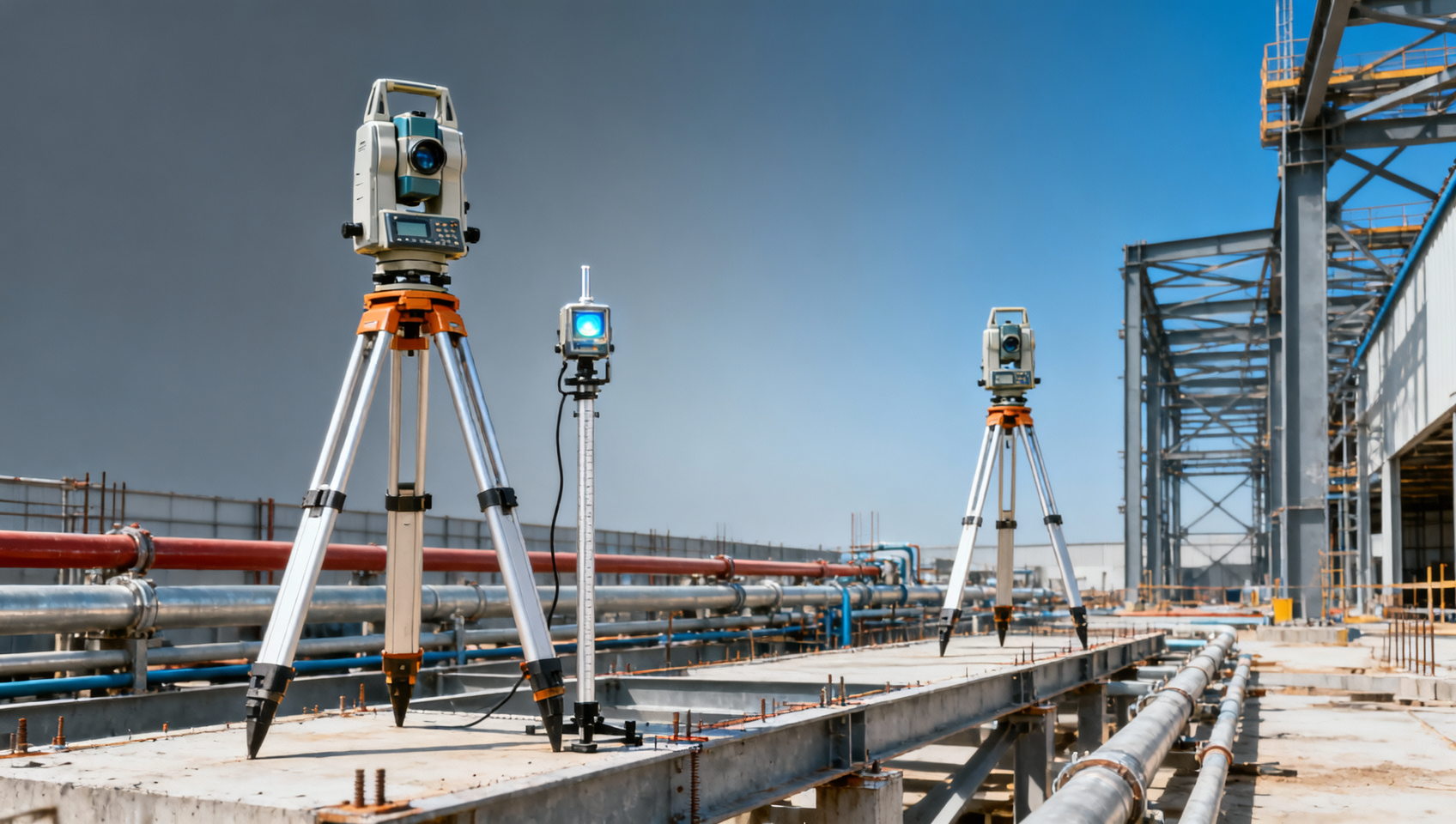
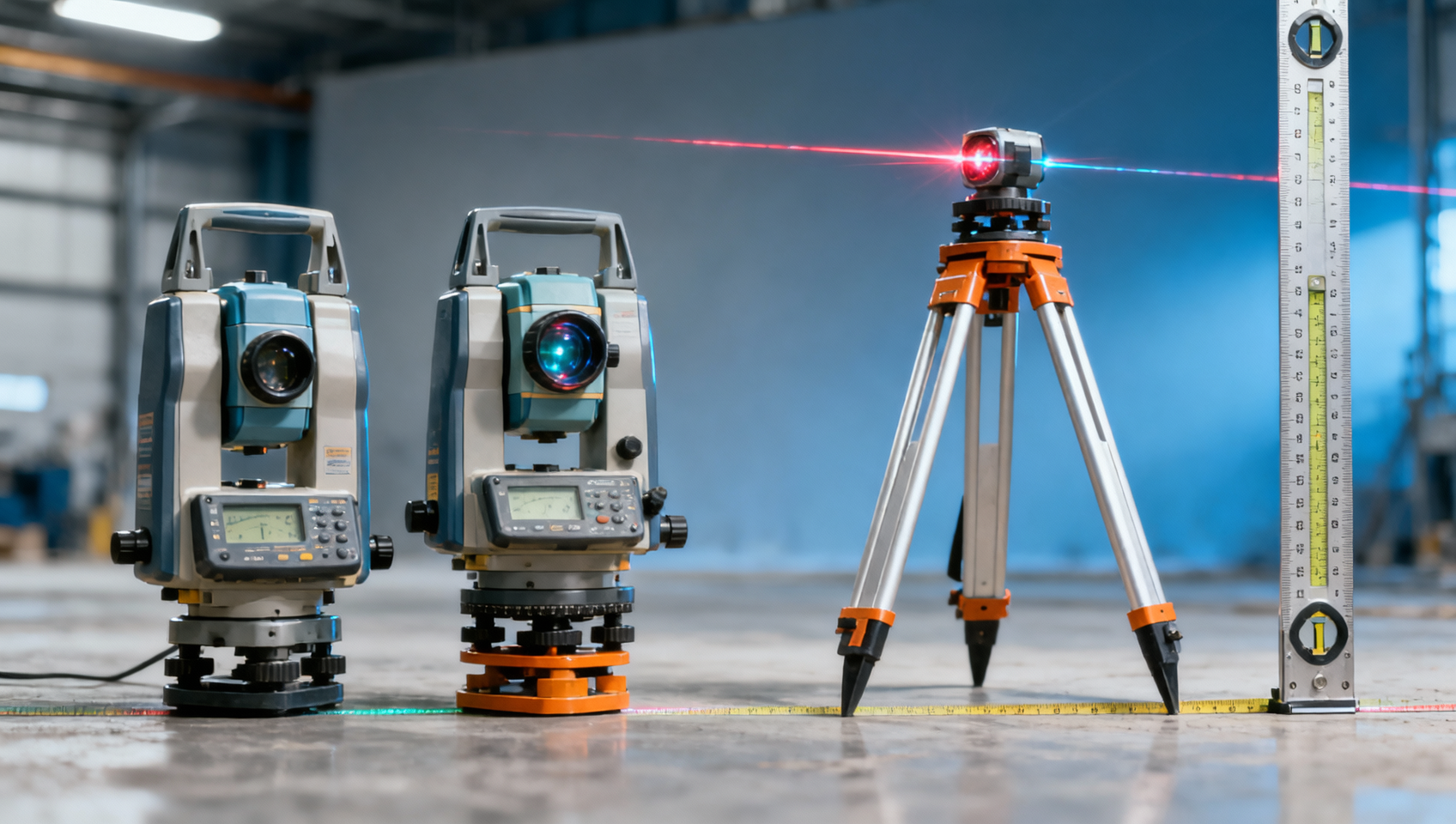
Choosing the right total station surveying solution in 2026 means balancing accuracy, durability, workflow compatibility, and budget. For buyers comparing a total station with a gnss rtk receiver, auto level instruments, rotary laser levels, and laser distance meters wholesale options, the decision goes far beyond specs alone. This guide helps researchers, operators, procurement teams, and decision-makers evaluate the features, applications, and long-term value that matter most.
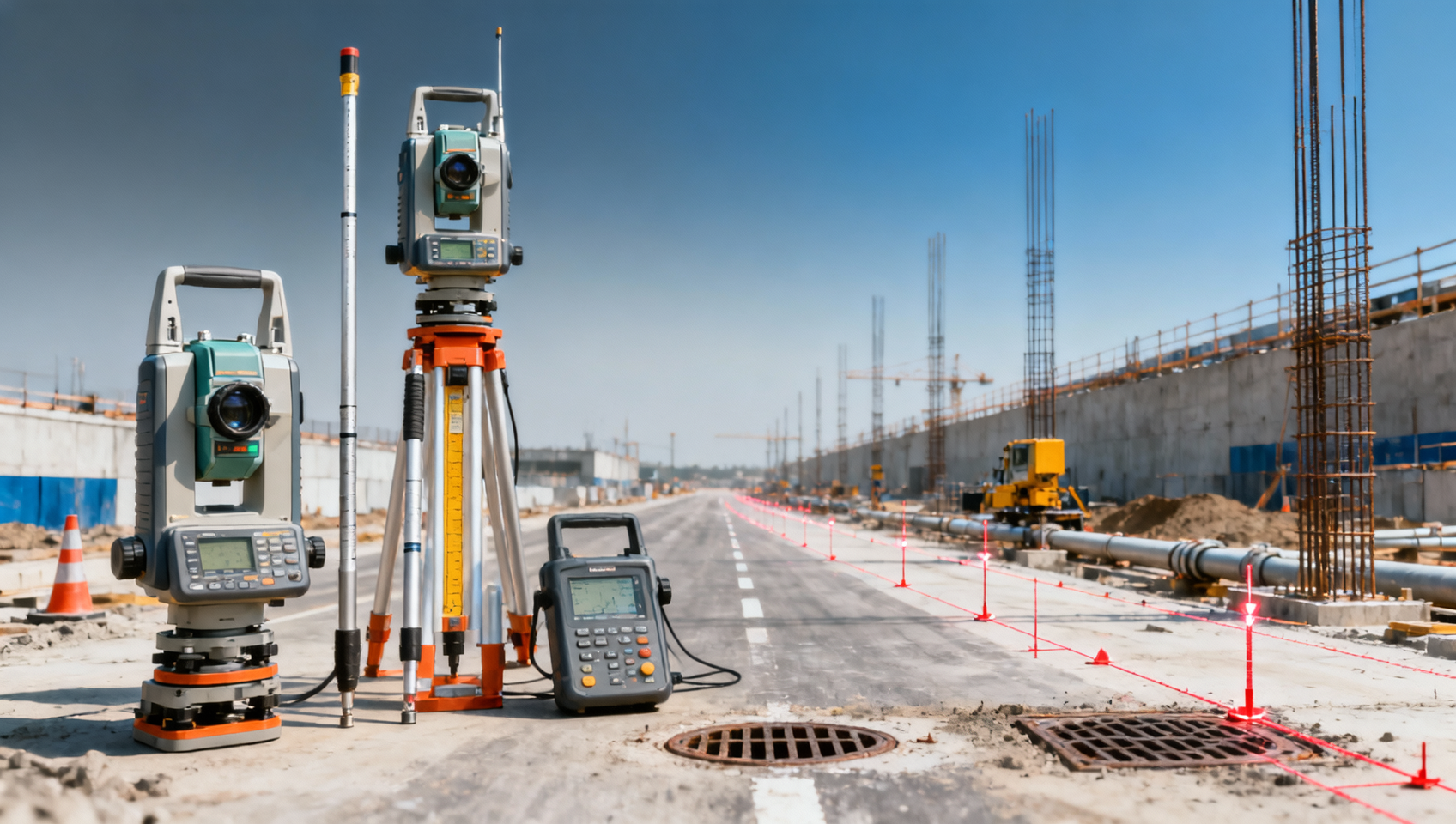
In industrial construction, plant expansion, utility installation, and infrastructure maintenance, a total station is often the measurement backbone between design intent and field execution. A poor fit can create rework, slow crews, introduce layout errors, and increase lifecycle cost over 3–7 years. A well-matched system improves survey speed, supports traceable data capture, and reduces coordination friction across engineering, operations, and procurement teams.
The 2026 buying landscape is also different from just a few years ago. Buyers now expect stronger software interoperability, faster data transfer, better battery efficiency, and practical resistance to dust, vibration, rain, and temperature swings from -20°C to 50°C. That means selection should cover not only angle accuracy and range, but also service response, training needs, accessory availability, and the actual jobsite conditions the instrument will face.
Understand Where a Total Station Fits in the 2026 Surveying Stack
A total station combines electronic angle measurement, distance measurement, and onboard computing in one field-ready instrument. It is especially valuable where line-of-sight measurement, precise staking, topographic capture, and construction layout are required. In many industrial settings, it remains the preferred tool for structural grids, equipment foundations, steel alignment, and as-built verification where tolerances may fall within ±1 mm to ±5 mm depending on the task.
However, not every project needs a total station as the primary tool. A GNSS RTK receiver is often faster for open-sky site control over large areas, while auto level instruments remain cost-effective for elevation transfer and basic leveling tasks. Rotary laser levels can speed up interior or simple grading work, and laser distance meters are useful for rapid checks, facility measurements, and lower-cost volume procurement.
The key is to identify whether your workflow depends on precision optical measurements, obstacle-heavy environments, or repeatable layout tied to engineering coordinates. In congested plants, tunnels, bridges, refineries, and urban utility corridors, a total station often outperforms satellite-based tools because signal blockage and multipath interference limit GNSS efficiency. In contrast, greenfield earthworks may favor GNSS for productivity over very long baselines.
Typical use cases by buyer type
- Researchers and technical evaluators compare accuracy classes, data formats, and field software compatibility.
- Operators focus on setup speed, interface simplicity, battery endurance of 8–16 hours, and visibility in bright daylight.
- Procurement teams assess total cost of ownership, spare parts lead times, warranty terms, and calibration intervals.
- Decision-makers care about deployment across multiple crews, training efficiency, and measurable reduction in rework risk.
The comparison below helps clarify when a total station should be prioritized over adjacent measurement tools. This is useful for mixed fleets where organizations need to standardize equipment for 2–5 field teams without overbuying capability.
For most industrial buyers, the conclusion is not that one tool replaces all others. Instead, the best strategy is to define the total station as either the primary precision instrument or part of a complementary measurement stack. That distinction has a direct impact on configuration, training, and budget planning.
Core Specifications That Matter More Than Marketing Claims
When comparing models in 2026, start with the specifications that change field outcomes. Angle accuracy, EDM range, reflectorless capability, compensator stability, onboard memory, and communication options usually matter more than broad promotional language. For high-precision construction layout, common angle accuracy tiers include 1", 2", 3", and 5". The tighter the tolerance chain on your project, the more carefully this must be matched to the application.
Distance performance should also be read in context. A reflectorless range of 300–1,000 meters may look attractive, but actual performance depends on surface reflectivity, ambient light, dust, and heat shimmer. Industrial users should confirm realistic working distances for concrete, painted steel, and dark surfaces, not just ideal test conditions. Prism range may extend several kilometers, but many plant and building jobs do not need that extreme envelope.
Durability is another priority. For heavy industry, an enclosure rating such as IP65 or IP66 is often a practical minimum where moisture, windblown dust, and splash exposure are expected. If crews work on infrastructure or mining-adjacent sites, resistance to shock, vibration, and frequent transport matters almost as much as precision itself. An instrument that requires frequent recalibration after handling events can erode productivity quickly.
Specifications to review before issuing an RFQ
- Angle accuracy matched to task tolerance, such as 1"–3" for precision layout and 5" for general construction surveying.
- Reflectorless and prism distance ranges under realistic site conditions.
- Battery runtime per shift, ideally supporting at least 8 hours and preferably a full 10–12 hour day with spare batteries.
- Ingress protection, operating temperature, and display readability for outdoor use.
- Data export compatibility with CAD, BIM, GIS, or field controller software already used by your teams.
- Calibration, service turnaround, and local support availability within 48–72 hours for critical operations.
The table below summarizes how buyers can translate headline specifications into procurement decisions. This is especially useful when evaluating multiple quotations that look similar on paper but differ in field practicality.
A common mistake is overbuying maximum range while underbuying usability. If operators struggle with the interface, file transfer, or calibration workflow, the theoretical performance advantage may never be realized. In many industrial deployments, stable repeatability and team adoption matter more than top-end lab specifications.
Match the Instrument to Jobsite Conditions, Crew Skills, and Workflow
The best total station is the one that fits the way work is actually performed. That means evaluating site geometry, line-of-sight constraints, crew experience, and how survey data moves into downstream systems. A refinery turnaround, a warehouse expansion, and a power distribution upgrade may all require a total station, but the optimal configuration can differ significantly. One may need faster reflectorless shots in tight spaces, while another may require stronger integration with design files and stakeout routines.
Crew capability is often underestimated in equipment selection. A highly advanced robotic setup can reduce labor in some environments, but it may add complexity if teams are not trained to use automation consistently. For organizations with 1–2 experienced surveyors and several general field technicians, a simpler and durable manual or motorized configuration may produce better results than a feature-rich system with steep learning demands.
Workflow compatibility is equally important. If your engineering team exports coordinates from CAD or BIM models, the field instrument should import common formats without time-consuming conversion. If your facility team needs daily as-built checks, then quick data upload through USB, Bluetooth, Wi-Fi, or cloud-linked controllers can save 20–40 minutes per shift. Over a year, that efficiency gain becomes meaningful.
Questions to ask before selection
Field environment
Will the instrument operate mostly outdoors, indoors, or across both? Does the site include reflective steel, vibration, restricted access zones, or poor weather exposure for 4–6 months each year? These factors influence EDM reliability, tripod stability, and enclosure requirements.
Team structure
Will one operator handle setup and measurement, or will two-person crews rotate across shifts? If the workforce includes mixed skill levels, prioritize interface clarity, guided workflows, and repeatable setup checks. The cost of one extra training day can be far lower than the cost of layout errors on structural or mechanical installation work.
Data path
Map the full flow from design file to field measurement to final report. If the total station cannot exchange data efficiently with existing project software, manual re-entry can introduce avoidable errors. For industrial users, traceability and document control are often as important as measurement speed.
A practical selection framework is shown below. It helps buyers align the total station choice with operational realities rather than spec sheet comparison alone.
This type of matching process reduces the chance of buying an instrument that looks capable but performs poorly in your actual operating context. It also helps procurement teams justify the choice internally using operational criteria, not just price.
Procurement Criteria: Cost, Support, Calibration, and Lifecycle Risk
For B2B buyers, the purchase price is only the starting point. The real decision should consider total cost of ownership over at least 36–60 months. That includes accessories, software licenses if applicable, annual calibration, downtime risk, training, replacement batteries, data collectors, tribrachs, prisms, and transportation cases. A lower upfront quote can become the more expensive option if service delays keep crews waiting or if parts are difficult to source.
Calibration and service support deserve special attention. Many organizations set verification intervals at 6 or 12 months depending on usage intensity, transport frequency, and project criticality. If the instrument supports utility layout, structural alignment, or machine base installation, a documented maintenance and calibration plan is not optional. Buyers should ask about service turnaround time, loaner unit availability, and where the nearest qualified service point is located.
Commercial terms also affect risk. Lead times for standard packages may range from 7–21 days, while custom kits, specialty prisms, or bundled software may extend delivery to 3–6 weeks. If your project mobilization is near-term, confirm not just product availability but also accessory completeness, firmware readiness, and commissioning support. Partial deliveries can delay site deployment more than buyers expect.
A practical procurement checklist
- Confirm the included package: instrument, batteries, charger, data cable, prism set, tripod, tribrach, case, and field software tools.
- Request calibration documentation and understand the recommended verification interval.
- Check warranty scope, exclusions for accidental damage, and whether local repair is available.
- Ask for operator training options, either onsite, remote, or hybrid, typically ranging from 2 hours to 2 days.
- Review spare availability for consumables and wear-prone items with realistic replenishment timelines.
Buyers should also assess supply continuity. If the organization plans to deploy 3, 10, or 20 units over time, consistency of firmware, accessories, and support matters. Standardizing on a manageable platform can simplify training, reduce operator error, and strengthen internal measurement governance across sites.
In 2026, another procurement trend is stronger scrutiny on interoperability. Even when a total station is purchased for one project, many enterprise buyers now evaluate whether it can be reused across civil, mechanical, utility, and facility maintenance workflows. That broader utility improves asset utilization and shortens payback time.
Common Buying Mistakes, Implementation Risks, and How to Avoid Them
One of the most common mistakes is choosing based only on nominal accuracy. Precision is critical, but it is not the only determinant of success. If the instrument is too complex for the crew, too fragile for transport conditions, or poorly matched to the site layout, the expected accuracy may never be achieved in practice. Field discipline, setup repeatability, and workflow consistency matter just as much.
Another frequent issue is underestimating deployment readiness. A total station may arrive on time, yet still be unusable if the correct prism constants, coordinate system settings, file templates, and training steps are not prepared. For industrial projects with tight shutdown windows or commissioning schedules, even a 1-day delay can affect multiple contractors and sequencing activities.
The third risk is fragmented measurement strategy. Some organizations buy a total station, GNSS RTK receiver, auto level instruments, rotary laser levels, and laser distance meters wholesale from different channels without aligning data conventions, accessories, or maintenance procedures. The result is inconsistent workflows, more operator confusion, and weaker traceability in reporting.
Risk-control steps before field deployment
- Run a pre-deployment verification on known control points before the first live job.
- Standardize naming rules, coordinate systems, prism settings, and export formats across crews.
- Document a 5-step setup routine covering tripod stability, leveling, backsight check, target verification, and data save protocol.
- Keep at least 1 spare battery set and critical accessories ready for each active crew.
- Schedule periodic performance checks after transport shocks, heavy weather exposure, or long shutdown intervals.
How long does implementation usually take?
For a single crew with basic layout tasks, implementation can be completed in 1–3 days if templates and control data are ready. For multi-site organizations integrating field procedures, software templates, and internal training, a more realistic onboarding window is 1–3 weeks.
When should buyers consider alternatives?
If most work occurs in wide open terrain with low obstruction and speed matters more than optical line-of-sight precision, a GNSS RTK receiver may be the better primary investment. If the need is limited to elevation transfer or interior reference lines, auto level instruments or rotary laser levels may deliver a better cost-to-use ratio.
The strongest buying decision usually comes from defining a measurement ecosystem instead of treating each device as an isolated purchase. That approach helps enterprises reduce handoff errors and ensures the total station delivers value long after the initial project closes.
How to Build a Smarter 2026 Selection Process
A strong selection process starts with a short list of application requirements rather than vendor brochures. Document the top 4–6 use cases, the target tolerance band, the expected environmental conditions, and the digital systems the instrument must support. Then compare suppliers against those priorities using a weighted evaluation model. This avoids the common trap of paying for features that will see little real-world use.
It is also wise to involve multiple stakeholders early. Operators can identify usability issues, engineers can confirm data compatibility, procurement can review lifecycle cost, and leadership can evaluate deployment scale. For industrial organizations, this cross-functional review often shortens the approval cycle because technical and commercial questions are resolved before the purchase order stage.
Where possible, request a practical evaluation using your own workflow. A short field demonstration on representative surfaces and distances can reveal more in 30–60 minutes than several pages of specifications. Test setup speed, target acquisition, export routine, screen visibility, and battery handling. This is especially important when comparing a total station against alternative measurement tools in a broader instrumentation strategy.
Recommended 5-step selection model
- Define the main application mix: layout, as-built, control, monitoring, or utility staking.
- Set minimum thresholds for accuracy, environmental protection, runtime, and file compatibility.
- Evaluate full package cost over 3–5 years, not just the base instrument quote.
- Verify support readiness including calibration, training, and spare accessibility.
- Run a pilot or demonstration before finalizing multi-unit procurement.
For organizations sourcing across multiple industrial categories, the right choice is rarely the cheapest or the most advanced on paper. It is the system that consistently supports field accuracy, crew adoption, asset longevity, and reliable reporting. That is the real definition of value in 2026.
If your team is comparing total station options alongside GNSS RTK receiver solutions, auto level instruments, rotary laser levels, and laser distance meters wholesale supply routes, a structured evaluation can reduce procurement risk and improve long-term equipment utilization. To discuss application fit, technical criteria, or a tailored sourcing plan, contact us to get a customized solution and explore more industrial measurement options.
Expert Insights

Chief Security Architect
Dr. Thorne specializes in the intersection of structural engineering and digital resilience. He has advised three G7 governments on industrial infrastructure security.
Related Analysis
Core Sector // 01
Security & Safety
- How to Choose a Total Station in 2026Author :Precision Metrology Expert

- Auto Level Instruments vs Rotary LasersAuthor :Precision Metrology Expert

- GNSS RTK Receiver: Who Needs ItAuthor :Precision Metrology Expert

- Wholesale Moisture Meters Buying GuideAuthor :Precision Metrology Expert

- Wood Moisture Tester for Daily ChecksAuthor :Precision Metrology Expert

- Concrete Test Hammer Accuracy TipsAuthor :Precision Metrology Expert

- Anemometers Wholesale for Field WorkAuthor :Precision Metrology Expert

- Lux Meters Bulk Buying MistakesAuthor :Precision Metrology Expert