Automotive Diagnostic Scanner Buying Tips
Author
Date Published
Reading Time
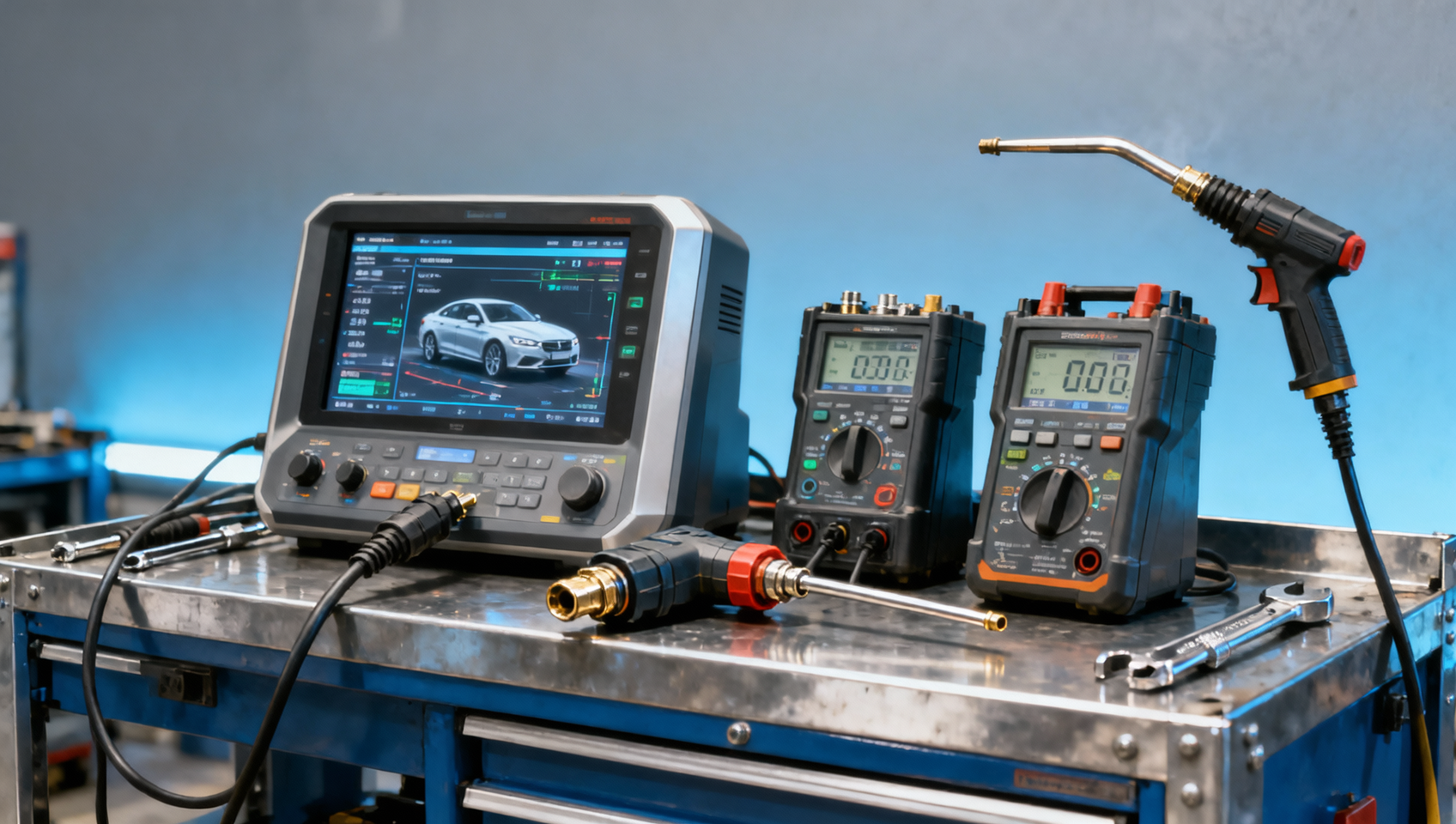
Choosing an automotive diagnostic scanner is not just about picking the tool with the longest feature list. For most buyers, the real question is simpler: will it accurately cover the vehicles you service, help technicians work faster, and remain useful after purchase through stable software updates and dependable support? For workshop operators, procurement teams, and business decision-makers, the best choice is usually the scanner that matches actual diagnostic workflows, not the one with the most marketing claims.
In practice, a good buying decision comes down to five things: vehicle coverage, diagnostic depth, update policy, ease of use, and total cost of ownership. If you are also comparing related tools such as a battery tester, obd2 code reader, or emission gas analyzer, the same principle applies: buy for real operating requirements, compliance needs, and long-term service value.
Start with the most important question: what do you need the scanner to do every day?
Before comparing brands or prices, define the scanner’s actual job in your operation. This step is where many buying mistakes begin. A workshop handling routine maintenance, quick fault checks, and emissions-related issues does not need the same toolset as a repair center diagnosing advanced electronic systems, module coding problems, or mixed fleets across multiple manufacturers.
For most buyers, scanner requirements usually fall into one of these categories:
- Basic fault reading and clearing: suitable for general service bays, entry-level users, and quick inspections.
- Full-system diagnostics: needed when checking ABS, SRS, transmission, body systems, and other modules beyond engine faults.
- Service and maintenance functions: useful for oil reset, EPB, SAS, DPF regeneration, battery registration, injector coding, and other common workshop tasks.
- Advanced OEM-level functions: important for programming, module adaptation, bidirectional control, and deeper troubleshooting.
- Fleet and inspection support: relevant when fast, repeatable diagnostics are needed across many vehicles.
If your team only needs to retrieve codes and confirm readiness monitors, a dependable obd2 code reader may be enough. If technicians are expected to isolate intermittent faults, perform active tests, and support newer vehicle electronics, you need a more capable platform. Matching the tool to daily use prevents both underbuying and overbuying.
Vehicle coverage matters more than feature count
One of the biggest purchasing errors is assuming that “multi-brand” means “works well on everything.” In reality, vehicle coverage varies by region, model year, engine type, and system depth. A scanner may support hundreds of brands on paper but still offer limited access to the exact makes and functions your team needs.
Ask these questions before purchase:
- Which passenger cars, light commercial vehicles, or mixed fleets must be covered?
- What model years are most common in your market?
- Do you need support for domestic, European, Asian, or specialty vehicles?
- Does the scanner access only powertrain data or full systems?
- Are special functions available on the brands you service most often?
For procurement teams, it is smart to request a brand-and-model coverage list instead of relying on broad marketing language. For workshop managers, checking coverage against the top 20 vehicles seen each month often provides a more realistic buying framework than comparing generic specifications.
If your operation also handles battery diagnostics or emissions inspection workflows, scanner selection should align with adjacent equipment. A wholesale battery tester, for example, should support the battery technologies commonly seen in serviced vehicles, while an emission gas analyzer should match local testing methods and compliance requirements. The goal is a connected diagnostic workflow, not isolated tools that create process gaps.
Do not confuse code reading with real diagnostics
Many buyers focus on whether a tool can read and erase trouble codes. That is only the starting point. Real diagnostics require usable live data, graphing, freeze-frame analysis, active tests, and service functions that help technicians verify root causes instead of swapping parts unnecessarily.
When evaluating an automotive diagnostic scanner, pay close attention to diagnostic depth:
- Live data quality: Is the data fast, stable, and easy to interpret?
- Graphing and comparison: Can technicians compare multiple parameters in real time?
- Bidirectional control: Can the tool command actuators for testing?
- Module access: Does it communicate with all relevant onboard systems?
- Service functions: Are reset and calibration procedures practical and reliable?
- Diagnostic workflow support: Does the interface help users move efficiently from fault code to confirmation?
For operators and technicians, this directly affects productivity. For business owners and decision-makers, it affects labor efficiency, comeback rates, customer trust, and parts replacement costs. A scanner that saves time on every diagnosis often delivers better return than a cheaper tool with limited depth.
Software updates and support often determine long-term value
Automotive electronics evolve quickly. A scanner that performs well today may become less useful if software support is weak, updates are irregular, or subscriptions become too expensive. Long-term value depends heavily on update policy and after-sales support.
Evaluate the following carefully:
- Update frequency: How often are new vehicle models and functions added?
- Subscription structure: Is it one-time purchase, annual renewal, or modular licensing?
- Post-expiry usability: Will the scanner still work if updates are not renewed?
- Technical support: Is support fast, knowledgeable, and available in your region or language?
- Warranty and repair service: What happens if the device fails in the field?
This is especially important for procurement departments that need predictable lifecycle costs. A lower purchase price can become expensive if renewal fees, downtime, poor vendor response, or limited update support reduce real usability. In contrast, a scanner with transparent software maintenance and strong support may have a better total cost of ownership over several years.
Ease of use is not a small detail; it affects throughput and training costs
In busy service environments, user experience matters. A scanner with strong features but a confusing interface can slow diagnostics, increase training time, and cause inconsistent use across technicians. For operators, ease of use means faster work. For management, it means smoother onboarding and more standardized service quality.
Look for practical usability factors such as:
- Clear menu structure and logical navigation
- Fast boot time and stable wireless or wired connection
- Readable screen in workshop lighting conditions
- Simple report generation and data export
- Multi-language support if needed
- Portable design and durable casing for shop-floor use
If multiple technicians will use the same device, request a live demo or trial wherever possible. Real-world testing often reveals more than product brochures. A scanner that works smoothly in actual workshop conditions can improve tool adoption far more than one with a longer but harder-to-use feature list.
Think in systems: scanner, battery tester, and emissions tools should support the same workflow
Many buyers evaluate an automotive diagnostic scanner in isolation, but workshop efficiency improves when related diagnostic tools are selected as part of the same process. If your business handles charging system checks, battery health assessment, or emissions compliance testing, your purchasing strategy should reflect that broader workflow.
For example:
- A scanner identifies charging or starting system faults.
- A battery tester confirms battery condition, cranking performance, and charging behavior.
- An emission gas analyzer helps verify combustion performance and emissions-related repair results.
This integrated approach is useful for service centers, inspection lines, fleet maintenance teams, and procurement managers building a practical tool portfolio. Rather than chasing isolated features, buyers should ask whether the equipment set supports diagnosis, verification, documentation, and compliance in one efficient sequence.
For larger buyers or distributors, sourcing a wholesale battery tester alongside scanners may also improve procurement efficiency, standardization, and service consistency across locations.
How buyers should compare cost: look beyond purchase price
Price matters, but it should be evaluated in context. The cheapest scanner may increase labor time, limit vehicle coverage, or require early replacement. The most expensive scanner may include functions your team never uses. Better decisions come from comparing total value, not just invoice cost.
Use a cost framework like this:
- Initial purchase cost
- Annual software update fees
- Training time required
- Expected service life
- Downtime risk and support responsiveness
- Impact on technician efficiency
- Impact on repeat repairs or misdiagnosis
For enterprise decision-makers, this is where ROI becomes visible. If a better scanner cuts diagnosis time, improves first-time fix rates, and supports more service opportunities, the business case can be stronger even at a higher initial price point.
A practical checklist before you buy
To reduce purchase risk, buyers should validate key points before placing an order:
- List the top vehicle brands and model years you must support.
- Define whether you need basic OBD2, full-system diagnostics, or advanced service functions.
- Verify coverage using real model lists, not generic claims.
- Check software update terms, subscription cost, and post-expiry usability.
- Assess interface quality, speed, and training needs.
- Confirm local support, warranty terms, and repair turnaround.
- Compare total cost of ownership over two to five years.
- Consider whether a battery tester or emission gas analyzer should be sourced at the same time.
This checklist is especially useful for procurement teams balancing operational needs with budget control, and for workshop managers who must justify tool investment with practical results.
Conclusion
The best automotive diagnostic scanner is the one that fits your real service environment, supports the vehicles you actually handle, and continues delivering value after purchase through reliable updates and support. For technicians and operators, that means accurate diagnostics and easier workflows. For procurement teams and business leaders, it means lower risk, better utilization, and stronger long-term return.
Whether you are comparing an obd2 code reader, a more advanced automotive diagnostic scanner, a wholesale battery tester, or an emission gas analyzer, the smartest buying strategy is to prioritize compatibility, diagnostic usefulness, lifecycle cost, and workflow fit. When those factors align, the tool becomes more than a device purchase; it becomes a dependable part of service quality and operational efficiency.
Expert Insights

Chief Security Architect
Dr. Thorne specializes in the intersection of structural engineering and digital resilience. He has advised three G7 governments on industrial infrastructure security.
Related Analysis
Core Sector // 01
Security & Safety
- How to Choose a Total Station in 2026Author :Precision Metrology Expert

- Auto Level Instruments vs Rotary LasersAuthor :Precision Metrology Expert

- GNSS RTK Receiver: Who Needs ItAuthor :Precision Metrology Expert

- Wholesale Moisture Meters Buying GuideAuthor :Precision Metrology Expert

- Wood Moisture Tester for Daily ChecksAuthor :Precision Metrology Expert

- Concrete Test Hammer Accuracy TipsAuthor :Precision Metrology Expert

- Anemometers Wholesale for Field WorkAuthor :Precision Metrology Expert

- Lux Meters Bulk Buying MistakesAuthor :Precision Metrology Expert