Wholesale Battery Testers Worth It?
Author
Date Published
Reading Time
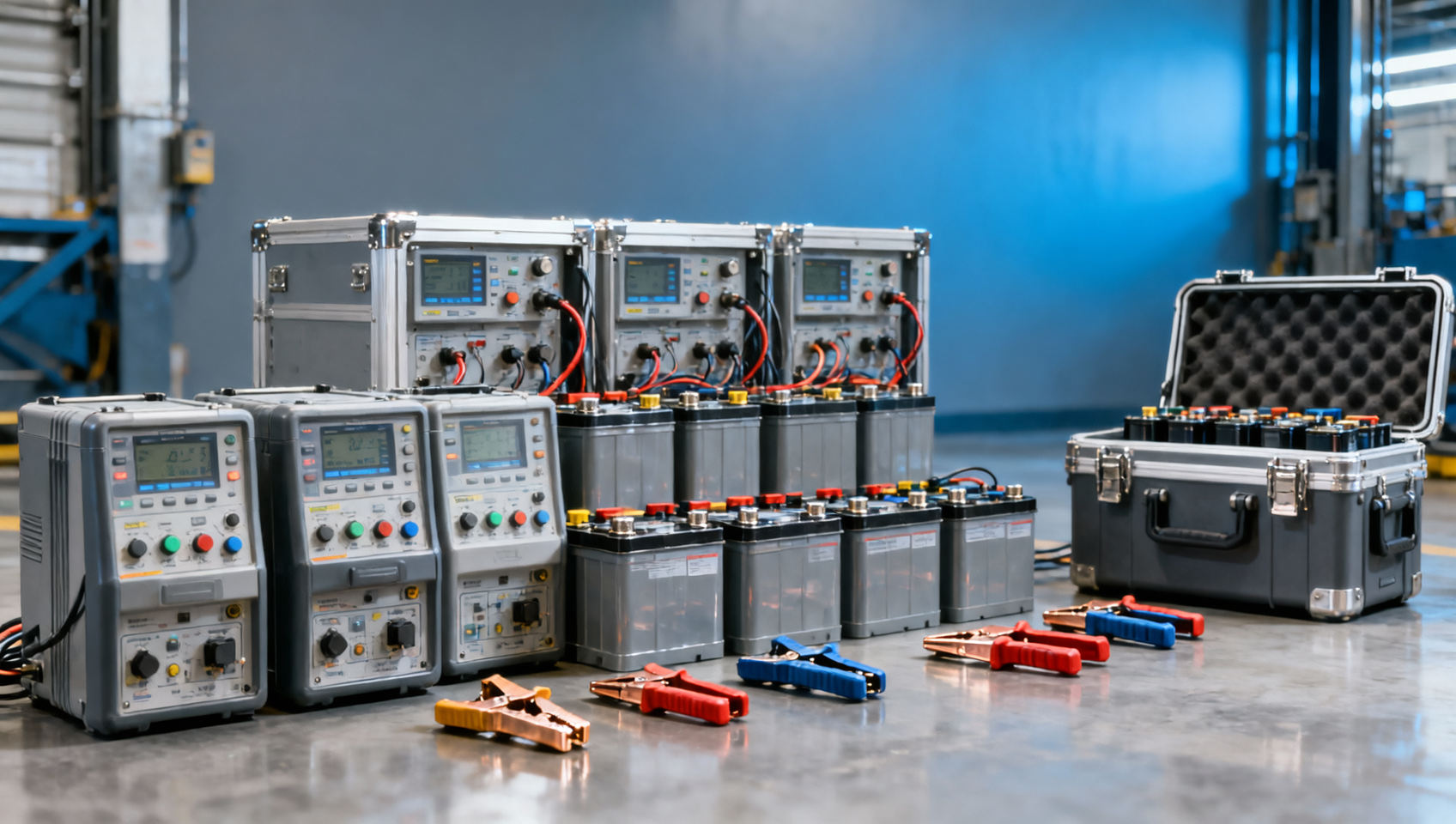
Are wholesale battery testers worth the investment for industrial buyers and technical teams? In most cases, yes—if your organization relies on batteries across fleets, backup systems, maintenance programs, or incoming quality control, buying at wholesale can deliver strong value. The catch is that the return does not come from unit price alone. It comes from measurement accuracy, reliability in the field, compliance, training fit, data visibility, and the ability to reduce failures, warranty claims, and unnecessary battery replacements. For buyers comparing automotive diagnostic scanner tools, obd2 code readers, load banks for testing, and broader Instruments & Measurement solutions, the real question is not simply whether wholesale battery testers are cheaper, but whether they improve decisions across the battery lifecycle.
For procurement teams, operators, and business decision-makers, the best approach is practical: define the use case, match the tester type to the battery chemistry and operating environment, verify standards and calibration support, and calculate total cost of ownership rather than just purchase price. When done correctly, wholesale battery testers can be a high-value sourcing decision. When done poorly, they become another low-cost tool that creates bad data and expensive mistakes.
Who should actually buy wholesale battery testers?
Wholesale battery testers make the most sense for organizations that use battery testing repeatedly across multiple sites, technicians, or asset classes. This includes industrial maintenance teams, automotive service networks, equipment rental fleets, warehouse operators, telecom backup power managers, UPS service providers, and procurement departments that standardize testing tools across branches.
If your team tests only a few batteries occasionally, wholesale purchasing may not be the best move. But if you are managing preventive maintenance schedules, incoming inspections, field service kits, or battery replacement programs, buying in volume can support standardization and lower operating costs. In these environments, one consistent testing platform often delivers more value than a collection of mismatched low-cost devices.
The core search intent behind this topic is usually commercial investigation with a procurement angle. Readers are trying to answer questions such as:
- Will wholesale battery testers reduce cost at scale?
- How do I know if the testers are accurate enough for industrial use?
- What features matter for technicians versus buyers?
- Are these tools better than relying on load banks for testing or general automotive diagnostic scanner tools?
- What risks come with sourcing from wholesale suppliers?
What value do wholesale battery testers actually deliver?
The biggest benefit is better decision quality at scale. A battery tester is not just a handheld device; it is a decision tool. If it helps your team identify weak batteries early, prevent downtime, avoid replacing healthy batteries, and document battery condition more consistently, it creates measurable operational value.
That value typically appears in five areas:
1. Lower per-unit acquisition cost
Buying wholesale usually reduces the price per tester, especially when equipping multiple technicians, facilities, or service teams. It can also lower accessory and logistics costs when probes, cases, printers, charging cables, or software licenses are bundled.
2. Standardized testing across teams
Standardization matters in industrial environments. If different locations use different testing methods, your maintenance records become inconsistent and purchasing decisions become harder to defend. Using the same battery tester model across the organization improves comparability and training efficiency.
3. Reduced misdiagnosis
Low-quality testers often produce unreliable readings, especially under real field conditions. Better wholesale battery testers can reduce false failures and false passes, which directly affects battery replacement spending and asset reliability.
4. Faster workflows for technicians
For service teams, a tester that delivers fast, repeatable results with minimal setup saves labor time. In high-volume environments, time savings across hundreds or thousands of tests can justify the investment quickly.
5. Better procurement control
From a sourcing perspective, buying through qualified wholesale channels can improve supply continuity, warranty management, spare availability, and documentation. That matters when battery testing is tied to regulated maintenance or operational uptime targets.
When are wholesale battery testers not worth it?
They are not automatically worth it in every situation. A low wholesale price can hide serious weaknesses. Industrial buyers should be cautious when:
- The tester does not support the battery chemistries you use, such as lead-acid, AGM, gel, lithium-ion, or deep-cycle systems.
- The supplier cannot provide calibration information, technical specifications, or traceable quality documentation.
- The devices are designed for light automotive use but are being pushed into industrial maintenance environments.
- The interface is too complex or too vague for field operators, leading to inconsistent test interpretation.
- There is no after-sales support, firmware update path, or replacement parts availability.
- The tool is marketed broadly alongside obd2 code readers or automotive diagnostic scanner tools, but lacks the robustness needed for dedicated battery analysis.
In short, wholesale battery testers are not worth it when they create bad data. Cheap testing devices that lead to incorrect battery decisions can cost far more than the savings from bulk purchase.
What should buyers compare before placing a bulk order?
This is where many purchasing decisions succeed or fail. Instead of focusing only on price, compare battery testers using a practical industrial evaluation framework.
Measurement capability
Check whether the tester measures voltage only, or if it also evaluates conductance, internal resistance, cold cranking performance, state of health, or charging system behavior. Different environments require different levels of diagnostic depth.
Battery compatibility
Make sure the tester matches your battery types and capacity ranges. A tool optimized for passenger vehicle batteries may not perform well for industrial standby banks, motive power batteries, or mixed fleet applications.
Accuracy and repeatability
Ask for performance data, test methodology, and consistency benchmarks. Repeatable results across users and locations are often more important than flashy feature lists.
Build quality and environment fit
For industrial users, look at enclosure strength, display readability, connector durability, ingress resistance, temperature tolerance, and drop resistance. Field tools should survive actual use, not just bench demonstrations.
Compliance and certification
For professional procurement, verify CE, UL where applicable, EMC performance, and any relevant quality certifications. If your internal quality team requires traceability or calibration workflows, confirm those before approval.
Data handling
Can the tester store results, export records, integrate with maintenance software, or generate reports? Data-ready testers can support trend analysis, warranty tracking, and compliance documentation.
Training burden
A tester can be technically impressive yet operationally ineffective if technicians struggle to use it correctly. User interface clarity, procedure guidance, and documentation quality matter.
Total support package
Check lead times, spare parts, accessory availability, warranty terms, technical support responsiveness, and supplier stability. Industrial sourcing decisions should not rely on product specs alone.
How do battery testers compare with load banks for testing?
Many industrial buyers also compare wholesale battery testers with load banks for testing. These tools are related, but they serve different purposes.
Battery testers are generally better for fast routine diagnostics, maintenance screening, and portable field use. They are efficient for checking battery condition across many assets without the heavier setup and time requirements of load testing.
Load banks for testing, by contrast, are often used for deeper performance validation under controlled load conditions. They are valuable in commissioning, acceptance testing, and critical power verification where actual load behavior must be observed.
For many organizations, this is not an either-or decision. A battery tester handles routine inspections and large-volume maintenance work, while a load bank is reserved for higher-stakes testing or verification events. If your team only needs quick field decisions, wholesale battery testers may offer much better operational efficiency. If your site must validate power system performance under realistic load, a tester alone may not be enough.
Do automotive diagnostic scanner tools or obd2 code readers replace battery testers?
Usually, no. Automotive diagnostic scanner tools and obd2 code readers are useful for reading fault codes, monitoring vehicle systems, and diagnosing charging-related issues through the vehicle interface. But they do not fully replace a dedicated battery tester.
An obd2 code reader may help identify alternator or charging system anomalies, but it typically does not provide the same direct battery health assessment as a purpose-built tester. For fleet managers and service operations, the best setup often combines both: diagnostic scan tools for system-level troubleshooting and battery testers for direct battery evaluation.
That distinction is important for procurement. If your sourcing plan assumes one tool can do everything, you may under-equip technicians and create process gaps. Dedicated battery testers still play a distinct role in preventive maintenance and battery replacement decisions.
How can procurement teams calculate ROI realistically?
To decide whether wholesale battery testers are worth it, procurement and operations teams should evaluate return on investment using real operational factors, not just the invoice price.
A practical ROI model should include:
- Reduction in unnecessary battery replacements
- Reduction in unplanned downtime caused by battery failure
- Labor time saved per inspection or service call
- Improved consistency across sites or technicians
- Lower emergency replacement and service dispatch costs
- Better incoming quality control for purchased batteries
- Fewer warranty disputes due to improved condition records
For example, if a maintenance team avoids replacing even a small percentage of healthy batteries due to more accurate testing, the savings can quickly exceed the cost difference between low-end tools and better wholesale battery testers. The same is true when earlier detection prevents a battery-related shutdown in a critical asset.
Decision-makers should also consider the cost of bad measurements. In industrial settings, one incorrect test result can trigger unnecessary part swaps, repeat service visits, production interruptions, or safety concerns. That is why the lowest-priced option is often the most expensive over time.
What sourcing risks should industrial buyers watch for?
Wholesale sourcing can be efficient, but it requires discipline. The main risks are not limited to counterfeit products. More often, the issue is specification mismatch or supplier overstatement.
Watch for these common problems:
- Specifications that are vague or copied from generic templates
- No clear explanation of testing method or supported battery standards
- Unverified claims about industrial durability
- Inconsistent model numbers or undocumented revisions
- Lack of calibration, inspection, or acceptance-test documentation
- Weak warranty terms for commercial use
- No local or regional support for returns and technical troubleshooting
Industrial buyers should request sample evaluation units when possible, run side-by-side validation against known references, and involve both end users and quality stakeholders before signing a large-volume agreement. A small pilot often reveals more than a polished product sheet.
What features matter most to technicians and operators?
While enterprise buyers often focus on pricing and supplier terms, users care about speed, clarity, and trust in the reading. If the tool is hard to use, adoption will suffer even if procurement negotiated a strong price.
Features operators typically value most include:
- Fast startup and quick test cycle time
- Clear pass/fail and health indicators
- Easy-to-attach clamps or probes
- Readable screen in low-light or outdoor conditions
- Rugged housing for mobile or field environments
- Simple navigation with minimal training burden
- Reliable performance across repeated daily use
If your workforce includes mixed-skill operators, simplicity can be a major value driver. A slightly more expensive tester that reduces user error may deliver better long-term economics than a feature-heavy model that confuses technicians.
What is the best buying strategy for organizations evaluating wholesale battery testers?
The strongest buying strategy is a cross-functional one. Procurement should not select wholesale battery testers in isolation. The best results usually come when sourcing, maintenance, quality, and operations teams define requirements together.
A practical buying process looks like this:
- List your battery types, voltage ranges, and use environments.
- Define the testing purpose: screening, preventive maintenance, diagnostics, incoming inspection, or compliance documentation.
- Shortlist suppliers that can provide technical documentation and commercial support.
- Validate sample units in real working conditions.
- Compare not only device price, but support, training, warranty, and data handling.
- Standardize procedures so results are comparable across teams.
- Review ROI after deployment using maintenance and replacement metrics.
This approach helps buyers avoid both extremes: overbuying sophisticated tools that are not needed, and underbuying cheap testers that cannot support industrial decision-making.
Final verdict: are wholesale battery testers worth it?
Yes, wholesale battery testers are often worth it for industrial organizations, fleet operators, service networks, and maintenance-driven businesses that depend on reliable battery assessment at scale. Their value is highest when they improve decision accuracy, reduce downtime risk, support standardization, and fit the realities of field use.
But they are only worth the investment when sourcing is disciplined. Buyers should look beyond unit cost and ask whether the tester is accurate enough, durable enough, supported enough, and simple enough to improve outcomes over time. For teams also evaluating automotive diagnostic scanner tools, obd2 code readers, and load banks for testing, the smart choice is to understand each tool’s role rather than expect one device to solve every diagnostic need.
If your organization tests batteries regularly and relies on those results for maintenance or replacement decisions, wholesale purchasing can be a strong strategic move. The key is not buying more testers. It is buying the right testers, from the right supplier, for the right operational purpose.
Expert Insights

Chief Security Architect
Dr. Thorne specializes in the intersection of structural engineering and digital resilience. He has advised three G7 governments on industrial infrastructure security.
Related Analysis
Core Sector // 01
Security & Safety
- How to Choose a Total Station in 2026Author :Precision Metrology Expert

- Auto Level Instruments vs Rotary LasersAuthor :Precision Metrology Expert

- GNSS RTK Receiver: Who Needs ItAuthor :Precision Metrology Expert

- Wholesale Moisture Meters Buying GuideAuthor :Precision Metrology Expert

- Wood Moisture Tester for Daily ChecksAuthor :Precision Metrology Expert

- Concrete Test Hammer Accuracy TipsAuthor :Precision Metrology Expert

- Anemometers Wholesale for Field WorkAuthor :Precision Metrology Expert

- Lux Meters Bulk Buying MistakesAuthor :Precision Metrology Expert