Lint free wipes in bulk: what causes unexpected residue?
Author
Date Published
Reading Time
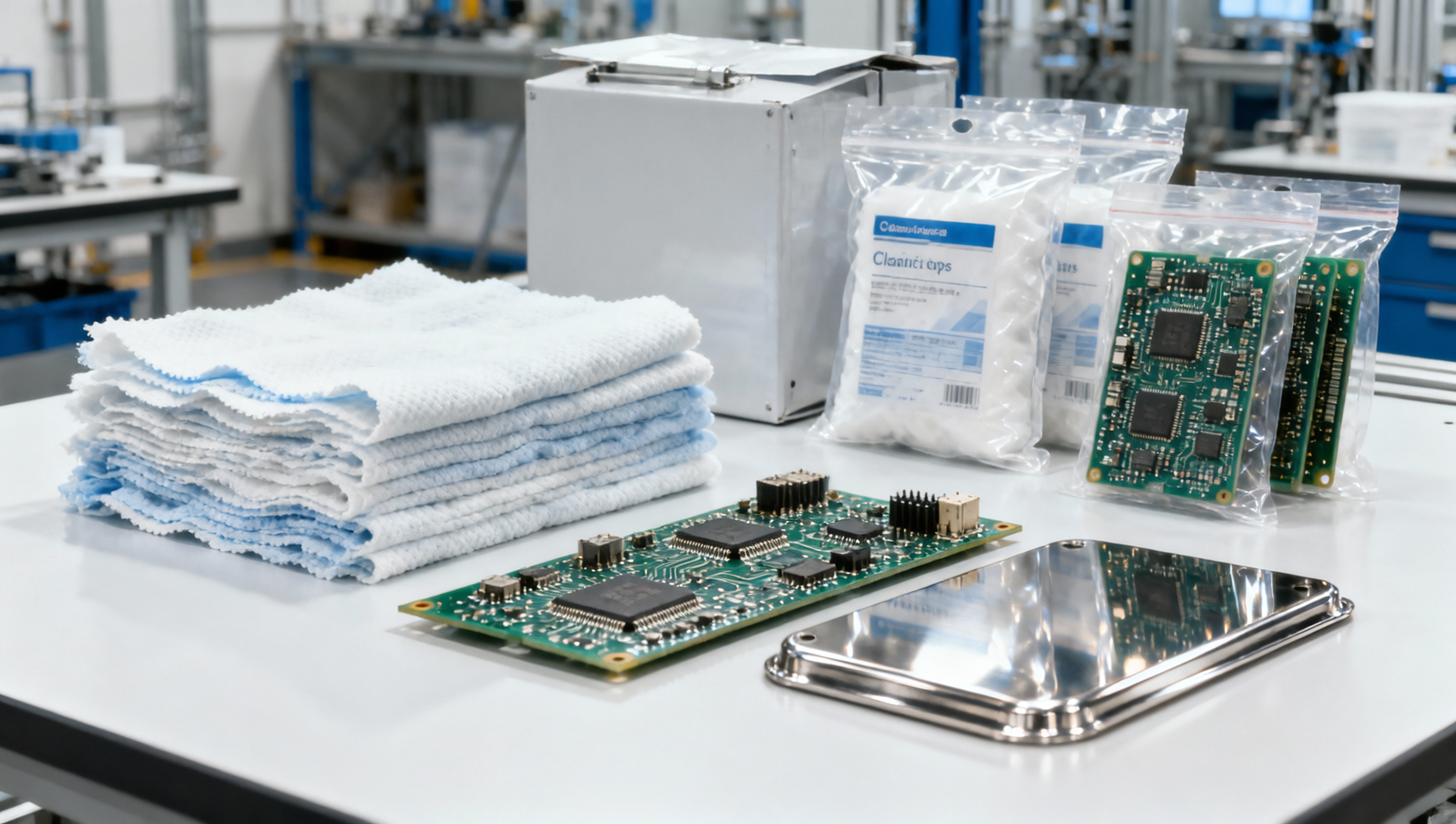
Buying lint free wipes bulk should reduce contamination risk, yet unexpected residue can still appear and compromise cleaning results in cleanroom, electronics, and industrial settings. From fiber composition and solvent compatibility to surface chemistry and storage conditions, several overlooked factors may be responsible. This guide explains why residue happens, how it affects operators and procurement teams, and what to check alongside sticky mats cleanroom supplies, wholesale cleanroom garments, and esd anti static shoes.
Why do lint free wipes in bulk still leave residue in controlled and industrial environments?
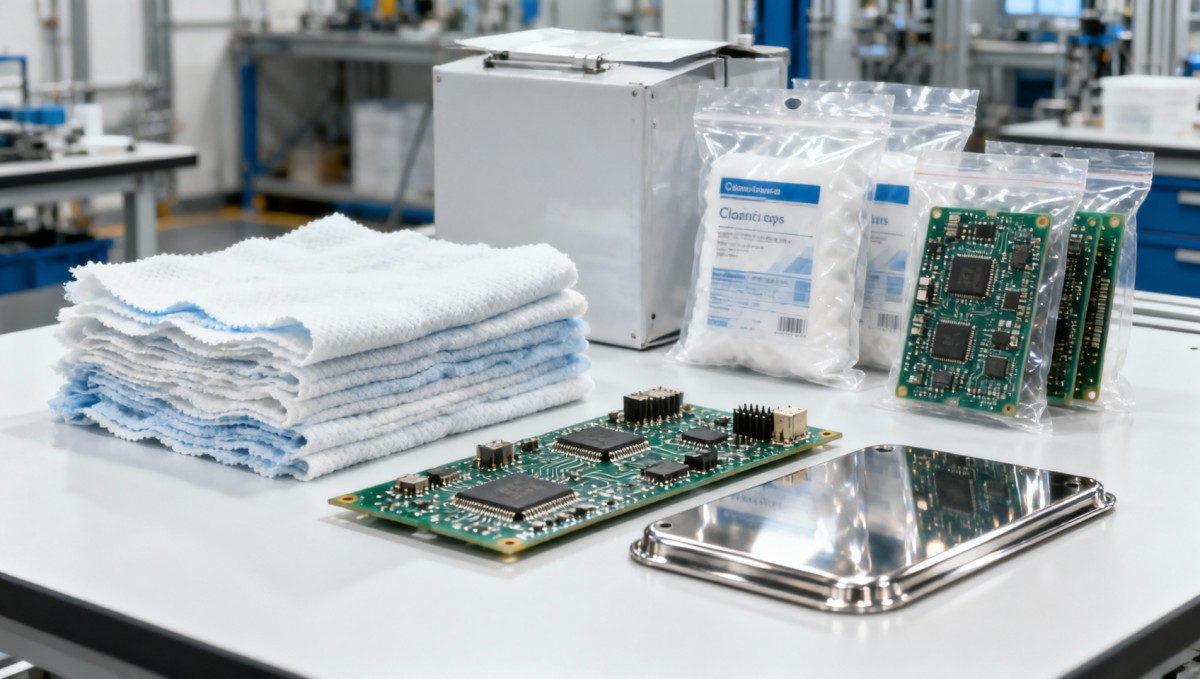
Many buyers assume that lint free wipes in bulk are automatically residue-free. In practice, “lint free” usually describes low particle shedding, not a universal guarantee against ionic residue, extractables, binder transfer, or solvent marks. In cleanroom maintenance, electronics assembly, optics handling, and precision metal finishing, those remaining traces can interfere with inspection, coating, adhesion, or conductivity checks.
Residue typically comes from 4 interacting sources: wipe material, liquid chemistry, target surface condition, and handling method. A polyester wipe may perform well with IPA in one application but leave visible streaking on polished stainless steel or coated glass. A cellulose blend may absorb quickly yet release more extractables when paired with aggressive solvents or extended wet contact times.
For operators, the problem appears as haze, smearing, white trails, microfibers, or tacky film after a 1-pass or 2-pass wipe. For procurement teams, the risk is larger. Unexpected residue can trigger rework, extra solvent use, repeated cleaning cycles, and batch acceptance delays over 24–72 hours. In regulated or high-value production, that means both contamination risk and hidden operating cost.
At GIC, residue analysis is treated as a sourcing and process issue rather than a simple consumables issue. Teams comparing lint free wipes bulk options should evaluate not only unit pricing, but also particle release behavior, absorbency range, edge sealing method, packaging integrity, and compatibility with surrounding contamination-control items such as sticky mats cleanroom supplies, wholesale cleanroom garments, and esd anti static shoes.
What “unexpected residue” usually includes
In industrial cleaning discussions, residue is broader than visible lint. It can include nonvolatile residue after solvent evaporation, ionic contamination that affects electronics, surfactant traces from converting processes, edge debris, or redeposited oils lifted from the surface and spread rather than removed. These categories matter because each one points to a different root cause and a different corrective action.
- Visible residue: streaks, fibers, smears, haze, or white marks seen under standard lighting after drying.
- Functional residue: contamination that may not be visible but affects soldering, bonding, optical clarity, or sensor performance.
- Process residue: contamination introduced during storage, handling, repacking, or cross-use between work zones with different cleanliness classes.
This distinction helps decision-makers avoid the common mistake of replacing wipes before reviewing the full cleaning system. In many facilities, residue events occur because the wipe is only one weak point inside a chain that also includes gloves, solvents, garment control, flooring transfer, and dispensing practices.
Which technical factors most often cause residue when using lint free wipes bulk?
Material construction is the first checkpoint. Common wipe families include 100% polyester, polyester-cellulose blends, polypropylene, and specialty nonwovens. Each has a different balance of absorbency, abrasion resistance, and extractables profile. A wipe that works well for general machine cleaning may be unsuitable for electronics, optics, or critical cleanroom use where lower ions and lower nonvolatile residue are expected.
Edge treatment is the second checkpoint. Laser-sealed, ultrasonic-sealed, and mechanically cut edges behave differently. Poor edge control can release microfibers during repeated folding and wiping, especially on corners or textured surfaces. In a 30-minute cleaning task across multiple stations, edge debris may be mistaken for environmental contamination when it actually originates from the wipe itself.
Liquid compatibility is the third checkpoint. IPA, DI water, ethanol blends, and specialty cleaners do not evaporate or wet surfaces the same way. If the solvent flashes too fast, redeposition rises. If the wipe saturates unevenly, residue may concentrate near the final drying zone. In many facilities, the issue appears when changing from one solvent ratio to another, such as 70/30 to 90/10 alcohol-water blends.
Storage and packaging complete the picture. Bulk purchasing can improve cost control, but longer storage periods of 3–6 months require better moisture, dust, and carton management. Open cartons, damaged inner bags, and mixed-lot handling may expose wipes to airborne particles or humidity swings of 10%–20%, reducing consistency before the wipe reaches the operator.
Root cause map for residue complaints
The table below helps teams separate surface chemistry issues from wipe quality issues. This is especially useful during supplier comparison, incoming inspection, and line troubleshooting.
A structured review usually prevents unnecessary supplier switching. If 3 out of 4 complaints involve a new solvent container, changed garment flow, or open storage, the wipe may not be the primary problem. For procurement, this means better decisions and fewer rushed substitutions that create new qualification work.
Four technical checks before escalating a residue issue
- Confirm the wipe substrate and edge method match the surface type and cleaning chemistry.
- Review storage history, including opened carton age, resealing method, and warehouse humidity range.
- Compare residue events across shifts, lines, or rooms to see whether usage practices differ.
- Check contamination-control links such as sticky mats cleanroom supplies, garments, gloves, and footwear interfaces.
How should buyers compare wipe types, surface demands, and total cleaning performance?
Not all lint free wipes in bulk fit the same process window. Buyers should align wipe selection to at least 3 variables: surface sensitivity, contamination type, and liquid system. Precision electronics and optics generally require lower extractables and tighter particulate control. General equipment maintenance may prioritize absorbency and durability. Metalworking may need a balanced option that handles oils without excessive shedding.
This is where purchasing teams can make better decisions than simply comparing carton price. A lower-cost wipe that requires 2 or 3 passes instead of 1 pass may increase solvent consumption, labor time, and rejection risk. Over a quarterly procurement cycle, apparent savings often disappear when rework and downtime are added.
GIC typically recommends treating wipes as part of a contamination-control bundle. If a site is already reviewing wholesale cleanroom garments and esd anti static shoes, wipe selection should be included in the same sourcing discussion. Clean garments reduce particle transfer, compliant footwear limits electrostatic and floor-borne contamination, and quality wipes complete the final surface-contact step.
The comparison below supports users who need fast screening across applications. It is not a substitute for qualification testing, but it helps narrow shortlists before sample approval, line trial, and supplier negotiation.
Typical wipe selection by application priority
Use this matrix when evaluating lint free wipes bulk offers for different cleaning objectives, especially when the same procurement team supports multiple departments.
This comparison shows why no single wipe is ideal for every site. Buyers should request material data, packaging details, and sample packs for line trials lasting at least 3–5 operating days. That short validation period often reveals whether a wipe performs consistently across shifts, solvents, and surfaces.
Three procurement signals that matter more than carton price
- Consistency by lot: stable converting quality and packaging reduce batch-to-batch surprises during monthly or quarterly replenishment.
- Usable yield: fewer wipes per task and fewer repeat wipes can lower total cost even when unit cost is slightly higher.
- Qualification support: suppliers who can clarify substrate, packaging, and compatibility shorten trial time and reduce sourcing risk.
What should procurement teams, operators, and managers check before placing bulk orders?
Bulk purchasing improves inventory efficiency, but it also magnifies specification mistakes. Before approving lint free wipes in bulk, teams should define 5 key checks: application, wipe substrate, packaging format, storage plan, and validation method. This is especially important for multi-site operations where one SKU may be used in cleanroom, maintenance, and assembly areas with very different cleanliness expectations.
Operators should document actual use conditions. Are wipes used dry, pre-wetted, or with trigger bottles? Is the contact surface smooth, textured, coated, or oily? Does the task last 5 minutes or 45 minutes? These details influence residue far more than generic marketing labels. A wipe suited to short spot cleaning may underperform in long-duration cleaning rounds.
Procurement teams should also review pack size and carton handling. Bulk packs lower per-unit handling cost, but if open bags sit too long on the floor, contamination risk increases. In practice, many facilities use 2-stage storage: sealed reserve inventory in warehouse conditions and smaller issue quantities for 7–14 days of controlled consumption near the work area.
Senior decision-makers should ask whether wipes are being sourced in isolation. A contamination-control program works better when wipes, sticky mats cleanroom supplies, wholesale cleanroom garments, and esd anti static shoes are assessed together. This integrated approach reduces the chance that one weak control point undermines an otherwise compliant cleaning regime.
Practical bulk-order evaluation checklist
The following checklist is useful during RFQ review, pilot qualification, and supplier comparison meetings. It also helps internal teams align technical expectations with procurement timelines.
A checklist-based review helps avoid one of the most common B2B mistakes: approving a technically acceptable wipe that is operationally difficult to store, distribute, or validate. Good sourcing decisions combine cleanliness performance with realistic logistics and user behavior.
A 4-step implementation flow for lower residue risk
- Define the task by surface, solvent, and contamination type across each work zone.
- Shortlist 2–3 wipe constructions and validate them under actual shift conditions.
- Set storage, opening, and dispensing rules for 7–14 day consumption windows.
- Review performance monthly or quarterly with operators, quality, and procurement teams.
Which standards, usage practices, and common mistakes deserve the most attention?
When selecting wipes for industrial infrastructure, electronics, or cleanroom support, teams should use standards and compliance language carefully. Wipes themselves may not carry the same certification framework as electrical equipment, but the surrounding environment often follows ISO-based cleanroom controls, ESD handling requirements, and internal contamination procedures. That means procurement should ask for relevant product information without assuming every claim has the same technical meaning.
One frequent mistake is treating “cleanroom compatible” as identical to “suitable for every clean process.” Compatibility depends on the application. Another mistake is ignoring the interface between wipes and operator control systems. If garments shed, sticky mats are not replaced at the correct interval, or esd anti static shoes are poorly maintained, wipes may receive blame for residue generated elsewhere in the process chain.
A third mistake is over-wetting. More solvent does not always mean cleaner surfaces. On nonporous materials, excessive fluid can spread dissolved contaminants over a larger area and dry unevenly. In many practical settings, a controlled pre-wet level and a defined wiping pattern deliver more consistent outcomes than a heavily soaked wipe. Training operators on 1-direction wiping and fold management often improves results within 1–2 shifts.
Finally, teams should verify change control. If a residue issue appears after a supplier switch, a solvent change, a packaging revision, or a warehouse move, each change should be logged. In industrial procurement, small specification differences can create large downstream effects, especially when bulk volumes are distributed across multiple departments or regional sites.
FAQ for sourcing and using lint free wipes bulk
How do I know whether residue comes from the wipe or from the solvent?
Run a simple comparison under the same surface and environmental conditions using at least 2 wipe types and 1 unchanged solvent, then 1 wipe type with 2 solvent conditions. If residue changes with the wipe, the substrate or edge may be responsible. If residue changes with the liquid, evaporation rate, contamination level, or chemical compatibility is more likely the issue.
Are lint free wipes in bulk always the best option for cost control?
Usually, bulk purchasing improves cost efficiency, but only when storage discipline and consumption planning are in place. If opened packs remain exposed too long or are distributed without traceability, the savings can be offset by waste, rework, and repeated cleaning. A planned 30-day to 90-day procurement cycle often works better than overstocking without controls.
What related supplies should be reviewed at the same time?
For contamination-sensitive environments, review sticky mats cleanroom supplies, wholesale cleanroom garments, gloves, and esd anti static shoes together. These items influence particle transfer, floor contamination, and electrostatic behavior. A good wipe cannot fully compensate for poor gowning, worn footwear, or ineffective entry control.
What delivery and qualification points should buyers confirm with suppliers?
Ask about pack format, lot traceability, sample availability, standard lead time, and documentation support. For many B2B buyers, the most important point is whether the supplier can support a controlled evaluation period of several days to several weeks without disrupting production schedules or internal approval workflows.
Why choose GIC when evaluating lint free wipes bulk and cleanroom support supplies?
GIC helps industrial buyers move beyond generic product listings and toward application-based sourcing decisions. For teams dealing with residue complaints, qualification delays, or inconsistent cleaning outcomes, the practical question is not just which wipe to buy. It is how the wipe performs inside a broader operating system that includes contamination control, worker protection, equipment sensitivity, and procurement continuity.
Our strength is in connecting technical review with sourcing judgment. That means helping information researchers compare materials and use cases, helping operators identify likely residue causes, helping procurement teams screen specifications and delivery risks, and helping business decision-makers understand where hidden cost sits across rework, downtime, and consumable overlap.
If you are reviewing lint free wipes in bulk, GIC can support discussions around wipe substrate fit, cleaning process alignment, related supply coordination, and sourcing priorities across sticky mats cleanroom supplies, wholesale cleanroom garments, and esd anti static shoes. This is especially valuable for EPC contractors, facility managers, and industrial procurement leaders managing multi-site or multi-standard environments.
Contact GIC to discuss 6 practical areas: parameter confirmation, product selection, lead-time expectations, custom sourcing plans, certification and documentation needs, and sample support for line evaluation. If your team is comparing suppliers or trying to reduce residue-related rework over the next procurement cycle, a focused technical and sourcing review can shorten decision time and improve operational consistency.
Technical Specifications
Expert Insights

Chief Security Architect
Dr. Thorne specializes in the intersection of structural engineering and digital resilience. He has advised three G7 governments on industrial infrastructure security.
Related Analysis
- Apr 14, 2026How accurate is a true RMS multimeter on VFD signals?Author :Precision Metrology Expert
- Apr 14, 2026When a digital oscilloscope wholesale quote looks cheap at firstAuthor :Precision Metrology Expert
- Apr 14, 2026What changes when an ozone generator goes commercial gradeAuthor :Environmental Engineering Director
Core Sector // 01
Security & Safety
- Sticky mats for cleanrooms lose grip faster than expected?Author :Precision Metrology Expert

- Lint free wipes in bulk: what causes unexpected residue?Author :Precision Metrology Expert

- Drug testing kits: where false positives usually come fromAuthor :Precision Metrology Expert

- NMPA Releases 103rd Batch of Generic Drug Reference List, Accelerating Market Access for Key APIsAuthor :Precision Metrology Expert

- Metallurgical microscopes vs. standard optical microscopes: when does resolution matter most?Author :Precision Metrology Expert

- Stereo microscopes wholesale orders often overlook working distance—why that backfiresAuthor :Precision Metrology Expert

- Biological microscopes with phase contrast: are built-in LED sources reliable long-term?Author :Precision Metrology Expert

- Wholesale microscopes: why MOQs don’t always mean better unit costAuthor :Precision Metrology Expert