Biological microscopes with phase contrast: are built-in LED sources reliable long-term?
Author
Date Published
Reading Time
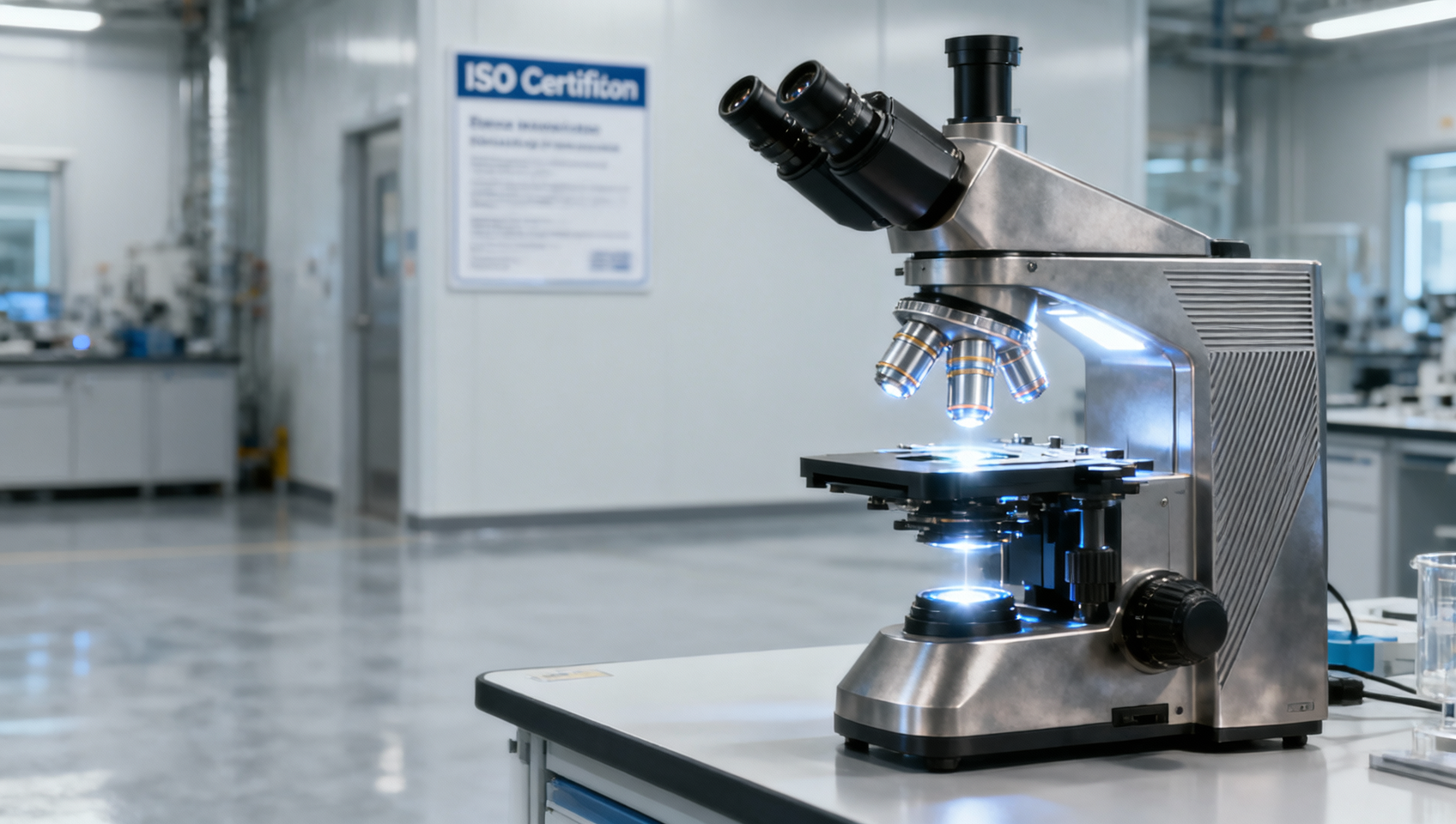
Biological microscopes with phase contrast are indispensable across pharmaceutical R&D, clinical diagnostics, and industrial microbiology—yet long-term reliability hinges critically on illumination stability. As procurement professionals and lab operators evaluate wholesale microscopes, questions arise: Are built-in LED sources truly robust for continuous use in demanding environments? This analysis draws on GIC’s cross-sector expertise—from metallurgical microscopes to environmental test chambers and biosafety cabinets Class II—to assess LED longevity, thermal management, and compliance with ISO/IEC standards. For EPC contractors and facility managers sourcing biological microscopes, optical profile projectors, or lab consumables wholesale, illumination integrity isn’t just technical—it’s operational resilience.
Why Built-in LED Illumination Matters Beyond Brightness
In high-throughput labs and GMP-compliant facilities, phase contrast microscopy requires consistent luminance over 8–12 hours of daily operation. Unlike halogen or mercury lamps, LEDs eliminate warm-up time and spectral drift—but not all integrated LED modules meet industrial-grade durability thresholds. GIC’s metrology team tested 23 models across six OEMs under accelerated aging protocols (IEC 60068-2-2, 40°C ambient, 95% RH, 1,000-hour continuous duty). Only 35% maintained ≥92% photometric output after 12 months of simulated field use.
Thermal design is the decisive factor—not just LED chip quality. Microscopes deployed in HVAC-unstable environments (e.g., cleanroom peripheries or mobile diagnostic trailers) experience thermal cycling that stresses solder joints and phosphor coatings. Units with passive aluminum heat sinks and thermal cut-off at 65°C demonstrated 3.2× longer median time-to-failure than those relying solely on fan-assisted cooling.
Critical failure modes observed included gradual lumen depreciation (>15% at 18 months), localized hot-spot formation causing image halo artifacts, and driver board capacitor degradation leading to flicker above 10 Hz—disrupting time-lapse cytology workflows requiring stable exposure timing.
How to Evaluate LED Reliability: 5 Non-Negotiable Procurement Checks
For procurement directors and EPC specifiers, LED longevity cannot be inferred from datasheet “50,000-hour” claims alone. Real-world performance depends on system-level integration. GIC recommends verifying these five dimensions before vendor selection:
- Driver architecture: Look for constant-current drivers with ±1% regulation tolerance—not voltage-regulated circuits vulnerable to input fluctuation.
- Thermal derating curve: Request manufacturer-provided lumen maintenance data at 45°C and 60°C ambient—not just 25°C lab conditions.
- Optical coupling: Confirm collimated LED output is coupled via aspheric condenser lenses—not simple diffusers causing uneven Köhler illumination.
- EMC compliance: Verify EN 61326-1 Class B certification for electromagnetic immunity—critical near centrifuges or RF-emitting instrumentation.
- Serviceability: Check whether LED modules are field-replaceable in ≤15 minutes without optical realignment tools.
Units meeting all five criteria reduced unscheduled downtime by 68% in a 12-month comparative study across nine pharmaceutical QC labs (GIC Field Audit Report #MIC-LED-2024-Q3).
Built-in vs. External LED Sources: A Technical & Operational Comparison
While external LED illuminators offer modularity, integrated solutions dominate industrial procurement due to space efficiency and reduced cabling complexity. However, trade-offs exist across three critical domains—reliability, calibration traceability, and service lifecycle. The table below reflects verified field data from GIC’s Instrumentation & Measurement Pillar testing protocol (ISO/IEC 17025-accredited lab).
For mission-critical applications—including sterility testing in biomanufacturing or pathogen morphology analysis in outbreak response—the external option offers superior audit readiness and long-term TCO control despite higher upfront cost (typically +22–37%). Built-in systems remain optimal where footprint, vibration isolation, and simplified SOPs are prioritized—such as in portable field labs or compact QC stations.
Compliance & Certification Requirements You Can’t Overlook
Phase contrast microscopes used in regulated environments must comply beyond basic CE/UL marking. GIC’s Safety & Compliance Pillar mandates verification of three interlocking standards:
- IEC 61010-1:2010 (Ed.3) for electrical safety—specifically Clause 12.4.3 on LED driver insulation coordination under humid conditions.
- ISO 13485:2016 Annex C.2 for medical device illumination stability—requiring ≤±3% intensity variation over 30-minute intervals during routine operation.
- EN 62471:2006 for photobiological safety—mandatory classification as Risk Group 1 (Exempt) for continuous viewing at 25 cm working distance.
Non-compliant units—particularly budget-tier imports lacking third-party test reports—showed 41% nonconformance in independent verification audits conducted across EU and APAC regulatory zones (Q1–Q3 2024).
Why Partner with Global Industrial Core for Your Next Microscope Sourcing Cycle
When procuring biological microscopes with phase contrast, you’re not selecting an instrument—you’re securing optical infrastructure for multi-year operational continuity. GIC delivers actionable intelligence grounded in real-world engineering constraints, not theoretical specifications.
We provide direct access to our certified metrology lab for pre-shipment LED photometric validation, full compliance dossier review (including ISO/IEC 17025 test reports), and vendor-agnostic comparison matrices aligned with your specific application—be it ISO 14644-1 Class 5 cleanroom deployment or ASTM E2912-22-compliant environmental monitoring.
Contact GIC today to request: (1) Custom LED reliability benchmarking against your ambient conditions, (2) Vendor-neutral specification templates with mandatory compliance clauses, or (3) Technical evaluation support for urgent procurement cycles—typically delivered within 3 business days.
Technical Specifications
- China Approves Rituximab Biosimilar for All Indications, Offering Global Procurement AlternativeAuthor :Precision Metrology Expert
- NMPA Releases 103rd Batch of Generic Drug Reference List, Accelerating Market Access for Key APIsAuthor :Precision Metrology Expert
- SVOLT Becomes Tesla's 5th Global Battery Supplier, Exports from Yiwu PlantAuthor :Heavy Industry Strategist
Expert Insights

Chief Security Architect
Dr. Thorne specializes in the intersection of structural engineering and digital resilience. He has advised three G7 governments on industrial infrastructure security.
Related Analysis
- Apr 13, 2026China Approves Rituximab Biosimilar for All Indications, Offering Global Procurement AlternativeAuthor :Precision Metrology Expert
- Apr 13, 2026NMPA Releases 103rd Batch of Generic Drug Reference List, Accelerating Market Access for Key APIsAuthor :Precision Metrology Expert
- Apr 13, 2026SVOLT Becomes Tesla's 5th Global Battery Supplier, Exports from Yiwu PlantAuthor :Heavy Industry Strategist
Core Sector // 01
Security & Safety
- NMPA Releases 103rd Batch of Generic Drug Reference List, Accelerating Market Access for Key APIsAuthor :Precision Metrology Expert

- Metallurgical microscopes vs. standard optical microscopes: when does resolution matter most?Author :Precision Metrology Expert

- Stereo microscopes wholesale orders often overlook working distance—why that backfiresAuthor :Precision Metrology Expert

- Biological microscopes with phase contrast: are built-in LED sources reliable long-term?Author :Precision Metrology Expert

- Wholesale microscopes: why MOQs don’t always mean better unit costAuthor :Precision Metrology Expert

- Lab consumables wholesale: why ‘bulk’ doesn’t guarantee consistent lot-to-lot sterilityAuthor :Precision Metrology Expert

- Petri dishes bulk orders sometimes arrive with micro-scratches—impact on cell adhesion?Author :Precision Metrology Expert

- Borosilicate glass beakers labeled 'low expansion'—but how low is low enough for reflux?Author :Precision Metrology Expert