Environmental compliance reporting errors that trigger rework
Author
Date Published
Reading Time

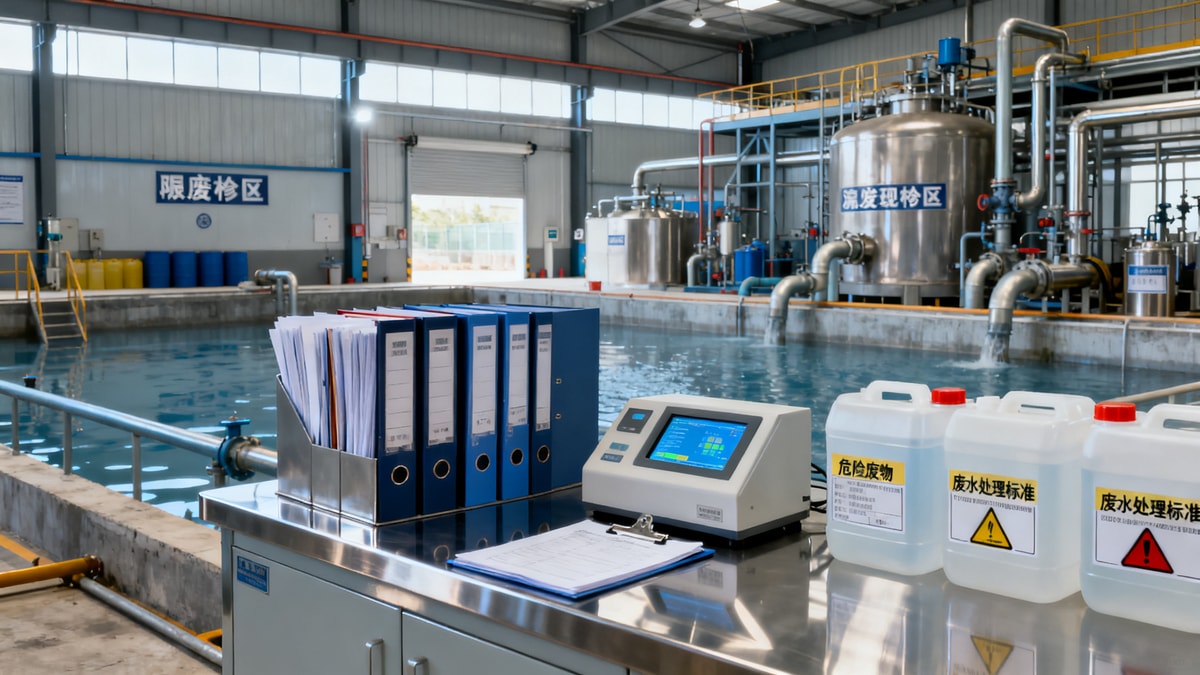
Environmental compliance reporting errors rarely start as major failures, but they often trigger costly rework, audit delays, and avoidable risk. For quality control and safety managers, even small gaps in data accuracy, document traceability, or regulatory interpretation can disrupt operations and weaken stakeholder trust. This article examines where environmental compliance reporting breaks down and how industrial teams can prevent repeat errors before they escalate.
In heavy industry, utilities, processing plants, and infrastructure projects, reporting is not just an administrative task. It sits between field operations, laboratory testing, maintenance records, permit conditions, and management review. When one figure is entered in the wrong unit, one sampling date is missed, or one version of a regulatory threshold is applied after an update, the downstream effect can involve 2 to 6 rounds of document correction, delayed submissions, and corrective action plans that consume weeks of staff time.
For teams responsible for quality, safety, and environmental assurance, the practical challenge is clear: build a reporting process that is accurate enough for regulators, traceable enough for audits, and efficient enough for day-to-day industrial operations. That is where disciplined environmental compliance reporting becomes a control function, not a paperwork burden.
Where environmental compliance reporting typically fails

Most reporting failures do not begin with deliberate noncompliance. They begin with fragmented workflows. A facility may have emissions logs in one system, wastewater sampling records in another, contractor manifests in email chains, and calibration certificates in a shared folder with inconsistent naming. In practice, environmental compliance reporting breaks down when operational data moves across 3 to 5 owners without a single verification checkpoint.
1. Data integrity errors at the point of capture
The first weak point is basic data capture. Field staff may record readings manually during inspections every 8 hours, weekly, or monthly depending on permit requirements. Errors enter the process through transposed numbers, missing decimals, incorrect units such as mg/L versus g/L, and delayed entries made from memory rather than direct observation. Even an error range of 1% to 3% can create reportable discrepancies when discharge limits or stack emission thresholds are tight.
Common field-level issues
- Manual transcription from paper logs to spreadsheets
- Sampling labels that do not match laboratory chain-of-custody records
- Equipment readings collected after calibration due dates
- Time stamps that do not align with permit-defined reporting windows
These are not minor clerical problems. If a monitoring device is calibrated every 6 or 12 months but the certificate cannot be linked to the data set used in the submission, reviewers may question the validity of the entire report period.
2. Misinterpretation of permit conditions and reporting thresholds
A second failure point is regulatory interpretation. Industrial sites often operate under multiple obligations at the same time: air permits, wastewater discharge permits, hazardous waste recordkeeping, chemical handling requirements, and local environmental notifications. The reporting calendar may include monthly summaries, quarterly declarations, annual inventories, and event-driven notifications within 24 to 72 hours. Confusion often arises when teams rely on outdated permit language or apply internal assumptions instead of the latest requirement.
This is especially risky during plant modifications, line expansions, fuel switches, or changes in raw material composition. A process change that looks operationally minor can alter reporting obligations if it affects emission factors, waste streams, storage volumes, or monitoring frequency.
The table below summarizes recurring reporting errors and the type of rework they usually trigger in industrial environments.
The main pattern is that one reporting defect rarely stays isolated. A missed threshold can require recalculation, document reconstruction, and additional review, multiplying internal labor long before any external penalty appears.
3. Weak document traceability during audits and client reviews
Traceability is where many systems fail under pressure. During routine operations, a spreadsheet may appear sufficient. During an audit, however, the reviewer may ask for 4 linked elements at once: original reading, calibration proof, sampling method, and approval record. If a team needs 2 days to rebuild that chain for one parameter, the reporting system is not audit-ready.
This matters not only for regulators but also for EPC contractors, asset owners, and procurement stakeholders. On large industrial projects, environmental compliance reporting often supports bid qualification, vendor approval, handover documentation, and operational risk assessments. Inaccurate records can slow project milestones and weaken supplier credibility.
How quality and safety managers can prevent repeat errors
Preventing rework requires more than asking teams to “be more careful.” Reliable environmental compliance reporting depends on controls that are simple, repeatable, and visible across operations. In most facilities, the strongest gains come from standardizing 5 areas: ownership, source data, review timing, document linkage, and regulatory change control.
Build a 3-level reporting control model
A practical control model uses three review layers. Level 1 is source verification by the data owner, such as a technician, lab coordinator, or maintenance lead. Level 2 is technical review by EHS, quality, or compliance personnel who confirm calculation logic and permit alignment. Level 3 is management approval before external submission. This structure reduces single-point failure and makes accountability visible.
Recommended implementation steps
- Map every reportable parameter to one named data owner.
- Define approved source documents for each metric.
- Set a submission buffer of 3 to 5 business days before the legal deadline.
- Lock calculation templates so only controlled fields can be edited.
- Maintain a revision log for each reporting period.
A 3 to 5 day buffer is especially important. It gives time to resolve missing lab data, signature delays, or discrepancies between operating logs and analytical results without forcing last-minute corrections.
Use standardized templates linked to traceable records
Standardization is one of the lowest-cost improvements available. A controlled template should include fixed units, automated date formatting, predefined permit references, version numbers, and clear signoff sections. It should also link each entry to a traceable evidence source, whether that is a lab report, calibration log, meter export, or manifest record.
The table below outlines a practical control matrix that many industrial teams can adapt without changing their full software stack.
The value of this matrix is operational clarity. It turns environmental compliance reporting into a controlled process with visible checkpoints instead of a monthly scramble driven by memory and email follow-up.
Align reporting with maintenance, calibration, and laboratory schedules
A common mistake is treating compliance reporting as separate from asset reliability and quality control. In reality, the report is only as credible as the instruments, laboratory methods, and sampling routines behind it. If analyzers drift, flow meters miss verification, or sample preservation procedures are inconsistent, reporting accuracy deteriorates even before the form is prepared.
Quality and safety managers should maintain a rolling 90-day view of upcoming calibrations, permit deadlines, and laboratory turnaround times. For many facilities, lab results take 2 to 7 days, while instrument maintenance windows may occur monthly or quarterly. Synchronizing those cycles helps avoid last-minute substitutions and unsupported estimates.
High-risk reporting scenarios in industrial operations
Some situations generate more environmental compliance reporting errors than others. Knowing these scenarios allows teams to add extra review depth rather than applying the same effort to every report. In industrial settings, the highest-risk cases often involve process change, contractor interfaces, and multi-site data consolidation.
Process modifications and temporary operating modes
Shutdowns, startups, bypass operations, temporary abatement equipment, and pilot runs create reporting complexity because normal assumptions no longer apply. Monitoring frequency may increase, baseline values may shift, and non-routine events may require separate explanation. Teams should flag these periods for enhanced review and preserve operator logs in the same record package as the final submission.
A useful rule is to trigger an environmental reporting review whenever a process change affects any of these 4 factors: material input, energy source, emission point, or waste classification. This captures many issues before they turn into retroactive corrections.
Contractor and supplier data in shared compliance workflows
On construction projects, industrial expansions, and outsourced waste handling arrangements, reporting can depend on third-party records. That is a control risk. Contractors may use different naming conventions, inconsistent units, or incomplete signatures. If manifests, disposal certificates, or field monitoring sheets arrive late, your internal team still owns the final reporting accuracy.
To manage this, procurement and compliance teams should define reporting deliverables in contractor scopes of work. At minimum, contracts should specify 3 items: document format, submission frequency, and required supporting evidence. This turns compliance from an informal expectation into a measurable supplier obligation.
Questions to ask during supplier or contractor review
- Can the supplier provide records in the required unit system and reporting period?
- Are chain-of-custody, calibration, or disposal documents available within 24 to 48 hours when requested?
- Who signs off the third-party data before it enters the internal compliance file?
- What is the escalation path if submitted records are incomplete or inconsistent?
Multi-site reporting and consolidated corporate dashboards
Corporate reporting often introduces a different problem: over-standardization without site-level context. A central dashboard may help leadership compare performance across 5, 10, or 20 facilities, but local permits often define different thresholds, methods, and timing rules. If the corporate template strips out those differences, the result can be neat dashboards built on non-equivalent data.
The solution is a two-layer structure. Let sites report against local regulatory obligations first, then map those verified figures into the corporate view. This preserves compliance accuracy while still giving management consistent metrics for trend review and resource allocation.
A practical audit-ready framework for environmental compliance reporting
An audit-ready system does not need to be complicated, but it must be disciplined. For most industrial organizations, a workable framework includes a controlled document register, a compliance calendar, defined approvers, evidence links, and retention rules. If these 5 elements are maintained consistently for 12 months, reporting quality usually improves faster than teams expect.
What “audit-ready” should mean in day-to-day practice
A report should be reproducible within 30 minutes by someone other than the original preparer. That means another reviewer can find the source files, understand the calculation method, verify the approval path, and confirm the correct reporting threshold without relying on memory. If it takes multiple phone calls or inbox searches to reconstruct the file, the process is still fragile.
Minimum records to retain per reporting cycle
- Final submitted report and submission confirmation
- Source logs, meter exports, or field sheets
- Lab results and chain-of-custody forms where applicable
- Calibration and maintenance evidence for relevant instruments
- Internal review comments, approvals, and revision history
When these records are bundled by period, site, and permit type, environmental compliance reporting becomes easier to defend during inspections, owner reviews, or due diligence exercises tied to expansion and acquisition activity.
Rework in environmental compliance reporting usually comes from familiar causes: weak source control, unclear ownership, missing evidence, and outdated interpretation of requirements. For quality control and safety managers, the most effective response is not more paperwork but better system design—clear templates, 3-level review, 3 to 5 day submission buffers, and direct linkage between reporting data and operational records.
Global Industrial Core supports industrial teams that need practical, decision-grade guidance across environment, safety, instrumentation, and infrastructure compliance. If your organization is reviewing reporting workflows, supplier data controls, or audit readiness, contact us to discuss a tailored approach, request a structured evaluation, or explore more industrial compliance solutions.
Technical Specifications
- Hidden Environment & Ecology cost after project approvalAuthor :Environmental Engineering Director
- When does an Environment & Ecology impact assessment need updating?Author :Environmental Engineering Director
- Security & Safety standards that affect product approval speedAuthor :Safety Compliance Lead
Expert Insights

Chief Security Architect
Dr. Thorne specializes in the intersection of structural engineering and digital resilience. He has advised three G7 governments on industrial infrastructure security.
Related Analysis
- May 07, 2026Hidden Environment & Ecology cost after project approvalAuthor :Environmental Engineering Director
- May 07, 2026When does an Environment & Ecology impact assessment need updating?Author :Environmental Engineering Director
- May 07, 2026Security & Safety standards that affect product approval speedAuthor :Safety Compliance Lead
Core Sector // 01
Security & Safety
- How often should an environmental compliance audit go deeper?Author :Precision Metrology Expert

- Environmental compliance reporting errors that trigger reworkAuthor :Precision Metrology Expert

- How to compare an Instruments & Measurement supplier on service depthAuthor :Precision Metrology Expert

- Instruments & Measurement Supplier Delays: What Causes Them MostAuthor :Precision Metrology Expert

- Korea MFDS Mandates Korean UI & KOSHA OEL Database for Industrial Water AnalyzersAuthor :Precision Metrology Expert

- COD BOD Analyzer Results Drift: Causes Worth Checking FirstAuthor :Precision Metrology Expert

- Chemical validation for industrial standardsAuthor :Precision Metrology Expert

- TUV Rheinland Updates EMC Guide: RF Immunity Testing Now Required for Industrial Optical Inspection EquipmentAuthor :Precision Metrology Expert
![]()