How to compare an Instruments & Measurement supplier on service depth
Author
Date Published
Reading Time

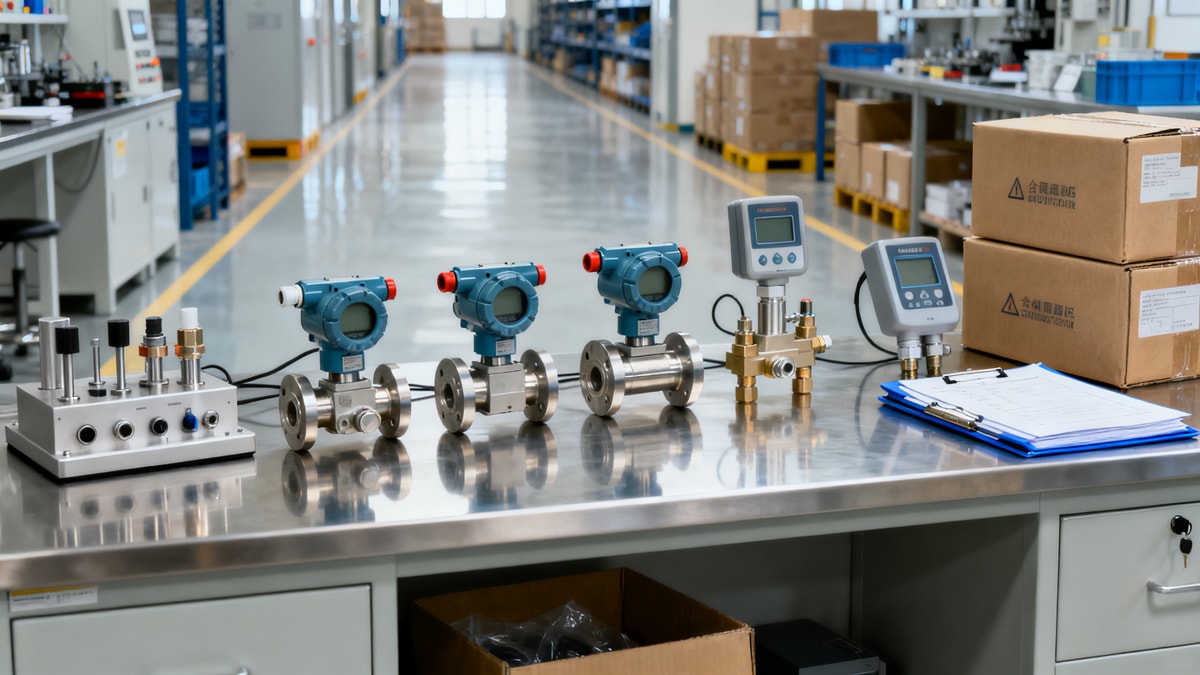
Choosing an Instruments & Measurement supplier is about more than price or product range—it is about service depth, technical responsiveness, compliance support, and long-term reliability. For procurement teams, knowing how to compare suppliers through calibration capability, after-sales service, documentation quality, and application expertise can reduce risk and improve operational performance.
What does “service depth” really mean when comparing an Instruments & Measurement supplier?
For procurement professionals, service depth refers to how far an Instruments & Measurement supplier can support the full equipment lifecycle, not just the initial shipment. A capable supplier helps before purchase, during installation, throughout operation, and even during recalibration, repair, replacement, and audit preparation. In industrial settings, this depth can directly affect uptime, compliance, maintenance planning, and the total cost of ownership.
A shallow supplier may only provide a quotation, a datasheet, and a delivery date. A deeper supplier usually adds application engineering support, model selection guidance, traceable calibration services, local or regional technical teams, spare parts planning, and fast problem escalation. This matters in sectors where pressure, flow, temperature, level, gas detection, electrical measurement, or analytical instrumentation must perform reliably under demanding conditions.
When evaluating service depth, procurement should ask a simple question: if something goes wrong in the field, how much practical support will this supplier provide, how quickly, and with what documented proof? That question often reveals more than a price sheet ever can.
Why is service depth often more important than unit price?
Low purchase price can look attractive, but measurement failures create hidden costs that usually exceed the savings. A poorly supported transmitter, analyzer, calibrator, sensor, or data acquisition device can trigger process deviations, false readings, maintenance delays, safety issues, or compliance failures. In regulated or safety-critical facilities, even a minor documentation gap can slow acceptance, inspection, or customer approval.
A strong Instruments & Measurement supplier reduces these risks by supporting configuration, test certificates, calibration intervals, startup checks, and troubleshooting. That support lowers the chance of wrong model selection or avoidable downtime. Procurement teams should therefore compare suppliers not only on capex but also on lifecycle service value. In many industrial sourcing decisions, the best supplier is not the cheapest bidder, but the one that keeps the plant stable and audit-ready.
This is especially relevant for EPC contractors and facility operators handling cross-border projects, where documentation standards, installation conditions, and local service coverage may vary. A supplier with proven service depth can prevent expensive project friction long after the purchase order is issued.

Which service indicators should procurement teams compare first?
The most effective way to compare an Instruments & Measurement supplier is to break service depth into measurable indicators. Procurement teams should avoid broad claims such as “excellent support” and instead request verifiable evidence. The following comparison points are especially useful during supplier prequalification or bid review.
If two suppliers look similar on product specifications, these five indicators usually reveal the real operational difference. A procurement team that scores each category during comparison can make supplier selection more objective and easier to defend internally.
How should you assess calibration and compliance support?
Calibration support is one of the clearest markers of a strong Instruments & Measurement supplier. In many industrial environments, instruments are only as valuable as the proof behind their accuracy. Procurement should confirm whether the supplier offers factory calibration, field calibration, recalibration scheduling, and traceability to recognized standards. If third-party laboratories are used, ask how the chain of custody and certificate integrity are managed.
Compliance support goes beyond certificates printed at shipment. A qualified supplier should be able to explain which standards apply to the product and use case, such as CE, UL, ISO, RoHS, or industry-specific requirements. They should also provide clear documentation for hazardous area options, electrical safety, material compatibility, and performance tolerances where relevant. Procurement teams should not assume a logo on a datasheet equals full compliance for the intended installation environment.
A practical comparison method is to request a sample documentation package before award. This may include datasheets, calibration certificates, declaration of conformity, installation manuals, and maintenance recommendations. Reviewing a real package is often more revealing than listening to a sales presentation.
What questions reveal the true quality of after-sales service?
After-sales capability is where many supplier differences become visible. A procurement team should test whether an Instruments & Measurement supplier can support operations after commissioning, not just before closing the order. Good questions include: What is your typical first-response time for a technical issue? Do you provide remote troubleshooting? Is on-site support available in our region? Who owns the escalation process if root cause is unclear?
It is also useful to ask about warranty boundaries. Some suppliers promise support but define warranty so narrowly that common field issues fall outside coverage. Others can offer advanced replacement, repair exchange, or service stock for critical devices. That difference can be decisive for plants that cannot tolerate long downtime.
Another strong signal is training. Suppliers with deeper service models often provide operator training, maintenance guidance, startup assistance, or digital knowledge resources. These services reduce user error and improve instrument life. For buyers, that means fewer reactive interventions and a better return on the equipment investment.
How can you compare application expertise between suppliers?
Not every Instruments & Measurement supplier has the same level of application knowledge. Some are strong in catalog sales but weak in process understanding. Others can interpret media behavior, vibration, temperature drift, ingress risks, EMC concerns, or installation constraints in real operating conditions. Procurement should verify whether the supplier can discuss the application in context, rather than just repeat product features.
A reliable test is to present a realistic scenario. For example, describe a corrosive environment, a dusty outdoor enclosure, fluctuating flow conditions, or a need for integration into an existing control system. Then evaluate the quality of the supplier’s response. Do they ask clarifying questions? Do they identify limitations or installation risks? Do they propose accessory needs such as manifolds, protection housings, signal converters, or mounting assemblies? Strong application expertise usually appears through the quality of these details.
This matters because instruments rarely fail only because of manufacturing defects. They often fail because they were chosen without enough understanding of the process, environment, or maintenance reality. Suppliers with better application support help prevent those mistakes early.
What are the most common mistakes when evaluating an Instruments & Measurement supplier?
One common mistake is comparing only model-to-model specifications and ignoring service infrastructure. Two devices may look nearly identical on paper, but one supplier may have better calibration access, faster repairs, stronger documentation control, and more responsive engineers. Another mistake is assuming global branding automatically means strong local support. In reality, regional service capacity can vary widely by market.
Procurement teams also sometimes overlook document quality until late in the project. Missing serial traceability, incomplete certificates, outdated manuals, or unclear compliance declarations can create approval delays. Another risk is failing to ask about lifecycle availability. If a supplier cannot explain end-of-life planning, spare parts continuity, or upgrade paths, the buyer may face future replacement pressure much earlier than expected.
A final mistake is not involving operations and maintenance teams in the comparison. Service depth affects daily use, calibration scheduling, troubleshooting, and shutdown planning. Their feedback often exposes practical concerns that a commercial review alone will miss.
What should a procurement checklist include before selecting a supplier?
A structured checklist helps turn service depth into a sourcing decision instead of a vague impression. Before awarding business to an Instruments & Measurement supplier, procurement should confirm the points below and document the answers for internal alignment.
Using a checklist like this allows procurement to compare suppliers on operational fit, not just commercial attractiveness. It also helps justify decisions to engineering, quality, and leadership teams.
How should procurement teams move from comparison to supplier discussion?
Once the shortlist is clear, the next step is not simply asking for the lowest quote. It is opening a structured discussion around risk, support, and delivery reality. A strong Instruments & Measurement supplier should be able to explain how they will support installation, calibration, documentation, training, and problem resolution across the lifecycle. The better the supplier can answer these questions with evidence, the more confidence procurement can have in long-term performance.
If you need to confirm a specific sourcing path, it is smart to begin with a few priority questions: Which instruments are most critical to uptime or safety? What calibration and compliance evidence is mandatory for acceptance? What response time is acceptable if a device fails? Is local technical service required? Are there lifecycle or spare parts concerns over the next three to five years? These questions help transform supplier evaluation from a transactional exercise into a reliable industrial sourcing decision.
Technical Specifications
- SASO Mandates Dual Energy Label for Industrial Transformers in Saudi Arabia from May 2026Author :Grid Infrastructure Analyst
- EN 61000-4-30:2026 Enforced: Class A Harmonic Traceability Mandatory for EU PQ AnalyzersAuthor :Precision Metrology Expert
- US DOE Level 3 Transformer Efficiency Standard Effective July 1, 2026Author :Grid Infrastructure Analyst
Expert Insights

Chief Security Architect
Dr. Thorne specializes in the intersection of structural engineering and digital resilience. He has advised three G7 governments on industrial infrastructure security.
Related Analysis
- May 06, 2026SASO Mandates Dual Energy Label for Industrial Transformers in Saudi Arabia from May 2026Author :Grid Infrastructure Analyst
- May 06, 2026EN 61000-4-30:2026 Enforced: Class A Harmonic Traceability Mandatory for EU PQ AnalyzersAuthor :Precision Metrology Expert
- May 06, 2026US DOE Level 3 Transformer Efficiency Standard Effective July 1, 2026Author :Grid Infrastructure Analyst
Core Sector // 01
Security & Safety
- How to compare an Instruments & Measurement supplier on service depthAuthor :Precision Metrology Expert

- Instruments & Measurement Supplier Delays: What Causes Them MostAuthor :Precision Metrology Expert

- Korea MFDS Mandates Korean UI & KOSHA OEL Database for Industrial Water AnalyzersAuthor :Precision Metrology Expert

- COD BOD Analyzer Results Drift: Causes Worth Checking FirstAuthor :Precision Metrology Expert

- Chemical validation for industrial standardsAuthor :Precision Metrology Expert

- TUV Rheinland Updates EMC Guide: RF Immunity Testing Now Required for Industrial Optical Inspection EquipmentAuthor :Precision Metrology Expert
![]()
- TÜV Rheinland Updates EMC Guide for Industrial Optics EquipmentAuthor :Precision Metrology Expert
![]()
- Wholesale Refractometers: Key DifferencesAuthor :Precision Metrology Expert