Instruments & Measurement Supplier Delays: What Causes Them Most
Author
Date Published
Reading Time

When project timelines slip, an Instruments & Measurement supplier is often blamed first—but the real causes of delay usually run deeper. From calibration bottlenecks and compliance checks to component shortages and global logistics risks, procurement teams must understand where disruptions truly begin. This article breaks down the most common causes of supplier delays and how industrial buyers can reduce exposure before schedules and costs escalate.
Why do Instruments & Measurement supplier delays happen so often in industrial procurement?
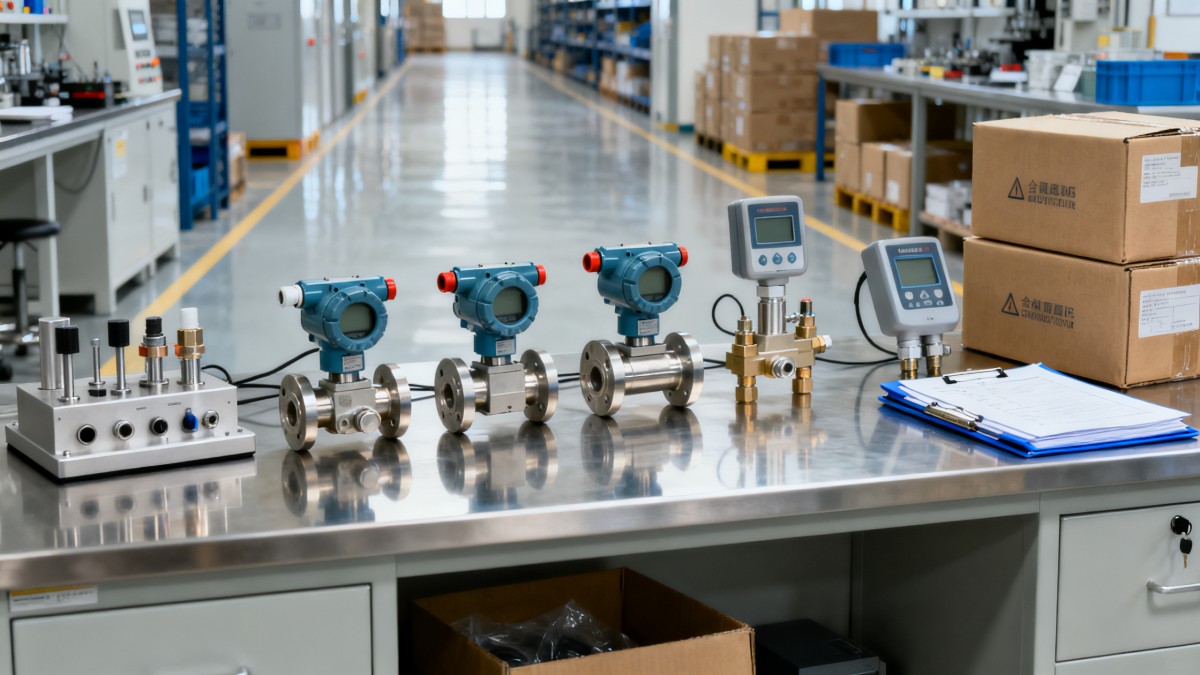
For procurement teams in EPC, utilities, manufacturing, energy, water treatment, and process industries, delays rarely come from a single weak point. An Instruments & Measurement supplier may quote a lead time based on standard production assumptions, yet actual delivery depends on engineering approval, component allocation, calibration capacity, certification review, export handling, and site acceptance requirements.
Instruments are not generic commodities. Pressure transmitters, gas detectors, flowmeters, analyzers, temperature sensors, panel meters, and calibration devices all sit inside compliance-sensitive systems. If one document is incomplete or one component is substituted without approval, the delivery may pause even when the product is physically assembled.
That is why procurement professionals should separate visible delay from root cause. In many cases, the supplier is only the final point where upstream design changes, testing queues, or freight disruptions become visible. Global Industrial Core supports buyers by mapping these hidden dependencies before a purchase order turns into a schedule risk.
- Long lead components such as semiconductors, sensing elements, specialty alloys, and display modules can hold up otherwise simple assemblies.
- Calibration, factory acceptance testing, and documentation review often take longer than mechanical assembly.
- Procurement-side changes, including revised tag lists, cable entry changes, or hazardous area requirements, frequently reset delivery clocks.
- Cross-border shipping, customs classification, and destination inspection can add uncertainty even after ex-works readiness.
The difference between quoted lead time and true project lead time
One of the most common purchasing mistakes is to treat the supplier quote as the total schedule. In practice, the project lead time starts earlier and ends later. It includes technical clarification, internal approval, PO release, drawing confirmation, manufacturing, calibration, document pack preparation, shipping, receiving inspection, and installation readiness.
If your team only tracks the supplier’s factory lead time, you may miss the far more critical delays building up around it. A disciplined buyer asks not only “When can you ship?” but also “What assumptions must remain unchanged for that date to hold?”
What causes the longest delays: the main risk points buyers should audit
The most effective way to manage an Instruments & Measurement supplier is to break delay causes into auditable categories. This helps procurement teams identify whether the risk sits in engineering, quality, sourcing, compliance, or logistics.
The table below gives a practical delay map for industrial buyers comparing where a late shipment usually starts and what can be done before the order is placed.
For most projects, the longest delays come from combinations rather than isolated events. A calibration queue may not matter on its own, but when paired with a late component and a revised tag list, the result can push commissioning by weeks. This is why an experienced Instruments & Measurement supplier is valuable only when its internal planning is matched by buyer-side specification control.
1. Calibration and traceability are frequent hidden bottlenecks
Buyers often assume calibration is a routine finishing step. In reality, it can be the slowest stage for precision instruments. Multi-point calibration, environmental conditioning, drift verification, and traceable certificate preparation all consume skilled labor and lab capacity. If the order includes different ranges, site-specific tags, or witness testing, the queue grows fast.
This matters most in regulated facilities, critical process loops, custody transfer, and safety-related applications. A supplier may have inventory, but if the required calibration format is unclear or changes late, the delivery date may slip despite material availability.
2. Compliance and documentation can stop shipment at the last minute
Industrial procurement is document-heavy for good reason. Product labels, declarations, inspection reports, manuals, material statements, and test certificates are often needed before release to site. An Instruments & Measurement supplier serving global projects must align product configuration with destination standards and client document formats.
Minor mismatches can cause major delay: wrong cable gland thread, incomplete hazardous area marking, outdated drawing revision, or certificate not matching ordered range. GIC helps procurement teams reduce this risk by translating technical and compliance requirements into a pre-PO verification checklist.
3. Component shortages are still shaping delivery performance
Even when supply chains stabilize, instruments remain vulnerable because they combine electronics, precision mechanics, sealing materials, and specialized sensing elements. A transmitter may rely on one pressure sensor die. A gas detector may depend on one electrochemical cell family. If that part is constrained, the whole assembly waits.
Procurement teams should ask which parts are truly long lead, which alternates are approved, and whether the quoted date assumes current market allocation. These questions are more valuable than a generic promise of “fast delivery.”
How should buyers evaluate an Instruments & Measurement supplier before placing an order?
Selecting on unit price alone is one of the fastest ways to create delivery risk. A lower quote may reflect narrower testing scope, weaker documentation support, limited stock strategy, or less resilient sourcing. Procurement teams need a broader evaluation framework tied to schedule reliability.
The following table can be used during RFQ comparison when reviewing an Instruments & Measurement supplier for project-critical orders.
A capable supplier is not simply the one with the shortest advertised lead time. It is the one that can explain its constraints clearly, flag risk early, and support document and testing requirements without repeated clarification. For procurement managers, transparency is often more valuable than speed promises.
A practical pre-PO checklist for procurement teams
- Freeze the datasheet, range, materials, process connection, electrical entry, output signal, and certification scope before commercial award.
- Request a milestone plan covering drawing approval, component allocation, assembly, calibration, final inspection, documentation, and shipment.
- Confirm whether calibration certificates, inspection reports, and manuals are included in the promised lead time or issued afterward.
- Identify items that are configurable late in the process and those that lock the schedule immediately after order entry.
- Align Incoterms, packaging expectations, destination import data, and consignee details before goods are ready to ship.
Which delay risks are created by the buyer rather than the supplier?
Many late deliveries are partly buyer-generated. Procurement teams work under pressure, but compressed RFQ cycles, incomplete specifications, and late engineering decisions create avoidable friction. An Instruments & Measurement supplier can only deliver on time when order inputs are stable and decision paths are clear.
Common buyer-side causes of delay
- Issuing RFQs with missing process data, unclear accuracy requirements, or unconfirmed certification needs, which forces long clarification loops.
- Approving based on price first and technical fit later, which often triggers reconfiguration after order placement.
- Treating all instruments as standard stock items even when they require configured ranges, wetted materials, or application-specific testing.
- Delaying drawing approvals or document comments, which can stall production release even when materials are available.
- Changing destination, shipment split, or packaging requirements after manufacturing is complete.
This is where GIC adds practical value. By supporting buyers with structured specification reviews, sourcing intelligence, and cross-functional risk checks, the procurement process becomes less reactive. Instead of chasing delays after the fact, teams can prevent them at the inquiry and award stage.
How can procurement teams reduce schedule exposure without overpaying?
Reducing delivery risk does not always mean choosing the most expensive option or holding excess stock. It means matching purchasing strategy to project criticality. Some instruments require dual-source planning or early reservation. Others can be standardized to shorten lead time and simplify maintenance.
Risk-control strategies that usually work
- Standardize preferred configurations where possible. Repeated models with fixed outputs, common materials, and consistent approvals are easier for any Instruments & Measurement supplier to deliver quickly.
- Segment instruments by criticality. Reserve early capacity for shutdown items, safety-related devices, and commissioning path equipment rather than all tags equally.
- Use framework agreements for recurring categories. This can improve allocation priority, documentation consistency, and response speed.
- Build approval discipline. Faster comment turnaround on datasheets and documents often saves more time than expensive expediting fees.
- Ask for risk-based alternatives early. If one sensing technology or enclosure type is constrained, a technically acceptable alternate may protect the project timeline.
Buyers should also compare total schedule cost, not only purchase price. A slightly higher instrument cost may be justified if it avoids liquidated damages, labor idle time, or delayed plant startup. Good procurement is commercial discipline informed by technical context.
What standards and documentation usually matter most for on-time delivery?
Industrial buyers often focus on physical product readiness, but paperwork can be just as critical. Depending on the project, documentation may need to support safety, import clearance, quality acceptance, maintenance planning, and commissioning records. If the document package is not aligned upfront, delivery can stop at dispatch or site receiving.
The table below summarizes common documentation areas that should be clarified with an Instruments & Measurement supplier before order finalization.
The key lesson is simple: documentation is part of the product. Procurement teams that define it early usually experience fewer surprises at shipment and site handover.
FAQ: what procurement teams ask most about Instruments & Measurement supplier delays
How long should delivery take for industrial instruments?
There is no single answer because lead time depends on configuration complexity, testing scope, documentation requirements, and supply chain conditions. Standard panel instruments may move faster than application-specific analyzers or calibrated field transmitters. Buyers should ask for milestone-based timing rather than one headline number.
Is a shorter quoted lead time always better?
Not necessarily. A short quote may exclude calibration, documentation, destination compliance review, or final inspection. Procurement teams should confirm what is included in the promised date and what assumptions could change it. A realistic schedule is more useful than an aggressive one that collapses after order entry.
What should buyers ask an Instruments & Measurement supplier during RFQ?
Ask about critical components, calibration turnaround, compliance documentation, alternate configurations, and the exact events that trigger lead-time reset. Also ask whether the supplier can support your tagging, packaging, inspection, and shipment split requirements without delaying release.
Can expediting solve most supplier delays?
Expediting helps only when the bottleneck is managerial or queue-based. It does not solve unavailable components, missing approvals, or certification mismatches. The better approach is early risk discovery, milestone visibility, and technical freeze discipline.
Why work with us when delivery risk is tied to both sourcing and technical detail?
Global Industrial Core supports procurement teams that need more than a simple vendor list. We help buyers assess an Instruments & Measurement supplier through the realities that affect industrial delivery: compliance scope, calibration burden, engineering fit, documentation completeness, and sourcing resilience across critical infrastructure categories.
If your team is comparing suppliers, preparing a project RFQ, or trying to recover a slipping schedule, you can consult us on specific decision points instead of general marketing claims. That includes parameter confirmation, product selection, likely delivery constraints, documentation planning, certification alignment, sample support where applicable, and quotation communication for complex industrial requirements.
- Need help confirming whether your datasheet is complete enough for accurate quoting?
- Need a structured comparison between multiple Instruments & Measurement supplier options?
- Need clarity on lead-time risk, calibration requirements, or project documentation expectations?
- Need support discussing alternatives when schedule pressure conflicts with budget or specification limits?
For procurement professionals, the goal is not just to buy instruments. It is to protect project continuity. With the right technical screening and sourcing intelligence, many supplier delays can be predicted, contained, or avoided before they become expensive site problems.
Technical Specifications
- US DOE Level 3 Transformer Efficiency Rule Takes Effect July 1, 2026Author :Grid Infrastructure Analyst
- INMETRO Proposes EMP Immunity Requirement for Industrial Laser Distance Meters in BrazilAuthor :Precision Metrology Expert
- Indonesia BPOM Fast-Tracks Chinese Industrial Air PurifiersAuthor :Environmental Engineering Director
Expert Insights

Chief Security Architect
Dr. Thorne specializes in the intersection of structural engineering and digital resilience. He has advised three G7 governments on industrial infrastructure security.
Related Analysis
- May 05, 2026US DOE Level 3 Transformer Efficiency Rule Takes Effect July 1, 2026Author :Grid Infrastructure Analyst
- May 05, 2026INMETRO Proposes EMP Immunity Requirement for Industrial Laser Distance Meters in BrazilAuthor :Precision Metrology Expert
- May 05, 2026Indonesia BPOM Fast-Tracks Chinese Industrial Air PurifiersAuthor :Environmental Engineering Director
Core Sector // 01
Security & Safety
- Instruments & Measurement Supplier Delays: What Causes Them MostAuthor :Precision Metrology Expert

- Korea MFDS Mandates Korean UI & KOSHA OEL Database for Industrial Water AnalyzersAuthor :Precision Metrology Expert

- COD BOD Analyzer Results Drift: Causes Worth Checking FirstAuthor :Precision Metrology Expert

- Chemical validation for industrial standardsAuthor :Precision Metrology Expert

- TUV Rheinland Updates EMC Guide: RF Immunity Testing Now Required for Industrial Optical Inspection EquipmentAuthor :Precision Metrology Expert
![]()
- TÜV Rheinland Updates EMC Guide for Industrial Optics EquipmentAuthor :Precision Metrology Expert
![]()
- Wholesale Refractometers: Key DifferencesAuthor :Precision Metrology Expert

- Brix Refractometer for Sugar TestingAuthor :Precision Metrology Expert