COD BOD Analyzer Results Drift: Causes Worth Checking First
Author
Date Published
Reading Time
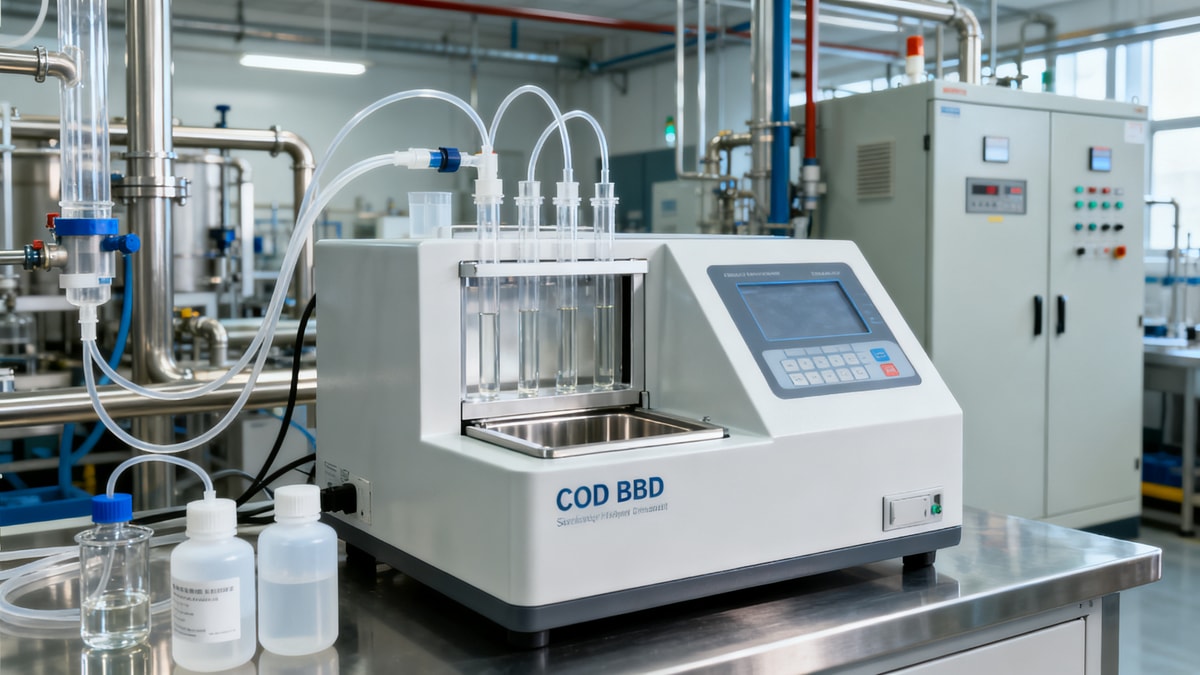
When COD BOD analyzer results begin to drift, after-sales maintenance teams usually do not need a theory lesson first. They need a fast way to separate normal process variation from instrument-related error, identify the most likely failure points, and restore confidence in the reading before operations, reporting, or customer satisfaction are affected. In most cases, drift is not caused by a single dramatic failure. It comes from a short list of practical issues: dirty measuring paths, unstable calibration, aging reagents, sample handling problems, temperature variation, flow inconsistency, or neglected maintenance routines.
For maintenance personnel, the key question is not simply “Why is the analyzer drifting?” but “What should I check first to rule out the highest-probability causes with the least downtime?” That is the focus of this article. Rather than covering every theoretical possibility equally, the discussion prioritizes the checks that most often solve real field problems in industrial wastewater, process water, and compliance monitoring environments.
If your COD BOD analyzer has started showing slow baseline movement, unexplained deviation from lab results, unstable repeatability, or frequent recalibration needs, start by checking the basics before replacing expensive parts. In many service cases, the root cause is found in the sample path, sensor condition, reagent integrity, or installation environment. A structured troubleshooting sequence saves time, reduces unnecessary part swaps, and helps maintenance teams communicate clearly with plant operators and customers.
What drift usually means in a COD BOD analyzer service context
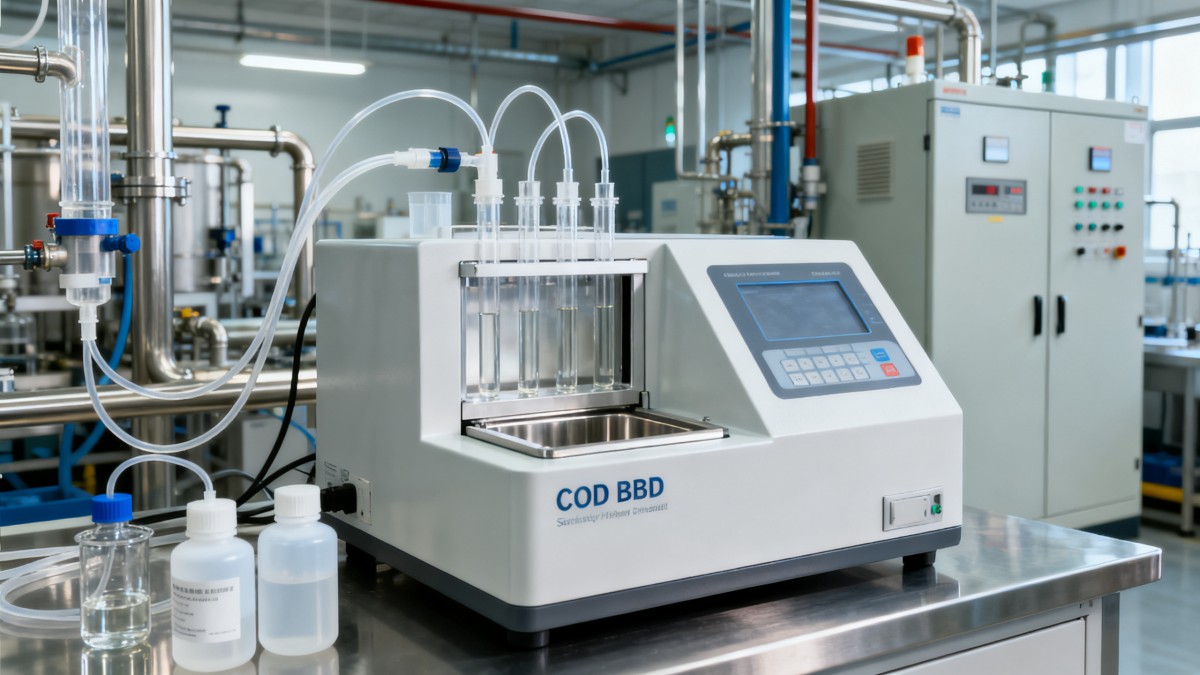
In service work, “drift” generally refers to a gradual or recurring shift in analyzer readings that cannot be explained by actual process changes alone. The analyzer may read higher or lower than expected, move away from recent calibration values, or disagree more often with grab-sample laboratory testing. Drift can be continuous, intermittent, or linked to certain operating periods such as startup, cleaning cycles, temperature swings, or reagent replacement.
For after-sales teams, it is important to confirm whether the issue is true analyzer drift or simply normal variation in the wastewater stream. COD and BOD-related parameters are sensitive to changing load, suspended solids, aeration conditions, and upstream process disturbances. Before opening the instrument, compare the trend with plant events, sample timing, and lab reference data. If the deviation is persistent, repeatable, or increasingly out of tolerance, instrument-side causes become much more likely.
A practical rule is this: if multiple consecutive readings shift in one direction without a corresponding process explanation, or if recalibration temporarily fixes the problem but the error quickly returns, the analyzer likely has an underlying maintenance issue rather than a one-time sample anomaly.
Start with the simplest high-probability cause: contamination and fouling
One of the first things worth checking in any COD BOD analyzer is fouling. In real industrial environments, sample matrices are rarely clean. Oils, biological growth, scaling, suspended solids, fibers, sludge residue, and chemical deposits can all accumulate in measurement cells, tubing, filters, valves, sample chambers, and sensor surfaces. Even a thin layer of contamination may alter optical paths, reduce sensor response, affect flow behavior, or create carryover between measurements.
If the analyzer uses optical detection, inspect windows, lenses, cuvettes, and light paths for haze, staining, or film buildup. If the system relies on dissolved oxygen measurement, pressure sensing, digestion stages, or reagent dosing, check all wetted components for partial blockage or residue. Fouling often causes slow drift rather than sudden failure, which is why it is so commonly misread as calibration instability.
Maintenance teams should also confirm whether automatic cleaning functions are actually performing as intended. A self-cleaning feature can fail quietly if the cleaning fluid is empty, the valve is sticking, the brush is worn, or the cycle timing no longer matches the process conditions. In sites with high solids or high organic loading, the factory cleaning interval may simply be too long for real-world use.
A useful field habit is to document the condition of removed sample-path components during service. If every visit shows similar residue patterns, the issue may not be random drift at all but an installation or process compatibility problem that requires filtration upgrades, preconditioning changes, or a more aggressive preventive maintenance schedule.
Check calibration quality before assuming hardware failure
Calibration is another major source of drifting results, and not always because the analyzer itself is defective. In many cases, the instrument is responding consistently, but the reference used for calibration is compromised. Expired standards, contaminated calibration solutions, incorrect dilution, poor mixing, or procedural shortcuts can all introduce bias that appears later as analyzer drift.
After-sales maintenance personnel should verify when the last successful calibration was performed, who performed it, what materials were used, and whether the analyzer remained stable afterward. If drift started immediately after calibration or after a reagent lot change, revisit the calibration workflow first. Small procedural errors often have large effects on trend reliability.
It is also important to separate calibration frequency from calibration quality. Recalibrating too often without identifying the underlying cause can actually make the problem harder to diagnose. If each new adjustment shifts the baseline further, the analyzer may be chasing unstable references, dirty components, or poor sample consistency. A better approach is to inspect, clean, verify flow and temperature, confirm reagent condition, and then recalibrate using controlled references.
Where possible, use a known good check standard between full calibrations. If the analyzer fails a mid-range verification but the process sample remains uncertain, that failure gives a stronger indication of instrument-side drift. If the check standard passes while process readings look erratic, sampling conditions or process variability may be the true issue.
Do not overlook reagent condition, storage, and dosing accuracy
For many COD analyzer systems especially, reagent-related problems are among the first causes worth checking. Reagents can degrade due to age, heat, light exposure, contamination, improper sealing, or unsuitable storage conditions. Even when they look acceptable, their reactivity may have changed enough to shift results. In some systems, dosing pump wear or line blockage can create inconsistent reagent volumes, leading to unstable readings that mimic sensor drift.
Check reagent expiration dates, lot numbers, storage logs, and visual condition. Crystallization, discoloration, sediment, gas formation, or leakage are all warning signs. Then verify that the analyzer is drawing and dispensing the correct amount. A pump tube that has hardened, a syringe seal that is wearing out, or a dosing line with micro-bubbles can all reduce repeatability.
In field service, one common mistake is replacing the sensor first while leaving old or questionable reagents in place. This can waste both time and parts. If the COD BOD analyzer depends on chemical reactions to generate its reading, reagent integrity is not secondary. It is central to measurement reliability.
BOD-related analyzers or respirometric systems may also be sensitive to nutrient condition, microbial activity assumptions, incubation environment, and oxygen measurement stability. In those cases, apparent drift may come from support chemistry or biological inconsistency rather than the primary sensing element alone.
Review the sample itself: flow, representativeness, and conditioning problems
A COD BOD analyzer can only measure the sample it actually receives. If the sample line is intermittently blocked, settling occurs in the tubing, air enters the stream, solids separate before reaching the analyzer, or the sampling point is poorly chosen, the instrument may appear unstable even when functioning correctly. This is especially common in wastewater applications with variable solids content or long sample transport distances.
Check whether the sample reaching the analyzer is representative of the process at the time the reading is taken. Dead legs, low flow velocity, oversized tubing, and poorly maintained strainers can all alter composition before measurement. If lab grab samples are taken from a different point than the analyzer intake, disagreement may reflect sampling mismatch rather than analyzer drift.
Sample conditioning equipment deserves close attention. Filters, macerators, separators, pressure regulators, coolers, and degassing assemblies can all influence measurement consistency. A partially clogged filter may not stop flow completely, but it can change particle distribution enough to shift COD results. Similarly, fluctuating sample pressure can alter uptake volume or timing in automated systems.
When drift is reported, ask a simple but powerful question: did anything upstream change? New chemicals, altered cleaning cycles, modified wastewater routing, changed pump schedules, or seasonal temperature variation can all affect sample behavior. Good after-sales support often depends as much on process questioning as on instrument testing.
Temperature, environment, and installation conditions can quietly push results off target
Industrial analyzers do not operate in ideal laboratory conditions. Ambient heat, cold, humidity, vibration, power quality issues, and enclosure ventilation can all contribute to drifting measurements over time. Some analyzers compensate for temperature internally, but compensation has limits. If the sample temperature, cabinet temperature, or reagent temperature is moving outside expected ranges, measurement accuracy can suffer.
Look for installation factors that create repeated stress. Direct sunlight on the analyzer cabinet, poor HVAC performance, heat from nearby equipment, winter condensation, or unstable line voltage may not trigger an immediate alarm, but they can degrade stability. Sensitive optical and electrochemical components often show this as gradual drift or increased calibration frequency.
Vibration is another underappreciated issue. In facilities with heavy rotating equipment or poorly isolated mounting frames, repeated vibration can affect tubing connections, dosing precision, electrical contacts, or flow-cell alignment. If the analyzer problem returns after every apparent repair, review the installation environment instead of focusing only on internal parts.
Maintenance personnel should also inspect grounding and shielding in electrically noisy environments. Signal instability from poor grounding can be interpreted as drifting values, especially when the analyzer interfaces with multiple controllers, pumps, or variable frequency drives nearby.
Sensor aging and wear are real, but they should be confirmed, not guessed
Yes, sensors and measuring components age. Membranes lose performance, optical surfaces degrade, electrodes lose sensitivity, seals harden, and moving parts wear. But in service practice, true component aging should be confirmed with evidence, not assumed at the first sign of unstable readings. Too many costly replacements happen before basic cleaning, verification, and sample-path checks are completed.
Signs that point more clearly to sensor or component wear include slower response time, inability to hold calibration after other causes have been eliminated, repeated verification failure with good standards, visible physical damage, or maintenance history showing the part has reached or exceeded normal service life. Compare current performance with baseline commissioning data if available.
Trend history matters here. A sudden shift often suggests contamination, reagent change, or process disturbance. A slow decline across weeks or months, despite proper cleaning and stable operating conditions, more strongly suggests aging hardware. Good recordkeeping makes this distinction easier and helps justify replacement decisions to the customer.
A practical troubleshooting order for after-sales maintenance teams
When time is limited, a structured sequence helps. First, confirm the problem using trend data, recent lab comparisons, and plant operating context. Second, inspect the sample path and measurement chamber for fouling, blockage, bubbles, or carryover. Third, review reagent status, storage conditions, and dosing consistency. Fourth, verify calibration materials and procedure. Fifth, check sample representativeness, flow stability, and conditioning equipment. Sixth, review environmental and electrical conditions. Only after these checks should you move toward major part replacement.
This order works because it starts with the most common and least expensive causes. It also reduces the risk of masking the issue. For example, replacing a sensor before cleaning a dirty flow cell or correcting a dosing problem may briefly change the symptom without fixing the root cause. The drift then returns, creating frustration for both the service team and the end user.
It also helps to perform one controlled change at a time. If you clean components, replace reagents, recalibrate, and change tubing all at once, you may restore performance but lose visibility into what actually caused the drift. In critical installations, that makes recurrence harder to prevent.
How to reduce repeat drift complaints after the immediate fix
Solving today’s drift issue is valuable, but reducing repeat service calls is even more valuable. Once the analyzer is stable again, convert the root cause into a preventive action. If fouling was the issue, shorten cleaning intervals or improve pretreatment. If reagent degradation was found, tighten storage control and stock rotation. If sample inconsistency caused the problem, review intake location and conditioning design. If calibration practice was weak, standardize the procedure and train local operators.
After-sales teams create the most value when they leave behind a more stable operating routine, not just a repaired instrument. That may include a simple service checklist, clearer alarm thresholds, a monthly verification schedule, or a log for sample-line condition and reagent lot changes. These small process improvements often prevent larger failures later.
For organizations managing multiple analyzers across sites, comparing failure patterns can also reveal systemic issues. If several COD BOD analyzer units show similar drift after a specific maintenance interval or under similar process loads, the lesson can be applied fleet-wide. That turns reactive troubleshooting into a reliability program.
Final takeaway: check the likely causes first, and let evidence guide the repair
When COD BOD analyzer results drift, the fastest path to a reliable fix is usually not the most complicated one. Start with the causes that most often create real-world instability: fouling, poor calibration inputs, degraded reagents, sample handling issues, and environmental stress. These account for a large share of drift complaints and can often be corrected without major hardware replacement.
For after-sales maintenance personnel, the real advantage comes from disciplined troubleshooting. Confirm whether the drift is real, inspect what the analyzer actually touches, validate what it is being fed, and only then decide whether a sensor or module has reached end of life. This approach improves repair speed, reduces unnecessary parts use, and builds customer confidence in both the instrument and the service team.
In short, if a cod bod analyzer starts drifting, do not begin with assumptions. Begin with the highest-probability checks. In industrial service environments, that is usually where the answer is found.
Technical Specifications
- India BIS Draft IS 17832:2026 Sets Noise & Dust Limits for Waste CrushersAuthor :Environmental Engineering Director
- Korea MFDS Mandates Korean UI & KOSHA OEL Database for Industrial Water AnalyzersAuthor :Precision Metrology Expert
- Indonesia BPOM Mandates PM0.1 Efficiency & CADR Decay Labeling for Industrial Air PurifiersAuthor :Environmental Engineering Director
Expert Insights

Chief Security Architect
Dr. Thorne specializes in the intersection of structural engineering and digital resilience. He has advised three G7 governments on industrial infrastructure security.
Related Analysis
- May 03, 2026India BIS Draft IS 17832:2026 Sets Noise & Dust Limits for Waste CrushersAuthor :Environmental Engineering Director
- May 03, 2026Korea MFDS Mandates Korean UI & KOSHA OEL Database for Industrial Water AnalyzersAuthor :Precision Metrology Expert
- May 03, 2026Indonesia BPOM Mandates PM0.1 Efficiency & CADR Decay Labeling for Industrial Air PurifiersAuthor :Environmental Engineering Director
Core Sector // 01
Security & Safety
- Korea MFDS Mandates Korean UI & KOSHA OEL Database for Industrial Water AnalyzersAuthor :Precision Metrology Expert

- COD BOD Analyzer Results Drift: Causes Worth Checking FirstAuthor :Precision Metrology Expert

- Chemical validation for industrial standardsAuthor :Precision Metrology Expert

- TUV Rheinland Updates EMC Guide: RF Immunity Testing Now Required for Industrial Optical Inspection EquipmentAuthor :Precision Metrology Expert
![]()
- TÜV Rheinland Updates EMC Guide for Industrial Optics EquipmentAuthor :Precision Metrology Expert
![]()
- Wholesale Refractometers: Key DifferencesAuthor :Precision Metrology Expert

- Brix Refractometer for Sugar TestingAuthor :Precision Metrology Expert

- How to Choose a Polarimeter WholesaleAuthor :Precision Metrology Expert