Egypt SMIIC Mandate: Arabic Energy Labels for Industrial Pumps Effective May 2026
Author
Date Published
Reading Time
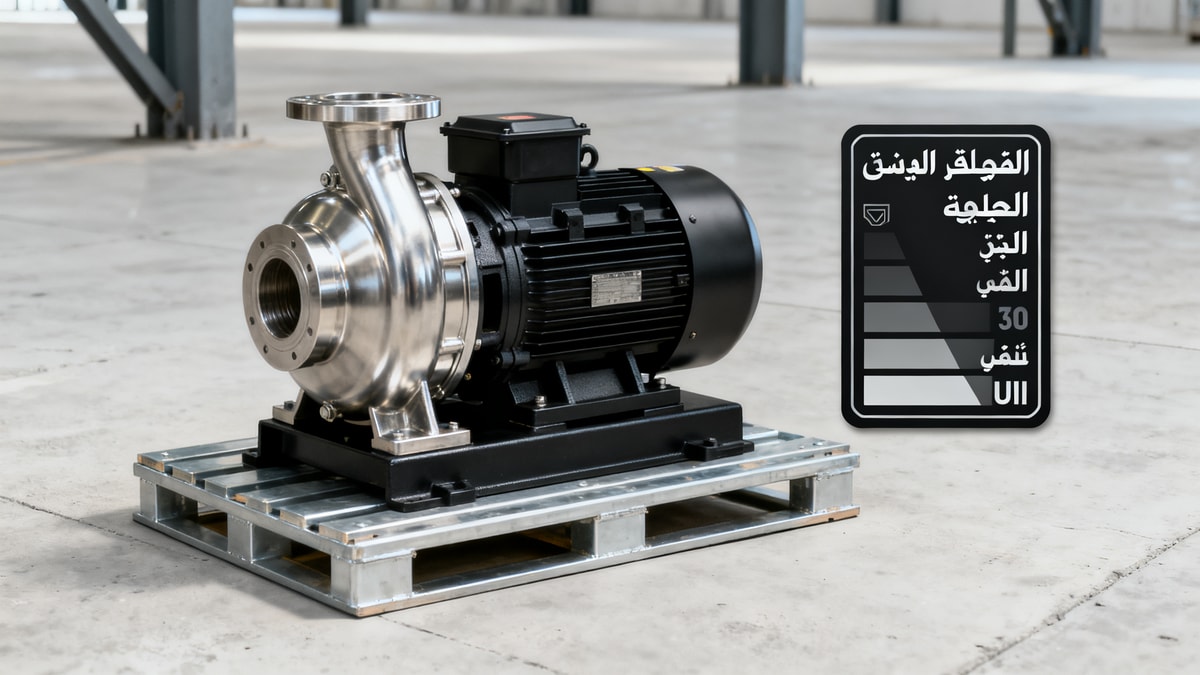
On 1 May 2026, Egypt’s Standardization and Industrial Organization (SMIIC) enforced Mandatory Order No. 22/2026, requiring Arabic-language energy efficiency labels — including IP rating — on all imported industrial pumps. Exporters of centrifugal, multistage, and sewage pumps—particularly those based in China—must now adapt labeling and registration practices before shipment. This development directly affects global pump supply chains serving the Egyptian industrial and infrastructure markets.
Event Overview
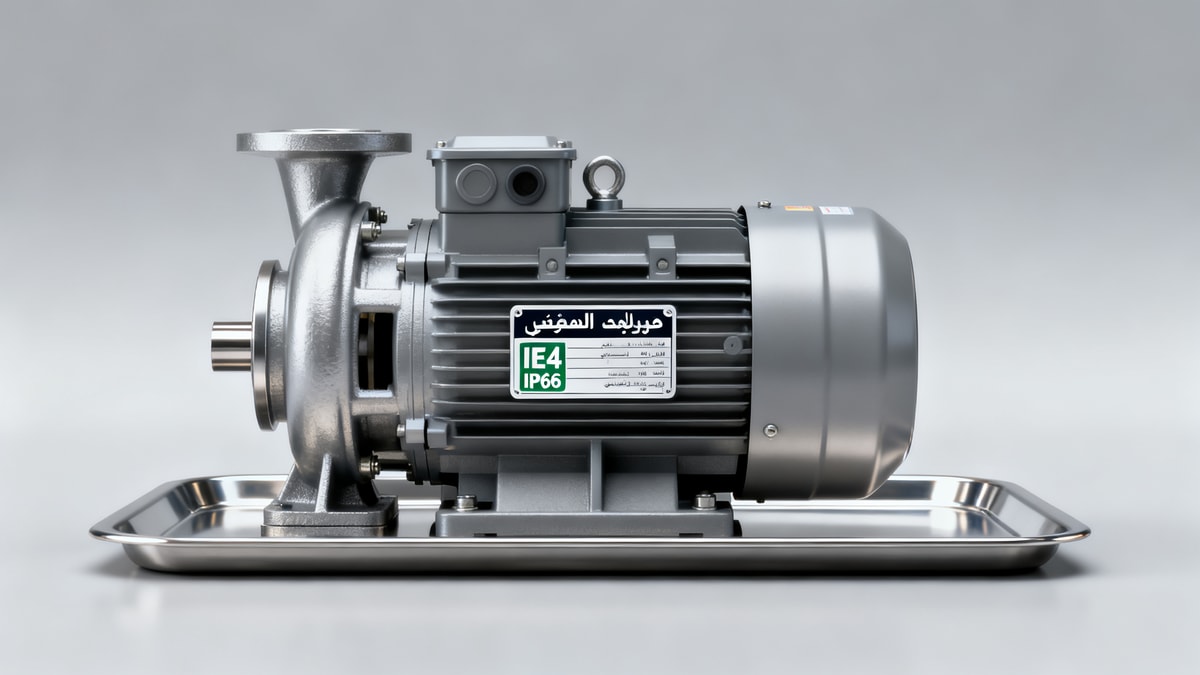
SMIIC Mandatory Order No. 22/2026 entered into force on 1 May 2026. It applies to all imported industrial pumps—including centrifugal, multistage, and sewage pumps—and mandates that each unit bear a permanent, adjacent Arabic-language energy efficiency label. The label must display: IP protection rating, efficiency value (η), rated power, and the product’s SMIIC registration number. Units lacking compliant labels—or bearing incomplete or non-Arabic information—will be detained at Alexandria Port by Egyptian customs authorities.
Industries Affected
Direct Exporters (e.g., Chinese Pump Manufacturers & Trading Companies)
These entities face immediate compliance obligations. As the regulation targets imported units, exporters are responsible for label design, language localization, and SMIIC registration prior to shipment. Non-compliance results in port detention, delays, storage fees, and potential re-export or destruction.
Contract Manufacturers & OEM Suppliers
Suppliers producing pumps under private labels or for international distributors must verify whether their end-market contracts include Egypt-bound shipments. If so, they bear upstream responsibility for label integration—even if branding is handled downstream—since physical labeling must occur pre-shipment.
Logistics & Customs Compliance Service Providers
Firms offering documentation support, customs brokerage, or regulatory advisory services for Middle East trade must update their checklists and client advisories. SMIIC registration status and Arabic label verification are now mandatory pre-clearance checkpoints—not optional post-arrival steps.
What Relevant Enterprises Should Monitor and Do Now
Confirm SMIIC registration eligibility and timeline
SMIIC registration is not automatic; it requires application, technical documentation submission (including test reports), and approval. Exporters should initiate registration well ahead of planned shipments—current processing times are not publicly disclosed, and delays may occur without early engagement.
Localize label design with full technical accuracy
The Arabic label must reflect exact values from certified test reports—not translated marketing materials. Efficiency (η), IP rating, and rated power must match official test data and be rendered in standardized Arabic technical terminology. Misalignment between label content and test certificates is a common cause of customs rejection.
Verify label placement and durability requirements
The mandate specifies the label must be affixed “adjacent to the nameplate.” While SMIIC has not published formal specifications for material, size, or UV/weather resistance, industry practice indicates durable, non-removable labeling (e.g., laser-etched metal plates or industrial-grade adhesive labels) is expected to pass inspection.
Update internal quality control and pre-shipment audit protocols
Label verification must become part of final QA checks before container loading. Relying solely on supplier assurances or post-production photo confirmation is insufficient; physical verification at the point of origin reduces risk of detention upon arrival.
Editorial Perspective / Industry Observation
Observably, this mandate signals Egypt’s tightening alignment with regional energy efficiency governance frameworks—notably those advanced under the Arab Industrial Development and Mining Organization (AIDMO) and the broader African Union’s energy transition agenda. Analysis shows the inclusion of IP rating alongside efficiency metrics suggests an emerging emphasis on operational reliability in harsh industrial environments, beyond pure energy consumption. From an industry perspective, this is less a one-off compliance hurdle and more a structural shift: Egypt is moving toward harmonized, pre-market conformity assessment for critical industrial equipment. Current enforcement at Alexandria Port—Egypt’s largest import gateway—indicates high implementation readiness, meaning the policy is already yielding operational consequences, not merely signaling intent.
Consequently, the mandate is better understood as an enforceable market access requirement—not a pending proposal or soft guidance. Its scope (covering three major pump types) and enforcement mechanism (port detention) confirm its operational weight. Continuous monitoring of SMIIC’s public registry updates and any subsequent amendments to labeling format or testing standards remains essential.
It is worth noting that while the order references SMIIC registration, the official portal does not yet publish real-time status tracking for foreign applicants—a gap currently observed by multiple export support agencies. This remains a key area for follow-up.
Conclusion
This mandate marks a concrete step in Egypt’s industrial product regulation modernization. For exporters and supply chain stakeholders, it represents a defined, actionable compliance threshold—not a distant policy trend. The most pragmatic interpretation is that Arabic-language, technically accurate, pre-registered labeling is now a non-negotiable condition for market entry. Proactive coordination among manufacturers, registrars, and freight forwarders—not reactive correction—is the current operational baseline.
Information Sources
– Egypt Standardization and Industrial Organization (SMIIC), Mandatory Order No. 22/2026 (effective 1 May 2026)
– SMIIC Official Gazette Notification (Gazette No. 18/2026, published March 2026)
– Egyptian Customs Authority Operational Directive No. CA/IMP/2026-04 (cited in port clearance advisories)
– Observed gap: Real-time public access to SMIIC foreign registration status remains unavailable as of April 2026; verification currently requires direct inquiry.
Technical Specifications
- Indonesia Opens Bearing & Seal Manufacturing to 100% FDIAuthor :Heavy Industry Strategist
- SASO Extends AI Water Module Cybersecurity Deadline to Oct 2026Author :Environmental Engineering Director
- Copper Price Surges 4.1% to Record High in 2026; Impacts BOM Costs for Cable & Transformer MakersAuthor :Grid Infrastructure Analyst
Expert Insights

Chief Security Architect
Dr. Thorne specializes in the intersection of structural engineering and digital resilience. He has advised three G7 governments on industrial infrastructure security.
Related Analysis
- May 02, 2026Indonesia Opens Bearing & Seal Manufacturing to 100% FDIAuthor :Heavy Industry Strategist
- May 02, 2026SASO Extends AI Water Module Cybersecurity Deadline to Oct 2026Author :Environmental Engineering Director
- May 02, 2026Copper Price Surges 4.1% to Record High in 2026; Impacts BOM Costs for Cable & Transformer MakersAuthor :Grid Infrastructure Analyst
Core Sector // 01
Security & Safety
- SASO Extends AI Water Module Cybersecurity Deadline to Oct 2026Author :Environmental Engineering Director

- Egypt SMIIC Mandate: Arabic Energy Labels for Industrial Pumps Effective May 2026Author :Environmental Engineering Director

- UAE ESMA Enforces EN 14181 QA/QC Level 3 for Industrial Water SensorsAuthor :Environmental Engineering Director

- ESMA Mandates EN 14181 QA/QC Level 3 for Industrial Water Sensors in UAEAuthor :Environmental Engineering Director

- SASO Extends AI Water Quality Module Compliance to Oct 2026Author :Environmental Engineering Director

- Egypt SMIIC Enforces Arabic Energy Labeling for Industrial Pumps from May 2026Author :Environmental Engineering Director

- SCFI Hits 21-Month High: Shanghai–LA Freight Surges to $3,920/TEUAuthor :Environmental Engineering Director

- China’s New Hazardous Chemicals Safety Law Takes Effect May 1, 2026Author :Environmental Engineering Director