Egypt SMIIC Enforces Arabic Energy Labeling for Industrial Pumps from May 2026
Author
Date Published
Reading Time
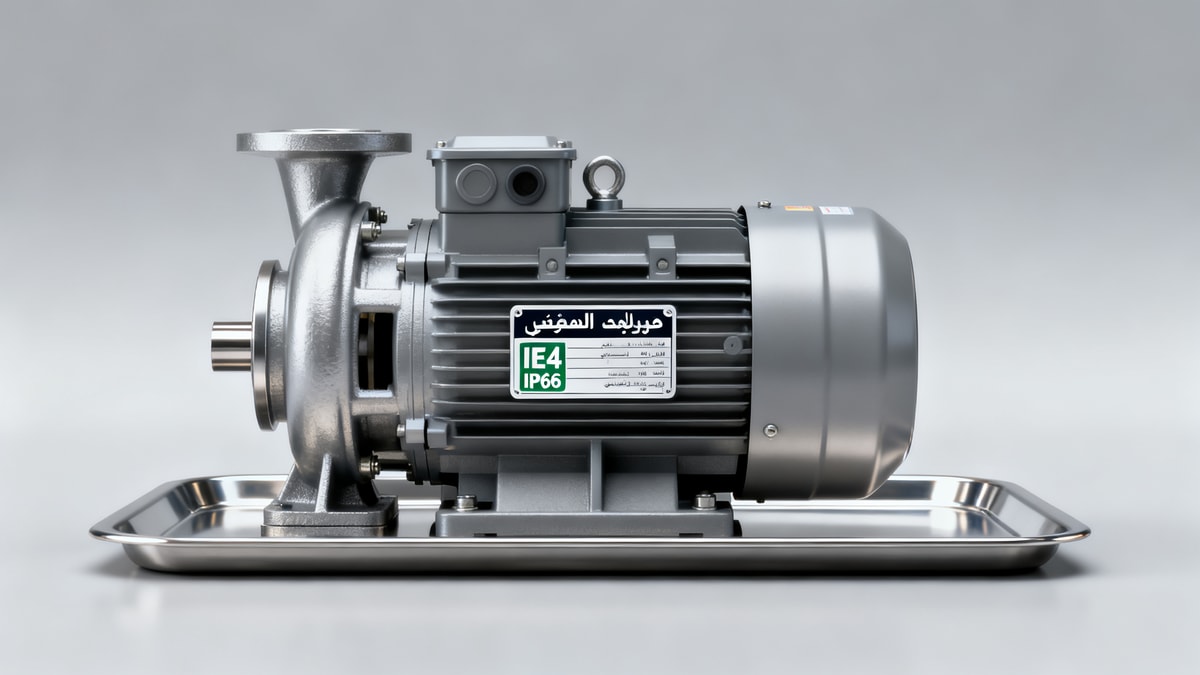
Effective May 1, 2026, Egypt’s Standardization and Metrology Institute (SMIIC) mandates Arabic-language energy efficiency labeling—including IE3/IE4 efficiency class and IP55/IP66 ingress protection ratings—on all imported industrial pumps. The requirement also extends to associated equipment such as cooling towers and air compressors. Exporters, manufacturers, and distributors serving the Egyptian industrial equipment market must now adjust labeling, documentation, and compliance workflows accordingly.
Event Overview
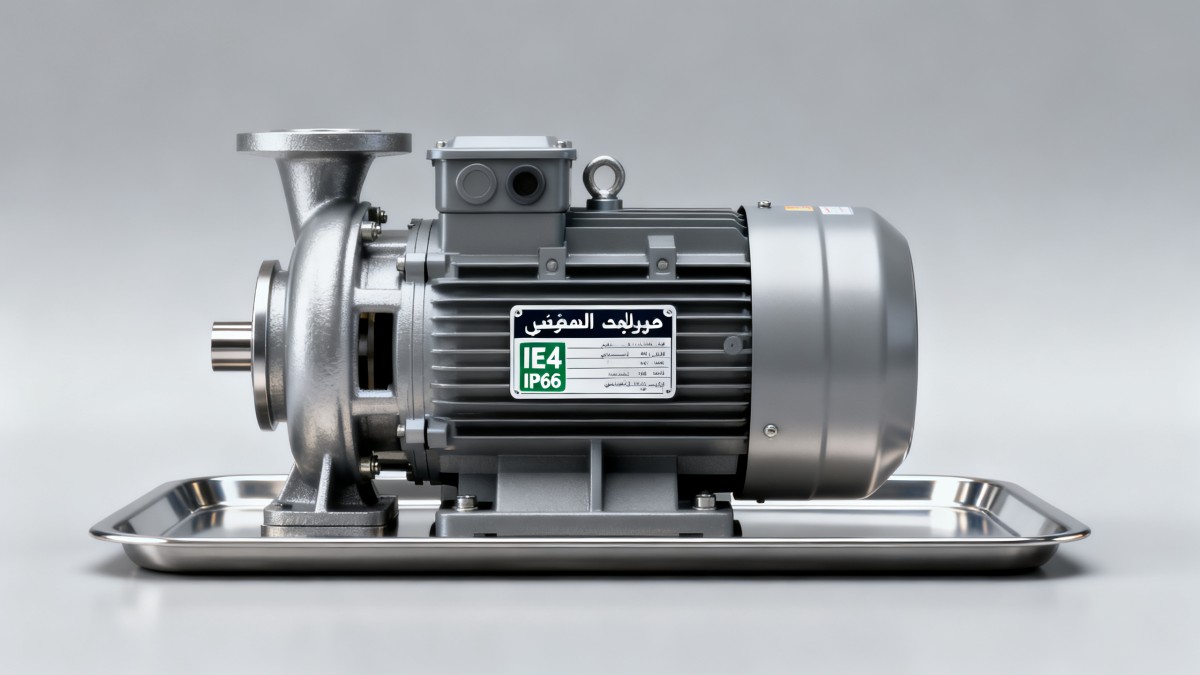
On April 30, 2026, Egypt’s Standardization and Metrology Institute (SMIIC) issued official notification confirming that, starting May 1, 2026, all imported industrial pumps must bear Arabic-language energy efficiency labels on both nameplates and outer packaging. Labels must explicitly state the motor’s efficiency class (IE3 or IE4) and its IP rating (IP55 or IP66). Products failing to meet this requirement will be denied customs clearance. The scope explicitly includes cooling towers and air compressors used in conjunction with industrial pumping systems.
Which Subsectors Are Affected
Direct Exporters & Trading Companies
These entities are directly responsible for ensuring product conformity prior to shipment. Non-compliant labeling will result in port rejection, demurrage costs, and potential re-export or destruction of cargo. Impact is immediate and operational: revised labeling templates, bilingual technical documentation, and pre-shipment verification become mandatory.
Manufacturers of Industrial Pumps & Related Equipment
Manufacturers supplying to Egypt—even via third-party distributors—must update nameplate design, packaging artwork, and factory labeling processes to include Arabic text meeting SMIIC’s specifications. This affects production line setup, quality control checklists, and OEM/ODM agreements where branding or labeling responsibilities are shared.
Supply Chain & Logistics Service Providers
Fulfillment centers, freight forwarders, and customs brokers handling Egyptian-bound shipments must now verify label compliance as part of pre-clearance checks. Lack of verified Arabic labeling may delay release, trigger inspections, or require on-the-spot relabeling—where permitted—and increase administrative burden.
What Relevant Businesses or Practitioners Should Focus On — And How to Respond Now
Monitor official SMIIC implementation guidance
While the effective date and core requirements are confirmed, SMIIC has not yet published detailed technical specifications for label layout, font size, minimum legibility standards, or approved translation protocols. Businesses should track SMIIC’s official portal and authorized conformity assessment bodies for updates before finalizing label designs.
Prioritize labeling readiness for high-volume pump categories
Centrifugal pumps, submersible pumps, and multistage industrial pumps represent the largest share of Egyptian imports in this segment. Firms should first adapt labeling for these categories—not just for compliance, but to avoid bottlenecks in inventory deployment ahead of May 2026.
Distinguish between policy signal and enforceable requirement
The mandate applies only to products entering Egypt after May 1, 2026. Shipments cleared before that date—even if delivered later—are exempt. Businesses should coordinate closely with shipping dates and customs entry timing, rather than assuming blanket retroactivity.
Prepare bilingual labeling assets and internal alignment
Procurement, engineering, marketing, and logistics teams must jointly review and approve Arabic label content. Translation must be technically accurate—not just linguistically correct—for terms like “IE4”, “IP66”, and “energy efficiency class”. Internal SOPs should assign accountability for label validation prior to packaging and shipment.
Editorial Perspective / Industry Observation
Observably, this requirement signals Egypt’s broader regulatory shift toward harmonizing energy performance transparency with regional trade partners—particularly those adopting similar labeling frameworks under the Arab Industrial Development and Mining Organization (AIDMO) guidelines. Analysis shows it functions less as an isolated technical barrier and more as a procedural checkpoint aligned with Egypt’s national energy efficiency strategy. From an industry perspective, it reflects growing emphasis on post-import traceability and end-user awareness—not just product safety. Current enforcement appears focused on documentation and physical labeling; no third-party certification or test report submission is mandated at this stage. However, sustained observation is warranted for possible future linkage to mandatory type approval or local conformity assessment.
Conclusion
This SMIIC labeling mandate is not merely a translation task—it represents a material step in aligning export operations with Egypt’s evolving regulatory infrastructure for industrial equipment. It is best understood not as a temporary adjustment, but as an early indicator of tightening technical market access conditions across North African industrial import channels. For stakeholders, proactive alignment with labeling requirements—grounded in verified official guidance—is currently the most operationally sound approach.
Information Sources
Primary source: Egypt Standardization and Metrology Institute (SMIIC), official notification dated April 30, 2026.
Note: Technical implementation details—including label format, verification methodology, and applicability to refurbished or spare-part units—remain pending official clarification and are subject to ongoing monitoring.
Technical Specifications
- ILAC Recognizes CNAS Bearing Vibration ReportsAuthor :Heavy Industry Strategist
- ESMA Mandates EN 14181 QA/QC Level 3 for Industrial Water Sensors in UAEAuthor :Environmental Engineering Director
- JIS T 8201-2026 Enforces New Low-Temp Impact Test for Fire Respirator MasksAuthor :Safety Compliance Lead
Expert Insights

Chief Security Architect
Dr. Thorne specializes in the intersection of structural engineering and digital resilience. He has advised three G7 governments on industrial infrastructure security.
Related Analysis
- May 01, 2026ILAC Recognizes CNAS Bearing Vibration ReportsAuthor :Heavy Industry Strategist
- May 01, 2026ESMA Mandates EN 14181 QA/QC Level 3 for Industrial Water Sensors in UAEAuthor :Environmental Engineering Director
- May 01, 2026JIS T 8201-2026 Enforces New Low-Temp Impact Test for Fire Respirator MasksAuthor :Safety Compliance Lead
Core Sector // 01
Security & Safety
- ESMA Mandates EN 14181 QA/QC Level 3 for Industrial Water Sensors in UAEAuthor :Environmental Engineering Director

- SASO Extends AI Water Quality Module Compliance to Oct 2026Author :Environmental Engineering Director

- Egypt SMIIC Enforces Arabic Energy Labeling for Industrial Pumps from May 2026Author :Environmental Engineering Director

- SCFI Hits 21-Month High: Shanghai–LA Freight Surges to $3,920/TEUAuthor :Environmental Engineering Director

- China’s New Hazardous Chemicals Safety Law Takes Effect May 1, 2026Author :Environmental Engineering Director

- SASO Extends AI Water Quality Module Deadline to Oct 2026Author :Environmental Engineering Director

- SASO AI Water Quality Rule Effective July 2026 for Industrial SystemsAuthor :Environmental Engineering Director

- SASO AI Water Quality Rule Effective July 2026Author :Environmental Engineering Director
![]()