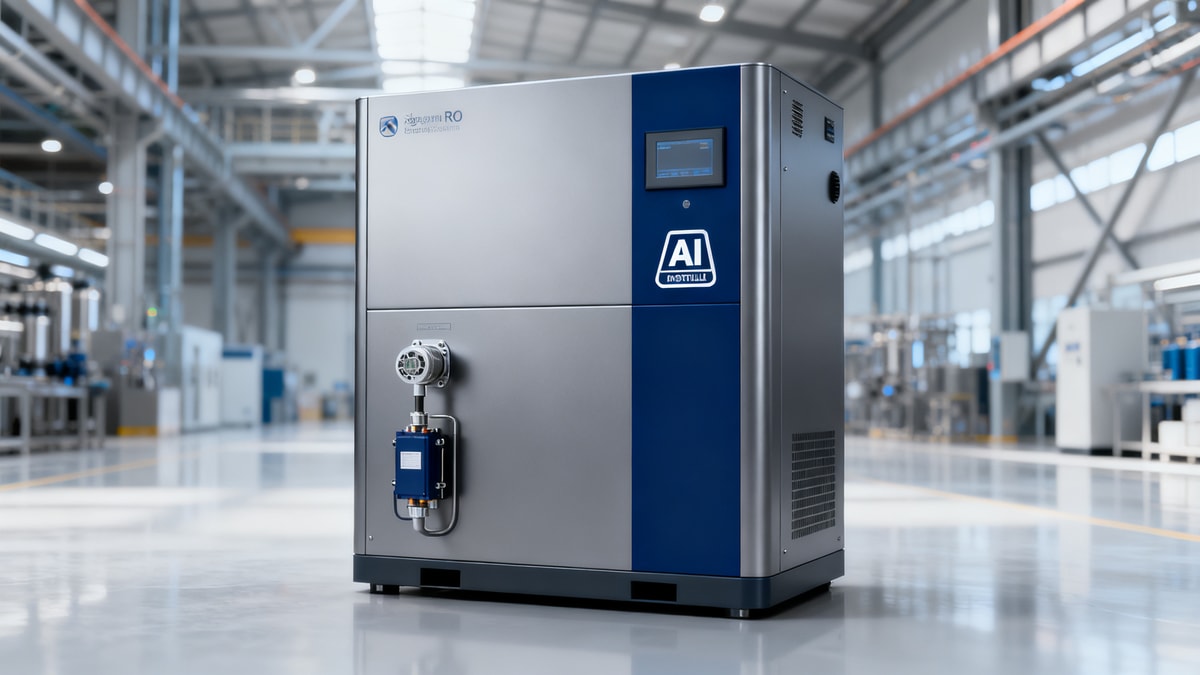
ESMA Mandates EN 14181 QA/QC Level 3 for Industrial Water Sensors in UAE
Author
Date Published
Reading Time
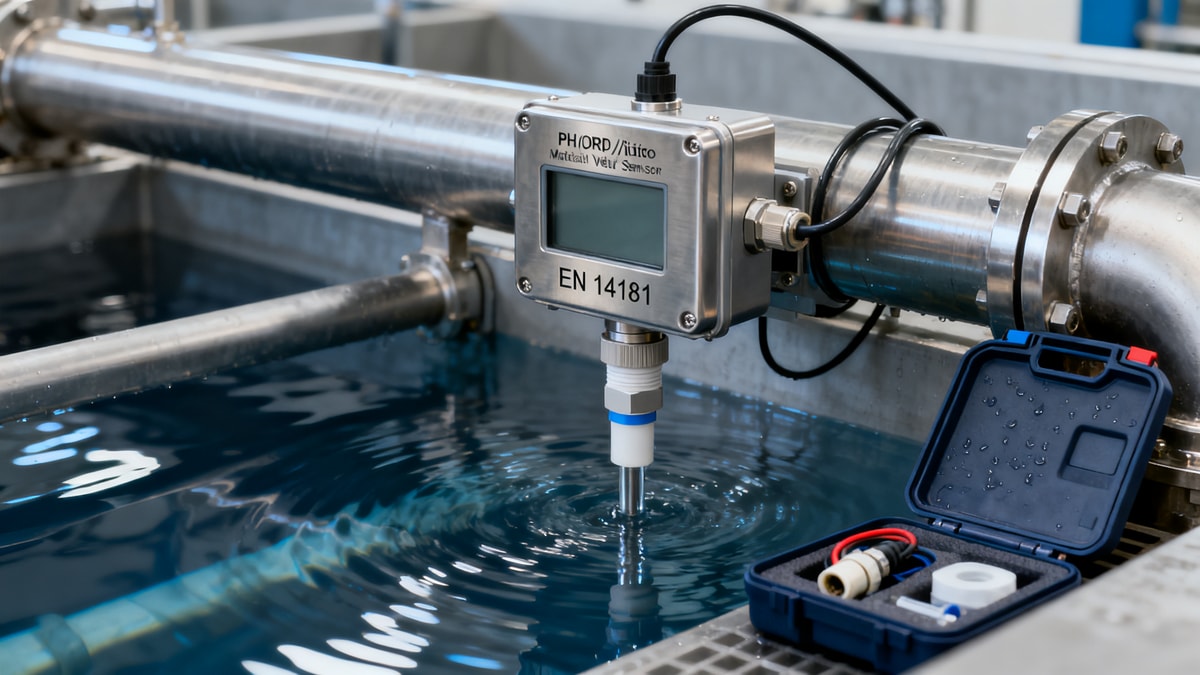
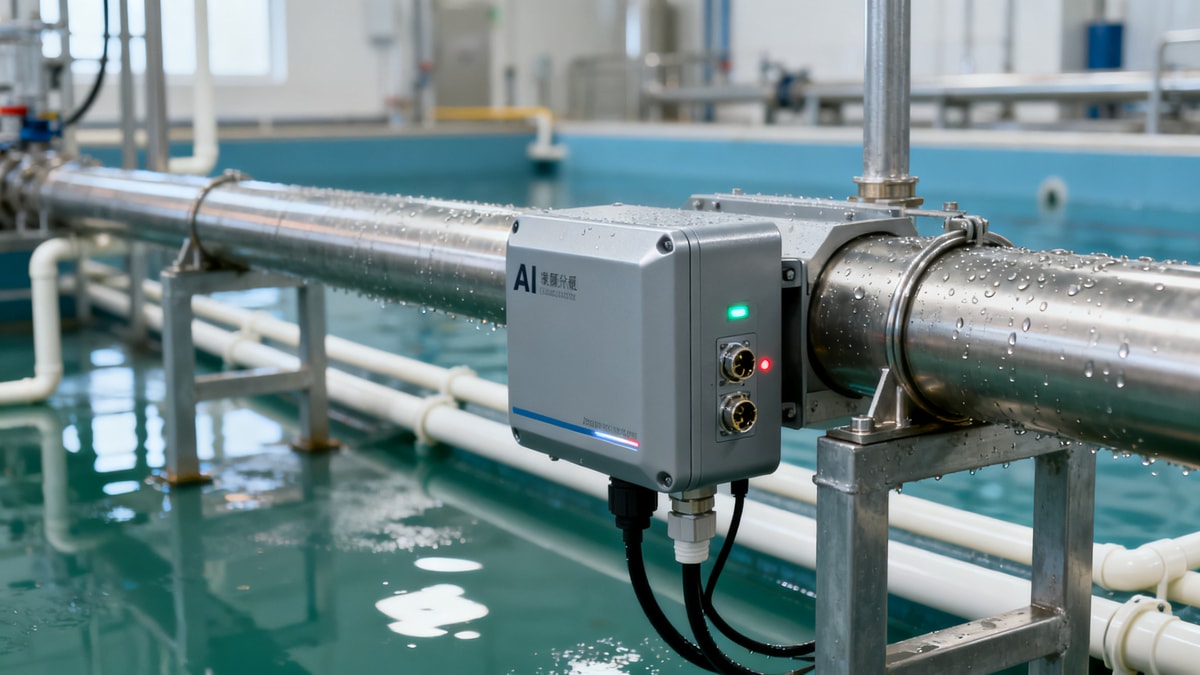
On 28 April 2024, the Emirates Authority for Standardization and Metrology (ESMA) updated its Guidelines for Environmental Monitoring Equipment准入, requiring all imported industrial water quality monitoring sensors—including pH, ORP, turbidity, and ammonia-nitrogen modules—to comply with EN 14181’s Quality Assurance/Quality Control (QA/QC) Level 3 certification. The requirement takes effect on 1 August 2026. Exporters from China—and other non-EU countries—must obtain certification from an EU-notified body prior to market entry. This development directly affects manufacturers, exporters, distributors, and system integrators supplying water monitoring solutions to UAE industrial facilities, including wastewater treatment plants, power generation sites, and petrochemical complexes.
Event Overview
On 28 April 2024, ESMA published an updated version of its Guidelines for Environmental Monitoring Equipment准入. The revision specifies that, effective 1 August 2026, all industrial water quality monitoring sensors imported into the UAE must demonstrate compliance with EN 14181’s QA/QC Level 3 requirements. Level 3 includes on-site performance verification (e.g., field comparison tests) and continuous operational validation over a defined period. Certification must be issued by an EU-notified body. No transitional provisions or exemptions are stated in the publicly available guideline update.
Industries Affected
Direct Exporters (especially from China)
Exporters shipping water sensor modules or integrated analyzers into the UAE will face mandatory conformity assessment before customs clearance. Non-compliant units may be rejected at port or barred from registration with ESMA’s equipment approval portal. Impact manifests as extended lead times, increased pre-market costs (notified body fees, test logistics), and potential loss of tender eligibility for government or utility contracts.
Manufacturers of Sensor Modules & Analyzers
Producers supplying OEM or white-label sensors—particularly those embedding pH, ORP, turbidity, or ammonia-nitrogen measurement technologies—must now design for, and validate against, EN 14181 Level 3. This includes documentation traceability, calibration stability under field conditions, and data integrity protocols required for continuous verification. Product development cycles may lengthen due to added validation steps.
Distributors & System Integrators
Local UAE distributors and integrators deploying multi-parameter water monitoring systems must verify certified status for each sensor module—not just the host analyzer—before commissioning. ESMA’s enforcement approach suggests that full system compliance hinges on individual component certification. This increases technical due diligence and may shift contractual liability toward suppliers providing uncertified modules.
What Enterprises Should Monitor and Do Now
Track official ESMA implementation guidance and interpretation notes
While the 28 April 2024 update confirms the requirement, ESMA has not yet published detailed technical annexes, accepted test protocols, or a list of authorized notified bodies recognized for this scope. Enterprises should monitor ESMA’s official website and official gazette notifications for updates on recognition criteria and submission procedures.
Identify which sensor models fall under the scope—and prioritize certification for high-volume or high-value SKUs
The regulation explicitly names pH, ORP, turbidity, and ammonia-nitrogen modules. Companies should audit their export portfolio to confirm whether embedded or standalone versions of these sensors are covered. Prioritizing certification for best-selling or contract-critical models helps manage cost and timeline risk.
Distinguish between regulatory signal and enforceable requirement
The 1 August 2026 effective date is confirmed, but enforcement mechanisms—including penalties, grace periods for existing stock, or post-import surveillance—are not yet detailed. Enterprises should treat the policy as binding for new shipments after the date, while treating current stock and pending tenders as subject to further clarification.
Initiate engagement with EU-notified bodies experienced in EN 14181 Level 3
Certification timelines can exceed 3–6 months depending on test readiness and backlog. Early contact with notified bodies capable of performing both laboratory and on-site verification (as required for Level 3) is advisable. Documentation prepared should include sensor specifications, calibration history, maintenance logs, and draft QA/QC procedures aligned with EN 14181 Annex B.
Editorial Perspective / Industry Observation
Observably, this requirement signals ESMA’s strategic alignment with EU environmental monitoring standards—not merely as a technical benchmark, but as a formalized market access gate. It reflects growing emphasis on data reliability for regulatory compliance in UAE industrial sectors, especially under federal sustainability mandates such as UAE Net Zero by 2050. Analysis shows the move is less about immediate market restriction and more about long-term harmonization: it creates a predictable, auditable pathway for sensor performance validation, shifting focus from device specification alone to operational integrity. From an industry perspective, this is currently best understood as a structural policy signal—not yet a fully operationalized enforcement regime—requiring proactive alignment rather than reactive compliance.
This is not a one-time certification event but the institutionalization of ongoing QA/QC obligations. Continuous operation validation implies periodic re-assessment, meaning compliance becomes a sustained process—not a static certificate.
Conclusion
ESMA’s EN 14181 Level 3 mandate marks a formal step toward higher evidentiary standards for environmental monitoring data in UAE industrial applications. Its significance lies not only in the technical threshold raised, but in the implicit expectation that sensor performance be verifiable in real-world operational contexts—not just under lab conditions. For affected enterprises, the most rational interpretation is that this is a calibrated, forward-looking regulatory evolution: it requires preparation, not panic; planning, not postponement; and documentation rigor, not just product conformity.
Information Sources
Primary source: Emirates Authority for Standardization and Metrology (ESMA), Guidelines for Environmental Monitoring Equipment准入, updated 28 April 2024. Status of detailed implementation guidance (e.g., test method acceptance, notified body recognition criteria) remains under observation and is subject to future ESMA publication.
Technical Specifications
- ILAC Recognizes CNAS Bearing Vibration ReportsAuthor :Heavy Industry Strategist
- ESMA Mandates EN 14181 QA/QC Level 3 for Industrial Water Sensors in UAEAuthor :Environmental Engineering Director
- JIS T 8201-2026 Enforces New Low-Temp Impact Test for Fire Respirator MasksAuthor :Safety Compliance Lead
Expert Insights

Chief Security Architect
Dr. Thorne specializes in the intersection of structural engineering and digital resilience. He has advised three G7 governments on industrial infrastructure security.
Related Analysis
- May 01, 2026ILAC Recognizes CNAS Bearing Vibration ReportsAuthor :Heavy Industry Strategist
- May 01, 2026ESMA Mandates EN 14181 QA/QC Level 3 for Industrial Water Sensors in UAEAuthor :Environmental Engineering Director
- May 01, 2026JIS T 8201-2026 Enforces New Low-Temp Impact Test for Fire Respirator MasksAuthor :Safety Compliance Lead
Core Sector // 01
Security & Safety
- ESMA Mandates EN 14181 QA/QC Level 3 for Industrial Water Sensors in UAEAuthor :Environmental Engineering Director

- SASO Extends AI Water Quality Module Compliance to Oct 2026Author :Environmental Engineering Director

- Egypt SMIIC Enforces Arabic Energy Labeling for Industrial Pumps from May 2026Author :Environmental Engineering Director

- SCFI Hits 21-Month High: Shanghai–LA Freight Surges to $3,920/TEUAuthor :Environmental Engineering Director

- China’s New Hazardous Chemicals Safety Law Takes Effect May 1, 2026Author :Environmental Engineering Director

- SASO Extends AI Water Quality Module Deadline to Oct 2026Author :Environmental Engineering Director

- SASO AI Water Quality Rule Effective July 2026 for Industrial SystemsAuthor :Environmental Engineering Director

- SASO AI Water Quality Rule Effective July 2026Author :Environmental Engineering Director
![]()