SCFI Hits 21-Month High: Shanghai–LA Freight Surges to $3,920/TEU
Author
Date Published
Reading Time
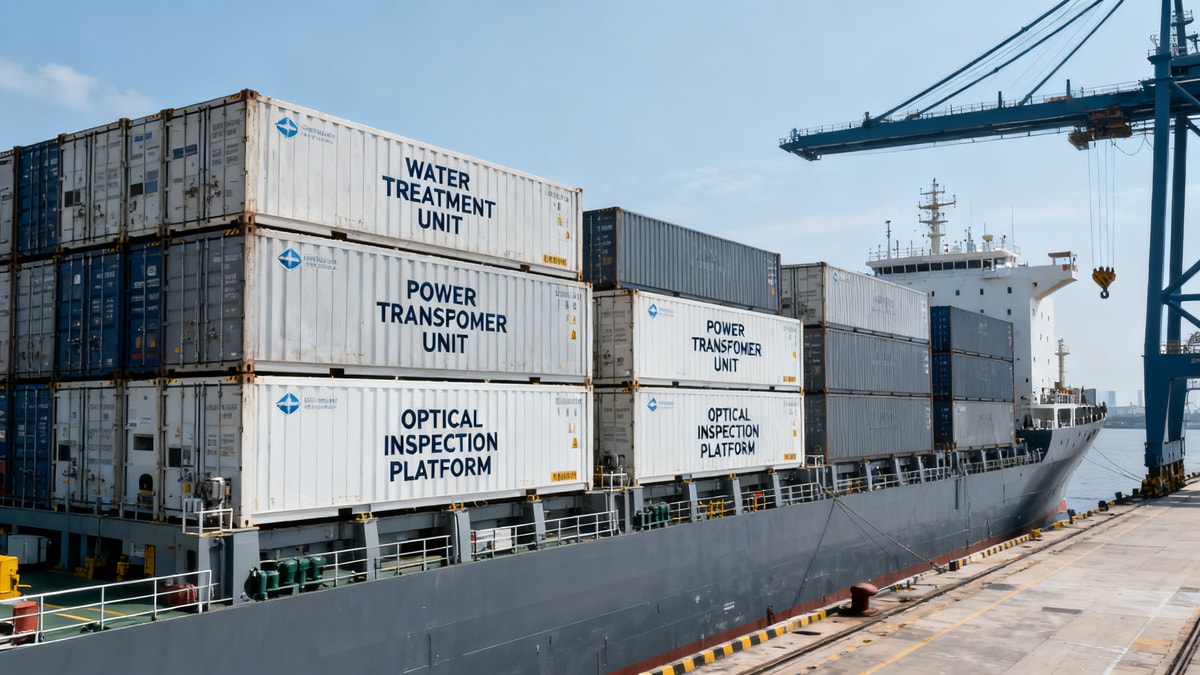
On April 30, 2026, the Shanghai Containerized Freight Index (SCFI) rose to $3,921 per TEU for the Shanghai–Los Angeles route—its highest level in 21 months. This surge reflects tightening capacity and extended lead times, particularly impacting industrial equipment exporters and importers reliant on timely container availability. Manufacturers of water treatment units, power transformers, and optical inspection platforms—and their logistics partners—should monitor this development closely, as it signals rising delivery risk and planning complexity.
Event Overview
As of April 30, 2026, the Shanghai Export Containerized Freight Index (SCFI) stood at $3,921/TEU for the Shanghai–Los Angeles route. This marks a new 21-month high. The rise coincides with ongoing labor negotiations at U.S. West Coast ports, contributing to heightened uncertainty and reduced vessel slot availability. For standard 40-foot containers carrying large industrial equipment—including water treatment units, transformers, and optical inspection platforms—the average booking lead time has extended to 21 days, up from the April monthly average by 7 days.
Industries Affected
Direct Exporting Enterprises
Companies shipping finished industrial equipment from Shanghai to Los Angeles face immediate pressure on delivery scheduling. Longer booking windows reduce flexibility in responding to customer deadlines and increase exposure to potential delays if port disruptions escalate.
Raw Material & Component Importers
Importers sourcing critical components or subassemblies from U.S.-based suppliers—especially those requiring precise just-in-time arrival—may encounter cascading delays. Extended container lead times compress available transit and customs clearance windows, raising inventory planning risk.
Contract Manufacturing & OEMs
OEMs coordinating final assembly across geographies (e.g., U.S. design + Chinese manufacturing + U.S. integration) may see synchronization challenges. A 21-day booking cycle limits responsiveness to engineering change orders or urgent build requests tied to U.S. end-market demand.
Logistics & Freight Forwarding Providers
Forwarders handling industrial equipment shipments must now allocate additional capacity buffers and adjust client communication timelines. The widening gap between booking confirmation and vessel departure increases documentation coordination complexity and liability exposure for missed slots.
What Stakeholders Should Monitor & Do Now
Track official updates on U.S. West Coast port labor talks
Current SCFI pressure stems partly from negotiation-related uncertainty—not yet an active strike or lockout. Stakeholders should follow statements from the Pacific Maritime Association (PMA) and International Longshore and Warehouse Union (ILWU), distinguishing between rumor, proposal, and ratified agreement.
Map exposure by equipment category and destination port
Not all industrial cargo faces equal impact. Water treatment units and transformers often ship in specialized or overweight containers; optical inspection platforms may require temperature- or vibration-controlled handling. Prioritize visibility into which specific container types are most constrained at Los Angeles/Long Beach terminals.
Reassess booking timing and contingency buffers
A 21-day average does not guarantee uniform availability. Some forwarders report same-week slots disappearing within hours of release. Companies should treat current lead times as minimums—not averages—and build in ≥5-day operational buffers for critical shipments.
Validate carrier-specific space allocation policies
Major carriers have begun prioritizing long-term contracts over spot bookings. Exporters without committed service agreements may face de-prioritization. Review existing ocean contracts for volume guarantees, penalty clauses, and alternate port options (e.g., Oakland or Seattle) before finalizing Q2/Q3 shipment plans.
Editorial Perspective / Industry Observation
Observably, this SCFI spike is less a standalone price event and more a liquidity signal: it reflects thinning buffer capacity amid sustained demand and institutional uncertainty. Analysis shows that the 7-day extension in booking lead time—rather than the absolute freight rate—is the more operationally significant metric for industrial shippers. From an industry perspective, this is currently best understood as an early-stage supply chain stress indicator—not yet a systemic breakdown, but one requiring proactive recalibration of planning horizons and partner alignment. Continued monitoring is warranted, especially as the U.S. West Coast labor agreement deadline approaches in mid-July 2026.
This development underscores how freight index movements translate directly into execution risk for capital-intensive, schedule-sensitive sectors. It is not merely a cost issue—it reshapes lead time reliability, inventory strategy, and cross-border coordination cadence.
Information Sources
Primary source: Shanghai Shipping Exchange (SSE) official SCFI data release dated April 30, 2026. Additional context drawn from publicly reported labor negotiation timelines issued by the Pacific Maritime Association (PMA). Note: The status of the U.S. West Coast port labor agreement remains under negotiation as of April 30, 2026; outcomes and implementation timing are subject to ongoing discussion and require continued observation.
Technical Specifications
- ILAC Recognizes CNAS Bearing Vibration ReportsAuthor :Heavy Industry Strategist
- ESMA Mandates EN 14181 QA/QC Level 3 for Industrial Water Sensors in UAEAuthor :Environmental Engineering Director
- JIS T 8201-2026 Enforces New Low-Temp Impact Test for Fire Respirator MasksAuthor :Safety Compliance Lead
Expert Insights

Chief Security Architect
Dr. Thorne specializes in the intersection of structural engineering and digital resilience. He has advised three G7 governments on industrial infrastructure security.
Related Analysis
- May 01, 2026ILAC Recognizes CNAS Bearing Vibration ReportsAuthor :Heavy Industry Strategist
- May 01, 2026ESMA Mandates EN 14181 QA/QC Level 3 for Industrial Water Sensors in UAEAuthor :Environmental Engineering Director
- May 01, 2026JIS T 8201-2026 Enforces New Low-Temp Impact Test for Fire Respirator MasksAuthor :Safety Compliance Lead
Core Sector // 01
Security & Safety
- ESMA Mandates EN 14181 QA/QC Level 3 for Industrial Water Sensors in UAEAuthor :Environmental Engineering Director

- SASO Extends AI Water Quality Module Compliance to Oct 2026Author :Environmental Engineering Director

- Egypt SMIIC Enforces Arabic Energy Labeling for Industrial Pumps from May 2026Author :Environmental Engineering Director

- SCFI Hits 21-Month High: Shanghai–LA Freight Surges to $3,920/TEUAuthor :Environmental Engineering Director

- China’s New Hazardous Chemicals Safety Law Takes Effect May 1, 2026Author :Environmental Engineering Director

- SASO Extends AI Water Quality Module Deadline to Oct 2026Author :Environmental Engineering Director

- SASO AI Water Quality Rule Effective July 2026 for Industrial SystemsAuthor :Environmental Engineering Director

- SASO AI Water Quality Rule Effective July 2026Author :Environmental Engineering Director
![]()