Magnetic Separator Machine Buying Traps in Mixed Scrap Lines
Author
Date Published
Reading Time
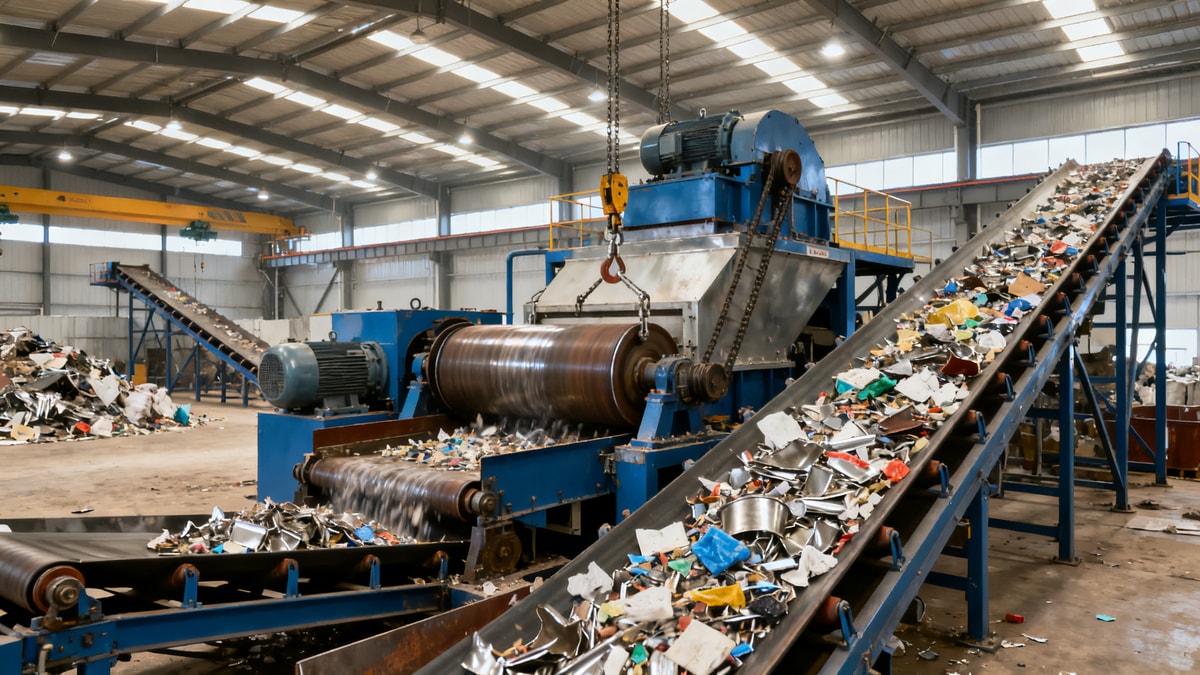
Choosing a magnetic separator machine for mixed scrap lines can look straightforward on paper, yet hidden buying traps often lead to poor recovery rates, contamination issues, and costly downtime. For business evaluators, this guide highlights the most overlooked risks behind specifications, compliance claims, and lifecycle costs, helping you compare suppliers with greater confidence and make decisions that protect both operational efficiency and long-term ROI.
For most buyers, the biggest mistake is assuming that magnet strength alone determines performance. In mixed scrap lines, actual results depend on feed composition, burden depth, belt speed, tramp metal profile, moisture, downstream purity targets, and maintenance discipline. A machine that looks impressive in a brochure can still underperform badly in a real plant.
The core search intent behind this topic is commercial and evaluative. Readers are not looking for a basic definition of magnetic separation. They want to know how to avoid making an expensive procurement error, how to compare suppliers beyond headline claims, and how to identify whether a proposed machine will deliver measurable value in a complex scrap environment.
That means the most useful discussion is not generic product promotion. It is a practical framework for spotting buying traps, validating technical fit, estimating total cost of ownership, and linking machine choice to business outcomes such as recovery rate, contamination control, labor efficiency, uptime, and payback period.
Why mixed scrap lines create more buying risk than standard separation applications
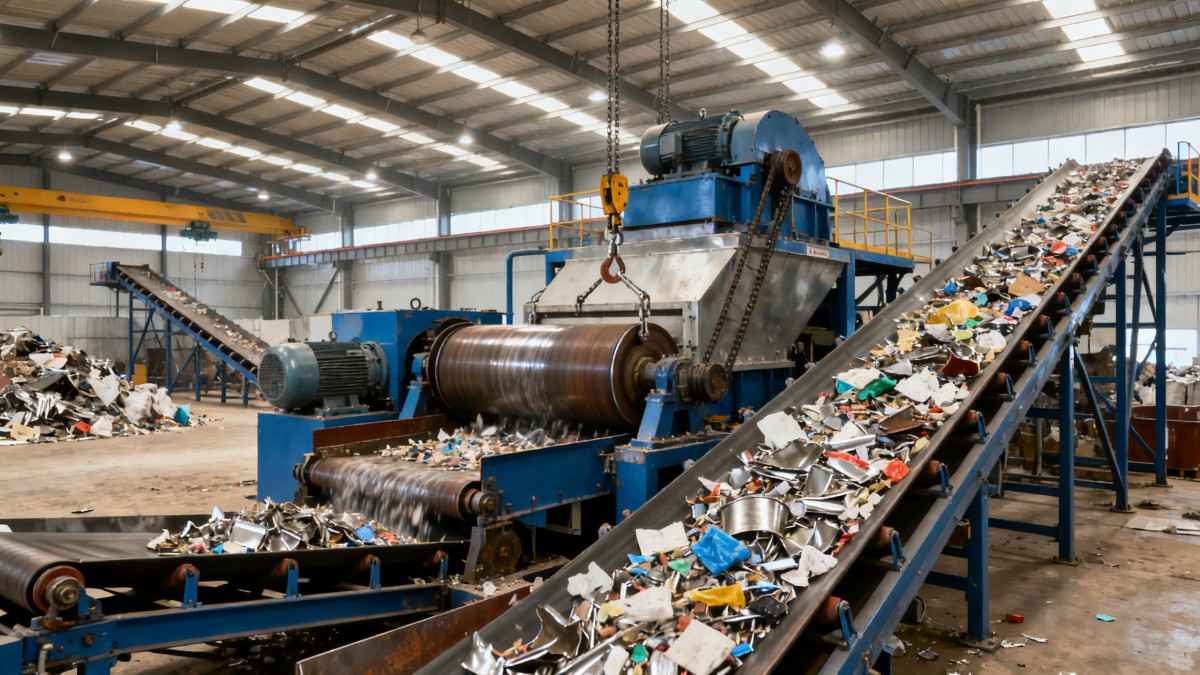
Mixed scrap lines are difficult because the feed is rarely stable. Ferrous and non-ferrous metals may be combined with plastics, fines, textiles, wire bundles, dust, painted surfaces, and irregular shapes. This variation changes how magnetic material presents itself to the separator, which directly affects capture efficiency and purity.
In a clean, predictable stream, many machines can produce acceptable results. In a mixed scrap line, however, the separator must handle surges, entanglement, variable particle size, and inconsistent loading. Business evaluators should therefore treat supplier claims based on ideal test conditions with caution. A machine validated on homogeneous feed may not perform similarly in a real scrap yard or processing facility.
Another risk is that mixed scrap lines often involve multiple objectives at once. One operator may want to maximize ferrous recovery, another may prioritize downstream equipment protection, and management may focus on resale value of recovered fractions. If those goals are not defined early, procurement teams can end up comparing machines using the wrong criteria.
The most common buying trap: selecting by gauss rating alone
Many buyers are drawn to a high gauss number because it appears to offer a simple basis for comparison. But gauss rating by itself is one of the most misleading metrics in the category. It only indicates magnetic field intensity at a specific point, often measured under conditions that do not reflect actual operating geometry.
A magnetic separator machine can have a high surface gauss rating and still fail to capture target materials effectively if the magnetic reach is too shallow, the burden depth is too high, or the conveyor speed is too fast. In mixed scrap lines, suspension height, splitter design, belt trajectory, and material presentation frequently matter more than brochure numbers.
Smart evaluators ask different questions. What is the effective separation distance? What throughput was used during testing? How did the machine perform on material sizes similar to your own feed? What was the measured recovery rate and purity under realistic contamination conditions? These answers are more decision-relevant than a single strength figure.
Do not buy before defining the real duty: recovery, protection, or purification
Not every magnetic separator is solving the same business problem. Some units are mainly installed to remove large tramp iron and protect shredders, granulators, and downstream sorting systems. Others are designed to recover saleable ferrous fractions. Still others support product purification where contamination thresholds are strict.
When buyers fail to define the primary duty, they often purchase a machine optimized for the wrong result. A robust overhead separator may be excellent for equipment protection but inadequate for fine recovery. A drum magnet suitable for steady material flow may struggle with bulky, bridged, or highly variable scrap. The trap is assuming that one machine type can solve every separation challenge equally well.
Before requesting quotations, evaluators should rank objectives clearly: machine protection, ferrous recovery, finished product purity, labor reduction, or line simplification. Suppliers can then size and configure the system against a real target rather than a vague specification.
Machine type mismatch is a major source of underperformance
Different separator designs behave very differently in mixed scrap lines. Overband and cross-belt magnets are commonly used for removing ferrous contaminants from conveyors. Magnetic drums are often better for continuous extraction from flowing bulk streams. Pulley magnets can work well where conveyor integration is favorable. Eddy current systems, while not magnetic separators in the ferrous sense, are often part of the broader line and can be affected by upstream magnetic performance.
The buying trap appears when procurement teams compare machines only by price or capacity class without checking whether the design fits the material behavior. For example, a cross-belt unit may be attractive on paper, but if your line carries deep, uneven loads with a high proportion of tangled ferrous pieces, its real separation performance may disappoint.
Ask suppliers for application references that match your feed profile, not just your industry label. “Scrap recycling” is too broad to be useful. Mixed demolition scrap, automotive shredder residue, WEEE fractions, and municipal bulky waste each place different demands on a separator.
Supplier test methods can hide real-world performance gaps
One of the most overlooked traps is overreliance on factory demonstrations or pilot tests that are not representative. A supplier may show strong capture on a short, clean, manually prepared sample. That does not prove stable performance across an eight-hour shift with fluctuating moisture, fines, overload events, and random metal distribution.
Business evaluators should insist on a documented test protocol. It should specify feed composition, particle size distribution, moisture condition, burden depth, belt speed, working gap, and throughput. More importantly, the results should be stated in business terms: ferrous recovery percentage, contamination reduction, product purity, and carryover loss.
If plant trials are possible, they are often worth the effort. A limited on-site trial can reveal issues that a showroom test never will, including installation constraints, housekeeping impact, dust loading, and operator usability. If on-site trials are not practical, require the supplier to justify how test conditions map to your operating environment.
Installation geometry and upstream conditions often matter more than buyers expect
Even a well-built magnetic separator machine can underdeliver if the surrounding line conditions are poor. Material layer thickness, conveyor width, head pulley position, chute design, and feed spread all influence separation quality. If the material stream is not presented consistently to the magnetic field, recovery losses increase.
This is a common commercial trap because some quotations focus on the machine only and treat installation conditions as the customer’s problem. In practice, geometry is part of system performance. A lower-priced offer that excludes supports, guarding, transfer redesign, or splitter optimization may become more expensive after commissioning problems appear.
Evaluators should ask for a full application layout review. The supplier should define recommended mounting height, magnet orientation, cleaning method, discharge path, and any required changes to conveyor or chute arrangement. If the proposal stops at the machine frame and motor details, it is incomplete from a business risk perspective.
Maintenance claims deserve closer scrutiny than purchase price
Low upfront price can hide high operating friction. In scrap environments, maintenance is not a minor issue. Wear from abrasive fines, belt tracking problems, heat exposure, dust ingress, seized bearings, and difficult cleaning access can all reduce uptime and increase labor cost.
Buyers should examine wear part availability, service intervals, maintenance access, and local technical support. Ask how often belts require replacement, whether bearings are standard or proprietary, how easy it is to clean accumulated material, and what mean time to repair looks like in practice. A separator that saves two hours of maintenance every week may justify a significantly higher capital cost.
Another trap is accepting generic warranty language. A two-year warranty sounds reassuring, but it may exclude wear components or require return-to-factory procedures that are unrealistic for heavy industrial operations. Practical support commitments matter more than broad marketing promises.
Compliance and certification claims should be verified, not assumed
Industrial buyers increasingly operate under strict safety, electrical, and site compliance requirements. Yet many procurement errors happen because teams assume that claims such as CE-compliant, ISO-certified, or export-ready automatically cover the entire delivered system.
In reality, certifications may apply only to selected components, not the assembled machine. Electrical panels, emergency stops, guarding, noise exposure, and documentation quality all need verification. For global projects, the relevant compliance framework may also vary by destination market and plant standard.
For business evaluators, this matters because non-compliance creates hidden cost. Delayed commissioning, retrofit work, legal exposure, and insurance complications can erase any savings from choosing the cheaper supplier. Ask for declaration documents, wiring standards, manuals, spare parts lists, and machine risk assessment records during evaluation, not after purchase order release.
Total cost of ownership is the right lens for comparing suppliers
In mixed scrap lines, the best buying decision rarely comes from comparing equipment price alone. The more accurate comparison is total cost of ownership over the expected service period. That includes energy use, consumables, wear parts, maintenance labor, downtime risk, lost recovery value, contamination penalties, and future integration needs.
For example, a separator with stronger application fit may improve ferrous recovery by a few percentage points. On paper, that can sound minor. But across thousands of tons of annual throughput, even small gains can materially improve recovered metal revenue. Likewise, better contamination removal can protect downstream sorters, reduce reject rates, and improve final product value.
Procurement teams should build a simple business case model with at least five variables: annual throughput, current ferrous loss, expected recovery improvement, maintenance cost difference, and downtime cost. This moves the conversation from vendor claims to measurable financial impact.
Questions every evaluator should ask before approving a magnetic separator machine
A disciplined supplier interview process can eliminate many hidden risks. Start with application fit: what similar mixed scrap lines has the supplier served, and what measurable results were achieved? Then move to performance: what recovery and purity levels can be expected at your actual throughput and burden depth?
Next, ask about design and reliability: what are the recommended installation conditions, likely wear points, cleaning requirements, and expected maintenance intervals? Clarify support terms, spare parts lead times, and whether local service is available. Finally, address compliance and documentation: what certifications, risk assessments, manuals, and commissioning support are included?
If a supplier cannot answer these questions with technical clarity and documented evidence, that is itself a buying signal. In industrial procurement, uncertainty usually converts into cost later.
A practical shortlisting framework for business evaluators
To make comparison easier, score suppliers across five weighted areas. First, application suitability: fit with your actual scrap mix, throughput, and separation goals. Second, verified performance: test data quality, reference cases, and expected recovery outcomes. Third, lifecycle reliability: maintenance burden, parts support, and durability in harsh conditions.
Fourth, compliance and project readiness: documentation quality, safety design, electrical conformity, and installation support. Fifth, commercial value: total cost of ownership, payback period, and risk transfer through service commitments. This structure helps prevent the common mistake of overvaluing purchase price and undervaluing operational certainty.
Where possible, involve operations and maintenance stakeholders in the evaluation process. Business evaluators need commercial discipline, but the most accurate buying decisions usually come from combining financial scrutiny with real plant experience.
Final takeaway: buy the system fit, not the headline specification
The biggest trap in buying a magnetic separator machine for mixed scrap lines is treating it like a standard catalog product. It is not. Performance depends on the interaction between machine design, feed variability, installation geometry, maintenance reality, and downstream business goals.
For decision-makers, the safest path is to challenge oversimplified claims, demand application-specific evidence, and compare suppliers on lifecycle value rather than magnet strength or unit price alone. A separator that is correctly matched to your line can improve recovery, reduce contamination, protect equipment, and strengthen long-term ROI. A poorly matched one will quietly drain value through losses, stoppages, and avoidable rework.
In short, do not ask only whether the machine is powerful. Ask whether it is proven for your scrap, your layout, your compliance environment, and your economics. That is the standard that separates a procurement decision from a procurement trap.
Technical Specifications
- India BIS Draft IS 17832:2026 Sets Noise & Dust Limits for Waste CrushersAuthor :Environmental Engineering Director
- Korea MFDS Mandates Korean UI & KOSHA OEL Database for Industrial Water AnalyzersAuthor :Precision Metrology Expert
- Indonesia BPOM Mandates PM0.1 Efficiency & CADR Decay Labeling for Industrial Air PurifiersAuthor :Environmental Engineering Director
Expert Insights

Chief Security Architect
Dr. Thorne specializes in the intersection of structural engineering and digital resilience. He has advised three G7 governments on industrial infrastructure security.
Related Analysis
- May 03, 2026India BIS Draft IS 17832:2026 Sets Noise & Dust Limits for Waste CrushersAuthor :Environmental Engineering Director
- May 03, 2026Korea MFDS Mandates Korean UI & KOSHA OEL Database for Industrial Water AnalyzersAuthor :Precision Metrology Expert
- May 03, 2026Indonesia BPOM Mandates PM0.1 Efficiency & CADR Decay Labeling for Industrial Air PurifiersAuthor :Environmental Engineering Director
Core Sector // 01
Security & Safety
- India BIS Draft IS 17832:2026 Sets Noise & Dust Limits for Waste CrushersAuthor :Environmental Engineering Director

- Eddy Current Separator Performance Drops With the Wrong Feed MixAuthor :Environmental Engineering Director

- Magnetic Separator Machine Buying Traps in Mixed Scrap LinesAuthor :Environmental Engineering Director

- When a Vibrating Screen Separator Starts Losing AccuracyAuthor :Environmental Engineering Director

- Copper Wire Granulator Output Depends on More Than Blade SpeedAuthor :Environmental Engineering Director

- Medical Waste Incinerator Compliance Risks Often Missed EarlyAuthor :Environmental Engineering Director

- Compost Turner Machine Size: Bigger Is Not Always BetterAuthor :Environmental Engineering Director

- What to Check Before Buying Smokeless Incinerators WholesaleAuthor :Environmental Engineering Director