Eddy Current Separator Performance Drops With the Wrong Feed Mix
Author
Date Published
Reading Time
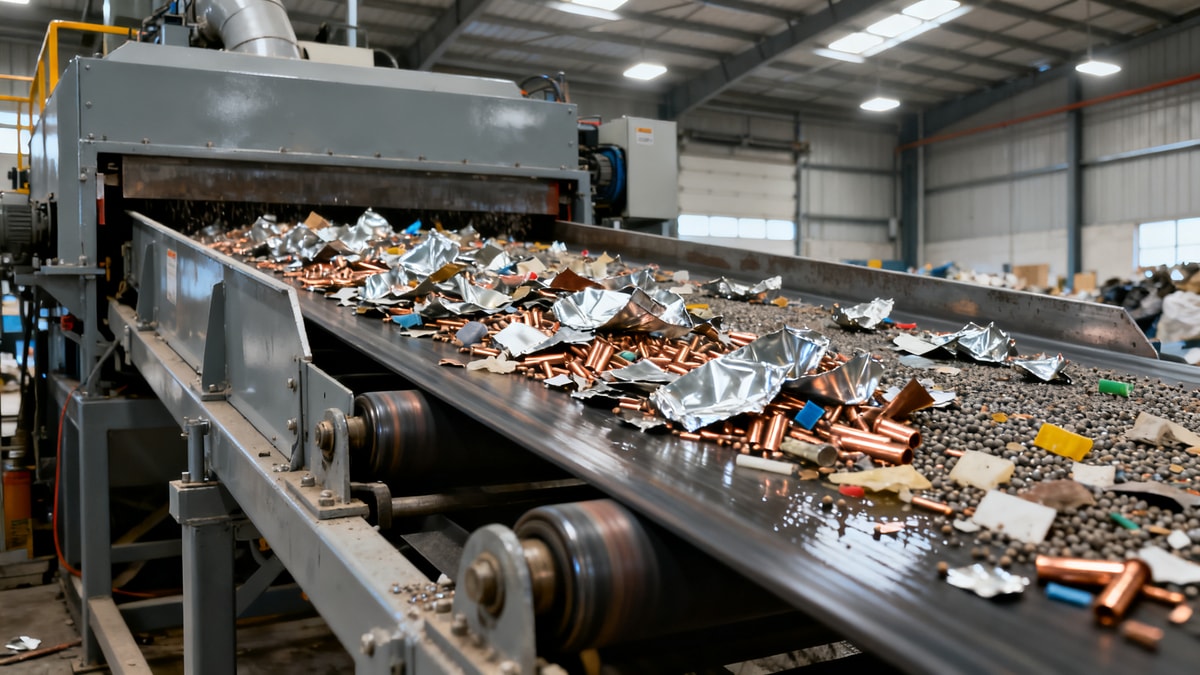
When an eddy current separator starts missing valuable non-ferrous metals, the problem often begins with the feed mix. Size variation, moisture, ferrous contamination, and unstable material flow can all reduce separation efficiency and increase product loss. For operators, understanding how feed composition affects machine response is the first step toward restoring performance, improving recovery rates, and keeping the system running at its best.
What an Eddy Current Separator Does and Why Feed Mix Matters
An eddy current separator is designed to recover non-ferrous metals such as aluminum, copper, and brass from mixed material streams. It works by inducing electrical currents in conductive particles through a rapidly changing magnetic field. Those induced currents create a repelling force, pushing target metals away from the normal trajectory of the rest of the material. In theory, the principle is straightforward. In operation, however, machine performance depends heavily on what actually enters the rotor zone.
For operators in recycling lines, scrap recovery plants, municipal solid waste facilities, and industrial by-product processing, feed mix quality often determines whether the eddy current separator delivers strong recovery or persistent product loss. A machine can be mechanically sound, correctly installed, and running at the right speed, yet still perform poorly if the incoming material is too wet, too deep, too inconsistent, or too contaminated with ferrous carryover. That is why feed preparation is not a secondary issue. It is part of the separation system itself.
Across modern industrial operations, especially where throughput and material value are both high, poor feed control creates hidden costs. These include lower non-ferrous recovery, dirtier final fractions, increased manual sorting, more recirculation, and reduced confidence in downstream quality. For operations focused on efficiency and resilience, understanding feed behavior is essential to getting consistent value from an eddy current separator.
Why Performance Drops in Real Operating Conditions
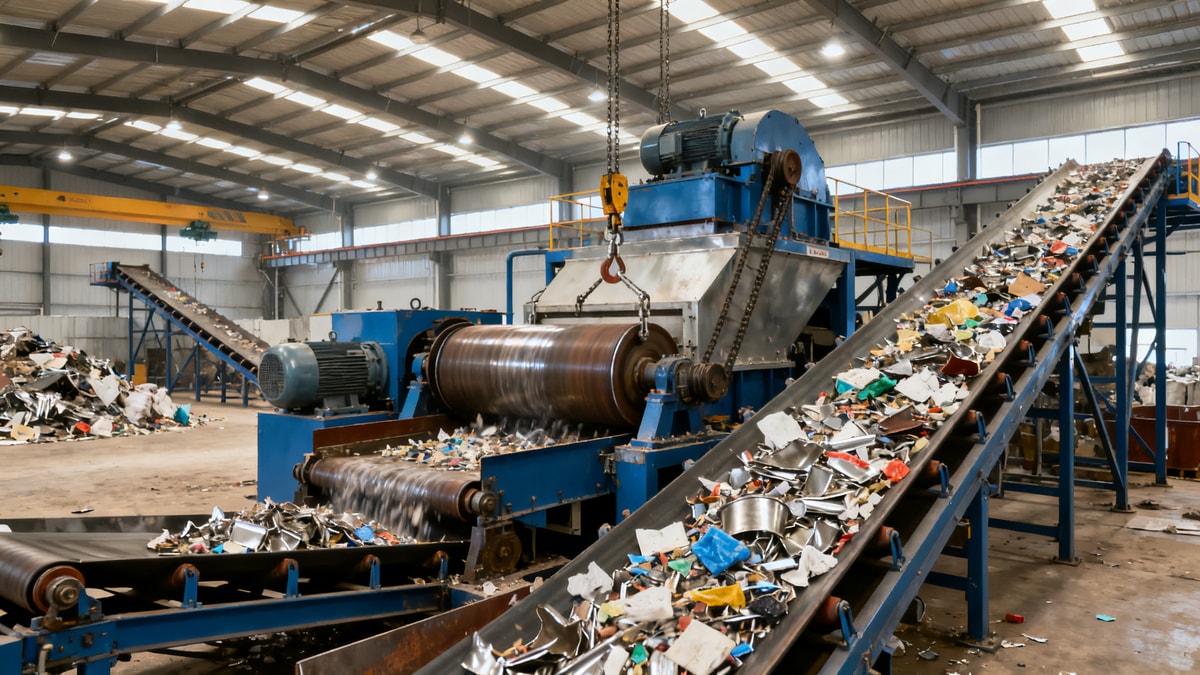
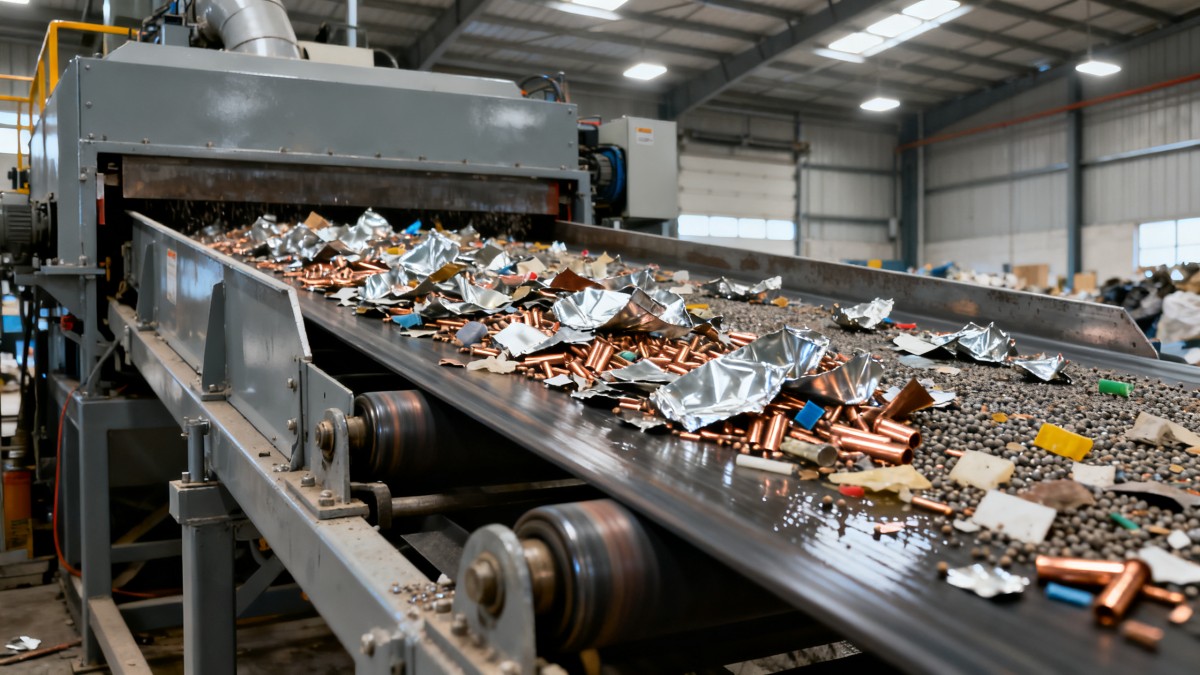
In real plants, material streams are rarely uniform. Shredded scrap may contain foil, rigid aluminum, insulated wire, glass, rubber, fluff, and fine ferrous residue in the same load. Construction and demolition waste can shift in density and particle shape from hour to hour. Electronic scrap may include highly conductive pieces mixed with plastics that behave unpredictably on the belt. When this variation is not controlled, the separator responds inconsistently because the physical conditions around the particle change before the magnetic interaction can do its job.
The most common symptom is a drop in recovery of smaller or lighter non-ferrous particles. These pieces are especially sensitive to belt burden, particle overlap, and turbulence at the discharge point. Heavy or bulky material can shield them, causing missed ejections. At the same time, excessive fines may create a carpet effect that reduces contact consistency and alters the throw pattern. The result is not always dramatic machine failure. More often, it is a gradual decline in separation sharpness that operators notice only after yield reports or quality complaints begin to rise.
Key Feed Mix Factors That Influence Separation Efficiency
Several feed characteristics have a direct impact on how an eddy current separator performs. Operators who understand these factors can diagnose issues faster and make more effective adjustments.
Particle size distribution
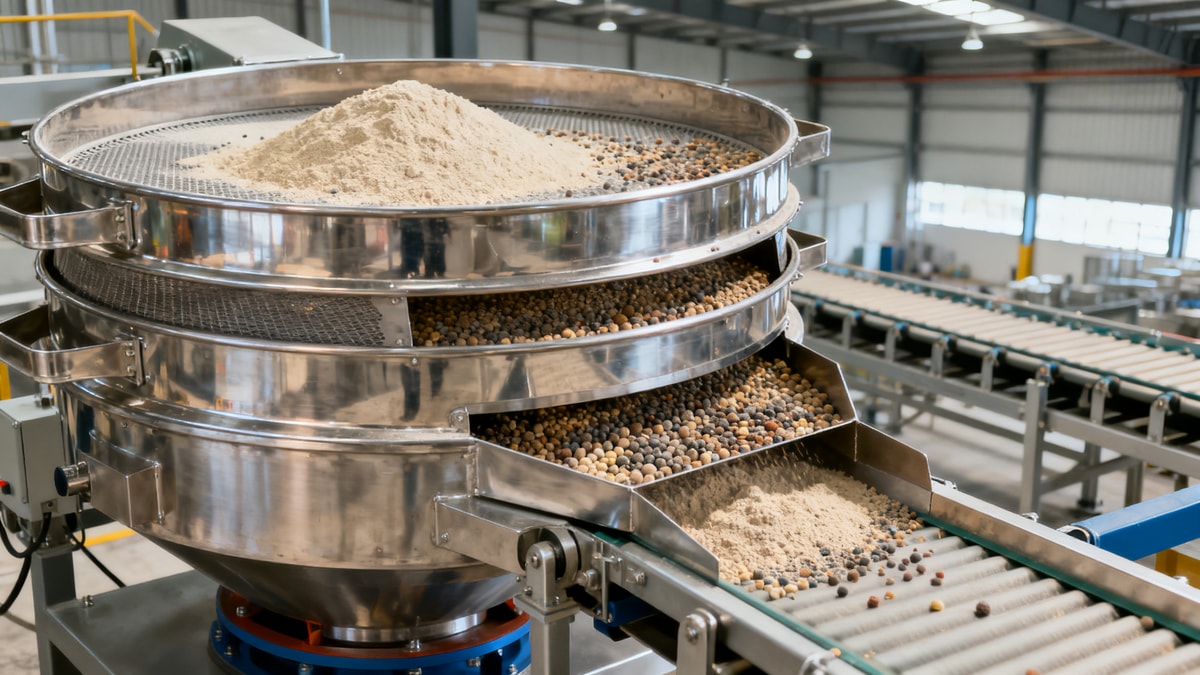
Wide size variation is one of the biggest causes of unstable performance. Large pieces bounce differently than small pieces, and thin foil reacts differently than dense metal chunks. If fines and oversized materials are processed together, the machine cannot maintain an optimized split for all fractions at once. Pre-screening into narrower size ranges usually improves both recovery and purity.
Moisture and stickiness
Moisture changes flow behavior. Wet material tends to clump, adhere to the belt, and carry fines in unstable patterns. Sticky feed can also trap light non-ferrous particles inside non-conductive material bundles, preventing proper ejection. Even if the eddy current separator itself is functioning correctly, wet feed may create performance losses that look like a mechanical fault.
Ferrous contamination
A strong upstream magnet should remove most ferrous material before the eddy current separator. When ferrous pieces remain in the feed, they disrupt flow, create wear risks, and reduce separation quality. Magnetic carryover is especially problematic when small steel fragments travel with conductive non-ferrous particles and alter the discharge pattern.
Layer depth and loading rate
A separator works best when particles present in a controlled, single-layer or near single-layer stream. If the belt is overloaded, materials stack on top of one another and target particles lose clear exposure to the rotor field. Throughput may look strong on paper, but actual metal recovery often falls. Operators should treat overfeeding as a quality problem, not just a production choice.
Shape and conductivity differences
Flat aluminum pieces, twisted wire, cast fragments, and copper granules do not respond in the same way. Conductivity, mass, and geometry all affect the ejection path. If the feed mix contains extreme shape diversity, splitter settings that capture one valuable fraction may lose another. This is why test runs and periodic trajectory checks matter.
Operational Impact by Feed Condition
The table below summarizes how typical feed conditions affect separator behavior and what operators should watch for.
Where This Issue Appears Most Often
Feed-related performance loss is not limited to one sector. It appears anywhere mixed waste or shredded product streams contain recoverable non-ferrous metals. In automotive shredder residue, the challenge is often a mix of fluff, fragmented metal, and changing density. In MRF and municipal recycling operations, seasonal moisture and packaging variability create unstable flow. In electronic scrap, operators face highly mixed particle geometry and strong value pressure on copper and aluminum recovery. In foundry or metal-processing residues, fines and oxidation can complicate the response of the eddy current separator.
This broad relevance matters because many industrial operators assume declining recovery means the separator rotor, belt, or splitter is the main problem. Sometimes that is true, but many losses begin upstream. A process line is an integrated system. Feed preparation, magnetic separation, screening, conveying, and machine settings all shape final performance.
Practical Steps Operators Can Take to Restore Performance
Improving an eddy current separator does not always require major capital changes. In many plants, the fastest gains come from disciplined operating practice and simple upstream corrections.
1. Audit the feed before adjusting the machine
Before changing rotor speed or splitter position, inspect the incoming stream. Look for size inconsistency, moisture, visible steel carryover, and material layering on the belt. If the feed itself is unstable, machine adjustments may only mask the problem temporarily.
2. Keep feed presentation as uniform as possible
A steady, even material curtain supports better separation. Vibratory feeders, controlled dosing, and proper belt loading reduce surging. Operators should watch not only average throughput but also short-term peaks that overload the separator for a few seconds at a time.
3. Strengthen upstream preparation
Screening, magnetic removal, and liberation directly influence recovery. If materials are not adequately prepared, even a high-quality eddy current separator will struggle. Investing attention in upstream housekeeping often gives a better return than chasing downstream losses.
4. Verify actual trajectory, not assumed trajectory
Operators should periodically observe where different target particles land. A splitter position that worked for one feed condition may not be suitable after changes in moisture, fraction size, or product mix. Test with representative material, especially after maintenance or process changes.
5. Monitor recovery and purity together
It is possible to improve recovery while lowering product quality, or to raise purity while losing valuable metal. A balanced evaluation should track both. Daily sampling, simple mass balance checks, and routine contamination reviews give operators a clearer picture of true separator performance.
What Good Feed Control Means for Industrial Operations
For industrial facilities focused on reliability, feed control is more than a sorting detail. It supports production stability, reduces rework, and strengthens downstream material value. Better feed consistency helps the eddy current separator operate within its designed response window, which can lower wear stress, reduce manual intervention, and improve confidence in final product specifications.
This has broader business significance as well. In sectors where compliance, efficiency, and process transparency are increasingly important, stable separation performance contributes to measurable operational resilience. For plant managers and operators alike, the lesson is simple: separator performance should be evaluated as a process outcome, not only as a machine condition.
A Practical Operating Perspective
When an eddy current separator begins underperforming, the most effective response is often to step back and review the feed mix first. Material size, moisture, magnetic contamination, and belt loading all influence how conductive particles react in the separation zone. By controlling these variables, operators can often recover missed aluminum and copper, improve product cleanliness, and reduce unnecessary troubleshooting time.
For teams responsible for day-to-day plant efficiency, the priority should be clear feed presentation, routine upstream checks, and performance verification based on actual recovery results. In many cases, the path to better separator output is not a more aggressive setting, but a better-prepared stream. That operating discipline turns the eddy current separator from a variable recovery point into a dependable part of a modern industrial sorting system.
Technical Specifications
- India BIS Draft IS 17832:2026 Sets Noise & Dust Limits for Waste CrushersAuthor :Environmental Engineering Director
- Korea MFDS Mandates Korean UI & KOSHA OEL Database for Industrial Water AnalyzersAuthor :Precision Metrology Expert
- Indonesia BPOM Mandates PM0.1 Efficiency & CADR Decay Labeling for Industrial Air PurifiersAuthor :Environmental Engineering Director
Expert Insights

Chief Security Architect
Dr. Thorne specializes in the intersection of structural engineering and digital resilience. He has advised three G7 governments on industrial infrastructure security.
Related Analysis
- May 03, 2026India BIS Draft IS 17832:2026 Sets Noise & Dust Limits for Waste CrushersAuthor :Environmental Engineering Director
- May 03, 2026Korea MFDS Mandates Korean UI & KOSHA OEL Database for Industrial Water AnalyzersAuthor :Precision Metrology Expert
- May 03, 2026Indonesia BPOM Mandates PM0.1 Efficiency & CADR Decay Labeling for Industrial Air PurifiersAuthor :Environmental Engineering Director
Core Sector // 01
Security & Safety
- India BIS Draft IS 17832:2026 Sets Noise & Dust Limits for Waste CrushersAuthor :Environmental Engineering Director

- Eddy Current Separator Performance Drops With the Wrong Feed MixAuthor :Environmental Engineering Director

- Magnetic Separator Machine Buying Traps in Mixed Scrap LinesAuthor :Environmental Engineering Director

- When a Vibrating Screen Separator Starts Losing AccuracyAuthor :Environmental Engineering Director

- Copper Wire Granulator Output Depends on More Than Blade SpeedAuthor :Environmental Engineering Director

- Medical Waste Incinerator Compliance Risks Often Missed EarlyAuthor :Environmental Engineering Director

- Compost Turner Machine Size: Bigger Is Not Always BetterAuthor :Environmental Engineering Director

- What to Check Before Buying Smokeless Incinerators WholesaleAuthor :Environmental Engineering Director