What should an Electrical & Power quotation really include?
Author
Date Published
Reading Time
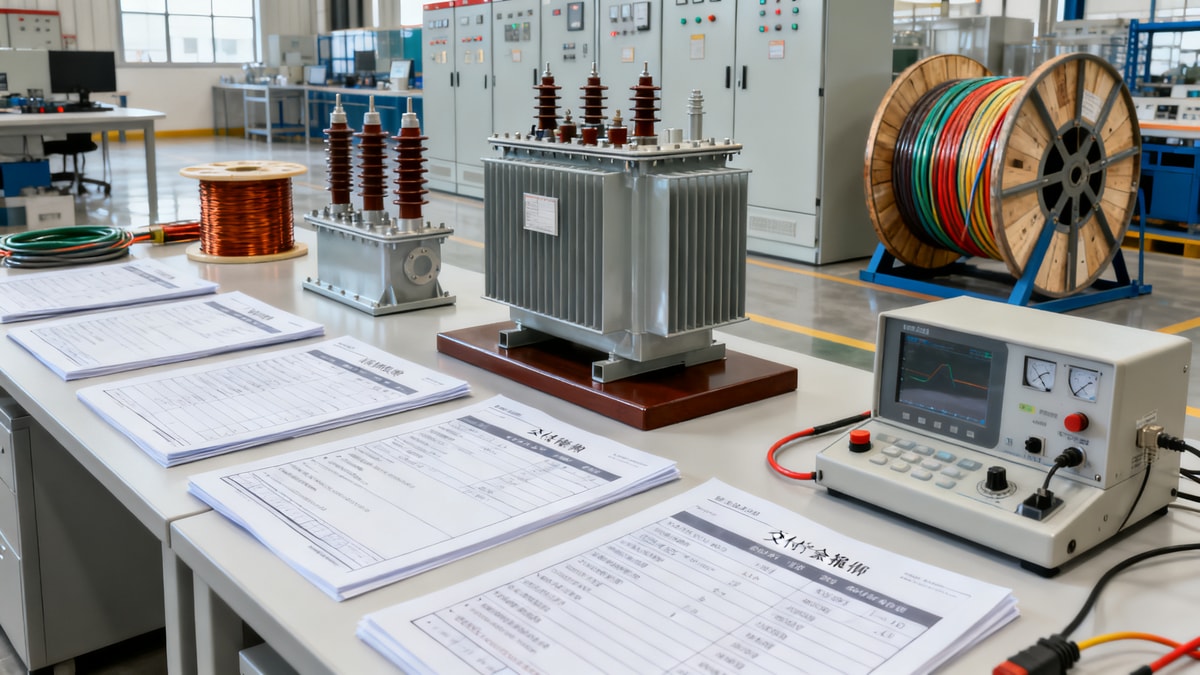
An accurate Electrical & Power quotation should do far more than list prices. For procurement professionals, it must clearly define technical scope, compliance standards, material specifications, delivery terms, testing requirements, and lifecycle cost factors. Understanding what an Electrical & Power quotation really include helps buyers reduce risk, compare suppliers effectively, and secure reliable solutions for demanding industrial projects.
In industrial procurement, a weak quotation often creates hidden cost exposure long before equipment arrives on site. A price sheet without design assumptions, excluded items, inspection criteria, or warranty boundaries can lead to variation claims, commissioning delays, and non-compliant installations. For EPC contractors, plant operators, and sourcing teams, the quotation is not just a commercial reply; it is an operational risk document.
This is especially true in Electrical & Power projects, where even small omissions can affect cable sizing, breaker coordination, transformer loading, enclosure protection, or grid compatibility. A buyer comparing 3 suppliers may see a 12% price gap, yet the difference often comes from missing test reports, downgraded materials, shorter warranty periods, or excluded accessories. A complete Electrical & Power quotation makes those differences visible before purchase approval.
Why a complete Electrical & Power quotation matters in industrial procurement
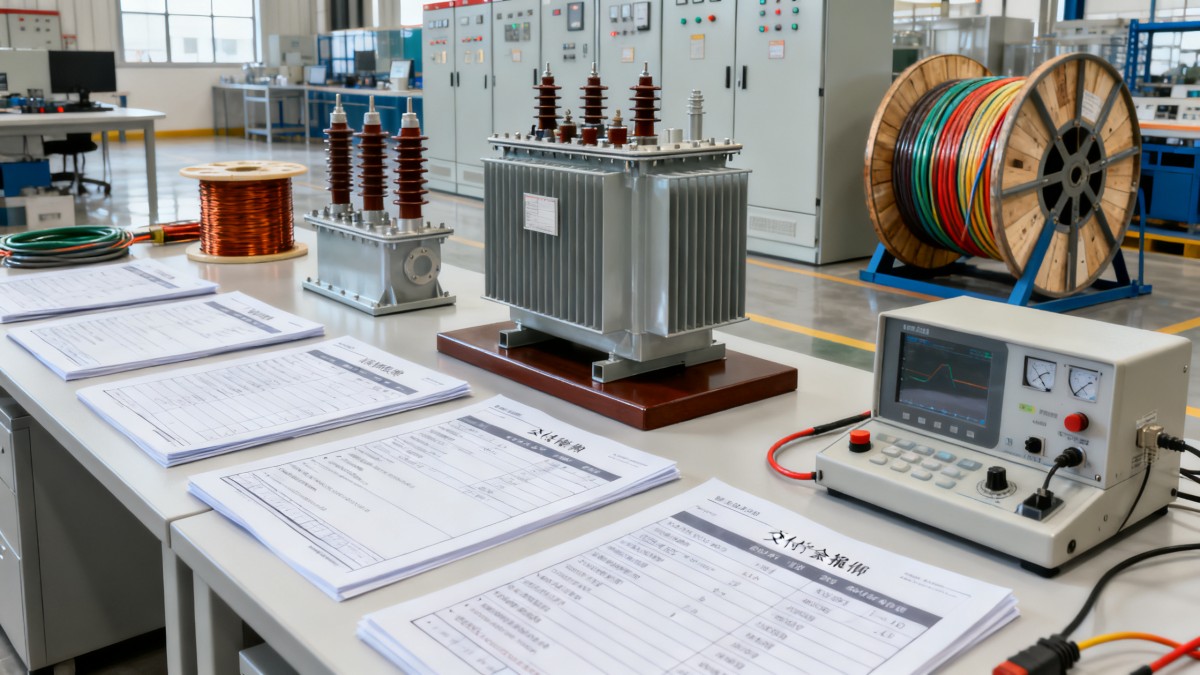
In heavy industry, quotation quality directly affects budgeting accuracy, technical compliance, and project execution. A quotation for switchgear, transformers, UPS systems, power cables, bus ducts, protection relays, or motor control centers should support decisions across at least 4 dimensions: technical suitability, compliance, delivery readiness, and total cost over the asset life.
Procurement teams frequently work under compressed timelines of 7–21 days for bid evaluation. Under that pressure, incomplete offers may appear competitive because major cost drivers are deferred to later clarification. Typical gaps include missing termination kits, special tools, commissioning supervision, or FAT witness arrangements. These gaps can increase project cost by 5%–15% after award, especially in brownfield or high-spec environments.
The procurement risks hidden behind a low headline price
A low initial number does not always indicate procurement efficiency. In Electrical & Power sourcing, omitted technical notes can lead to redesign, rejected documentation, or installation mismatch. If a quotation does not specify voltage class, frequency, short-circuit rating, duty cycle, ambient temperature, and ingress protection level, the buyer is not comparing equivalent solutions.
- Underspecified interrupting capacity for breakers in high-fault networks
- Incorrect cable conductor material, such as aluminum quoted instead of copper
- Missing mandatory standards such as IEC, UL, CE, or project-specific approvals
- Excluded testing, documentation, labels, spares, or site support
For projects above 400V, 11kV, or medium-voltage distribution applications, these omissions can become major approval blockers. A procurement team should therefore evaluate quotation completeness before analyzing unit price.
What buyers usually need to compare side by side
The table below shows the most common quotation dimensions used in industrial Electrical & Power procurement reviews. These elements help buyers compare offers on a like-for-like basis instead of relying only on total amount.
The key takeaway is simple: a professional Electrical & Power quotation should function as a decision document, not just a cost summary. When these 4 areas are clearly stated, buyers can compare offers faster and negotiate from a stronger technical position.
What an Electrical & Power quotation should really include
A robust quotation usually contains 8 core sections. While the exact content varies by product category, industrial duty, and project stage, the logic remains consistent: define what is being supplied, under which standards, on what timeline, with what performance obligations, and at what lifetime cost.
1. Clear technical scope and rating data
Every Electrical & Power quotation should begin with a precise description of the offered system. This includes equipment type, quantity, voltage, current, frequency, insulation level, fault rating, control philosophy, and environmental design basis. For example, a transformer quote should state kVA or MVA rating, primary and secondary voltage, vector group, impedance percentage, cooling method, and tap changer details.
For switchgear or MCC packages, buyers should also expect busbar rating, internal segregation form, IP rating, enclosure material, feeder count, and breaker brand equivalency if alternatives are proposed. If the offer says “as per datasheet” without summarizing 6–10 key parameters, the quotation is incomplete from a procurement standpoint.
Key scope details to verify
- Rated voltage and frequency, such as 400V/50Hz or 13.8kV/60Hz
- Short-circuit withstand or interrupting capacity, for example 25kA, 31.5kA, or 50kA
- Temperature range, such as -10°C to +45°C for outdoor or desert use
- Protection class, such as IP42, IP54, or IP65 depending on installation area
2. Standards, compliance, and documentation package
Industrial buyers should never assume compliance. The quotation must explicitly identify the governing standards, including IEC series, UL requirements, CE marking relevance, ISO-based manufacturing controls, or utility-specific technical rules. In many projects, the difference between “designed generally to IEC” and “fully tested to IEC clauses specified in the tender” is commercially significant.
Documentation is equally important. A complete Electrical & Power quotation should state whether the supplier will provide GA drawings, single-line diagrams, cable schedules, wiring diagrams, test procedures, operation manuals, recommended spare parts lists, and final as-built documents. On complex packages, missing documents can delay approval by 1–3 weeks.
3. Bill of materials and material specification transparency
Material clarity helps prevent silent downgrades. The quotation should identify conductor material, enclosure thickness, busbar material, insulation class, plating or coating, sealing materials, gland plates, hardware type, and cable accessories. Procurement professionals should look for distinctions such as copper versus aluminum, cast resin versus oil-immersed design, or stainless steel 304 versus 316 in corrosive settings.
Where alternatives are offered, they should be listed clearly as deviations. If one bidder prices FRLS cable and another prices XLPE armored cable, the total amount is not directly comparable unless the specification baseline is stated line by line.
4. Testing, inspection, and acceptance requirements
Testing should never be an afterthought. A serious Electrical & Power quotation identifies routine tests, type test references where applicable, FAT scope, third-party inspection options, and site acceptance support. For some categories, buyers should also request insulation resistance checks, ratio tests, relay secondary injection, heat run references, or calibration certificates.
The table below outlines a practical structure procurement teams can use when reviewing testing language in quotations.
When this section is detailed, buyers can estimate not only quality assurance coverage but also hidden logistics and travel cost. In many industrial projects, FAT and inspection issues account for 1–2 extra weeks if responsibilities are not defined up front.
5. Delivery terms, packaging, and logistics boundaries
Lead time should be specific, not vague. “8–10 weeks ex works after approved drawings and receipt of advance payment” is far more useful than “prompt delivery.” The quotation should also define production start trigger, drawing approval cycle, packing type, shipment splits, export crating, humidity protection, and storage limits after delivery.
For international orders, Incoterms such as EXW, FOB, CFR, or DDP change cost responsibility materially. Procurement personnel should check whether inland transport, marine insurance, customs documentation, or destination unloading is included. A low quote based on EXW can become less competitive than a higher CIF or DDP offer once logistics are fully loaded.
6. Commercial assumptions, warranty, and exclusions
A strong Electrical & Power quotation identifies payment structure, validity period, tax treatment, currency, bank charges, warranty duration, liquidated damages assumptions if any, and exclusion list. Warranty is not just a number of months. Buyers should confirm whether it starts at shipment, delivery, commissioning, or first energization, because the difference can be 3–6 months in long projects.
Exclusions require equal attention. Common excluded items include cable laying, civil works, foundations, terminal lugs, SCADA integration, software licenses, spare fuses, or harmonic studies. If excluded items later become mandatory, the budget baseline will shift.
- Check if warranty covers repair only or also replacement and travel.
- Verify whether commissioning is included for 1 visit or multiple visits.
- Confirm if delays caused by buyer comments reset the delivery schedule.
How procurement teams should evaluate and negotiate an Electrical & Power quotation
Reviewing a quotation effectively requires a repeatable process. In most industrial organizations, the best results come from a 3-stage workflow: technical normalization, commercial normalization, and risk adjustment. This prevents a buyer from awarding to the cheapest line item before understanding technical deviations or service limitations.
Build a like-for-like comparison sheet
Start by creating a comparison matrix with 10–15 fields covering rating, standards, accessories, lead time, FAT, warranty, documentation, and exclusions. Each supplier response should be marked as compliant, deviation, optional, or not stated. If more than 20% of fields are “not stated,” request clarification before price negotiation.
This step is critical when comparing offers for generators, panel boards, transformers, VFDs, grounding systems, or substation packages. Two quotations that look similar commercially may differ materially in enclosure grade, cable entry method, supervisory support, or spare parts coverage.
Focus on lifecycle cost, not just purchase price
The purchase price may represent only part of the financial picture. Buyers should estimate 5-year cost exposure by adding energy loss, maintenance frequency, spare replacement, downtime sensitivity, and service accessibility. For example, a slightly higher transformer quotation with lower no-load and load losses may recover the difference over 24–60 months depending on operating hours.
Similarly, a panel package with better documentation, modular design, and available local service may reduce outage duration by several hours per event. In process plants, those hours can outweigh a 6% initial price saving.
Questions buyers should raise before award
The most effective negotiation questions are precise and evidence-based. Instead of asking for a discount first, procurement teams should close technical and commercial ambiguities. That often reveals room for meaningful optimization without increasing project risk.
- Which accessories are mandatory for safe operation but listed as optional?
- Are test reports delivered before shipment or only after final payment?
- What are the approved deviations from the tender datasheet?
- How many drawing revisions are included in the quoted engineering scope?
- What is the standard spare package for the first 12–24 months of operation?
Common quotation mistakes that delay projects
Several recurring mistakes lead to avoidable delay. One is accepting “budgetary” wording for a project-ready purchase. Another is failing to lock the document hierarchy between tender specification, data sheet, drawing notes, and supplier deviations. A third is overlooking post-order deliverables such as document transmittal schedule, ITP approval, or packing inspection notices.
Buyers should also be cautious when a quotation promises short lead times without defining the approval cycle. An 8-week manufacturing commitment may turn into 12 weeks if the first 2 weeks are consumed by unresolved technical clarifications or missing load lists.
What a procurement-ready quotation looks like in practice
A procurement-ready Electrical & Power quotation is easy to audit, easy to compare, and difficult to misinterpret. It usually includes a commercial cover, technical summary, compliance statement, deviations list, document list, testing schedule, lead time basis, and warranty terms. In many industrial transactions, quotations that follow this structure shorten internal approval cycles by 20%–30% because fewer clarification rounds are needed.
Minimum checklist before issuing a purchase order
Before award, procurement professionals should confirm that the selected quotation answers 6 essential questions: what is included, what standards apply, what documents will be delivered, what tests will be performed, when goods will ship, and what support is available after delivery. If any of these points remains open, the commercial risk is still active.
- Match all key ratings against the approved datasheet.
- Verify compliance and deviations in writing.
- Confirm delivery trigger and document schedule.
- Check FAT, inspection, and reporting obligations.
- Review exclusions, warranty start point, and spare recommendations.
- Align price with complete scope rather than the lowest visible total.
For organizations sourcing across substations, plant utilities, water treatment, manufacturing lines, or critical backup power systems, disciplined quotation review reduces both technical exposure and commercial ambiguity. That is the real value of understanding what an Electrical & Power quotation should really include.
A well-structured Electrical & Power quotation gives procurement teams the confidence to evaluate suppliers beyond headline price. It clarifies technical scope, standards, materials, test obligations, delivery boundaries, and lifecycle cost implications, helping industrial buyers make faster and safer sourcing decisions. If you are reviewing quotations for critical infrastructure, power distribution, or plant reliability projects, now is the right time to standardize your evaluation criteria, get a tailored sourcing framework, and consult product details with a trusted industry partner. Contact us today to discuss your requirements and explore more reliable procurement solutions.
Technical Specifications
Expert Insights

Chief Security Architect
Dr. Thorne specializes in the intersection of structural engineering and digital resilience. He has advised three G7 governments on industrial infrastructure security.
Related Analysis
- May 04, 2026When Components & Metals bulk order pricing stops being cheaperAuthor :Heavy Industry Strategist
- May 04, 2026What makes an Instruments & Measurement supplier dependableAuthor :Precision Metrology Expert
- May 04, 2026How to assess an Environment & Ecology exporter by documentationAuthor :Environmental Engineering Director
Core Sector // 01
Security & Safety
- Power distribution solutions that reduce overload complaintsAuthor :Grid Infrastructure Analyst

- What should an Electrical & Power quotation really include?Author :Grid Infrastructure Analyst

- How to compare an Electrical & Power manufacturerAuthor :Grid Infrastructure Analyst

- EN 61800-5-2:2026 Effective May 2026: SIL2 Certification Required for EU Industrial DrivesAuthor :Grid Infrastructure Analyst

- When Is a Step Down Transformer the Wrong Choice?Author :Grid Infrastructure Analyst

- US DOE IE4 Rule for Dry-Type Transformers Takes Effect May 1, 2026Author :Grid Infrastructure Analyst

- DOE Raises Industrial Dry-Type Transformer Efficiency to IE4Author :Grid Infrastructure Analyst

- Revised Maritime Code Takes Effect May 1, 2026Author :Grid Infrastructure Analyst