How to compare an Electrical & Power manufacturer
Author
Date Published
Reading Time
Choosing the right Electrical & Power manufacturer is not mainly about finding the lowest price. For business evaluators, the real question is whether a supplier can meet technical requirements, pass compliance checks, deliver on schedule, support long lifecycle assets, and reduce operational risk over time. A weak choice can create project delays, safety exposure, warranty disputes, and costly replacement cycles. A strong choice becomes a long-term reliability partner.
This guide is designed for commercial evaluation teams, sourcing managers, EPC buyers, and industrial decision-makers who need a practical way to compare suppliers beyond brochures and sales claims. It explains what to examine, which questions matter most, and how to distinguish a credible manufacturer from one that only looks competitive on paper.
What should you compare first when evaluating an Electrical & Power manufacturer?
Start with a simple principle: compare risk before you compare price. In electrical and power systems, the cost of a wrong vendor decision is usually much higher than the savings from a lower initial quotation. Before looking at commercial terms, confirm whether the manufacturer is technically qualified, compliant for your market, and operationally capable of supplying at the scale and consistency your project requires.
For most business evaluators, the first screening should cover five areas: regulatory compliance, product performance, manufacturing capability, supply reliability, and lifecycle support. If a manufacturer is weak in any of these, a low unit cost may be misleading. A product that fails field conditions, misses certifications, or arrives late can trigger losses far beyond procurement budgets.
In practical terms, the best Electrical & Power manufacturer is not always the largest or cheapest supplier. It is the one whose capabilities align with your application, region, technical risk profile, and long-term maintenance model. That is why comparison should be structured and evidence-based rather than driven by brand recognition alone.
Are the supplier’s certifications and compliance claims actually relevant to your project?
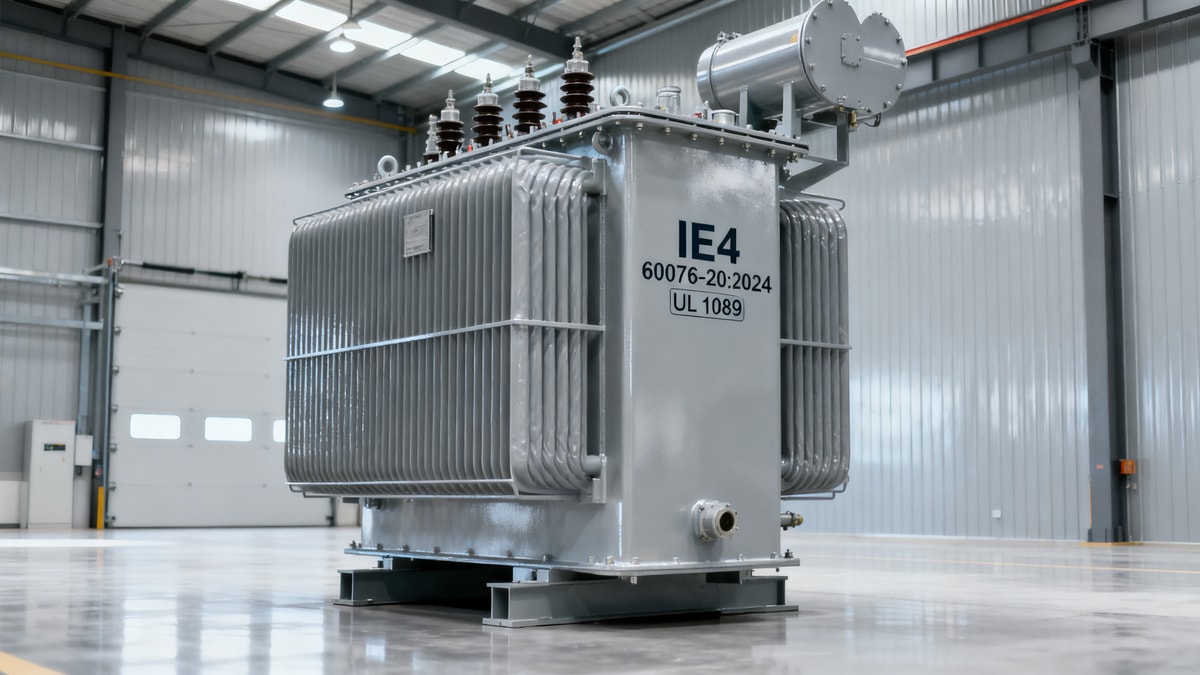
Many manufacturers list certifications, but business evaluators need to verify whether those certifications apply to the exact products, production sites, and destination markets involved. A general ISO certificate is not enough if your project also requires UL, CE, IEC conformity, RoHS, REACH, or utility-specific approvals. The key is relevance, validity, and traceability.
Ask for current certificates, test reports, declarations of conformity, and where needed, third-party laboratory documentation. Then check whether the submitted evidence matches the exact model families being quoted. In power distribution, switchgear, transformers, cables, enclosures, breakers, relays, and control components often have different approval pathways. One approved product line does not automatically validate all others.
It is also important to assess how the manufacturer manages compliance internally. Strong suppliers have documented quality systems, revision control, material traceability, incoming inspection procedures, and clear non-conformance handling. They can explain how they maintain product consistency after testing and certification. This matters because field risk often comes not from design intent, but from manufacturing variation.
If your organization operates across regions, compare manufacturers on multinational compliance readiness. A supplier that understands local grid codes, documentation expectations, labeling rules, and export requirements can save substantial time during approval and commissioning. For business evaluators, this directly affects project speed and regulatory risk.
Can the manufacturer meet your technical requirements under real operating conditions?
A quote may look acceptable on a datasheet, but technical comparison should go deeper than nominal ratings. The right Electrical & Power manufacturer must show that its products perform reliably in your actual use case: high ambient temperatures, humidity, vibration, altitude, corrosive environments, unstable grid conditions, continuous duty cycles, or mission-critical uptime requirements.
Review core performance factors such as voltage class, current rating, insulation system, thermal behavior, short-circuit withstand capacity, efficiency, ingress protection, electromagnetic compatibility, and service life expectations. For power equipment, small differences in design quality can significantly affect heat management, fault tolerance, and maintenance intervals.
Ask for application-specific references. If you are buying for heavy industry, utilities, data centers, oil and gas, manufacturing plants, or infrastructure projects, the supplier should be able to point to similar installations. Comparable operating environments are more useful than generic case studies. Real-world evidence often reveals whether the manufacturer truly understands demanding applications.
Engineering responsiveness is another critical comparison point. Can the supplier adapt designs, customize interfaces, support integration with existing systems, and clarify technical deviations quickly? Manufacturers with strong engineering teams reduce project friction, especially when specifications evolve or site conditions create unexpected constraints.
How do you assess manufacturing strength beyond marketing claims?
Many buyers focus heavily on the product itself and not enough on how it is made. Yet manufacturing discipline is often the clearest predictor of consistency. A qualified Electrical & Power manufacturer should be able to demonstrate process control, equipment capability, workforce competence, testing discipline, and production planning maturity.
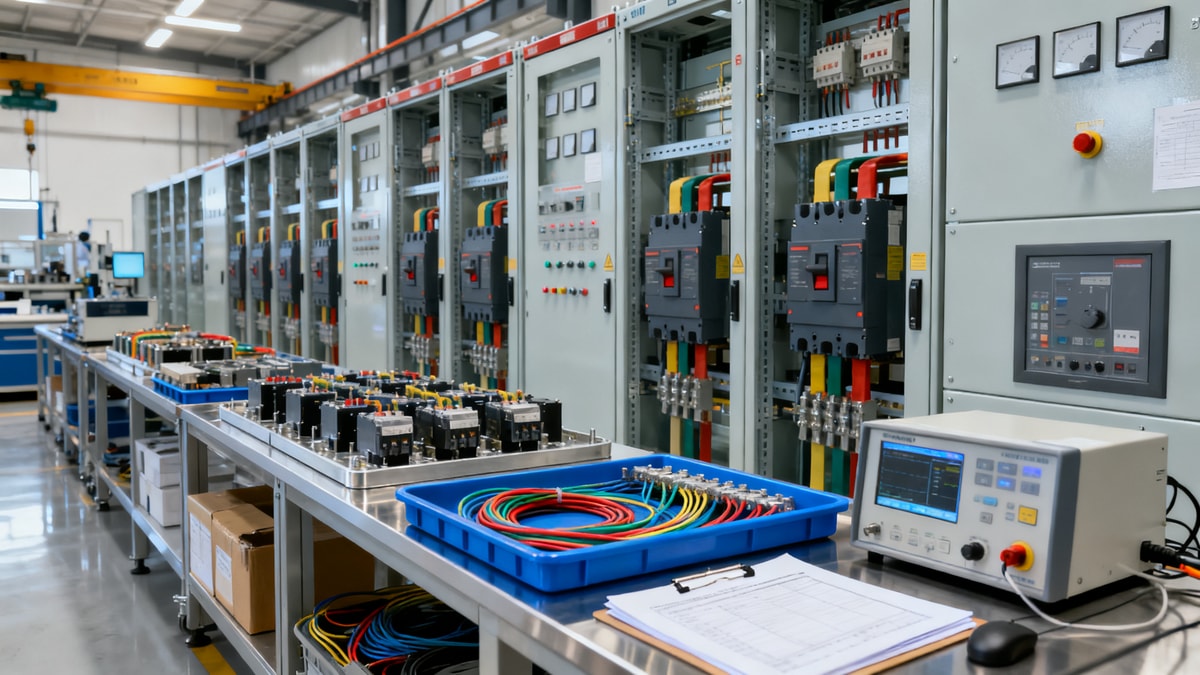
During evaluation, review factory scale, key production lines, automation level, calibration practices, final inspection protocols, and failure analysis procedures. If possible, request a factory audit or virtual plant review. Pay attention to cleanliness, material flow, lot identification, test documentation, and how the plant handles rework. These details often reveal whether quality is systemic or reactive.
Ask about sourcing strategy for critical materials and components. In electrical products, supply chain weakness can affect copper content, insulation materials, semiconductors, contact systems, magnetic cores, connectors, and protective housings. A manufacturer that depends on unstable upstream supply may struggle to maintain specification consistency or lead times during market disruptions.
It is also wise to compare make-versus-assemble capability. Some suppliers position themselves as manufacturers but mainly assemble outsourced parts. That is not always a problem, but business evaluators should understand which processes are controlled in-house and which are subcontracted. Greater transparency here leads to better assessment of quality, flexibility, and risk exposure.
How important are lead time, logistics, and delivery performance?
For industrial procurement, delivery reliability can be just as important as product quality. A technically acceptable manufacturer may still be a poor fit if it cannot meet project milestones, maintain order visibility, or support phased delivery schedules. Compare not only quoted lead times, but also the supplier’s historical on-time delivery performance and its ability to manage urgent changes.
Ask manufacturers for realistic production windows by product category, minimum order quantities, order backlog information, and contingency planning for raw material shortages. If the supplier gives overly optimistic schedules without explaining assumptions, that is a warning sign. Mature manufacturers can distinguish standard lead time, peak season lead time, and custom engineering lead time.
Logistics capability matters especially for global buyers. Review export packaging standards, shipment documentation, Incoterms familiarity, customs support, and regional warehousing options. Electrical and power equipment is often high value, compliance-sensitive, and vulnerable to transit damage. A supplier with poor packaging and weak documentation can create delays even after production is complete.
For project-driven procurement, compare communication discipline during order execution. Good manufacturers provide production milestones, inspection scheduling, dispatch confirmation, and issue escalation paths. This level of control helps procurement and project teams manage installation sequencing and avoid downstream disruption.
What should business evaluators look for in cost, pricing, and total value?
Price comparison should move beyond headline unit cost. The more useful question is total cost of ownership over the asset lifecycle. A lower-priced product may cost more if it has shorter service life, higher maintenance frequency, lower energy efficiency, limited spare parts support, or greater failure risk. In electrical and power systems, these hidden costs can be substantial.
Build your comparison around total value drivers: acquisition price, installation complexity, efficiency losses, commissioning support, warranty terms, replacement part availability, failure rates, and maintenance burden. If downtime is expensive in your operation, reliability should carry more weight than a small purchase price difference.
Request transparent quotations that separate product cost, tooling, engineering changes, testing, documentation, packaging, logistics, and after-sales support. This makes vendor comparison fairer and prevents underpriced offers from becoming expensive during execution. A trustworthy manufacturer is usually willing to clarify assumptions and exclusions in detail.
Commercial terms also deserve close review. Compare payment structures, currency risk, validity periods, penalty clauses, and warranty liabilities. For business evaluators, a strong commercial framework reduces dispute risk and improves predictability, especially on large or multi-phase projects.
How do after-sales support and service capability affect the decision?
After-sales support is often underestimated during sourcing, but it becomes critical once equipment is installed. The right Electrical & Power manufacturer should be able to support commissioning, troubleshooting, warranty claims, spare parts supply, technical training, and lifecycle maintenance planning. If support is weak, even a good product can become a long-term operational burden.
Evaluate service responsiveness by asking how the supplier handles field failures, technical escalation, and root cause analysis. Do they have service engineers, local partners, remote diagnostics capability, or regional stock for critical parts? If support requires long delays or unclear responsibilities, risk increases significantly.
Documentation quality is another strong indicator. Good manufacturers provide clear manuals, wiring diagrams, test certificates, maintenance schedules, spare parts lists, and revision records. This supports faster installation, easier audits, and more efficient operations. Weak documentation often signals weak internal control.
For long-life industrial assets, compare end-of-life policy and product continuity. Will the supplier maintain spare parts for five, ten, or more years? How are design changes communicated? These questions matter greatly in sectors where shutdowns are costly and replacement planning must be controlled well in advance.
Which warning signs suggest a manufacturer may not be a reliable partner?
Several red flags appear repeatedly in supplier evaluations. One is vague or inconsistent technical documentation. Another is certification claims that cannot be matched to actual model numbers or issuing bodies. A third is reluctance to discuss manufacturing processes, quality failures, or service procedures. Strong manufacturers may not be perfect, but they are usually transparent.
Other warning signs include extreme price deviations from the market without a clear explanation, unstable lead time promises, poor responsiveness from engineering teams, and inconsistent answers from sales and technical contacts. These often indicate weak internal coordination or overreliance on outsourced production.
Also be cautious when references are generic, outdated, or impossible to verify. If a supplier cannot provide relevant project examples, audit records, or traceable test evidence, the burden of risk moves to the buyer. Business evaluators should treat missing evidence as a commercial risk, not just a documentation gap.
A practical scorecard for comparing Electrical & Power manufacturers
To make decisions more objective, create a weighted evaluation scorecard. Typical categories include compliance and certifications, technical fit, manufacturing capability, quality system maturity, delivery performance, commercial competitiveness, after-sales support, and reference strength. Assign weights based on project risk. For example, compliance and reliability should carry more weight in critical infrastructure than in low-risk applications.
A simple structure may look like this: 20% compliance, 20% technical performance, 15% manufacturing quality, 15% delivery and supply reliability, 10% service support, 10% commercial terms, and 10% references and reputation. The exact weighting depends on your sector, but the method helps teams compare suppliers with greater consistency.
Use evidence, not impressions, to score each section. Certificates, test reports, audit findings, lead time records, warranty terms, sample evaluations, and customer references should all feed into the final ranking. This creates a procurement process that is easier to defend internally and more aligned with business risk management.
Conclusion: compare the manufacturer’s reliability, not just the product
When you compare an Electrical & Power manufacturer, the most important question is not who offers the lowest price or the most polished presentation. It is who can reliably support your technical, regulatory, operational, and commercial requirements over the full life of the project. For business evaluators, that means looking at evidence across compliance, engineering, production, logistics, cost structure, and service readiness.
The best sourcing decisions come from structured comparison and clear priorities. If a manufacturer can prove certification relevance, technical performance under real conditions, controlled manufacturing processes, dependable delivery, and strong after-sales support, it is far more likely to create long-term value. In electrical and power procurement, confidence comes from traceable capability, not sales language.
For teams managing critical infrastructure, a disciplined evaluation process is more than good purchasing practice. It is a safeguard for safety, uptime, financial control, and project success. Compare manufacturers accordingly, and you will make better decisions with fewer downstream surprises.
Technical Specifications
Expert Insights

Chief Security Architect
Dr. Thorne specializes in the intersection of structural engineering and digital resilience. He has advised three G7 governments on industrial infrastructure security.
Related Analysis
- May 04, 2026When Components & Metals bulk order pricing stops being cheaperAuthor :Heavy Industry Strategist
- May 04, 2026What makes an Instruments & Measurement supplier dependableAuthor :Precision Metrology Expert
- May 04, 2026How to assess an Environment & Ecology exporter by documentationAuthor :Environmental Engineering Director
Core Sector // 01
Security & Safety
- Power distribution solutions that reduce overload complaintsAuthor :Grid Infrastructure Analyst

- What should an Electrical & Power quotation really include?Author :Grid Infrastructure Analyst

- How to compare an Electrical & Power manufacturerAuthor :Grid Infrastructure Analyst

- EN 61800-5-2:2026 Effective May 2026: SIL2 Certification Required for EU Industrial DrivesAuthor :Grid Infrastructure Analyst

- When Is a Step Down Transformer the Wrong Choice?Author :Grid Infrastructure Analyst

- US DOE IE4 Rule for Dry-Type Transformers Takes Effect May 1, 2026Author :Grid Infrastructure Analyst

- DOE Raises Industrial Dry-Type Transformer Efficiency to IE4Author :Grid Infrastructure Analyst

- Revised Maritime Code Takes Effect May 1, 2026Author :Grid Infrastructure Analyst