How to Compare Medium Voltage Switchgear
Author
Date Published
Reading Time
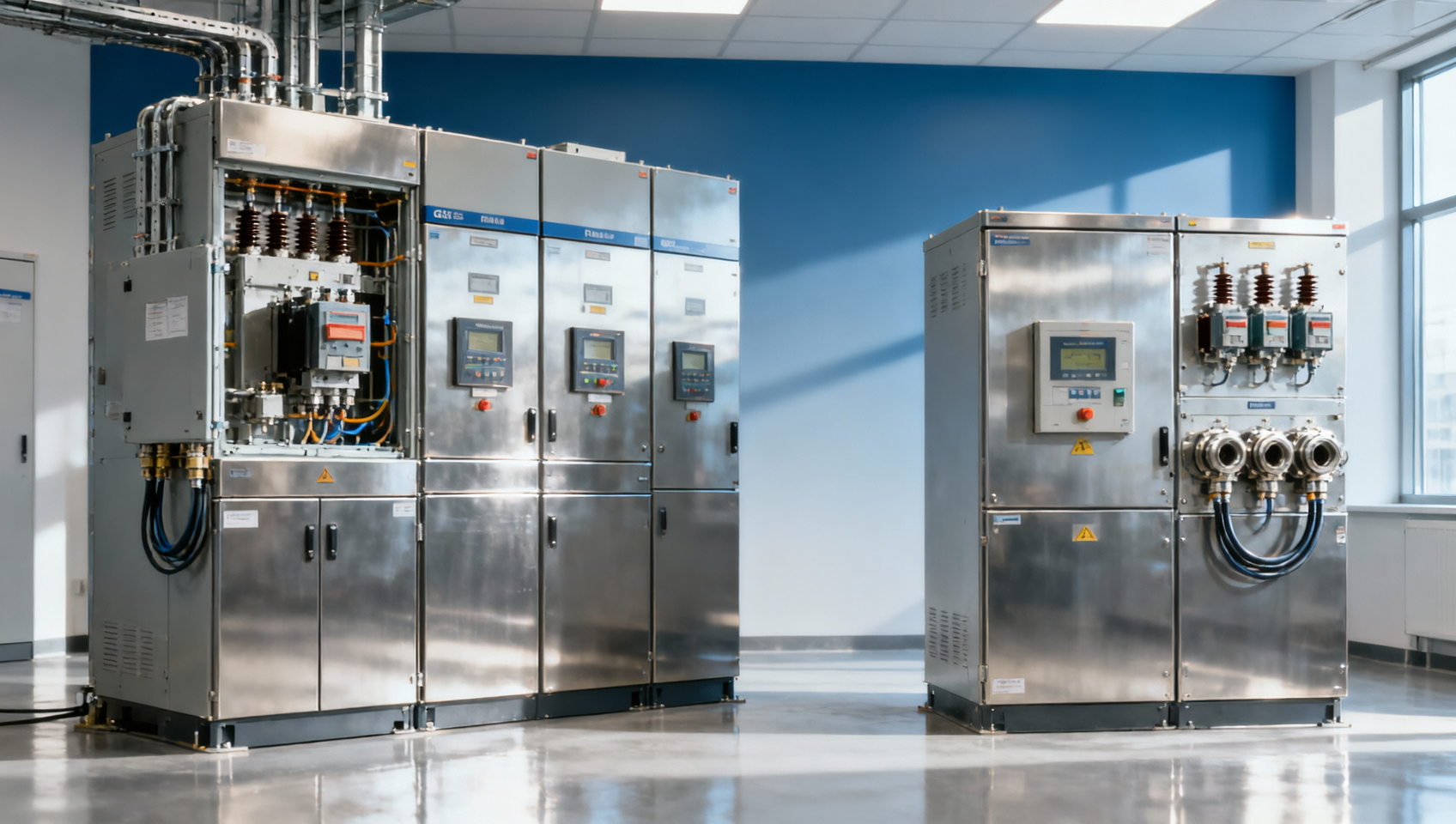
Choosing the right medium voltage switchgear requires more than a quick spec check. Buyers and engineers must compare safety, performance, lifecycle cost, and compatibility with systems such as gas insulated switchgear GIS, ring main unit RMU, air circuit breaker ACB, molded case circuit breaker MCCB, and current transformers CT. This guide helps researchers, operators, procurement teams, and decision-makers evaluate options with greater confidence and technical clarity.
In industrial power distribution, medium voltage switchgear is not an isolated asset. It sits inside a wider network of transformers, protection relays, feeders, CTs, cable terminations, and upstream or downstream switching devices. A weak comparison process can lead to under-specified insulation, difficult maintenance access, unnecessary arc-flash exposure, or expensive retrofit work within 12–36 months.
For EPC teams, plant operators, and procurement leaders, the real question is not only which unit costs less today. The better question is which switchgear configuration delivers safe operation, standards compliance, stable uptime, and predictable maintenance over a service life that often reaches 20–30 years. That is where a structured comparison method matters.
Understand What You Are Actually Comparing
Medium voltage switchgear typically covers systems in the range of about 3.3 kV to 36 kV, although exact definitions vary by market and utility practice. When buyers compare offers, they should first confirm whether they are reviewing the same voltage class, insulation medium, busbar arrangement, short-circuit rating, and application duty. A 12 kV indoor lineup for a commercial utility room is not directly comparable to a 24 kV outdoor industrial feeder solution.
The most common categories include air-insulated switchgear, gas insulated switchgear GIS, and compact ring main unit RMU designs. Each serves different spatial, environmental, and maintenance priorities. GIS often fits sites where footprint is limited and contamination is a concern. Air-insulated systems may offer easier visual inspection and lower initial complexity. RMUs are widely used in distribution networks where compactness and sectionalizing are key.
Comparison also requires clarity on the switching and protection elements inside the assembly. Vacuum circuit breakers are common in medium voltage panels, while ACB and MCCB devices are usually associated with low-voltage segments of the same facility. However, their coordination still matters. If the medium voltage switchgear trips too slowly or too aggressively, downstream ACB and MCCB selectivity can be compromised.
Current transformers CTs, voltage transformers, relays, and metering packages should be reviewed as functional parts of the switchgear rather than optional accessories. A panel with the right breaker but the wrong CT class can affect metering accuracy, protection reliability, and fault interpretation. In many industrial settings, CT selection errors only become visible during commissioning or the first fault event.
Key Categories to Define Before Asking for Quotes
- Voltage level and system frequency, such as 11 kV, 13.8 kV, 24 kV, or 50/60 Hz applications.
- Installation environment, including indoor, outdoor, coastal, dusty, humid, or high-altitude conditions above 1,000 m.
- Functional role, such as incoming feeder, transformer protection, motor control feeder, bus coupler, or ring distribution point.
- Protection and control scope, including relay type, CT ratio, communication protocol, and remote monitoring requirements.
The table below helps normalize the first-stage comparison so different suppliers are evaluated on consistent technical grounds rather than mixed assumptions.
A disciplined comparison starts by aligning these four variables. Once that baseline is fixed, pricing, delivery, and service discussions become far more meaningful and much less vulnerable to hidden scope gaps.
Compare Safety, Protection, and Compliance Requirements
Safety is often the decisive factor in medium voltage switchgear selection, especially in process plants, utilities, mining sites, and critical infrastructure. Buyers should review internal arc classification, interlocking logic, compartment segregation, earthing switch design, and operator access conditions. A lower upfront price can become unacceptable if the design increases exposure during isolation, cable testing, or maintenance switching.
At minimum, technical teams should confirm which standards the switchgear is built to and whether those standards match the project specification. Common references include IEC-based frameworks, local utility requirements, and customer-specific factory testing protocols. Compliance language in a quotation is not enough by itself; request the exact test scope for dielectric performance, temperature rise, mechanical endurance, and short-circuit verification.
Protection coordination deserves equal attention. The switchgear may include protection relays, CTs, trip circuits, and auxiliary power arrangements, but these must work with transformer characteristics and downstream devices. In a facility with several feeders, one poorly coordinated trip can shut down a full production block, not just the faulted branch. For this reason, comparing relay flexibility and integration options is often as important as comparing the breaker itself.
For operators, practical safety features matter every day. These include visible earthing status, mechanical position indicators, padlocking provisions, mimic diagrams, and access separation between busbar, cable, and breaker compartments. A unit that reduces human error during routine switching can cut operational risk significantly across hundreds of switching cycles over 5–10 years.
Questions to Ask During Technical Review
- What internal arc level is available, and does it cover front, side, and rear access where needed?
- Are CTs specified for both protection and metering duties, and what accuracy classes are offered?
- How are interlocks implemented for breaker insertion, earthing, and door access?
- Which tests are routine, type, or optional at factory acceptance stage?
Common Safety Misjudgments
One frequent mistake is assuming that a compact GIS lineup is automatically safer than an air-insulated alternative. In reality, safety depends on enclosure design, arc management, maintenance method, and operating procedures. Another mistake is underestimating the importance of local service capability. Even highly rated equipment can become risky if spare trip coils, relays, or CT replacements take 8–12 weeks to arrive after a fault.
The table below highlights how safety evaluation should move beyond a simple checklist and into site-specific decision logic.
The key takeaway is simple: safe switchgear is not defined by one feature. It is the result of proper ratings, verified testing, coherent protection design, and practical operator usability in the actual site environment.
Evaluate Performance, Lifecycle Cost, and Maintainability
Many purchasing teams focus on capital expenditure, but medium voltage switchgear should be assessed over a lifecycle horizon of at least 15–25 years. Initial panel price may represent only part of the real ownership cost. Maintenance shutdowns, spare parts, specialized gas handling, relay upgrades, and outage losses can outweigh the original purchase delta within a few years.
Performance comparison should include continuous current rating, dielectric margin, breaker mechanical endurance, environmental tolerance, and thermal performance inside the enclosure. A lineup rated for 1,250 A may be adequate on paper, but if future load growth is expected within 3–5 years, moving to 2,000 A may prevent costly expansion work later. The same logic applies to busbar sizing and feeder reserve strategy.
Maintainability is often where different technologies separate most clearly. GIS may reduce contamination exposure and save floor space, but maintenance procedures can be more specialized. Air-insulated switchgear may require more room and more cleaning attention in dusty environments, yet operators often find troubleshooting and visual inspection easier. The right choice depends on labor skill, maintenance philosophy, and site conditions, not on a generic technology hierarchy.
Procurement teams should also ask whether critical components are modular and whether replacement lead times are transparent. If a relay, CT, breaker truck, or auxiliary contact block requires 10–14 weeks for replenishment, that risk should be priced into the ownership model. A lower acquisition cost can quickly lose its advantage if a single unavailable spare extends downtime by several shifts or several days.
Lifecycle Cost Comparison Framework
- Initial acquisition cost, including base panel, relays, CTs, cabling accessories, and testing scope.
- Installation cost, including civil work, room requirements, cable entry arrangement, and commissioning support.
- Operating cost over 5, 10, and 20 years, including maintenance frequency, shutdown hours, and spare inventory.
- Expansion and retrofit cost, especially where future feeders, remote monitoring, or protection upgrades are likely.
The table below provides a practical lifecycle comparison view for common industrial decision scenarios.
This comparison shows why the best medium voltage switchgear decision is rarely the lowest quote. It is the option with the most balanced combination of uptime, safety, maintainability, and expansion readiness.
Match the Switchgear to Site Conditions and System Architecture
A technically sound panel can still be the wrong choice if it does not fit the site. Environmental factors such as dust, salt spray, humidity above 90%, ambient temperatures above 40°C, or altitude above 1,000 m can change insulation performance and derating requirements. Industrial buyers should never compare switchgear without reviewing where it will operate and how maintenance teams will access it.
System architecture is equally important. In a compact urban substation or tunnel facility, GIS may offer major value because space constraints dominate the design. In a manufacturing plant with regular shutdown windows and in-house electrical staff, air-insulated switchgear may be more practical. For secondary distribution networks, RMU solutions can simplify sectionalizing and improve restoration speed after local faults.
Compatibility with existing infrastructure should be checked early. This includes cable sizes, gland space, control voltage, communication protocol, protection philosophy, and the coordination path toward downstream ACB and MCCB devices. If the new switchgear is digitally advanced but the facility still operates a basic legacy SCADA environment, integration costs can rise unexpectedly during commissioning.
Researchers and decision-makers should also consider room for future adaptation. Many projects start with 4–6 feeder panels but may need 2–4 additional feeders after expansion, electrification, or process changes. Buying a lineup with no extension strategy may save budget now but create major replacement pressure later. Planning one step ahead is often cheaper than rebuilding the switch room twice.
Site Matching Checklist
- Confirm ambient temperature, humidity, pollution level, and indoor or outdoor installation conditions.
- Review fault level, transformer capacity, and future load growth for at least the next 3–5 years.
- Verify control power, relay communication, and interface requirements with SCADA or BMS systems.
- Check access routes, floor loading, cable trench geometry, and safe working clearance around the lineup.
- Define whether the facility can support specialized maintenance or needs simple field service routines.
When GIS, RMU, or Air-Insulated Designs Make Sense
GIS is often strong where floor area is limited, airborne contamination is high, and service continuity is critical. RMUs are practical for compact distribution nodes and utility-style ring networks. Air-insulated switchgear is often preferred where transparency, easier access, and conventional maintenance skills are readily available. None of these choices is universally superior; the best fit depends on the operating context and resource model.
A good comparison process maps the switchgear not just to the electrical line diagram, but also to people, maintenance capabilities, and the physical realities of the site. That broader view helps avoid mismatches that only become visible after delivery.
Build a Smarter Procurement and Vendor Evaluation Process
The final switchgear decision should come from a structured procurement workflow rather than an isolated engineering opinion or a price-only tender result. In most industrial projects, the strongest outcomes come when engineering, operations, maintenance, and procurement align on 4 core areas: technical compliance, safety, lifecycle cost, and supplier support capability. Missing any one of these can distort the buying decision.
A practical tender package should define minimum ratings, required tests, documentation expectations, spare parts scope, and service obligations. It should also request delivery lead times, recommended commissioning activities, and training detail for operators. For many projects, production lead time may range from 8–20 weeks depending on complexity, protection packages, and factory test scheduling. That timing should be evaluated alongside project critical path, not after award.
Vendor assessment should go beyond brochure strength. Ask how faults are handled, what local or regional technical support exists, how long critical spares take to ship, and whether commissioning engineers are available in the project region. A supplier with slightly higher equipment cost but faster service response can be commercially safer than a cheaper vendor with weak after-sales support.
Decision-makers should also insist on clean documentation. Single-line diagrams, GA drawings, CT schedules, relay logic summaries, interlock schemes, and testing plans should be reviewed before final approval. Documentation gaps are among the most common causes of variation orders, delayed FAT acceptance, and site disputes during energization.
Recommended 5-Step Buying Process
- Define site conditions, electrical parameters, protection philosophy, and expansion outlook.
- Issue a normalized technical inquiry so all bidders respond to the same scope.
- Score offers using weighted criteria such as 30% technical fit, 25% safety, 20% lifecycle cost, 15% delivery, and 10% service support.
- Review drawings, test scope, and spare parts before commercial closure.
- Plan FAT, site commissioning, operator training, and first-year maintenance support.
FAQ: Questions Buyers Commonly Ask
How long does medium voltage switchgear delivery usually take? For many standard industrial configurations, manufacturing may take 8–16 weeks. More customized lineups with advanced relays, special CT requirements, or extended FAT procedures can take 16–20 weeks or more.
Is the lowest-cost switchgear acceptable if ratings match? Not always. Matching voltage and fault ratings is only the start. Buyers should compare maintainability, test scope, spare part availability, operator safety, and integration effort.
Should CT specification be reviewed separately? Yes. CT ratio, burden, and accuracy class can materially affect both protection and metering performance. CTs should be reviewed against relay settings and system purpose, not treated as generic items.
When is RMU a better choice than full panel switchgear? RMU is often suitable where compact distribution, ring continuity, and limited installation space are priorities. For larger plants requiring extensive feeder protection or complex control schemes, a full switchgear lineup may be more appropriate.
Comparing medium voltage switchgear effectively means looking at the whole operational picture: electrical ratings, safety architecture, CT and relay coordination, maintenance burden, environmental fit, and supplier support. The strongest purchasing decisions are based on normalized technical review and realistic lifecycle thinking, not just initial price.
For EPC firms, facility operators, procurement teams, and industrial decision-makers, a structured comparison process reduces risk, improves uptime confidence, and helps avoid expensive redesign or service issues later. If you are evaluating switchgear for a new build, retrofit, or expansion project, contact us to discuss your requirements, compare suitable configurations, and get a more tailored sourcing and selection plan.
Technical Specifications
- Canton Fair Phase II 2026: Industrial Components Booking Rate Hits 98%Author :Heavy Industry Strategist
- TÜV Rheinland Updates EMC Guide for Industrial Optics EquipmentAuthor :Precision Metrology Expert
- Copper Price Surges 6.8%: Impact on Cables, Breakers & BOM CostsAuthor :Grid Infrastructure Analyst
Expert Insights

Chief Security Architect
Dr. Thorne specializes in the intersection of structural engineering and digital resilience. He has advised three G7 governments on industrial infrastructure security.
Related Analysis
- Apr 21, 2026Canton Fair Phase II 2026: Industrial Components Booking Rate Hits 98%Author :Heavy Industry Strategist
- Apr 21, 2026TÜV Rheinland Updates EMC Guide for Industrial Optics EquipmentAuthor :Precision Metrology Expert
- Apr 21, 2026Copper Price Surges 6.8%: Impact on Cables, Breakers & BOM CostsAuthor :Grid Infrastructure Analyst
Core Sector // 01
Security & Safety
- Shanghai Yangshan Port Launches Green Clearance for Industrial EquipmentAuthor :Grid Infrastructure Analyst
![]()
- How to Vet a Power Transformer ManufacturerAuthor :Grid Infrastructure Analyst

- How to Source Distribution TransformersAuthor :Grid Infrastructure Analyst

- Cast Resin Dry Type Transformer UsesAuthor :Grid Infrastructure Analyst

- Oil Immersed Transformer vs Dry TypeAuthor :Grid Infrastructure Analyst

- Current Transformers CT Buying ChecklistAuthor :Grid Infrastructure Analyst

- Potential Transformers PT Selection GuideAuthor :Grid Infrastructure Analyst

- How to Compare Medium Voltage SwitchgearAuthor :Grid Infrastructure Analyst