Current Transformers CT Buying Checklist
Author
Date Published
Reading Time
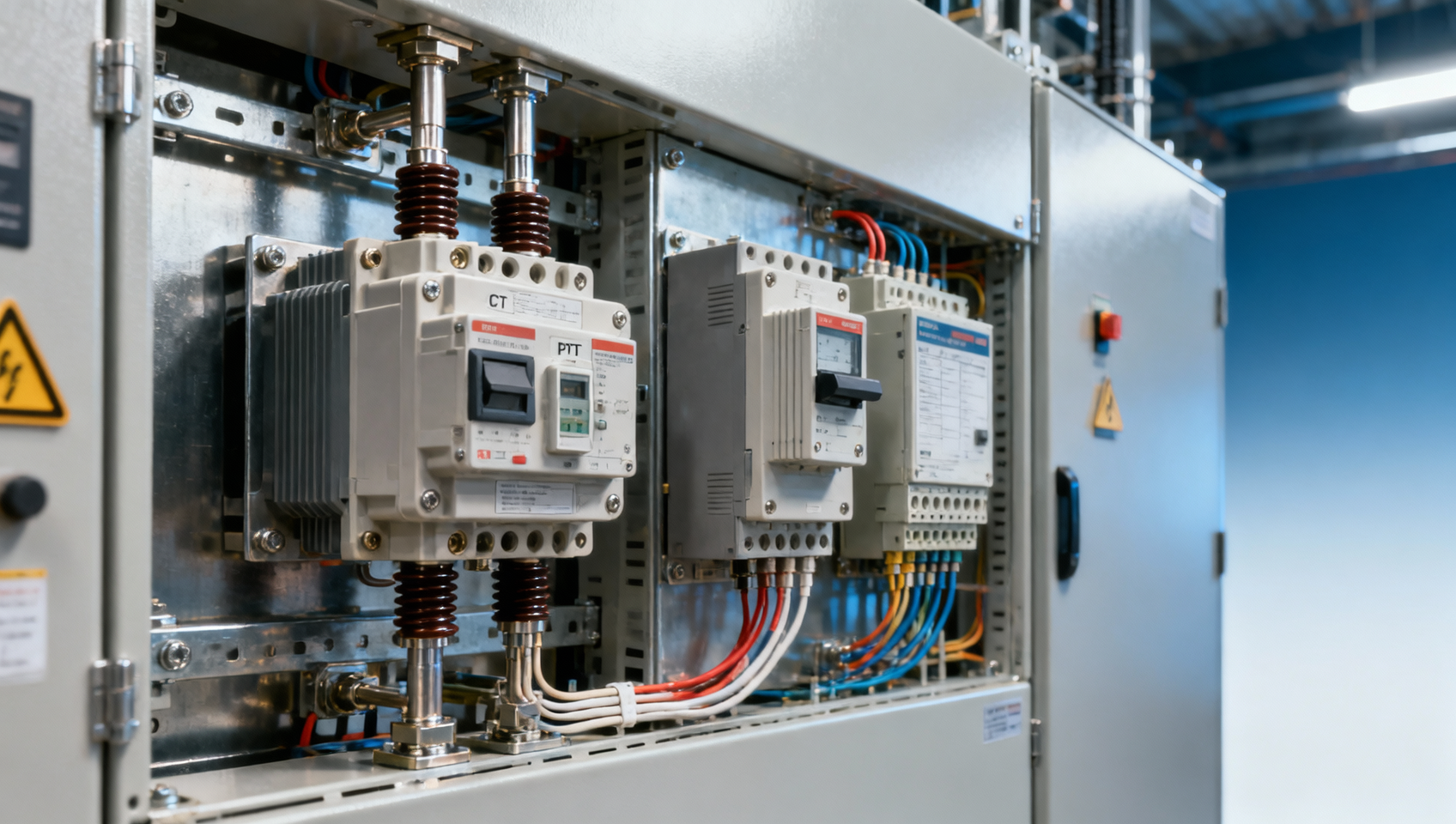
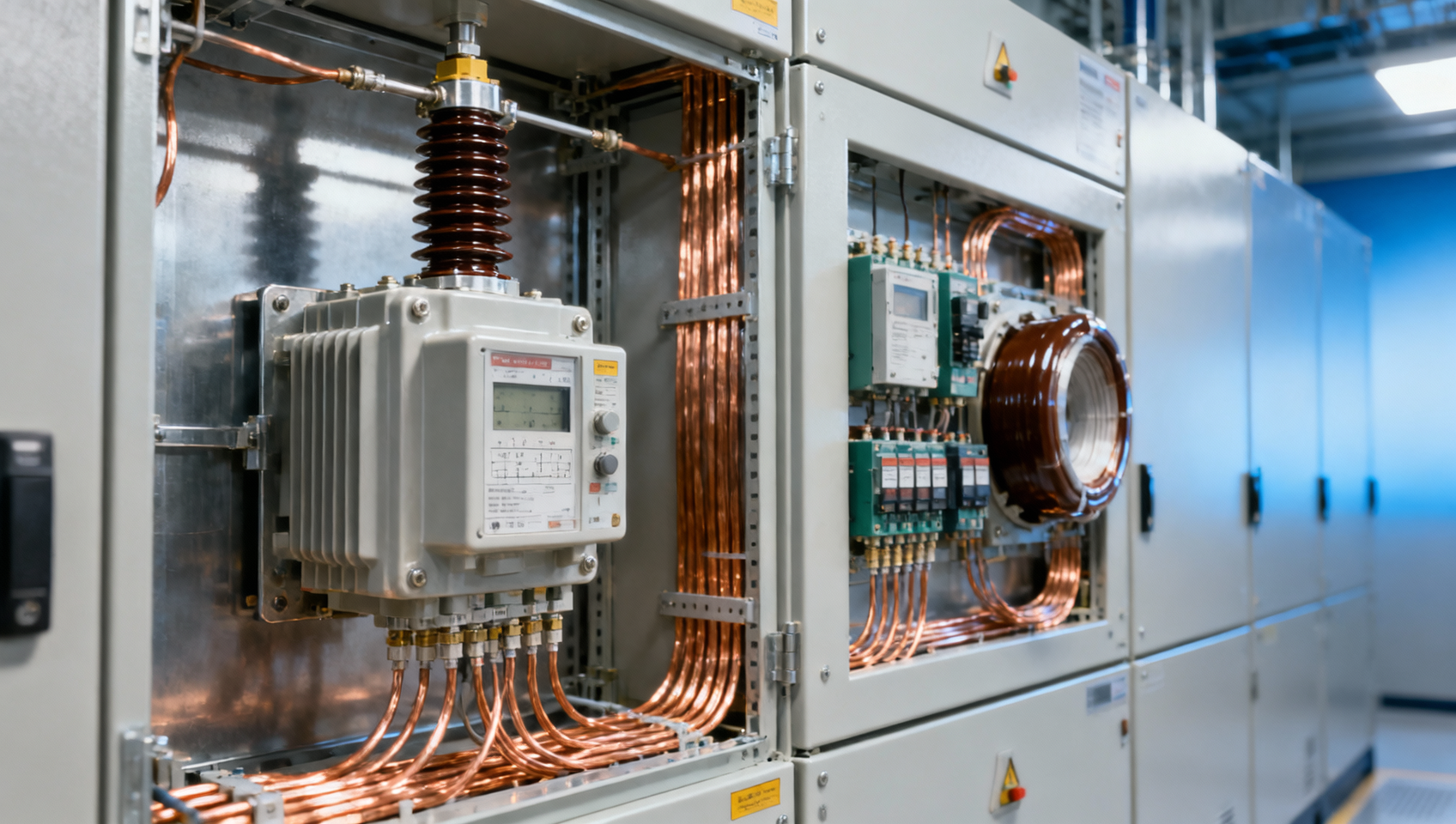
Buying current transformers CT for industrial power systems requires more than checking ratios and dimensions. From accuracy class and burden to insulation level, safety compliance, and installation environment, every detail affects reliability. This checklist helps researchers, operators, buyers, and decision-makers compare current transformers CT alongside potential transformers PT, low voltage switchboard integration, and medium voltage switchgear compatibility for smarter procurement.
In industrial projects, a CT is not a simple accessory. It directly affects metering accuracy, relay protection behavior, maintenance safety, and the long-term stability of switchboards and switchgear assemblies. A mismatch between CT specification and actual operating conditions can lead to false trips, incorrect billing data, overheating, or unsafe open-circuit risks.
For EPC teams, plant engineers, procurement managers, and technical evaluators, a practical buying checklist reduces selection errors early in the RFQ stage. It also makes cross-functional review easier when CTs must work with PTs, low voltage switchboards, energy monitoring systems, or medium voltage switchgear in substations, process plants, utilities, and infrastructure facilities.
Understand the CT Role Before Comparing Suppliers
A current transformer converts high primary current into a standardized secondary current, commonly 5 A or 1 A, so meters, relays, and monitoring devices can operate safely. In industrial systems, CTs are usually selected for measurement, protection, or dual-purpose use. That functional distinction should be clarified at the first stage of procurement because it changes the required accuracy class, saturation behavior, and burden handling.
Measurement CTs prioritize accuracy across a defined current range, while protection CTs must remain stable during fault conditions that may reach 10 times, 20 times, or even higher multiples of rated current. If a team buys a metering CT where a protection CT is required, relay performance may become unreliable during short-circuit events. If the reverse happens, metering precision may fall outside the acceptable tolerance for energy management or billing.
The application environment matters just as much as the electrical rating. A CT used in a dry indoor low voltage switchboard faces very different stresses than a resin-cast unit installed in medium voltage switchgear, an outdoor feeder pillar, or a dusty process plant. Temperature range, humidity, altitude, vibration, and enclosure limits should be documented before supplier comparison begins.
In many industrial projects, CTs are evaluated together with PTs because both support metering and protection architecture. However, the buying logic differs. PT selection focuses more on voltage insulation and voltage ratio, while CT selection is highly sensitive to burden, accuracy class, knee point behavior, and conductor or busbar dimensions. Treating them as interchangeable line items often leads to incomplete specifications.
Core application categories
- Metering in industrial distribution boards, generator panels, and energy management systems.
- Protection in feeders, motor control centers, transformers, and incoming utility panels.
- Monitoring for SCADA, power quality analyzers, and building or plant automation systems.
- Special applications such as summation CTs, core-balance CTs, or high-accuracy revenue metering.
First screening questions
Before asking for price, confirm 4 basic points: rated primary current, secondary current, intended function, and installation format. A supplier quotation that omits any one of these 4 points is not technically comparable, even if the unit price looks attractive. This is especially true in projects where one board may carry 12, 24, or 36 CTs across multiple incomers and outgoing feeders.
Technical Checklist: Ratios, Accuracy, Burden, and Insulation
The most visible CT parameter is the ratio, such as 200/5 A, 400/5 A, or 1000/1 A. But ratio alone does not determine fitness for service. Procurement teams should review at least 8 technical items: ratio, secondary current, accuracy class, burden, frequency, short-time thermal current, dynamic current rating, and insulation level. In medium voltage applications, partial discharge performance and power-frequency withstand values are also relevant.
Accuracy class should be matched to actual use. For measurement, common classes include 0.2, 0.5, and 1.0. For protection, common designations may include 5P10, 10P10, or PX-type arrangements depending on the relay scheme and market practice. A plant using digital relays for transformer differential protection usually needs more than a generic feeder protection CT specification.
Burden is frequently misunderstood. It represents the load on the CT secondary circuit, typically expressed in VA. If the connected meters, relays, wire length, and terminal losses create a burden above the CT rating, actual performance may drift away from the stated class. In practical projects, 2.5 VA, 5 VA, 10 VA, and 15 VA are common reference points, but the final requirement should be calculated from the circuit, not guessed from catalog habits.
Insulation and installation safety cannot be treated as secondary topics. A low voltage panel CT may only need modest insulation characteristics compared with a medium voltage resin-cast CT installed in 11 kV, 22 kV, or 33 kV switchgear. The correct standard framework and dielectric test expectations should therefore appear clearly in the specification sheet and factory test documentation.
Typical technical checkpoints
The table below summarizes the specification items that most often determine whether a CT quote is technically usable for industrial procurement. It can be used as a pre-bid review tool across engineering, operations, and purchasing teams.
The key takeaway is simple: a compliant CT datasheet must connect electrical performance with the actual end-use circuit. Where the application includes PTs, multifunction meters, or protection relays inside low voltage switchboards or medium voltage switchgear, the secondary circuit design should be reviewed as a complete system, not as isolated components.
Common mistakes in technical comparison
- Choosing the same ratio across all feeders without checking real load diversity.
- Using 5 A secondary by default when 1 A may reduce secondary cable loss on longer runs.
- Ignoring actual burden calculation for relay and metering circuits longer than 20 m to 30 m.
- Assuming a standard low voltage CT can be transferred directly into medium voltage switchgear design.
Mechanical Fit and System Compatibility Matter as Much as Electrical Data
Many CT procurement delays happen because the electrical team approves the ratio and class, but the mechanical fit is checked too late. Window size, busbar clearance, mounting method, panel depth, and cable bending space should be verified before order release. A CT that meets electrical requirements but cannot fit around a 60 mm x 10 mm busbar or inside a compact cubicle becomes a costly rework item.
This issue becomes more visible when CTs are supplied for packaged low voltage switchboards or medium voltage switchgear. Each OEM may use different busbar spacing, compartment segregation, or instrument chamber layouts. If the CT is intended for retrofit work, dimensional tolerance is even more important because existing conductors, insulation boots, and termination access often limit installation options.
Compatibility with PTs and monitoring equipment should also be considered at the panel architecture level. For example, if a feeder cubicle uses a multifunction meter, protection relay, and SCADA transducer in parallel, terminal block planning and secondary wiring space must support the CT burden and safety practices. Open-circuit protection, shorting links, and maintenance access should be included in the design review.
Operators benefit when CT installation is designed for inspection and replacement without major shutdown complexity. In facilities with 24/7 operations, even a 2-hour panel outage may have significant production impact. That is why practical maintainability deserves the same attention as catalog specifications.
Mechanical and integration review points
The following comparison table helps buyers align CT type with enclosure, voltage level, and maintenance expectations in industrial installations.
This comparison shows why CT buying should not be limited to electrical nameplate data. Mechanical fit, integration logic, and outage planning often determine the real total cost of ownership over 3 to 10 years of service.
A practical fit-check list
- Measure conductor or busbar dimensions in millimeters, not estimated nominal sizes.
- Confirm mounting orientation and cable exit direction before final drawing approval.
- Review terminal numbering and shorting arrangements for maintenance safety.
- Check whether the enclosure temperature can exceed 40°C during peak loading.
Procurement, Compliance, and Factory Evaluation Checklist
A technically correct CT can still become a poor procurement choice if documentation, testing, packaging, and delivery discipline are weak. Industrial buyers should evaluate supplier capability in 5 areas: standards compliance, routine testing, traceable documentation, production consistency, and logistics control. This is especially important for multi-panel orders where CT quantity may range from 20 units to several hundred units.
Routine factory test records should match the ordered specification, not just generic catalog values. Buyers should expect ratio confirmation, polarity marking, insulation verification, and basic dimensional conformity checks. For medium voltage or protection-critical applications, additional engineering review may be required before FAT approval, particularly when the CT interfaces with high-value relays or utility acceptance requirements.
Lead time should be evaluated in realistic bands. Commodity low voltage CTs may be available in 7 to 15 days, while custom dimensions, resin-cast medium voltage units, or special protection classes may require 3 to 6 weeks or longer. Procurement teams should also confirm whether accessories such as mounting hardware, terminal covers, shorting links, and test reports are included or priced separately.
Compliance review should focus on applicable CE, UL, ISO-related manufacturing controls where relevant to market entry and project specification. The exact compliance route depends on geography and application. What matters in practice is that the supplier can provide consistent technical files, marking details, and product test evidence suitable for industrial project documentation and audit trails.
Supplier evaluation criteria
- Verify whether the manufacturer has stable experience with low voltage switchboard and medium voltage switchgear integration.
- Request sample datasheets and routine test reports before placing high-volume orders.
- Check packaging for moisture protection, polarity identification, and transit shock handling.
- Ask for documented tolerances on window dimensions and mounting hardware.
- Confirm after-sales support response time, ideally within 24 to 72 hours for technical clarifications.
Documents that should appear in the purchase file
At minimum, the purchase package should include the approved datasheet, GA or dimensional drawing, wiring or polarity reference, routine test report format, packing list, and delivery schedule. For projects with multiple stakeholders, a controlled submittal workflow reduces disputes between engineering, procurement, QA, and site teams during inspection and installation.
Common Buying Mistakes, FAQs, and Final Decision Guidance
The most common buying mistake is selecting a CT as if it were only a price-driven passive component. In reality, its performance influences relay behavior, energy data quality, maintenance safety, and future upgrade flexibility. A low-cost unit may create higher lifecycle expense if it causes panel redesign, testing delays, or repeated troubleshooting after commissioning.
Another frequent issue is under-specifying the operating context. If the RFQ only lists ratio and quantity, suppliers will fill in the missing assumptions differently. That makes quotations difficult to compare and often shifts risk to the buyer. A better RFQ template includes voltage level, system frequency, application type, accuracy class, burden, installation space, and associated equipment such as PTs, meters, relays, and switchboard type.
For decision-makers, the best purchase is rarely the cheapest line item. It is the option that fits the electrical scheme, mechanical layout, compliance path, maintenance plan, and project schedule with the lowest practical risk. In many industrial environments, a well-specified CT supports stable operations for 10 years or more with minimal intervention.
FAQ: How do I choose between 1 A and 5 A secondary?
For short secondary wiring distances inside compact panels, 5 A remains common and straightforward. For longer cable runs, such as 20 m, 30 m, or more, 1 A can reduce copper loss and burden on the circuit. The correct choice depends on connected device inputs, existing standards in the facility, and total secondary loop calculation.
FAQ: When is a split-core CT a good option?
Split-core CTs are often useful for retrofit metering and temporary monitoring where shutdown access is limited. However, they may not be the first choice for all protection applications. Buyers should verify accuracy, mechanical locking security, and environmental suitability before using them beyond basic monitoring tasks.
FAQ: What should I ask for in an RFQ?
A solid RFQ should include at least 10 fields: quantity, ratio, secondary current, accuracy class, burden, frequency, installation type, conductor size, applicable standard, and required documents. If the CT will interface with PTs, relays, or medium voltage switchgear, mention those details explicitly to avoid hidden assumptions.
Final buying checklist
- Define function first: metering, protection, or both.
- Match ratio, class, and burden to the real circuit rather than a generic standard.
- Check mechanical fit with switchboard or switchgear drawings before order release.
- Review compliance documents and factory testing scope.
- Plan for installation safety, maintenance access, and future expansion.
A disciplined CT buying process protects more than a single component budget. It improves metering reliability, protection integrity, commissioning speed, and long-term asset confidence across industrial power systems. If your project involves current transformers CT, potential transformers PT, low voltage switchboard assemblies, or medium voltage switchgear packages, now is the right time to align technical and procurement requirements before issuing the final purchase order.
For tailored sourcing support, specification review, or cross-system compatibility guidance, contact Global Industrial Core to discuss your application, compare options, and obtain a more precise industrial procurement solution.
Technical Specifications
- Canton Fair Phase II 2026: Industrial Components Booking Rate Hits 98%Author :Heavy Industry Strategist
- TÜV Rheinland Updates EMC Guide for Industrial Optics EquipmentAuthor :Precision Metrology Expert
- Copper Price Surges 6.8%: Impact on Cables, Breakers & BOM CostsAuthor :Grid Infrastructure Analyst
Expert Insights

Chief Security Architect
Dr. Thorne specializes in the intersection of structural engineering and digital resilience. He has advised three G7 governments on industrial infrastructure security.
Related Analysis
- Apr 21, 2026Canton Fair Phase II 2026: Industrial Components Booking Rate Hits 98%Author :Heavy Industry Strategist
- Apr 21, 2026TÜV Rheinland Updates EMC Guide for Industrial Optics EquipmentAuthor :Precision Metrology Expert
- Apr 21, 2026Copper Price Surges 6.8%: Impact on Cables, Breakers & BOM CostsAuthor :Grid Infrastructure Analyst
Core Sector // 01
Security & Safety
- Shanghai Yangshan Port Launches Green Clearance for Industrial EquipmentAuthor :Grid Infrastructure Analyst
![]()
- How to Vet a Power Transformer ManufacturerAuthor :Grid Infrastructure Analyst

- How to Source Distribution TransformersAuthor :Grid Infrastructure Analyst

- Cast Resin Dry Type Transformer UsesAuthor :Grid Infrastructure Analyst

- Oil Immersed Transformer vs Dry TypeAuthor :Grid Infrastructure Analyst

- Current Transformers CT Buying ChecklistAuthor :Grid Infrastructure Analyst

- Potential Transformers PT Selection GuideAuthor :Grid Infrastructure Analyst

- How to Compare Medium Voltage SwitchgearAuthor :Grid Infrastructure Analyst