Oil Immersed Transformer vs Dry Type
Author
Date Published
Reading Time
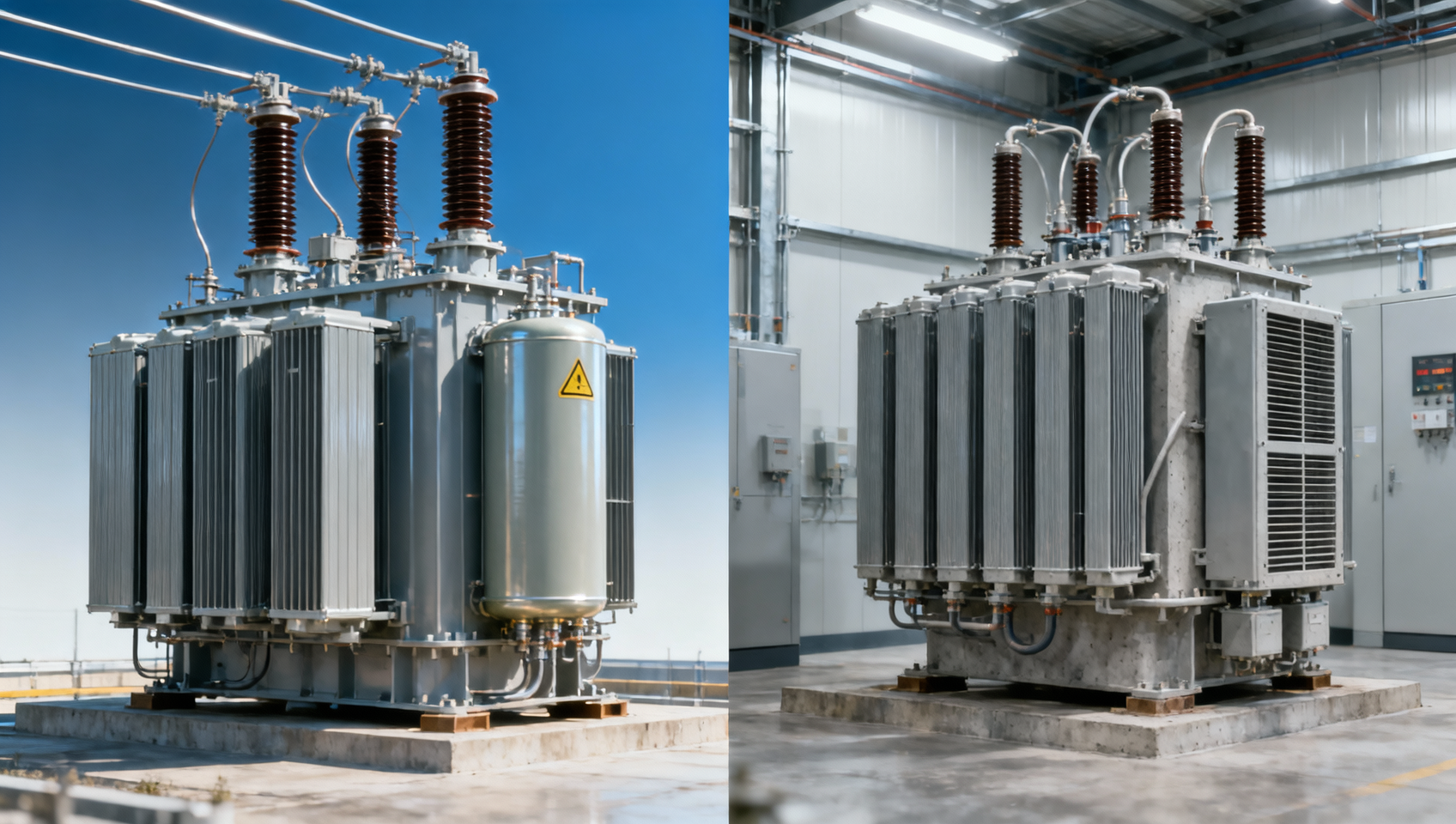
Choosing between an oil immersed transformer and a cast resin dry type transformer affects safety, maintenance, efficiency, and lifecycle cost across modern power systems. For buyers, operators, and project decision-makers comparing distribution transformers wholesale options or evaluating a power transformer manufacturer, understanding the real-world differences between these technologies is essential before specifying equipment for commercial, industrial, or grid applications.
In practice, the decision is rarely about one technology being universally better. It is about matching transformer design to load profile, installation environment, fire risk, ventilation constraints, maintenance resources, and total project budget. A transformer serving a petrochemical substation, a hospital basement, and a solar evacuation yard will face very different operating realities.
For EPC contractors, facility teams, procurement managers, and industrial investors, the most useful comparison goes beyond brochure claims. The real questions are straightforward: Which type is safer indoors? Which handles overloads better? How much space is needed? What are the maintenance intervals? And where does lifecycle cost shift after 10–20 years of operation?
Core Differences in Design, Cooling, and Installation Logic
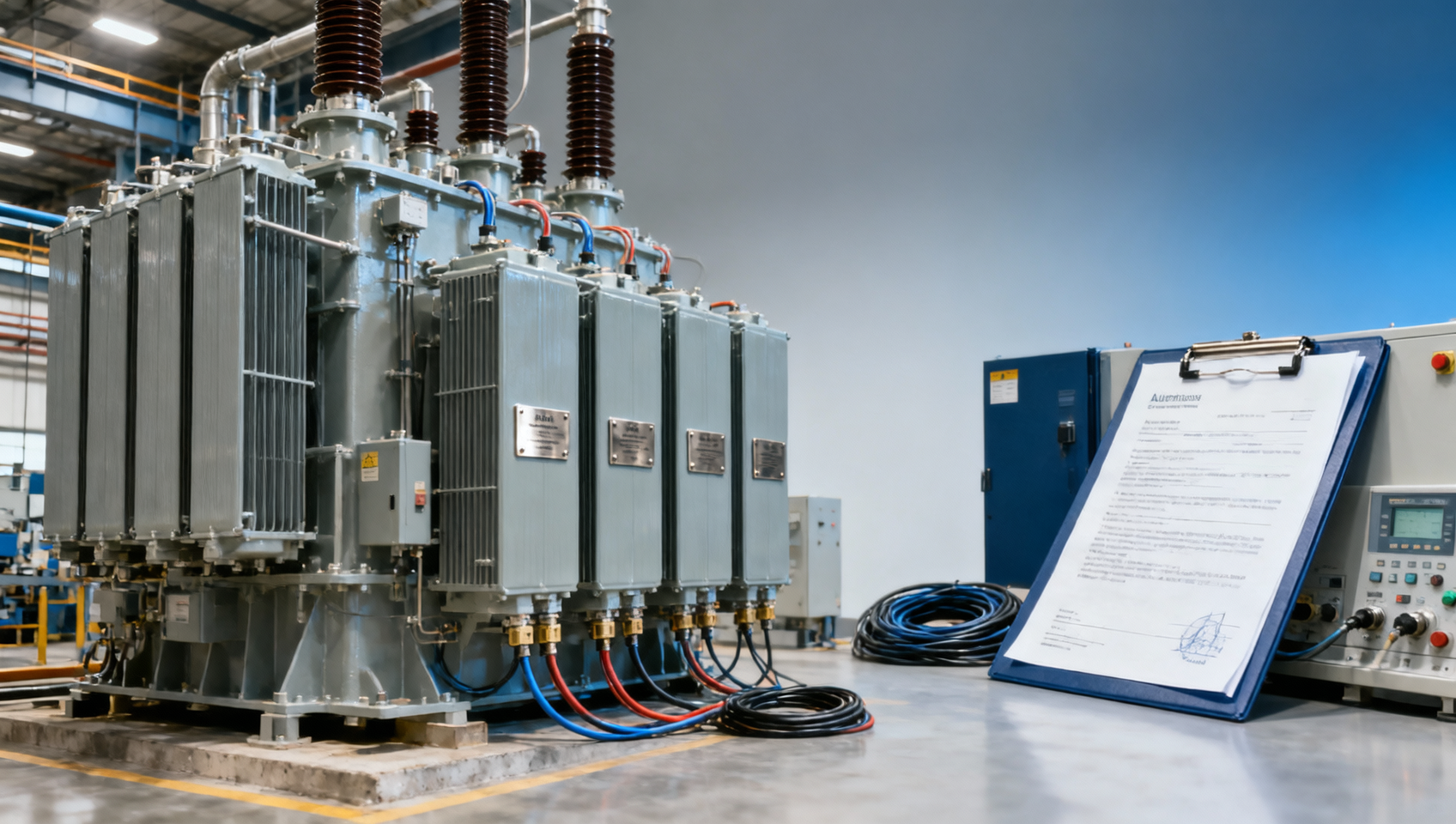
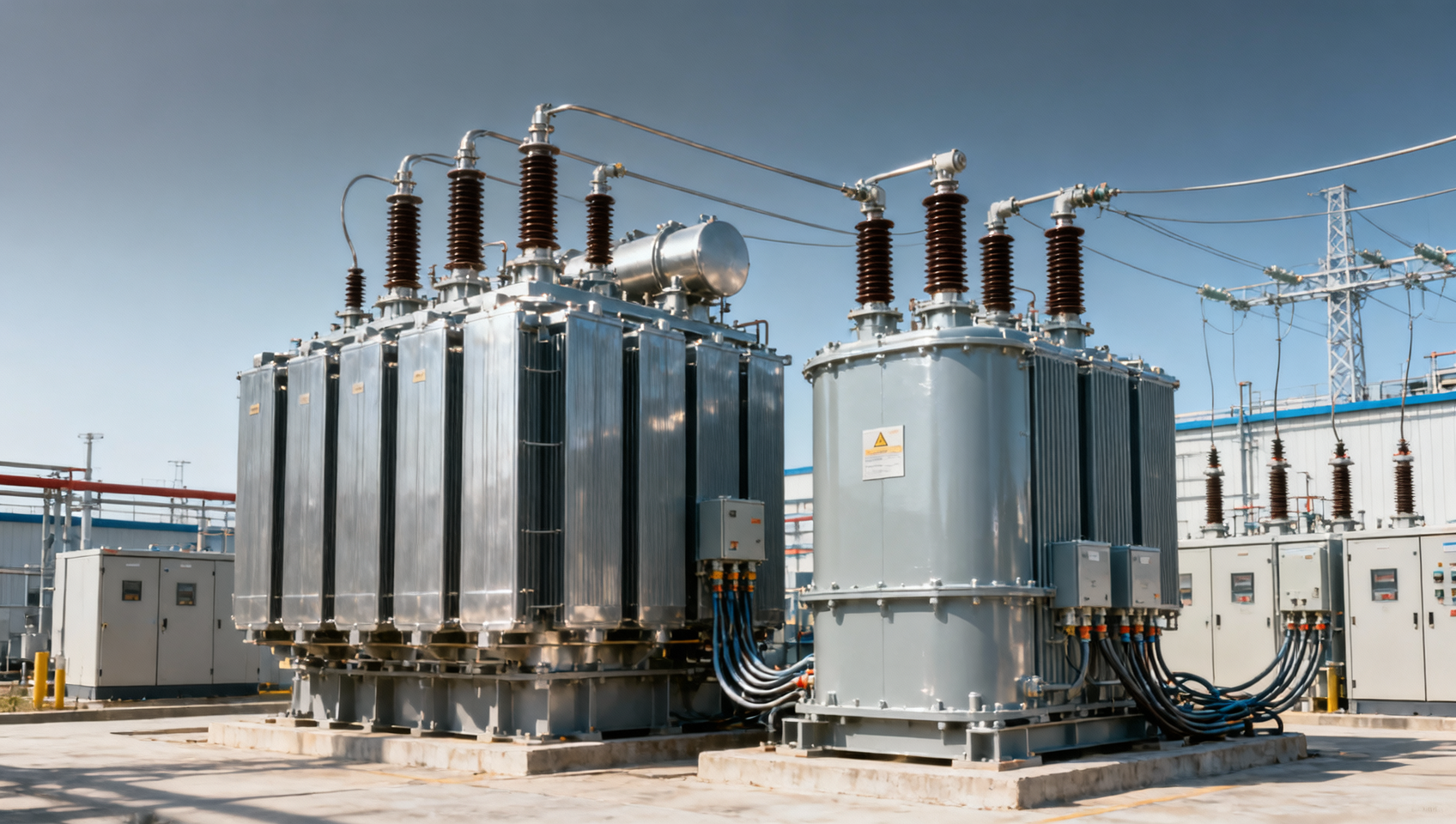
An oil immersed transformer uses mineral oil, natural ester, or synthetic insulating liquid for both dielectric insulation and heat dissipation. The core and windings are enclosed in a sealed or conservator-type tank, and cooling is commonly classified as ONAN, ONAF, or similar arrangements. In medium-voltage distribution applications, this design is widely selected from about 100 kVA up to several tens of MVA.
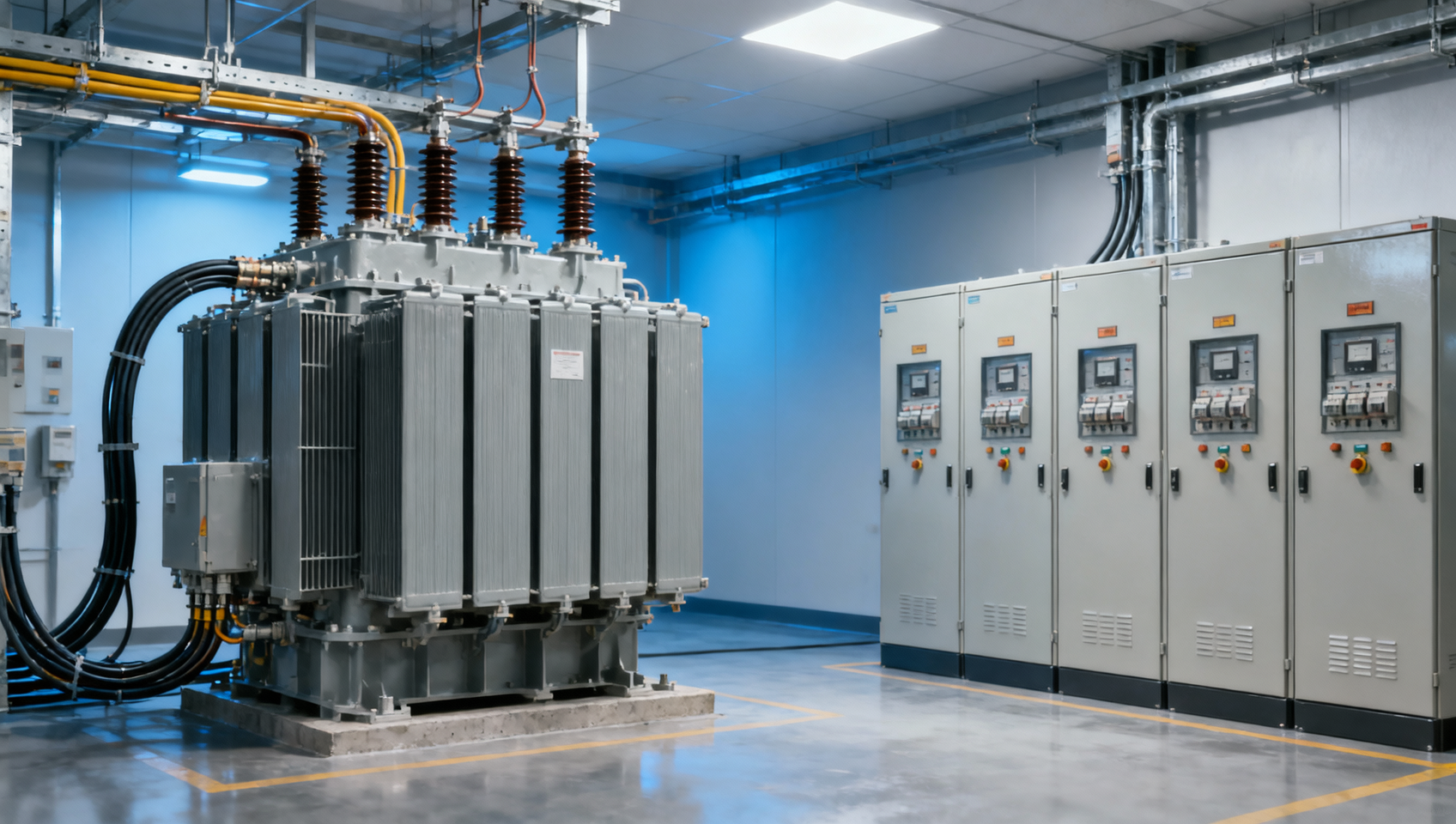
A dry type transformer, especially cast resin dry type, relies on solid insulation and air cooling instead of liquid insulation. Windings are encapsulated in resin, which reduces exposure to moisture and contaminants compared with older ventilated dry designs. Dry type units are frequently specified in commercial buildings, data centers, metros, hospitals, and indoor industrial plants where fire behavior and leakage concerns are critical.
The cooling method affects both performance and infrastructure planning. Oil immersed units generally dissipate heat more effectively, which can support higher capacity density and stronger overload tolerance under controlled conditions. Dry type units depend heavily on ambient ventilation. If the room temperature rises above 40°C or airflow is restricted, derating may become necessary.
Installation logic also differs. Oil filled transformers often require outdoor pads, bund walls, oil containment, separation distances, and fire protection measures depending on local code. Dry type transformers are commonly installed closer to the load center, often inside electrical rooms, reducing low-voltage cable length and related losses in multi-floor or space-constrained facilities.
Quick comparison at a glance
The table below summarizes the most practical engineering differences that influence project design, operator workload, and sourcing decisions.
The key takeaway is not simply “outdoor versus indoor.” The better fit depends on cooling margin, fire engineering requirements, available maintenance staff, and whether the project values lower first cost or lower building integration complexity.
Where design differences matter most
- In facilities above 1,600 kVA, heat rejection and overload behavior often become more important than brochure efficiency figures alone.
- In indoor sites with limited ventilation shafts or occupied areas nearby, dry type placement can simplify civil and fire planning.
- In dusty, humid, or chemically aggressive plants, enclosure rating and environmental sealing should be reviewed before selecting either option.
Safety, Environmental Risk, and Compliance Priorities
Safety is often the first decision filter. Oil immersed transformers introduce a combustible or spillable medium, so the site must evaluate fire separation, oil drainage, bund capacity, and emergency response. This does not make oil-filled designs unsafe by default, but it does mean the surrounding system design matters as much as the transformer itself.
Dry type transformers are widely chosen for indoor public or mission-critical spaces because they eliminate liquid leakage and can reduce secondary environmental controls. In high-rise buildings, airports, rail stations, and healthcare facilities, that can translate into simpler permitting and fewer civil protection measures. However, dry type does not mean risk-free. Dust buildup, blocked airflow, and poor room cooling can still drive insulation aging.
Compliance review should include not only transformer standards but also site-level electrical, fire, and environmental regulations. Buyers usually need to verify insulation class, temperature rise, ingress protection where applicable, short-circuit withstand capability, and compatibility with CE, UL, or ISO-driven project documentation. For international projects, documentation quality can affect approval lead times by 2–6 weeks.
Environmental policy is another growing factor. Some projects now prefer biodegradable ester-filled oil immersed transformers where spill mitigation is needed but the project still requires high capacity and outdoor robustness. This hybrid path can narrow the gap between conventional mineral oil systems and dry type expectations.
Risk comparison for typical industrial scenarios
The table below helps procurement and HSE teams compare the practical risk profile of each transformer type across real deployment conditions.
For many decision-makers, safety evaluation should be performed as a 4-part review: electrical risk, fire behavior, environmental exposure, and maintainability. A lower purchase price can quickly lose appeal if the site then requires expensive containment systems or major ventilation retrofits.
Common safety review points
- Confirm whether the transformer will be installed indoors, outdoors, or in a semi-enclosed substation.
- Review ambient temperature range, such as -10°C to 45°C, and whether derating applies above standard conditions.
- Check local fire code for separation distance, vault requirements, and extinguishing system expectations.
- Verify whether the project owner requires spill control, low-smoke behavior, or specific environmental documentation.
Efficiency, Losses, and Lifecycle Cost Over 10–20 Years
Initial purchase price is only one part of transformer economics. In continuous-service industrial networks, no-load loss and load loss accumulate every hour of the year. A transformer operating 8,000–8,760 hours annually can generate a meaningful difference in total ownership cost even if the nameplate efficiency gap appears small.
Oil immersed transformers often provide favorable economics at higher capacities, especially where the load factor remains above 60% for long periods. Their thermal behavior can support more stable operation under cyclical demand, and the cost per kVA is frequently lower in utility and large industrial projects. Dry type transformers, however, may save project cost elsewhere by reducing building modifications, cable routing distances, or fire engineering complexity.
Lifecycle cost should therefore include at least 5 components: purchase price, installation cost, energy losses, maintenance cost, and expected replacement or refurbishment profile. In many cases, the “cheapest” transformer on a quotation sheet becomes the more expensive option after 12–15 years if losses and operating constraints were underestimated.
Maintenance patterns differ as well. Oil immersed units may need periodic oil sampling, dissolved gas analysis for critical assets, seal inspection, and moisture control. Dry type units generally require less fluid-related servicing but benefit from scheduled cleaning, infrared inspections, and ventilation management. In dusty plants, cleaning frequency may rise from annual to quarterly intervals.
Illustrative lifecycle cost factors
The matrix below is a practical way to compare capital expenditure and operating cost drivers without assuming one universal winner.
A disciplined procurement process should calculate total cost over at least 10 years, and for major substations often 15–20 years. Even a 0.3%–0.8% efficiency-related difference becomes financially relevant when multiplied across thousands of operating hours and rising electricity prices.
What buyers should request from suppliers
- Guaranteed no-load loss and load loss values at the specified tap and cooling class.
- Temperature rise data under standard ambient conditions, typically around 40°C.
- Expected maintenance schedule over the first 3, 5, and 10 years.
- Accessory list covering protection devices, temperature monitoring, and enclosure details.
How to Choose by Application: Commercial, Industrial, and Grid Use
Application context should drive the final choice. In commercial buildings, dry type transformers are often preferred because they can be installed closer to the demand center, such as basement switch rooms or technical floors. This helps reduce low-voltage cable runs, which can simplify layout in towers, malls, airports, and healthcare campuses.
In industrial plants, the answer depends on process conditions. Oil immersed transformers are usually strong candidates for outdoor substations, mining sites, steel processing, water treatment, and large motor loads. They are especially common where ratings exceed 2,000 kVA, where ambient exposure is manageable, and where dedicated substation space is available.
For renewable energy collection systems and utility distribution networks, oil immersed transformers remain dominant due to capacity range, outdoor suitability, and cost efficiency at scale. Dry type units still have a role in inverter rooms, building-integrated energy systems, or noise-sensitive indoor installations where direct access and low spill risk are more important than outdoor ruggedness.
Noise can also influence selection. Dry type transformers may generate noticeable installation-area noise if not isolated properly, while oil immersed transformers can benefit from tank damping characteristics. In office-connected facilities, hospitals, and public infrastructure, acoustic review should be treated as an early design item, not a late-stage correction.
Application-based selection guide
The following guide aligns transformer type with common B2B project environments and sourcing logic.
This comparison should be treated as a planning shortcut, not a rulebook. Special conditions such as marine atmosphere, high altitude above 1,000 meters, harmonic-rich loads, or aggressive dust may shift the recommendation and require manufacturer-specific derating or design adaptation.
Five practical selection questions
- Will the transformer sit in an occupied indoor area, a dedicated vault, or an open yard?
- What is the real operating load factor during peak and average hours?
- Does the site have trained staff for oil sampling, diagnostics, and accessory inspection?
- Are ventilation and room temperature stable enough for dry type operation without derating?
- Will project approvals favor lower fire load or lower installed cost?
Procurement Checklist, Delivery Planning, and Common Mistakes
A strong transformer purchase decision depends on specification discipline. Many sourcing problems begin when buyers compare quotations based only on kVA and voltage ratio. In reality, at least 8 specification areas should be aligned: rating, primary and secondary voltage, vector group, impedance, cooling class, insulation or temperature rise class, enclosure or IP requirement, and accessory package.
Delivery planning matters as much as technical fit. Standard distribution transformer lead times often fall in the 4–10 week range, while larger customized power transformers can take 12–24 weeks or more depending on test scope and component availability. If the project requires factory acceptance testing, special paint systems, monitoring devices, or export packing, the procurement team should lock these requirements early.
One common mistake is underestimating site conditions. Buyers may specify a dry type transformer for an indoor room but overlook inadequate airflow, high harmonic content from VFD-heavy loads, or ambient temperatures that remain above 45°C. Another frequent issue is selecting an oil immersed transformer without budgeting for bund walls, oil drainage, fire separation, or environmental review.
Supplier evaluation should go beyond price. A dependable power transformer manufacturer should provide routine test documents, dimensional drawings, loss data, accessory lists, installation guidance, and after-sales response commitments. For cross-border procurement, document completeness often determines whether customs clearance, site acceptance, and energization proceed smoothly.
Procurement checklist for transformer buyers
The checklist below can help sourcing teams reduce specification drift and avoid avoidable change orders during delivery and installation.
A well-prepared RFQ should include single-line diagram data, site layout, fault level, harmonic expectations, cable entry direction, and delivery milestones. That level of detail helps both distribution transformer wholesale buyers and project owners obtain more accurate quotations and fewer late-stage engineering surprises.
Common sourcing mistakes to avoid
- Comparing only unit price while ignoring losses, installation scope, and maintenance burden.
- Assuming dry type transformers need no cleaning or environmental management.
- Assuming oil immersed transformers are unsuitable indoors without checking code-compliant vault solutions.
- Ordering without confirming transport dimensions, lifting points, and on-site access constraints.
FAQ for buyers and operators
Which transformer type is better for indoor installations?
In many indoor installations, a cast resin dry type transformer is favored because it eliminates oil leakage risk and may reduce fire-protection complexity. That said, oil immersed units can still be used indoors when the design includes a proper vault, containment measures, and code-compliant separation.
Which option usually has lower first cost?
Oil immersed transformers often have a lower first cost per kVA, particularly at medium and larger ratings. However, the total installed cost may shift if the project requires bund walls, oil pits, additional fire works, or remote placement that increases cable length.
How often should each type be inspected?
A practical baseline is visual inspection every 3–6 months for both types, with annual detailed checks. Critical oil immersed units may need periodic oil testing, while dry type units in dusty environments may require quarterly cleaning and thermal inspections.
What should procurement teams ask a power transformer manufacturer?
Ask for guaranteed losses, test reports, temperature rise data, short-circuit withstand information, dimensional drawings, accessory details, and the recommended maintenance plan. Also confirm lead time, packing method, commissioning support, and document availability for export or EPC review.
Oil immersed transformer versus dry type is ultimately a site-specific engineering and commercial decision. Oil immersed designs often deliver strong value in outdoor, higher-capacity, and utility-oriented applications. Cast resin dry type transformers often stand out in indoor, safety-sensitive, and space-constrained projects where building integration matters as much as electrical performance.
The right choice comes from aligning transformer technology with fire strategy, environmental exposure, cooling conditions, maintenance capability, and 10–20 year ownership cost. If you are comparing distribution transformers wholesale options or reviewing a power transformer manufacturer for an upcoming project, a detailed specification review can prevent costly redesigns later.
To move from comparison to confident selection, consult with a qualified engineering and sourcing team, validate the operating conditions, and request a project-specific technical proposal. Contact us today to discuss your application, get a tailored transformer recommendation, or learn more about reliable solutions for industrial and commercial power systems.
Technical Specifications
- Canton Fair Phase II 2026: Industrial Components Booking Rate Hits 98%Author :Heavy Industry Strategist
- TÜV Rheinland Updates EMC Guide for Industrial Optics EquipmentAuthor :Precision Metrology Expert
- Copper Price Surges 6.8%: Impact on Cables, Breakers & BOM CostsAuthor :Grid Infrastructure Analyst
Expert Insights

Chief Security Architect
Dr. Thorne specializes in the intersection of structural engineering and digital resilience. He has advised three G7 governments on industrial infrastructure security.
Related Analysis
- Apr 21, 2026Canton Fair Phase II 2026: Industrial Components Booking Rate Hits 98%Author :Heavy Industry Strategist
- Apr 21, 2026TÜV Rheinland Updates EMC Guide for Industrial Optics EquipmentAuthor :Precision Metrology Expert
- Apr 21, 2026Copper Price Surges 6.8%: Impact on Cables, Breakers & BOM CostsAuthor :Grid Infrastructure Analyst
Core Sector // 01
Security & Safety
- Shanghai Yangshan Port Launches Green Clearance for Industrial EquipmentAuthor :Grid Infrastructure Analyst
![]()
- How to Vet a Power Transformer ManufacturerAuthor :Grid Infrastructure Analyst

- How to Source Distribution TransformersAuthor :Grid Infrastructure Analyst

- Cast Resin Dry Type Transformer UsesAuthor :Grid Infrastructure Analyst

- Oil Immersed Transformer vs Dry TypeAuthor :Grid Infrastructure Analyst

- Current Transformers CT Buying ChecklistAuthor :Grid Infrastructure Analyst

- Potential Transformers PT Selection GuideAuthor :Grid Infrastructure Analyst

- How to Compare Medium Voltage SwitchgearAuthor :Grid Infrastructure Analyst