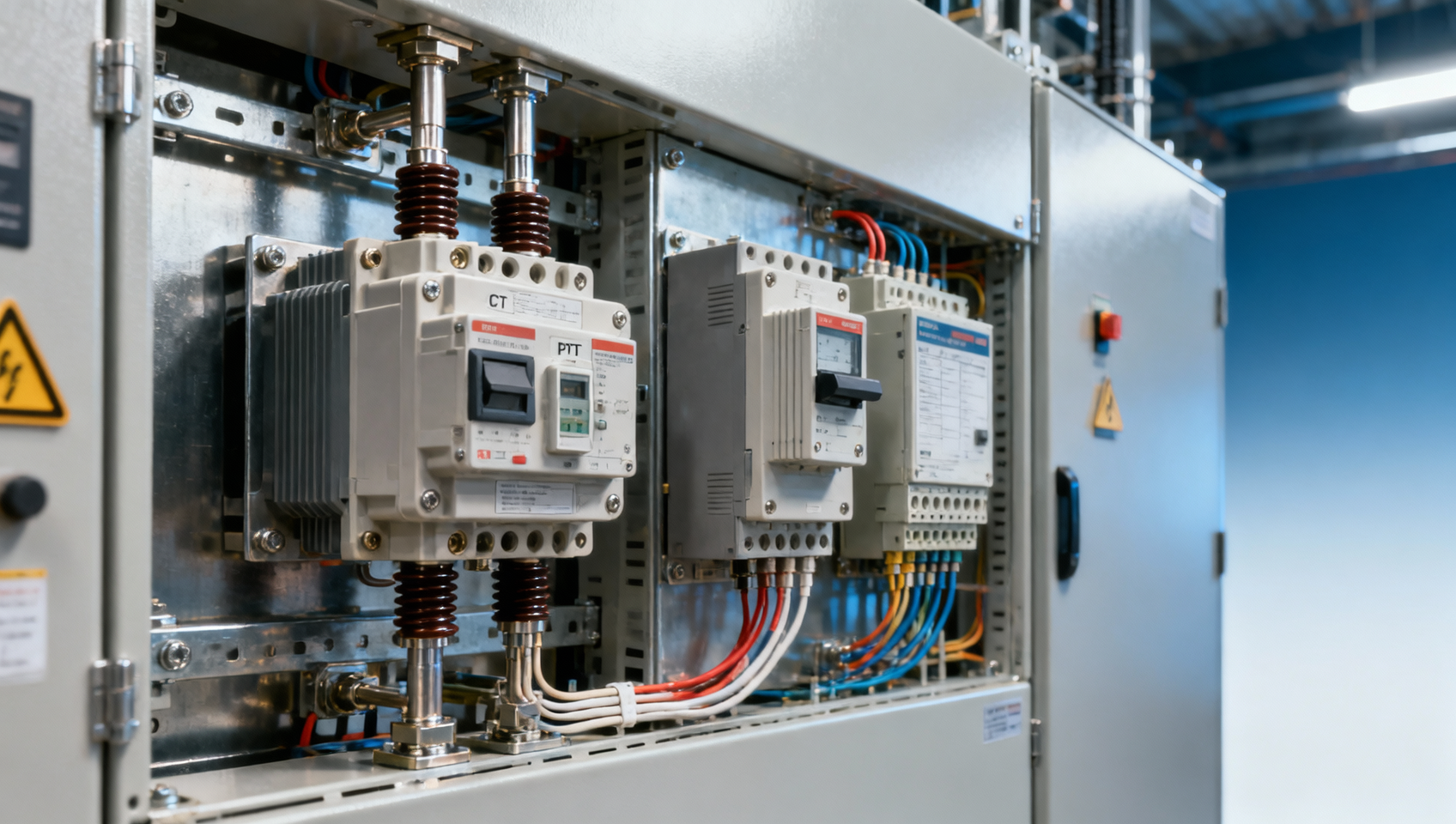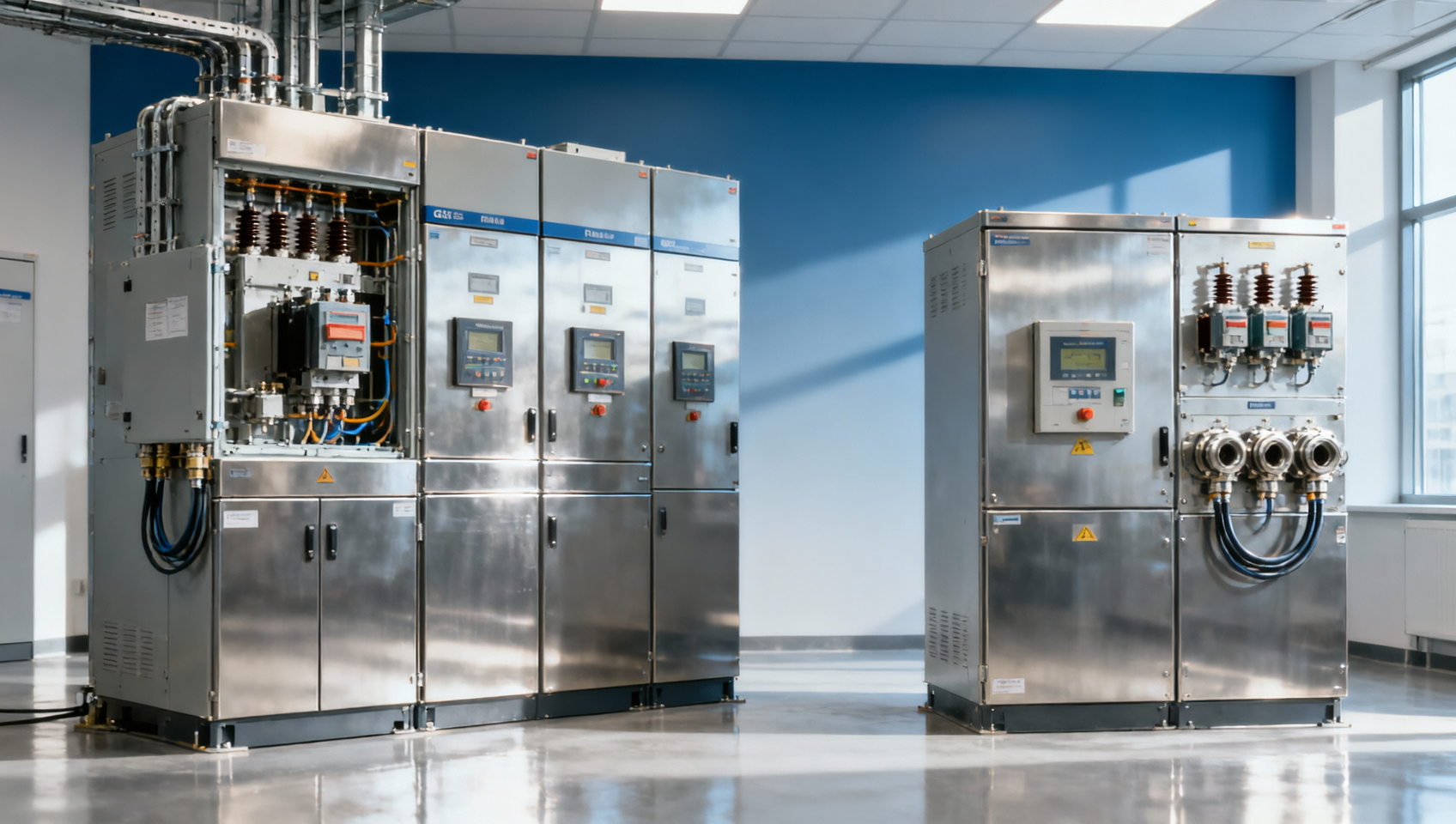
Potential Transformers PT Selection Guide
Author
Date Published
Reading Time
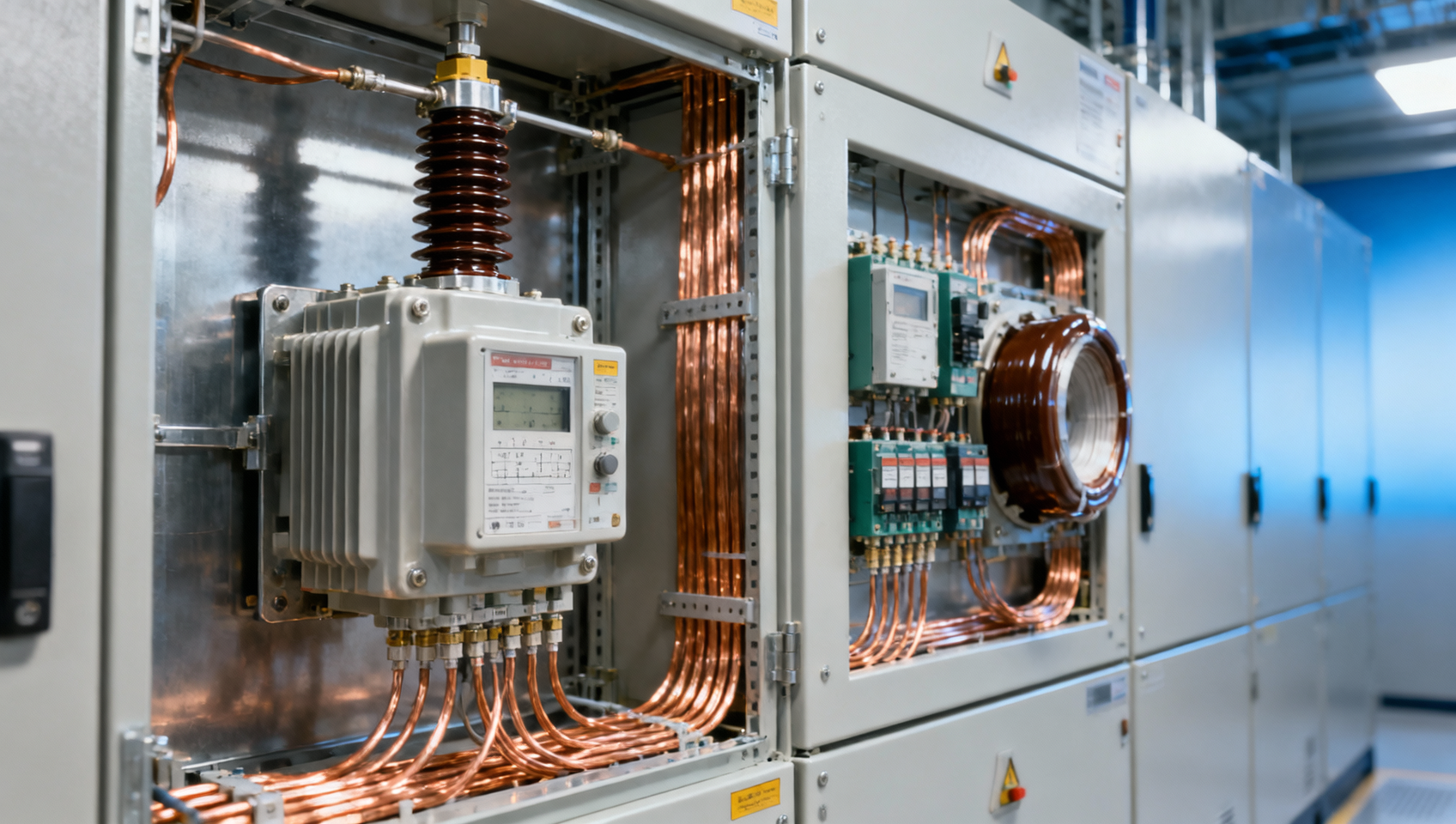
Selecting the right potential transformers PT is critical for accurate metering, relay protection, and long-term grid reliability. This guide helps researchers, operators, buyers, and decision-makers compare potential transformers PT with current transformers CT, evaluate insulation, accuracy class, and installation conditions, and align choices with medium voltage switchgear, gas insulated switchgear GIS, and ring main unit RMU applications for safer, more efficient power systems.
In industrial and utility environments, a PT is more than an accessory inside switchgear. It is a measurement interface that influences billing accuracy, protective relay performance, and operational visibility. A mismatch between transformer type, burden, insulation level, and installation environment can create errors that only appear under load, during switching surges, or at the worst possible moment during a fault event.
For EPC teams, maintenance personnel, procurement managers, and plant leaders, the selection process should balance electrical performance, enclosure compatibility, compliance, lifecycle cost, and serviceability. The following guide breaks down how to evaluate potential transformers PT in a practical B2B decision framework.
Understanding Potential Transformers PT in Industrial Power Systems
A potential transformer PT, often also referred to as a voltage transformer, steps medium or high system voltage down to a standardized secondary value for meters, relays, and monitoring devices. Common secondary outputs include 110V, 100V, or 63.5V, depending on system design and measurement philosophy. Its core purpose is safe, accurate voltage scaling with galvanic isolation between the primary network and secondary instruments.
The distinction between potential transformers PT and current transformers CT is fundamental. A PT is connected in parallel to the circuit and reproduces voltage at a reduced level, while a CT is connected in series and reproduces current at a reduced value such as 1A or 5A. In a typical protection and metering panel, both devices work together, but they are not interchangeable and should never be selected using the same burden logic.
In medium voltage systems from 3.6kV to 36kV, PTs are commonly installed in metal-clad switchgear, gas insulated switchgear GIS, ring main unit RMU assemblies, substations, and generator panels. The selection criteria change significantly depending on whether the application prioritizes billing metering, feeder protection, bus voltage indication, synch-check, or insulation monitoring.
Why PT selection affects system performance
An underspecified PT may saturate under transient conditions, fail to maintain its accuracy class at the intended burden, or degrade in harsh ambient conditions such as 45°C enclosure temperatures, high humidity, or contaminated coastal air. These issues can lead to relay misoperation, inaccurate trend data, nuisance alarms, and avoidable maintenance investigation time.
A correctly selected PT supports three measurable outcomes: stable voltage measurement, dependable relay input, and reduced downstream troubleshooting. In large industrial plants, even a 0.5% to 1% measurement deviation can become significant when it affects load balancing, power quality analysis, or energy performance reporting across multiple feeders.
PT vs CT at a glance
The table below highlights the practical differences buyers and engineers should keep in view during specification reviews and bid comparisons.
The key takeaway is simple: CT selection centers on current ratio and fault performance, while PT selection centers on voltage ratio, insulation coordination, burden, and accuracy under steady and transient system conditions. Treating them as similar line items often results in avoidable specification errors.
Core Selection Criteria: Ratio, Accuracy Class, Burden, and Insulation
The most reliable way to select a potential transformer PT is to start with four technical filters: primary system voltage, required secondary voltage, required accuracy class, and total connected burden in VA. These factors should be validated before discussing enclosure shape, mounting arrangement, or vendor lead time.
For medium voltage networks, common PT ratios may include values such as 11kV divided by 110V, 22kV divided by 110V, or 33kV divided by 110V. However, ratio selection must also consider system grounding, phase-to-phase versus phase-to-earth measurement, and whether an open-delta or residual connection is required for protection schemes.
Accuracy class depends on application. Metering circuits often require tighter classes such as 0.2, 0.5, or 1.0, while general indication or some protection functions may tolerate broader limits. Burden ratings such as 25VA, 50VA, or 100VA should reflect the real connected load from meters, relays, transducers, and wiring distance, with a reasonable design margin rather than a large oversizing habit.
How to check the burden correctly
Many field issues begin with inaccurate burden estimation. The connected burden includes relay input consumption, meter consumption, terminal losses, and cable losses on the secondary side. In compact switchgear, this may stay below 15VA, while in larger relay panels with longer runs it can reach 30VA to 60VA. A practical design target is to keep normal operating burden within roughly 25% to 80% of the rated burden for predictable accuracy performance.
Insulation is equally important. PTs in 12kV, 24kV, and 36kV classes must align with the switchgear insulation level, lightning impulse withstand requirements, and site overvoltage profile. Resin-cast indoor units are common for metal-enclosed assemblies, while outdoor or highly polluted sites may require designs with stronger environmental sealing and creepage consideration.
Quick technical selection matrix
The following matrix can be used as a first-pass screening tool during technical clarification and procurement review.
For procurement teams, the practical lesson is that a lower purchase price does not offset performance risk if the PT cannot hold its stated class at the actual burden. Technical equivalence should always be confirmed on ratio, class, burden, insulation, frequency, and installation form before commercial comparison begins.
- Confirm the exact system voltage and whether the PT measures line-to-line or line-to-ground voltage.
- List every secondary device and add cable burden before finalizing the VA requirement.
- Specify the target accuracy class separately for metering and protection if both functions are present.
- Check ambient temperature, altitude, humidity, and enclosure heat rise for real operating conditions.
Selecting PTs for Switchgear, GIS, and RMU Applications
Application context changes PT design priorities. In medium voltage switchgear, there is usually more flexibility in mounting, wiring access, and replacement planning. In GIS and compact RMU systems, the available space can be limited, thermal conditions can be more concentrated, and the integration method may strongly influence maintainability over a 15 to 25 year service life.
For indoor metal-clad switchgear, buyers typically focus on insulation class, panel fit, fuse arrangement, and front or rear accessibility. For GIS, the PT must align with the manufacturer’s dielectric design, gas compartment philosophy, and footprint constraints. In RMU projects, compactness, low maintenance, and stable performance under distribution-network switching duty are often the key decision drivers.
Installation conditions also matter. Sites with high vibration, frequent switching, dust contamination, or 95% relative humidity require more attention to terminal protection, resin integrity, and mounting stability. In coastal, mining, or chemical areas, contamination resistance and enclosure selection should be discussed early in the specification stage.
Application-specific comparison
The table below summarizes how PT priorities shift by installation platform.
This comparison shows why the same nominal PT ratio may not be equally suitable across all platforms. Mechanical design, heat dissipation, and access for testing can materially influence lifecycle value even when electrical ratings appear similar on paper.
Common integration checkpoints
- Verify whether primary fuses are integrated, external, or omitted by design philosophy.
- Check terminal orientation and minimum clearance around the PT body in the actual panel layout.
- Confirm test access for insulation checks, secondary injection, and routine maintenance intervals.
- Review whether replacement can be completed within a planned shutdown window of 4 to 8 hours.
- Ensure documentation includes schematic references, polarity, ratio, and burden details.
From a project execution standpoint, PT selection should be finalized with the switchgear or GIS manufacturer, not in isolation. Mechanical interface mismatches often create more project delay than the transformer lead time itself, especially in fast-track EPC schedules.
Procurement Checklist, Compliance Review, and Supplier Evaluation
Industrial buyers should evaluate PTs using a structured checklist instead of relying on headline specifications alone. A technically compliant PT still needs suitable documentation, test records, packing protection, and repeatable manufacturing quality. In many projects, the difference between a smooth delivery and a costly site delay comes down to document completeness and interface accuracy.
Typical procurement review points include routine test availability, drawing approval cycle, lead time, spare policy, and consistency between datasheet, nameplate, and wiring diagram. For international sourcing, the buyer should also confirm export packaging, humidity protection for transit periods of 3 to 6 weeks, and clarity on replacement support if a unit arrives damaged or fails incoming inspection.
Compliance review should focus on applicable standards, insulation coordination, and test scope rather than generic marketing claims. If the PT will be used for revenue-related metering or critical protection, the documentation burden should be higher, with closer attention to ratio tolerance, phase angle error, and burden-specific performance.
Buyer’s decision table
The following table provides a practical evaluation structure for RFQ comparison and internal approval review.
For many industrial projects, a realistic PT supply window can range from 2 to 8 weeks depending on customization, test witness requirements, and logistics route. If the PT is part of an integrated switchgear package, the governing schedule is often the panel assembly and factory test slot, not the transformer manufacturing time alone.
Five procurement mistakes to avoid
- Approving a PT based only on ratio and ignoring burden, class, or wiring distance.
- Assuming all 11kV or 24kV PTs will fit the same switchgear compartment.
- Failing to clarify whether the application is metering, protection, or both.
- Overlooking environmental conditions such as 40°C to 55°C enclosure temperatures.
- Skipping spare strategy for critical feeders where outage cost is high.
A disciplined procurement process reduces rework, supports cleaner technical approvals, and improves long-term asset consistency across sites. For multi-site operators, standardizing 3 to 5 approved PT configurations can also simplify inventory and maintenance training.
Installation, Testing, Maintenance, and FAQ
Even a well-selected potential transformer PT can underperform if installation and commissioning are weak. Secondary wiring errors, poor grounding practice, loose terminals, or incorrect fuse coordination can distort readings and create safety concerns. Field teams should treat PT commissioning as a controlled verification process rather than a routine wiring closure.
A typical implementation workflow includes 5 stages: specification confirmation, drawing approval, incoming inspection, installation and wiring check, and commissioning test. Incoming inspection should verify nameplate data, physical integrity, accessory completeness, and consistency with approved documents. Commissioning should include insulation checks, polarity confirmation, ratio verification where applicable, and validation of relay or meter readings under energized conditions.
For maintenance planning, PTs are often low-maintenance devices, but they should still be included in periodic visual inspection and condition review intervals. In clean indoor switchgear, annual inspection may be sufficient, while harsher sites may justify checks every 6 months for dust accumulation, cracking, corrosion, or terminal heating signs.
Routine maintenance priorities
- Inspect resin surfaces and terminals for cracks, contamination, moisture marks, or overheating.
- Verify secondary circuit tightness and labeling during planned shutdowns.
- Review meter and relay values against expected voltage levels for early anomaly detection.
- Replace damaged fuses and investigate the root cause rather than resetting repeatedly.
- Keep records of inspection dates, observed conditions, and any corrective action within 24 hours of maintenance.
FAQ: How do I know whether a PT is suitable for metering or protection?
Start by checking the specified accuracy class and intended burden. Metering applications usually require tighter error limits, often in classes such as 0.2 or 0.5, while protection circuits may prioritize stable performance during abnormal system conditions. If one PT serves both duties, verify that the design and winding arrangement support both functions without compromising either one.
FAQ: What installation conditions most often affect PT life?
The most common stress factors are heat, humidity, contamination, vibration, and switching surges. A compact compartment running at 50°C can age insulation faster than a ventilated indoor panel at 30°C. Sites with moisture or dust require better sealing discipline and more frequent inspection.
FAQ: How long is a practical delivery cycle for industrial PT orders?
For standard configurations, 2 to 4 weeks may be achievable. For customized switchgear-integrated units, witness testing, or export packing and sea freight, 4 to 8 weeks is more realistic. Critical projects should confirm drawing approval time and spare availability at the same time as commercial negotiation.
FAQ: What should decision-makers prioritize when comparing suppliers?
Look beyond unit price. The most relevant decision factors are technical conformity, consistency of manufacturing, test documentation, delivery reliability, and support responsiveness. In critical infrastructure, one avoided commissioning delay or one prevented relay issue can outweigh a modest purchase price difference.
Selecting the right potential transformers PT requires a disciplined review of voltage ratio, burden, accuracy class, insulation level, and installation platform. When those factors are aligned with switchgear, GIS, or RMU design, the result is more reliable metering, stronger protection performance, and lower lifecycle risk for industrial power systems.
For researchers, operators, procurement teams, and business leaders, the most effective path is a specification-led evaluation supported by application context, documentation quality, and practical maintenance planning. If you are comparing PT options for a new project, retrofit, or global sourcing program, contact us to discuss your technical requirements, request a tailored selection framework, or explore more industrial power solutions.
Technical Specifications
- Canton Fair Phase II 2026: Industrial Components Booking Rate Hits 98%Author :Heavy Industry Strategist
- TÜV Rheinland Updates EMC Guide for Industrial Optics EquipmentAuthor :Precision Metrology Expert
- Copper Price Surges 6.8%: Impact on Cables, Breakers & BOM CostsAuthor :Grid Infrastructure Analyst
Expert Insights

Chief Security Architect
Dr. Thorne specializes in the intersection of structural engineering and digital resilience. He has advised three G7 governments on industrial infrastructure security.
Related Analysis
- Apr 21, 2026Canton Fair Phase II 2026: Industrial Components Booking Rate Hits 98%Author :Heavy Industry Strategist
- Apr 21, 2026TÜV Rheinland Updates EMC Guide for Industrial Optics EquipmentAuthor :Precision Metrology Expert
- Apr 21, 2026Copper Price Surges 6.8%: Impact on Cables, Breakers & BOM CostsAuthor :Grid Infrastructure Analyst
Core Sector // 01
Security & Safety
- Shanghai Yangshan Port Launches Green Clearance for Industrial EquipmentAuthor :Grid Infrastructure Analyst
![]()
- How to Vet a Power Transformer ManufacturerAuthor :Grid Infrastructure Analyst

- How to Source Distribution TransformersAuthor :Grid Infrastructure Analyst

- Cast Resin Dry Type Transformer UsesAuthor :Grid Infrastructure Analyst

- Oil Immersed Transformer vs Dry TypeAuthor :Grid Infrastructure Analyst

- Current Transformers CT Buying ChecklistAuthor :Grid Infrastructure Analyst

- Potential Transformers PT Selection GuideAuthor :Grid Infrastructure Analyst

- How to Compare Medium Voltage SwitchgearAuthor :Grid Infrastructure Analyst