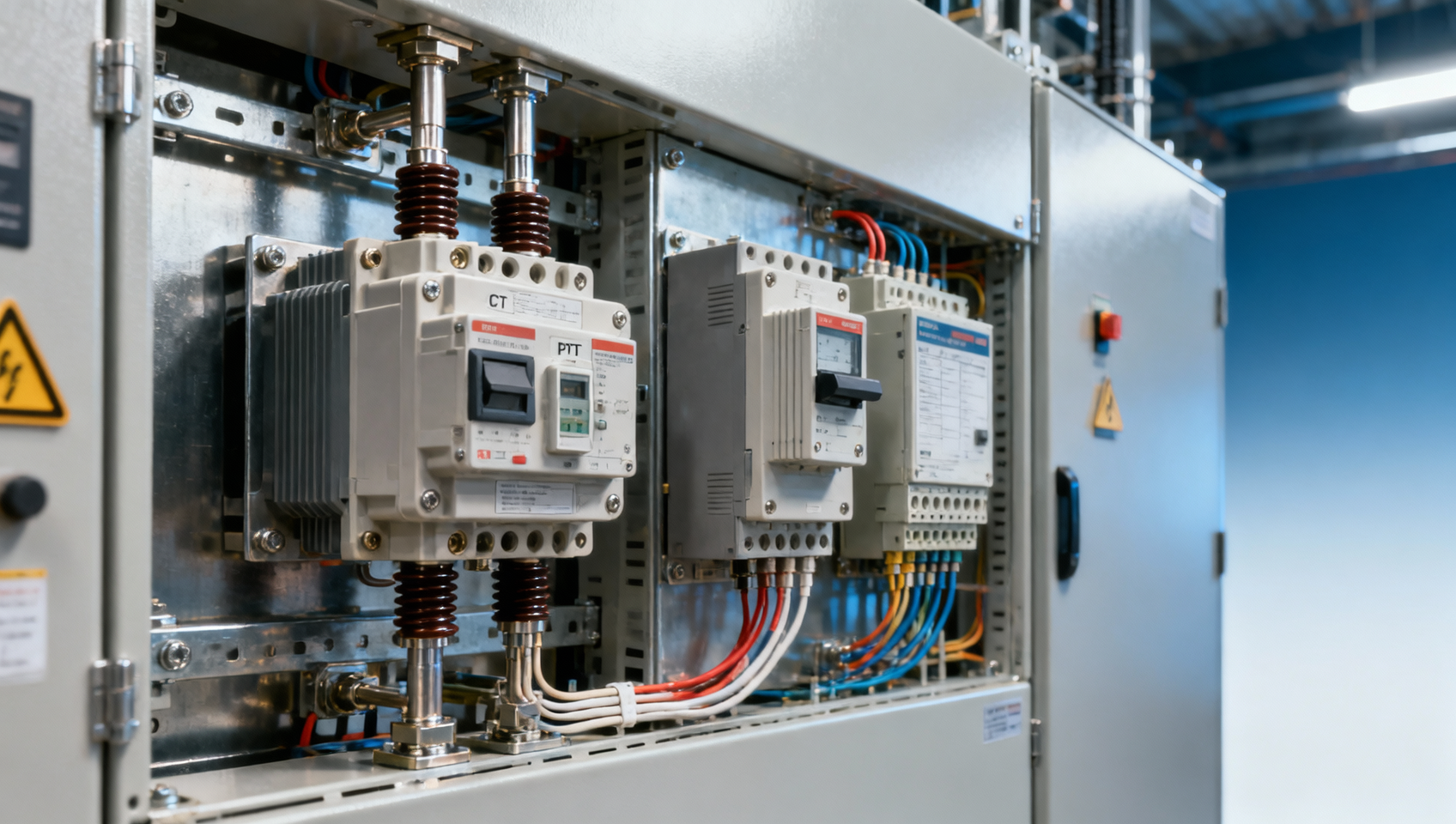
Gas Insulated Switchgear GIS Pros and Cons
Author
Date Published
Reading Time

Gas insulated switchgear GIS offers a compact, reliable solution for modern power networks, but it also raises questions about cost, maintenance, and environmental impact. For researchers, operators, buyers, and decision-makers comparing medium voltage switchgear, ring main unit RMU, air circuit breaker ACB, molded case circuit breaker MCCB, and low voltage switchboard options, understanding the real pros and cons of GIS is essential before making a long-term infrastructure investment.
What makes gas insulated switchgear different in real projects?
Gas insulated switchgear, commonly called GIS, is a type of switchgear in which the main live parts are enclosed in grounded metal compartments filled with insulating gas. In medium voltage and high voltage applications, this design reduces the footprint sharply compared with conventional air insulated systems. For EPC teams, plant operators, and procurement managers, that compactness often becomes the first reason GIS enters the shortlist.
In practice, GIS is not simply a “smaller switchboard.” It is a sealed power distribution solution built to perform in places where dust, humidity, salinity, and limited installation space create ongoing risk. Typical project discussions involve voltage class, feeder configuration, busbar arrangement, protection scheme, and whether the site demands modular expansion over the next 2–5 years.
The strongest market demand for GIS usually appears in urban substations, tunnels, offshore-related facilities, industrial plants, transport hubs, data centers, and process industries where downtime is expensive. In these environments, floor area can cost more than equipment, and unplanned outages can disrupt operations for hours or even days. That shifts the evaluation from purchase price alone to lifecycle performance.
For users comparing GIS with ring main unit RMU, air insulated switchgear, ACB, MCCB, or low voltage switchboard assemblies, the key point is simple: these products do not serve exactly the same system role. GIS is usually part of medium voltage or high voltage distribution architecture, while ACB and MCCB belong more often to low voltage protection and distribution layers.
Where GIS is most often considered
- Space-constrained substations where every square meter affects civil cost, cable routing, and future expansion options.
- Harsh industrial environments with dust, moisture, corrosive air, or frequent contamination of exposed insulation surfaces.
- Critical facilities that require high availability, controlled maintenance intervals, and predictable performance over 20–30 years.
- Retrofit projects where existing buildings cannot easily accommodate larger air insulated equipment clearances.
GIS pros and cons: where it delivers value and where it creates risk
A balanced GIS evaluation must go beyond general statements like “high reliability” or “high cost.” Industrial buyers need to know which benefits matter in actual operating conditions and which drawbacks affect budget, maintenance planning, training, and environmental compliance. The table below summarizes the most important pros and cons of gas insulated switchgear in procurement and operational terms.
The trade-off is clear. GIS tends to be strongest when 3 factors appear together: limited space, harsh environment, and high availability requirements. If only one of those factors is present, the premium may be harder to justify. That is why serious buyers compare not only equipment cost, but also building dimensions, outage risk, maintenance access, and expected service life.
From an operator’s perspective, GIS can reduce routine exposure to contamination and lower the frequency of some visual cleaning tasks. However, when intervention is required, it is rarely a casual maintenance event. Teams may need certified gas handling procedures, controlled shutdown windows, and specialist test equipment. A maintenance event that takes 1 shift on air insulated gear can become more structured on GIS.
From a procurement perspective, the main risk is buying GIS for the wrong reason. If the selection is based only on trend, aesthetics, or a generic specification copied from another project, the final investment may be oversized. A proper decision should review at least 5 points: footprint, fault level, expansion plan, environmental conditions, and service support availability within the project region.
Quick judgment checklist for pros and cons
GIS is often a strong fit when:
- The project must fit into a restricted building, skid, basement, tunnel, or compact substation footprint.
- The site has persistent dust, humidity, salt spray, or contamination exposure across all 4 seasons.
- The owner values lifecycle stability over the lowest initial capex.
GIS may be a weaker fit when:
- The installation area is generous and air insulated switchgear can be installed without major building cost.
- The maintenance team lacks gas handling capability and remote service support is slow.
- The project is highly price-sensitive and short-term cost control dominates the decision.
How does GIS compare with RMU, air insulated switchgear, ACB, MCCB, and low voltage switchboard options?
Many searchers ask whether GIS is “better” than RMU, ACB, MCCB, or a low voltage switchboard. That question is too broad because these products sit at different voltage levels and perform different system functions. A better question is this: which architecture best matches your network topology, continuity target, maintenance resources, and expansion plan over the next 3–10 years?
For example, an RMU is often selected for compact medium voltage distribution in utility and commercial networks, especially where ring feeding and sectionalizing are central requirements. ACB and MCCB are low voltage protection devices used inside low voltage switchboards. GIS usually serves the upstream medium voltage or high voltage layer where insulation reliability, fault containment, and space efficiency matter more than low voltage feeder density.
The comparison below helps decision-makers separate overlapping terms and avoid specification errors during early procurement. This is especially useful when consultants, site engineers, and purchasing teams use different product language in the same tender package.
This comparison shows why direct one-to-one replacement language can mislead a project team. GIS and air insulated switchgear are closer substitutes in many medium voltage applications. RMU overlaps with certain compact network functions. ACB and MCCB support a different downstream layer. If a tender mixes these categories, the bids can become technically inconsistent and difficult to evaluate fairly.
A practical comparison rule
If your core issue is MV footprint, environmental sealing, and long-term reliability in restricted spaces, compare GIS first with air insulated MV switchgear and certain RMU configurations. If your issue is LV protection coordination, compare ACB and MCCB within the low voltage switchboard design, not against GIS. This simple rule prevents many early-stage procurement mistakes.
Which technical and compliance factors should buyers check before ordering GIS?
For B2B procurement, the most expensive GIS mistake is not choosing the “wrong brand.” It is issuing an incomplete technical specification. When that happens, suppliers quote different assumptions on voltage rating, busbar capacity, short-circuit withstand, protection relays, cable terminations, interlocking, internal arc classification, and enclosure requirements. The result is a bid comparison that looks commercial but is actually inconsistent.
A disciplined buyer should define at least 6 technical checkpoints before RFQ release: system voltage, rated current, short-circuit level, required feeder count, installation environment, and future extension strategy. On many industrial projects, one missing parameter can affect panel arrangement, cable box design, relay selection, or civil interface. That creates avoidable redesign during the 2–6 week engineering stage.
Compliance is equally important. Industrial infrastructure buyers typically review alignment with IEC frameworks, project-specific utility rules, and site safety procedures. Depending on the market, procurement teams may also need CE-related documentation, factory routine test records, nameplate data, single-line diagrams, and operating manuals. The exact package varies, but the principle is constant: documentation quality affects handover quality.
Global Industrial Core supports this stage by helping technical and sourcing teams convert broad intent into verifiable procurement language. That includes interpreting environmental duty, separating mandatory requirements from preferred options, and aligning switchgear selection with broader plant risk, maintenance resources, and compliance expectations rather than relying on shorthand product labels alone.
Buyer checklist for technical review
- Confirm the network role: incoming, transformer feeder, bus coupler, outgoing feeder, or sectionalizing duty.
- Verify the electrical range required, including rated voltage, normal current, and short-circuit withstand values.
- Define the site conditions: indoor or outdoor placement, altitude, ambient temperature range, humidity, and contamination level.
- Request the service scope clearly: commissioning, training, spare parts, recommended inspections, and emergency support response window.
- Check compliance documents and factory test expectations before PO issue, not after shipment.
Common document package expected in serious procurement
- General arrangement drawing and single-line diagram for layout validation.
- Routine test records and equipment nameplate schedule for acceptance review.
- Operation and maintenance instructions covering isolation, interlocking, and safety sequence.
- Spare parts recommendation for the first 12–24 months of operation.
How should companies evaluate cost, lifecycle value, and alternatives?
The purchase price of gas insulated switchgear is usually the most visible number in a tender, but it is not the only meaningful number. In many projects, GIS is selected because it compresses the total system cost elsewhere. It may reduce building dimensions, improve equipment protection in contaminated environments, and lower the operational burden associated with exposed insulation. Those savings are indirect, but they are real when the site conditions justify them.
At the same time, GIS can increase costs in areas that budget owners underestimate. These include specialized commissioning, gas monitoring, service training, spare parts planning, and more structured fault intervention. If internal staff cannot support these tasks, external service dependency becomes a cost and continuity factor. For some facilities, that is acceptable. For others, it becomes a long-term concern.
A sound lifecycle review should compare at least 4 cost buckets over a 10–20 year horizon: equipment capex, civil and installation cost, routine maintenance effort, and downtime exposure. Even when precise numerical ROI is difficult in early planning, this framework helps enterprise decision-makers separate headline price from operational value.
Alternatives should also be reviewed honestly. Air insulated switchgear may be the right solution where space is available and maintenance access is a priority. RMU may fit compact network distribution with simpler sectionalizing needs. On the low voltage side, ACB and MCCB remain essential but should not be used as substitute references for medium voltage architecture decisions.
The table below provides a practical cost-oriented view for industrial buyers screening GIS against common alternatives.
The main takeaway is not that GIS is always cheaper or always more expensive in total ownership terms. It is that GIS changes where the costs sit. Strong buyers map those costs early and ask each supplier to state assumptions on service support, spares, documentation, and installation responsibility so that comparison remains transparent.
FAQ: what do researchers, operators, and buyers ask most about GIS?
Is GIS always better than air insulated switchgear?
No. GIS is often better when space is tight, contamination is high, or availability is critical. Air insulated switchgear may be a better commercial and operational choice when the site has enough room, the environment is controlled, and the maintenance team prefers easier physical access. The right answer depends on at least 3 variables: site conditions, maintenance capability, and lifecycle budget priorities.
What should procurement teams ask before requesting a GIS quote?
Start with 5 essentials: system voltage, current rating, short-circuit level, feeder quantity, and installation environment. Then ask about commissioning scope, recommended spare parts for the first 12–24 months, required operator training, documentation package, and expected lead time. Without that information, quotations may look comparable while hiding different technical assumptions.
Are gas insulated systems difficult to maintain?
Routine maintenance may be less exposed to dust and surface contamination, which is one reason GIS is valued in harsh environments. However, corrective maintenance can be more specialized. Buyers should confirm whether local service partners can support inspection, gas handling, diagnostics, and emergency response. That question is especially important for remote plants or fast-track infrastructure sites.
How long does a GIS procurement and implementation cycle usually take?
The exact schedule depends on voltage class, panel count, engineering complexity, and project approvals. In many industrial procurements, buyers should plan for a sequence that includes specification alignment, technical clarification, production, factory testing, delivery, installation, commissioning, and operator handover. Even when supply timing is compressed, a realistic project rhythm often spans several stages rather than a single purchase event.
What is the most common GIS buying mistake?
The most common mistake is treating GIS as a generic upgrade instead of a site-specific power distribution solution. Buyers sometimes focus on compact design but overlook maintenance access, future feeder expansion, service availability, or environmental management responsibilities. A better approach is to review the full operating context before locking in the specification.
Why work with Global Industrial Core when evaluating GIS options?
Global Industrial Core helps industrial teams move from broad product interest to procurement-ready technical judgment. That matters when GIS is being compared against RMU, air insulated switchgear, ACB, MCCB, and low voltage switchboard solutions across complex projects. Instead of relying on surface-level comparisons, buyers need a structured view of network role, site risk, compliance expectations, service planning, and lifecycle trade-offs.
For researchers, GIC clarifies the difference between overlapping switchgear terms and application boundaries. For operators, it highlights maintenance implications, environmental fit, and practical risk points. For procurement teams, it supports bid alignment, specification review, and comparison logic. For enterprise decision-makers, it frames GIS in terms of capital allocation, operational resilience, and infrastructure continuity.
If you are screening gas insulated switchgear for a plant, utility interface, transport facility, data center, or heavy industrial project, you can consult GIC on several concrete topics: parameter confirmation, product selection logic, lead time expectations, compliance document scope, customized configuration options, spare parts planning, and quotation comparison. This is especially useful when 2–3 technical paths remain viable and internal teams need a more disciplined decision basis.
Contact Global Industrial Core to discuss your GIS use case in practical terms. Share your single-line concept, operating environment, expansion plan, and target delivery window, and the discussion can focus on what matters most: whether GIS is the right fit, what specifications need refinement, which alternatives deserve comparison, and how to reduce risk before the purchase order is issued.
Technical Specifications
- Canton Fair Phase II 2026: Industrial Components Booking Rate Hits 98%Author :Heavy Industry Strategist
- TÜV Rheinland Updates EMC Guide for Industrial Optics EquipmentAuthor :Precision Metrology Expert
- Copper Price Surges 6.8%: Impact on Cables, Breakers & BOM CostsAuthor :Grid Infrastructure Analyst
Expert Insights

Chief Security Architect
Dr. Thorne specializes in the intersection of structural engineering and digital resilience. He has advised three G7 governments on industrial infrastructure security.
Related Analysis
- Apr 21, 2026Canton Fair Phase II 2026: Industrial Components Booking Rate Hits 98%Author :Heavy Industry Strategist
- Apr 21, 2026TÜV Rheinland Updates EMC Guide for Industrial Optics EquipmentAuthor :Precision Metrology Expert
- Apr 21, 2026Copper Price Surges 6.8%: Impact on Cables, Breakers & BOM CostsAuthor :Grid Infrastructure Analyst
Core Sector // 01
Security & Safety
- Shanghai Yangshan Port Launches Green Clearance for Industrial EquipmentAuthor :Grid Infrastructure Analyst
![]()
- How to Vet a Power Transformer ManufacturerAuthor :Grid Infrastructure Analyst

- How to Source Distribution TransformersAuthor :Grid Infrastructure Analyst

- Cast Resin Dry Type Transformer UsesAuthor :Grid Infrastructure Analyst

- Oil Immersed Transformer vs Dry TypeAuthor :Grid Infrastructure Analyst

- Current Transformers CT Buying ChecklistAuthor :Grid Infrastructure Analyst

- Potential Transformers PT Selection GuideAuthor :Grid Infrastructure Analyst

- How to Compare Medium Voltage SwitchgearAuthor :Grid Infrastructure Analyst