Engineering procurement process mistakes that delay plant delivery
Author
Date Published
Reading Time
Even the most technically sound project can miss its startup date when the engineering procurement process breaks down at critical decision points. From incomplete specifications to vendor misalignment and approval bottlenecks, small procurement mistakes often trigger major plant delivery delays. This article highlights the most common errors project managers and engineering leaders must prevent to protect schedules, budgets, and operational readiness.
For EPC contractors, owner’s engineers, and industrial project leaders, procurement is not a back-office activity. It is a schedule-critical function that connects design maturity, supplier capability, logistics control, inspection readiness, and plant commissioning. In large industrial programs, a delay of 2–6 weeks on long-lead electrical panels, analyzers, valves, or rotating components can easily push mechanical completion and disrupt startup sequencing.
The engineering procurement process becomes especially vulnerable when teams move from conceptual intent to executable specifications. A plant may have 500 to 5,000 tagged items across multiple packages, and even a 3% error rate in specifications, approvals, or vendor data can create dozens of downstream nonconformities. The following sections focus on the mistakes that most often delay plant delivery and the practical controls that reduce procurement risk.
Why engineering procurement process failures have outsized schedule impact
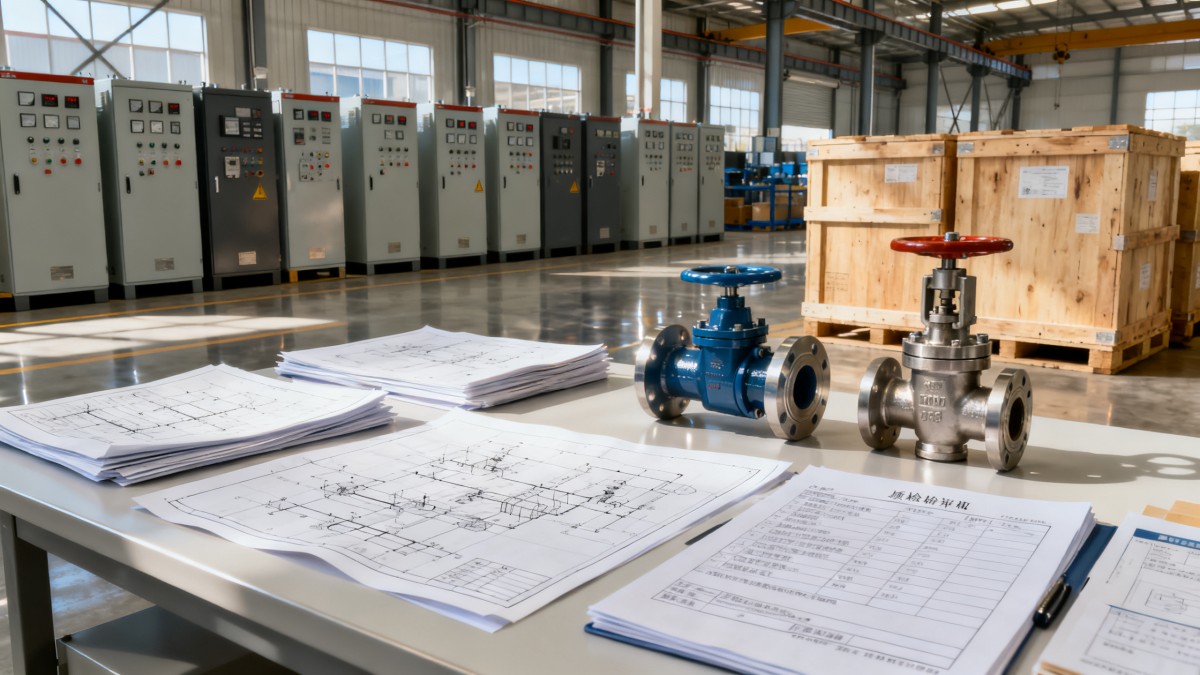
In industrial projects, procurement does more than buy materials. It converts engineering output into manufacturable, certifiable, shippable assets. When the engineering procurement process is weak, the project does not lose time in one place only; it loses time across document review, factory production, inspection windows, customs handling, site receipt, and installation readiness.
This effect is amplified for long-lead items with typical fabrication cycles of 10–24 weeks. If the technical bid evaluation takes 2 extra weeks, vendor drawing approval takes another 10 days, and one compliance issue triggers rework, the total delay can exceed 30 days before the equipment even leaves the factory. That is why procurement errors often appear small at origin but large at delivery.
The most delay-sensitive procurement categories
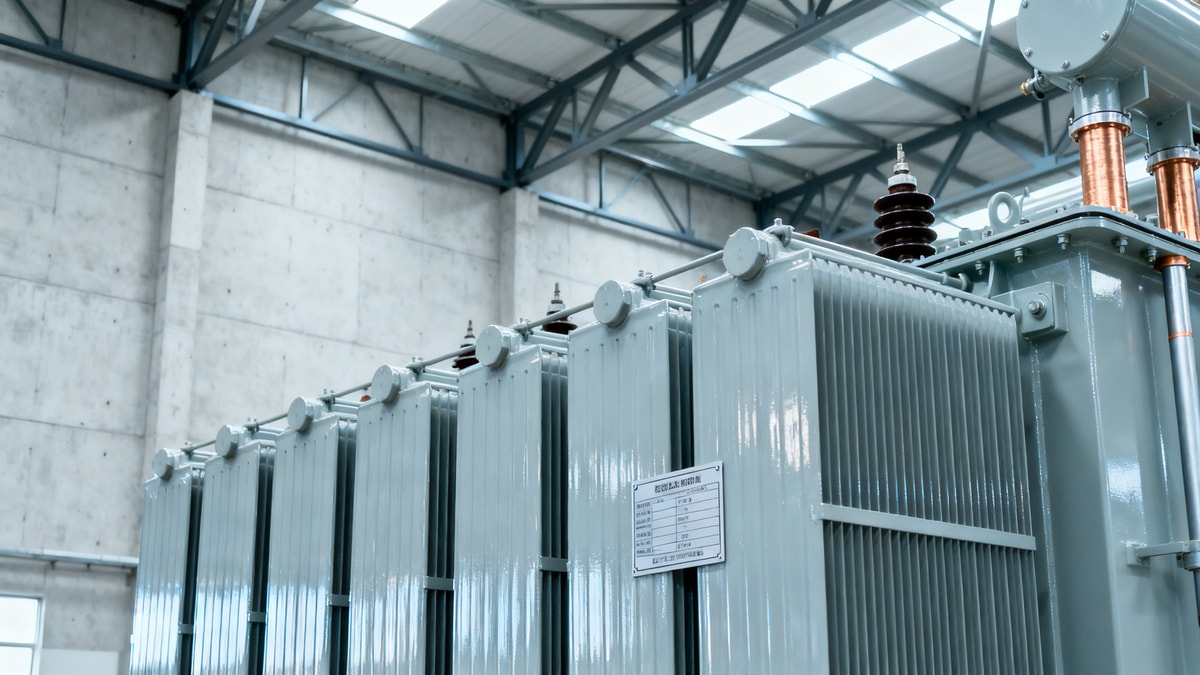
Not all packages carry the same schedule risk. In most heavy industrial plants, the most delay-sensitive categories are electrical switchgear, transformers, MCCs, control panels, safety devices, field instruments, specialty valves, steel assemblies, and custom mechanical components. Many of these items also require third-party inspection, FAT participation, or strict documentation packs before shipment release.
- Electrical and power distribution packages: often 12–20 weeks
- Critical instruments and analyzers: often 8–16 weeks
- Custom mechanical fabrications: often 6–14 weeks
- Imported safety-certified components: often 4–10 weeks plus customs variability
Where project teams underestimate risk
Many teams focus heavily on PO placement date and underestimate three earlier gates: specification completeness, vendor clarification closure, and internal approval discipline. In practice, a purchase order issued with unresolved technical deviations is not a secured schedule milestone. It is often the starting point of later delay.
The table below shows where common failures emerge in the engineering procurement process and how they typically affect plant delivery.
A consistent pattern emerges: most delays do not begin at the factory floor. They begin when technical and commercial decisions are separated. Project managers who treat procurement as a controlled engineering workflow rather than a purchasing transaction usually recover more schedule certainty.
The 8 most common mistakes that delay plant delivery
The engineering procurement process breaks down in predictable ways. The good news is that most of these issues are preventable if project leaders define clear ownership, lock critical data earlier, and monitor supplier execution using milestone-based controls.
1. Releasing RFQs with incomplete or unstable specifications
An RFQ issued too early often creates a false sense of progress. If process conditions, material grades, hazardous area classification, enclosure ratings, or interface dimensions are incomplete, vendors respond with assumptions. Those assumptions later become deviation lists, re-quotes, or redesign loops. A 5-day rush at RFQ stage can turn into a 20-day delay after award.
How to control it
- Use a release gate with at least 6 checks: duty point, standards, materials, interfaces, testing, and documentation scope.
- Separate “for pricing” packages from “for fabrication” packages.
- Flag any data sheet field that remains provisional beyond 10% tolerance.
2. Choosing vendors on unit price instead of delivery capability
Lowest cost is not lowest project cost when plant delivery is the priority. A supplier with a 6% lower quoted price but a 4-week longer fabrication lead time may create much higher indirect costs in site labor, crane windows, commissioning sequence, and liquidated damages exposure. Industrial procurement decisions must balance cost, compliance, lead time, and quality readiness.
3. Ignoring vendor data turnaround times
Many schedules include manufacturing duration but overlook document cycle time. In reality, drawings, data sheets, GA approvals, wiring diagrams, material certificates, and ITP acceptance can consume 2–5 review cycles. If each cycle takes 3–7 days on both sides, document handling alone may consume 15–30 days.
4. Poor alignment between engineering, procurement, and construction teams
A recurring mistake is allowing engineering to finalize designs without confirming site installation constraints or construction sequence. Procurement then buys technically correct equipment that arrives with the wrong cable entry orientation, foundation bolt pattern, lifting arrangement, or maintenance clearance. The result is field modification, hold points, and installation delay.
5. Failing to verify standards and certification requirements early
Industrial infrastructure often requires compliance with CE, UL, ISO-related quality systems, project specifications, client-approved vendor lists, and local electrical or environmental regulations. If the engineering procurement process does not confirm these requirements before award, the project may discover missing certificates only at inspection or import stage. That can stop shipment entirely.
6. Weak expediting on long-lead items
Expediting is not asking for status once a month. For long-lead packages, teams need milestone control from PO acknowledgment through drawing approval, raw material booking, fabrication start, FAT, packing, and dispatch. A vendor that slips 5 days at three different milestones has already lost 15 days, even before transport begins.
7. Treating logistics as an afterthought
Large panels, skids, fabricated steel, and fragile instruments require route planning, packaging verification, Incoterm clarity, and customs documentation. If logistics planning begins only after FAT, issues such as crate dimensions, export licenses, destination documentation, or inland transport permits can add 1–3 weeks. For oversize cargo, transport constraints may be even greater.
8. No structured management of supplier deviations
Suppliers rarely meet every line item exactly as issued. The problem is not deviations themselves; it is uncontrolled deviation closure. If technical exceptions are hidden in appendices, answered informally, or accepted without impact review, the project may approve a shorter warranty term, incompatible material, reduced ingress protection, or omitted test requirement without realizing the schedule or operational consequences.
The table below provides a practical control framework for these eight mistakes and shows where project managers should intervene first.
A strong pattern here is visibility. The engineering procurement process slows down when the project team sees only final dates instead of intermediate evidence. Milestone-based control gives earlier warning and creates room for correction before plant delivery is affected.
How project managers can build a delay-resistant procurement workflow
Preventing delays requires a practical operating model, not just better intentions. The most effective approach is to manage procurement through defined gates, measurable turnaround times, and cross-functional accountability. In many industrial projects, 5 control points are enough to materially reduce late surprises.
Set five mandatory control gates
- RFQ release gate: technical completeness, approved vendor list, commercial terms.
- Bid evaluation gate: deviations, lead times, production slot confirmation.
- Award gate: final scope alignment, documentation list, inspection plan.
- Manufacturing gate: approved drawings, raw material release, milestone schedule.
- Shipment gate: FAT closure, QA dossier, packing verification, logistics documents.
Use review SLAs to avoid approval bottlenecks
Every technical review should have a defined service level agreement. For example, vendor documents can be reviewed within 3 working days for routine packages and 5 working days for critical electrical or rotating equipment. When no response is issued within the review window, escalation should be automatic rather than informal.
Track procurement by risk tier, not by one master list
A plant may have hundreds of line items, but only a subset threatens startup. Classifying procurement into Tier 1, Tier 2, and Tier 3 risk groups helps teams focus scarce management attention. Tier 1 items are usually long-lead, highly integrated, or certification-sensitive. These may represent only 15% of total PO lines yet account for over 60% of schedule exposure.
Example risk criteria
- Lead time longer than 8 weeks
- Requires FAT or third-party inspection
- Single-source or limited qualified suppliers
- Interface dependency with civil, electrical, or automation systems
Align procurement milestones with construction sequence
A common mistake is driving procurement to earliest possible ship date rather than required site date. If equipment arrives 6 weeks early without protected storage or installation access, the project creates handling risk without schedule gain. The better approach is to align need-by dates with the construction workface plan, while protecting critical path items with buffer of 7–14 days where practical.
Practical questions to ask before issuing or approving any critical purchase order
Project leaders can improve the engineering procurement process significantly by asking a small set of disciplined questions at the right time. These questions reveal hidden uncertainty before it becomes delay.
Technical and commercial checkpoints
- Are all operating conditions, material specifications, and code requirements final?
- Has the vendor confirmed a realistic production slot rather than a generic lead time?
- Are there any deviations affecting interchangeability, testing, or site interfaces?
- Is the documentation register complete, including certificates and manuals?
- Does the Incoterm align with project capability for freight, insurance, and customs control?
- Has inspection responsibility been assigned with dates and witness requirements?
Operational checkpoints for plant delivery readiness
Beyond purchase order placement, teams should verify whether the item supports the startup sequence. If a field instrument is delivered on time but its calibration certificates, mounting accessories, or junction box interfaces are missing, the procurement status is not truly “green.” Plant delivery readiness depends on complete, installable, documented supply.
For complex industrial programs, this distinction matters. Mechanical completion may tolerate isolated shortages, but pre-commissioning often cannot. A missing cable gland set, nameplate correction, or loop drawing revision can delay energization of an entire subsystem for 48–72 hours, and those small losses accumulate quickly across multiple systems.
Conclusion: stronger procurement discipline protects startup dates
The engineering procurement process is one of the clearest predictors of whether a plant reaches delivery on schedule. Delays usually start with avoidable weaknesses: incomplete specifications, poor vendor selection logic, slow approvals, weak expediting, and unmanaged logistics or certification requirements. For project managers and engineering leaders, the priority is not simply faster buying. It is better-controlled buying with clear gates, measurable response times, and stronger coordination between engineering, procurement, QA, and construction.
Global Industrial Core supports industrial decision-makers with rigorous sourcing insight across safety systems, instrumentation, electrical infrastructure, environmental controls, and mechanical supply chains. If your team is reviewing critical packages, refining procurement controls, or evaluating supplier risk before award, now is the right time to get a more structured approach. Contact us to discuss your project priorities, request a tailored sourcing perspective, or explore more industrial procurement solutions.
Technical Specifications
- SASO Mandates Dual Energy Label for Industrial Transformers in Saudi Arabia from May 2026Author :Grid Infrastructure Analyst
- EN 61000-4-30:2026 Enforced: Class A Harmonic Traceability Mandatory for EU PQ AnalyzersAuthor :Precision Metrology Expert
- US DOE Level 3 Transformer Efficiency Standard Effective July 1, 2026Author :Grid Infrastructure Analyst
Expert Insights

Chief Security Architect
Dr. Thorne specializes in the intersection of structural engineering and digital resilience. He has advised three G7 governments on industrial infrastructure security.
Related Analysis
- May 06, 2026SASO Mandates Dual Energy Label for Industrial Transformers in Saudi Arabia from May 2026Author :Grid Infrastructure Analyst
- May 06, 2026EN 61000-4-30:2026 Enforced: Class A Harmonic Traceability Mandatory for EU PQ AnalyzersAuthor :Precision Metrology Expert
- May 06, 2026US DOE Level 3 Transformer Efficiency Standard Effective July 1, 2026Author :Grid Infrastructure Analyst
Core Sector // 01
Security & Safety
- SASO Mandates Dual Energy Label for Industrial Transformers in Saudi Arabia from May 2026Author :Grid Infrastructure Analyst

- US DOE Level 3 Transformer Efficiency Standard Effective July 1, 2026Author :Grid Infrastructure Analyst

- SASO Mandates Dual Energy Labels for Industrial Transformers in Saudi Arabia from May 2026Author :Grid Infrastructure Analyst

- US DOE Level 3 Transformer Efficiency Rule Takes Effect July 1, 2026Author :Grid Infrastructure Analyst

- How to assess an Electrical & Power manufacturer beyond catalog claimsAuthor :Grid Infrastructure Analyst

- How to request an Electrical & Power quotation without missing costsAuthor :Grid Infrastructure Analyst

- What to check before hiring EPC contractors for power plantsAuthor :Grid Infrastructure Analyst

- Engineering procurement process mistakes that delay plant deliveryAuthor :Grid Infrastructure Analyst