What to check before hiring EPC contractors for power plants
Author
Date Published
Reading Time
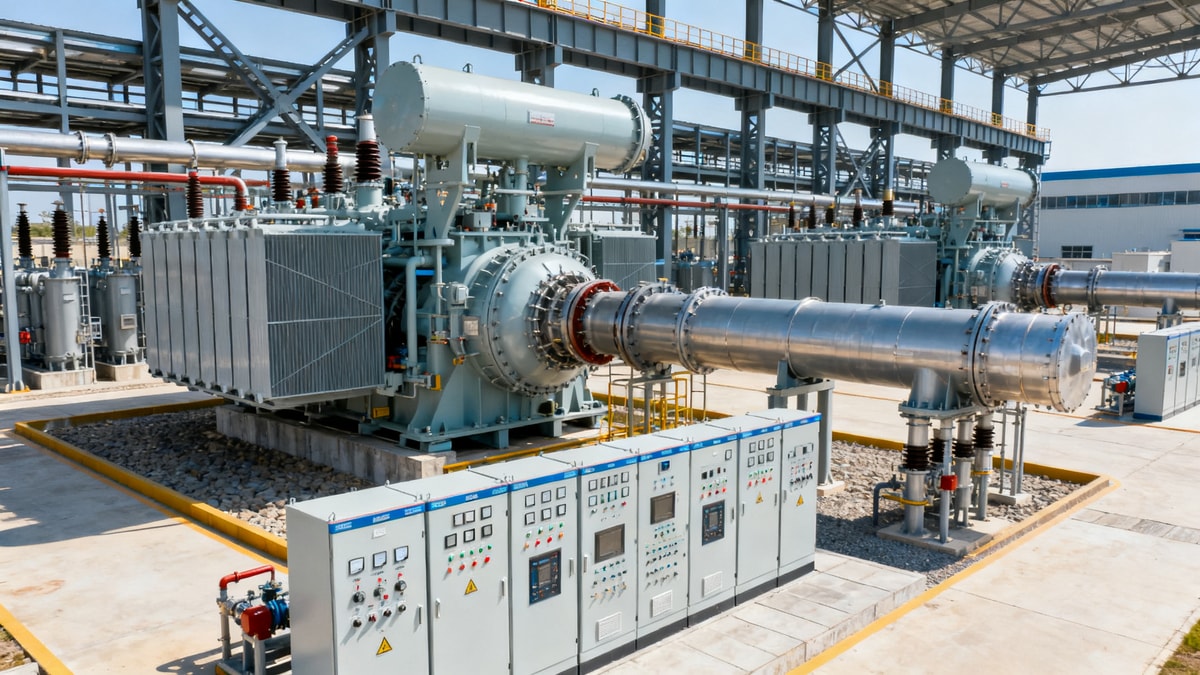
Before selecting EPC contractors for power plants, decision-makers must look beyond price and timelines. The right partner should demonstrate proven technical capability, strict compliance, financial stability, and a strong record in risk control and project delivery. This guide outlines the essential checks that help businesses reduce uncertainty, protect capital investment, and ensure long-term plant performance.
For enterprise buyers, a checklist-based approach is the fastest way to evaluate EPC contractors for power plants without missing critical details. Power plant projects involve long asset life, complex interfaces, heavy capital exposure, environmental obligations, and severe consequences if quality or schedule control fails. A structured review helps decision-makers compare bidders on facts rather than presentations, identify hidden weaknesses early, and align procurement decisions with lifetime plant performance rather than short-term bid savings.
Start with the non-negotiables before comparing proposals
Before reviewing technical narratives in depth, businesses should first screen EPC contractors for power plants against a set of threshold requirements. If a contractor fails any of these basic checks, detailed negotiations may waste time and resources.
- Relevant project experience in the same plant category, such as thermal, gas-fired, combined cycle, biomass, solar-plus-storage, or hybrid utility infrastructure.
- Demonstrated ability to manage engineering, procurement, construction, commissioning, and handover as an integrated delivery model.
- Documented compliance with international codes, grid requirements, environmental approvals, and health and safety systems.
- Sufficient financial capacity to absorb procurement fluctuations, subcontractor claims, and execution risk.
- A measurable record of on-time delivery, performance guarantee achievement, and defect resolution.
This first-pass filter reduces the candidate pool to EPC contractors for power plants that are credible enough for full due diligence. It also prevents a common mistake: treating all contractors as interchangeable when the delivery risk profile is fundamentally different across firms.
Core checklist: what to verify before hiring EPC contractors for power plants
1. Technical track record in comparable projects
Ask for a project list that matches your plant size, fuel type, operating conditions, grid connection complexity, and regulatory environment. A contractor that built utility-scale solar plants may not be equally capable in combined cycle gas turbine work, balance-of-plant integration, or high-pressure systems. Focus on references completed within the last five to seven years and confirm whether the contractor acted as full EPC lead or only as a limited package supplier.
Useful checks include contract value, installed capacity, location, execution model, achieved efficiency, outage history, and whether liquidated damages were triggered. Speak directly with previous clients when possible. Reference calls often reveal more about change order behavior, communication discipline, and commissioning support than proposal documents do.
2. Engineering depth and design control
Strong EPC contractors for power plants should demonstrate control over front-end engineering, detailed design coordination, interface management, constructability review, and document revision discipline. Check whether key design work is done in-house or outsourced. Heavy reliance on fragmented third parties can create schedule slippage, design conflicts, and weak accountability.
Review sample deliverables such as single-line diagrams, equipment layouts, P&IDs, cable routing logic, civil-structural interfaces, and commissioning procedures. Good contractors can explain how they prevent design freeze delays and how they manage late changes from owners, grid operators, or authorities.
3. Procurement strength and supply chain resilience
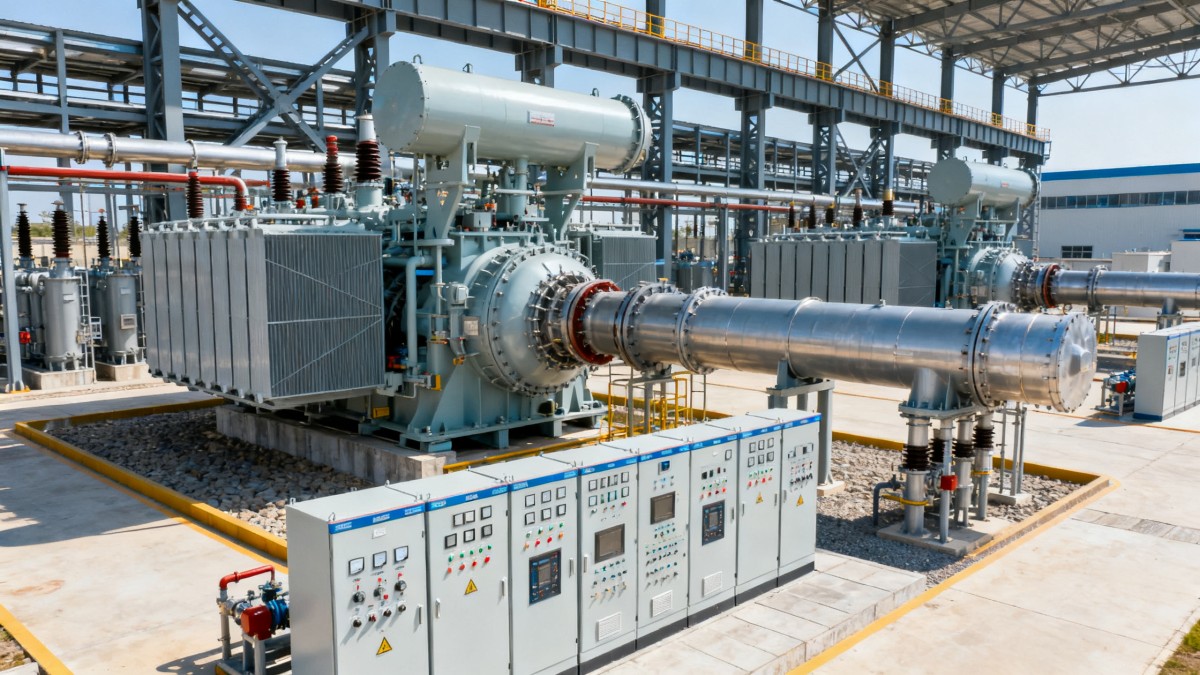
In power projects, procurement failure can destroy schedules and budgets. Evaluate approved vendor networks, long-lead item sourcing strategy, expediting systems, inspection plans, and logistics capability. Major equipment such as transformers, switchgear, boilers, turbines, emission control systems, and instrumentation packages must be sourced with realistic lead times and quality oversight.
Decision-makers should ask which critical components are single-source, which items face geopolitical or shipping risk, and what alternatives exist if a manufacturer misses delivery. EPC contractors for power plants should also show how they handle factory acceptance tests, material traceability, spares planning, and warranty coordination across multiple vendors.
4. Safety, compliance, and permitting capability
Safety performance is not a branding issue; it is a project viability issue. Review TRIR or equivalent safety indicators, training systems, permit-to-work procedures, subcontractor safety governance, and incident investigation methods. Contractors should also demonstrate familiarity with CE, UL, ISO, local electrical codes, pressure systems rules, emissions limits, and utility interconnection requirements where relevant.
Permitting capability matters just as much. Delays often come from environmental review, land use conditions, water approvals, transmission interfaces, and authority inspections. EPC contractors for power plants should identify the permits they support directly, the approvals the owner must obtain, and the milestones that can stop construction if not managed early.
5. Financial health and contract risk capacity
A contractor may look technically qualified but still be financially fragile. Request audited financial statements, banking references, bonding capacity, insurance coverage, and current backlog visibility. A weak balance sheet increases the risk of delayed procurement, cash stress across subcontractors, disputes over milestone payments, or failure to absorb cost escalation.
It is also important to understand how the contractor prices risk. Very low bids can indicate unrealistic assumptions about owner-supplied scope, soil conditions, logistics access, commodity pricing, taxes, or commissioning duration. If the assumptions are wrong, the project may later be recovered through claims and variations.
6. Project controls and schedule discipline
Ask to see the contractor’s planning methodology, critical path control, progress measurement standards, and reporting format. Strong EPC contractors for power plants can show how engineering release dates, procurement milestones, site readiness, heavy-lift sequences, energization windows, and commissioning stages are tied together in one integrated schedule.
Check how float is managed, how delays are escalated, and how recovery plans are implemented. A mature contractor should provide transparent earned-value tracking, risk-adjusted schedule review, and a clear process for reporting variance before it becomes a crisis.
7. Commissioning, performance testing, and after-handover support
The project is not truly successful until the plant achieves contractual output, efficiency, availability, and environmental limits. Review the contractor’s commissioning team structure, cold and hot testing approach, operator training plan, punch list control, and defect liability response process. EPC contractors for power plants should define exactly how they support performance test runs, reliability runs, and final acceptance.
Post-handover support is often underestimated. Ask about spare parts provisioning, digital documentation, O&M manuals, remote troubleshooting, warranty claim coordination, and emergency response capability during the first operating year.
A practical comparison table for decision-makers
When evaluating multiple EPC contractors for power plants, use a weighted comparison instead of relying on general impressions. The table below shows a practical decision framework.
Checks that vary by project type and business scenario
Not all buyer priorities are the same. Decision-makers should adjust the checklist depending on project type, geography, ownership model, and risk appetite.
- For greenfield plants: prioritize permitting support, civil works capability, geotechnical risk management, and local labor productivity assumptions.
- For brownfield expansion: focus on tie-in planning, outage coordination, safety in live environments, and compatibility with existing control systems.
- For cross-border projects: review import compliance, tax structure, foreign exchange exposure, local content rules, and multilingual project management.
- For fast-track delivery: verify modularization strategy, long-lead reservation, engineering freeze discipline, and realistic construction sequencing.
- For lender-sensitive projects: emphasize bankable documentation, contract clarity, insurance adequacy, and performance guarantee enforceability.
Commonly overlooked risks when hiring EPC contractors for power plants
Some of the most expensive problems do not appear in headline bid numbers. One frequent oversight is unclear battery limits between owner scope and contractor scope. Another is poor definition of utility responsibilities, especially around grid studies, protection settings, and energization approvals. Businesses also underestimate data and documentation quality; incomplete as-built drawings and weak tag traceability can create years of maintenance inefficiency.
Subcontractor dependence is another hidden issue. If a bidder relies heavily on local subcontractors without proven supervision systems, the owner may face uneven quality and fragmented accountability. Finally, many buyers do not test the contractor’s claims culture during negotiation. A contractor that appears cooperative before award may become highly contractual once site conditions, schedule pressure, or procurement inflation emerges.
How to run the evaluation process efficiently
To select EPC contractors for power plants with confidence, businesses should use a staged process. First, issue a prequalification package covering technical background, financial information, safety records, reference projects, and compliance capability. Second, shortlist only those contractors that meet threshold criteria. Third, require detailed clarifications on assumptions, exclusions, long-lead items, and delivery methodology before commercial comparison.
Fourth, conduct management interviews and technical workshops, not just procurement meetings. Fifth, perform reference checks with former clients, major suppliers, and where possible, independent engineering advisers. Finally, convert findings into a weighted scorecard tied to business priorities such as availability guarantees, schedule certainty, capex discipline, and regulatory compliance.
Questions to prepare before the final negotiation
Before awarding the contract, enterprise decision-makers should be ready to ask direct questions that expose execution quality. These include: Which assumptions in your bid create the largest cost or schedule sensitivity? Which equipment packages represent the greatest procurement risk? How do you manage design changes after issue for construction? What internal escalation path applies if performance testing fails? Which responsibilities remain with the owner during permitting, fuel supply interface, transmission connection, and startup readiness?
The quality of these answers often distinguishes capable EPC contractors for power plants from firms that are only strong at proposal writing. In capital-intensive infrastructure, disciplined selection is a form of risk engineering. If your business needs to move forward, prepare plant scope data, site conditions, performance targets, regulatory context, budget boundaries, delivery timeline, and preferred contract structure first. With that information in hand, discussions about technical fit, commercial alignment, project cycle, and cooperation model become far more productive and bankable.
Technical Specifications
- SASO Mandates Dual Energy Label for Industrial Transformers in Saudi Arabia from May 2026Author :Grid Infrastructure Analyst
- EN 61000-4-30:2026 Enforced: Class A Harmonic Traceability Mandatory for EU PQ AnalyzersAuthor :Precision Metrology Expert
- US DOE Level 3 Transformer Efficiency Standard Effective July 1, 2026Author :Grid Infrastructure Analyst
Expert Insights

Chief Security Architect
Dr. Thorne specializes in the intersection of structural engineering and digital resilience. He has advised three G7 governments on industrial infrastructure security.
Related Analysis
- May 06, 2026SASO Mandates Dual Energy Label for Industrial Transformers in Saudi Arabia from May 2026Author :Grid Infrastructure Analyst
- May 06, 2026EN 61000-4-30:2026 Enforced: Class A Harmonic Traceability Mandatory for EU PQ AnalyzersAuthor :Precision Metrology Expert
- May 06, 2026US DOE Level 3 Transformer Efficiency Standard Effective July 1, 2026Author :Grid Infrastructure Analyst
Core Sector // 01
Security & Safety
- SASO Mandates Dual Energy Label for Industrial Transformers in Saudi Arabia from May 2026Author :Grid Infrastructure Analyst

- US DOE Level 3 Transformer Efficiency Standard Effective July 1, 2026Author :Grid Infrastructure Analyst

- SASO Mandates Dual Energy Labels for Industrial Transformers in Saudi Arabia from May 2026Author :Grid Infrastructure Analyst

- US DOE Level 3 Transformer Efficiency Rule Takes Effect July 1, 2026Author :Grid Infrastructure Analyst

- How to assess an Electrical & Power manufacturer beyond catalog claimsAuthor :Grid Infrastructure Analyst

- How to request an Electrical & Power quotation without missing costsAuthor :Grid Infrastructure Analyst

- What to check before hiring EPC contractors for power plantsAuthor :Grid Infrastructure Analyst

- Engineering procurement process mistakes that delay plant deliveryAuthor :Grid Infrastructure Analyst