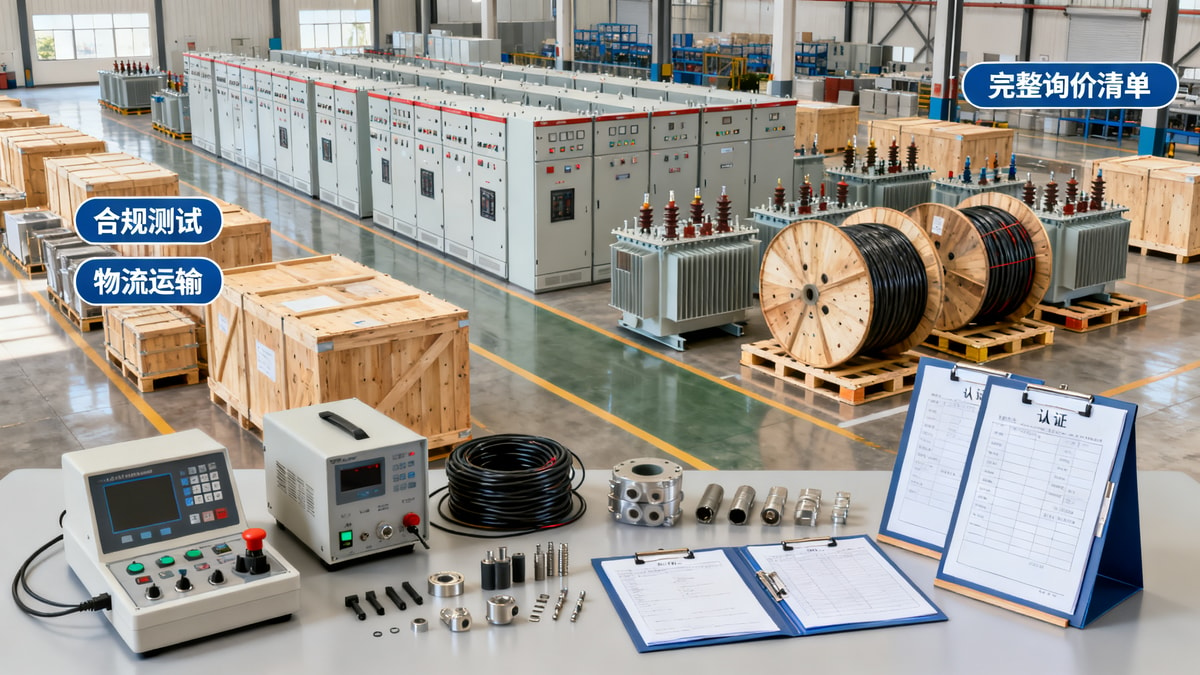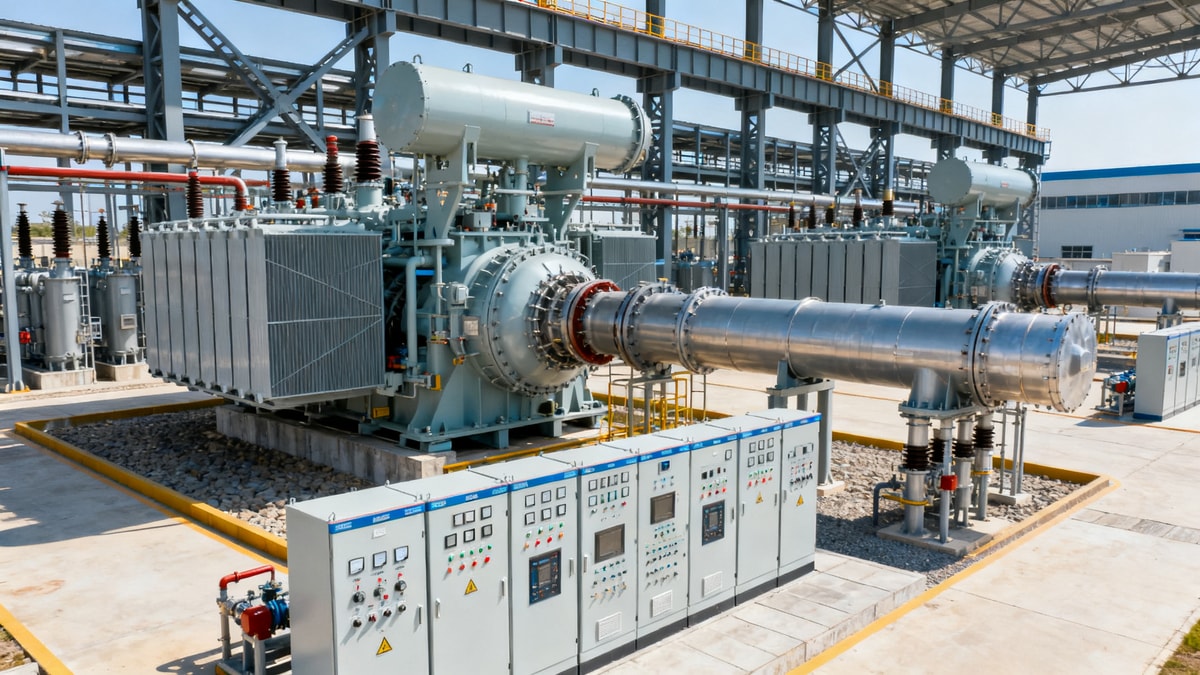
How to assess an Electrical & Power manufacturer beyond catalog claims
Author
Date Published
Reading Time
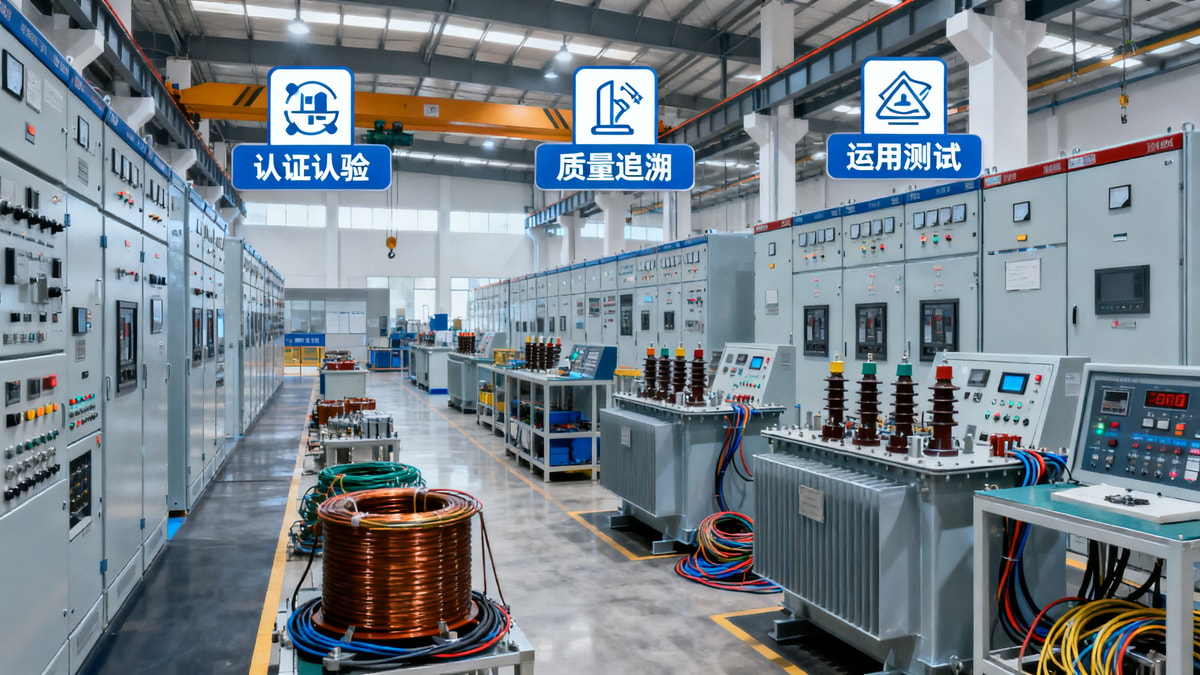
Choosing an Electrical & Power manufacturer based only on catalog claims can expose projects to compliance gaps, reliability risks, and hidden lifecycle costs. For business evaluators, a credible assessment goes far beyond product specs—it requires verification of certifications, production consistency, testing capability, supply chain resilience, and after-sales support. This guide outlines how to separate marketing language from measurable performance before making a high-stakes sourcing decision.
What assessment really means in the Electrical & Power sector
In industrial sourcing, an Electrical & Power manufacturer is rarely judged by product appearance or brochure language alone. The real question is whether the supplier can deliver repeatable performance under project conditions, regulatory pressure, and long operating cycles. For business evaluators, assessment is the process of converting claims into evidence: documented compliance, stable quality systems, traceable materials, validated test data, and the operational capacity to support delivery after the purchase order is issued.
This matters because electrical infrastructure is foundational. Whether the application involves switchgear, transformers, power cables, busbars, protection devices, control panels, or grid-support equipment, failure can affect safety, uptime, insurance exposure, and contractual penalties. In many sectors, the lowest visible unit price can become the highest total cost once rework, delayed commissioning, warranty disputes, and unplanned outages are included.
A strong evaluation therefore combines technical review with business due diligence. It should answer four practical questions: Can the manufacturer meet the stated standard? Can it maintain consistency at scale? Can it prove reliability under relevant operating conditions? And can it support the asset through installation, operation, and maintenance?
Why the industry pays close attention to manufacturer credibility
The electrical and power market has become more complex due to global compliance requirements, energy transition projects, digital monitoring, and volatile supply chains. As a result, business evaluators are under pressure to validate not just products, but the entire manufacturing ecosystem behind them. EPC contractors need suppliers that can survive schedule changes and site demands. Facility managers need equipment with predictable maintenance behavior. Procurement directors need risk visibility before large-volume commitments.
At the same time, catalog language has become more polished. Terms such as “high efficiency,” “international quality,” “full certification,” and “long service life” are common, but they often lack context. A capable Electrical & Power manufacturer should be able to specify exact standards, test methods, tolerances, service conditions, and production controls. If these details are vague, evaluators should treat the claim as unverified rather than accepted.
A practical overview of what to verify
The most reliable evaluations move from visible information to underlying proof. Start with public claims, then examine technical documentation, audit evidence, and operational readiness. The table below summarizes the core areas that should be reviewed when assessing an Electrical & Power manufacturer.
This framework is useful across many product categories because it focuses on measurable controls rather than sales language. It also aligns with the way serious industrial intelligence platforms evaluate supplier trustworthiness: documented evidence, technical depth, and real operational capability.
Compliance is more than a logo on a datasheet
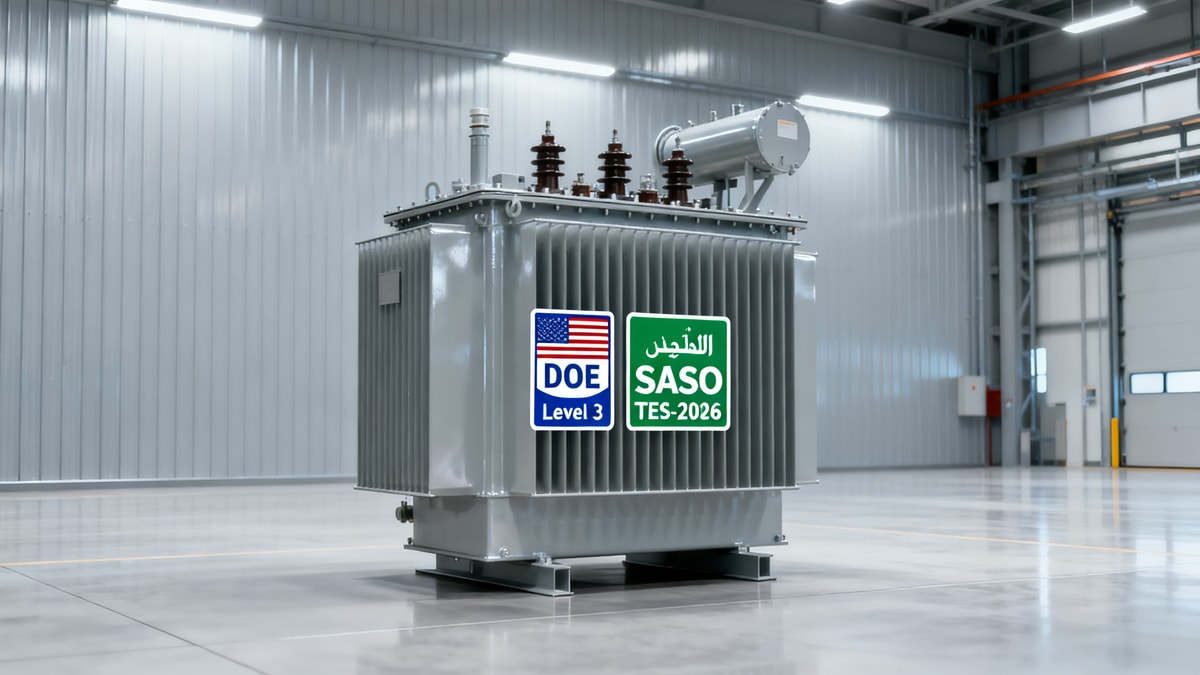
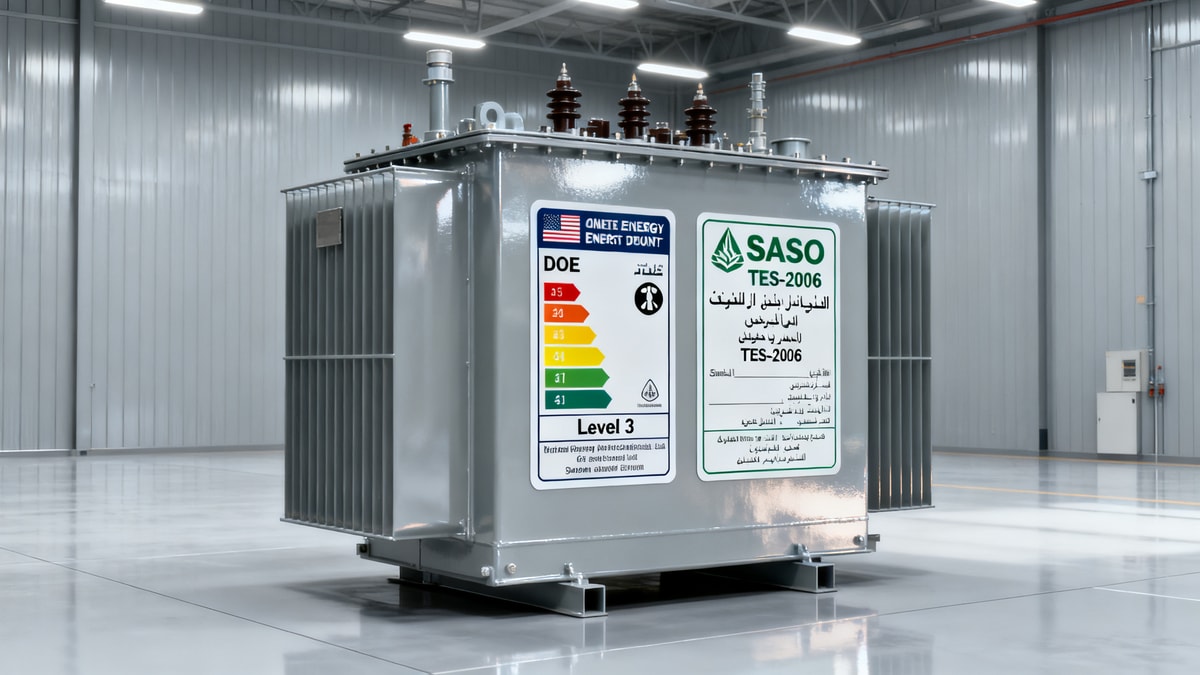
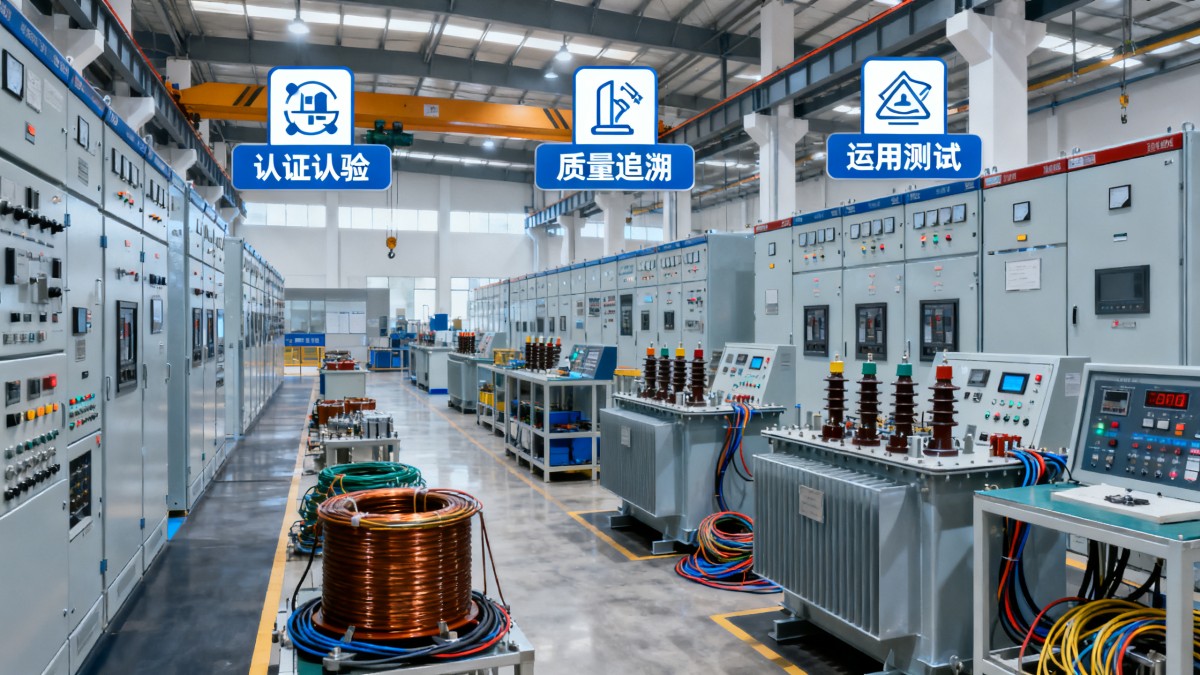
One of the first mistakes in evaluating an Electrical & Power manufacturer is assuming that a mark on a catalog equals full certification. Business evaluators should request certificate numbers, issuing bodies, validity dates, and the exact product families covered. A supplier may hold ISO 9001, for example, but that does not confirm that every offered product meets application-specific electrical safety requirements.
It is also important to distinguish among self-declarations, third-party certification, type testing, and routine factory testing. For mission-critical installations, ask whether reports are recent, whether they represent the same configuration you plan to buy, and whether material substitutions are controlled. If the manufacturer cannot clearly map the purchased item to the tested configuration, the compliance position may be weaker than it appears.
Production quality and consistency reveal the real manufacturer
A polished sample does not prove stable manufacturing. What matters is whether the supplier can reproduce the same quality across batches, factories, and timelines. A credible Electrical & Power manufacturer should be able to explain its quality control flow from raw material receipt to final inspection. This includes traceability of copper, insulation systems, terminals, electronic components, and any outsourced assemblies.
Evaluators should look for process discipline: standardized work instructions, in-process checkpoints, calibrated instruments, corrective action records, and nonconformance management. If possible, review defect trends, rework rates, and customer complaint closure practices. Consistency is especially important for power distribution components, where small deviations in insulation, contact pressure, or thermal design can create field failures months later.
Testing capability separates performance from promise
Testing is often the clearest indicator of seriousness. Manufacturers serving industrial infrastructure should not only show final product tests, but also demonstrate that they understand which tests matter for which risks. Depending on the category, evaluators may ask about short-circuit withstand, ingress protection, insulation resistance, dielectric strength, temperature rise, mechanical endurance, EMC, partial discharge, or environmental aging.
A strong Electrical & Power manufacturer will have calibrated equipment, documented procedures, qualified operators, and records that are easy to interpret. Just as important, it should be transparent about what is tested in-house and what is outsourced. Outsourced testing is not automatically a problem, but it must be controlled, traceable, and relevant to the delivered design.
Different application scenarios require different evaluation depth
Not every sourcing decision carries the same risk profile. The depth of assessment should match the application. A business evaluator reviewing low-complexity accessories may focus on compliance and delivery history, while a team sourcing substation, protection, or high-load distribution equipment must examine engineering competence, reliability data, and field support in much greater detail.
This scenario-based view helps evaluators avoid overchecking low-risk items and underchecking mission-critical ones. It also creates a clearer internal justification for supplier approval decisions.
Business signals that often predict supplier performance
Technical evidence is essential, but commercial behavior also reveals risk. A dependable Electrical & Power manufacturer usually provides clear revision control, realistic lead times, transparent exception notes, and stable communication between sales, engineering, and operations. Warning signs include inconsistent answers across departments, frequent reliance on “equivalent” substitutions, unwillingness to share test scope, and pricing that changes once technical details are clarified.
Another important signal is how the supplier handles limitations. Strong manufacturers rarely claim universal suitability. Instead, they define operating boundaries, derating factors, maintenance expectations, and installation requirements. This kind of precision should increase confidence, not reduce it, because it shows the supplier understands application reality.
Practical evaluation steps for business assessors
For evaluators who need a disciplined but efficient method, the following sequence works well. First, screen public claims against required standards and project conditions. Second, request controlled documents: certificates, test reports, quality manuals, sample inspection plans, and references from comparable projects. Third, validate manufacturing capability through audit, virtual walkthrough, or structured Q&A with technical staff. Fourth, compare total lifecycle value, not only purchase price. Finally, document residual risks and mitigation actions before approval.
When possible, involve cross-functional reviewers. Procurement may identify commercial stability, engineering can judge technical adequacy, and operations can challenge maintainability assumptions. This multidisciplinary review is especially valuable when evaluating a new Electrical & Power manufacturer for long-term framework agreements or critical infrastructure projects.
Frequently overlooked cost drivers
Many sourcing teams still underestimate the cost of incomplete evaluation. Common hidden cost drivers include shipment delays caused by missing documentation, site modifications due to dimensional mismatch, commissioning problems from unclear wiring logic, repeat purchases of non-interchangeable spare parts, and service interruptions linked to weak warranty response. These issues rarely appear in the catalog, yet they strongly influence actual project economics.
That is why assessing an Electrical & Power manufacturer should be treated as a risk management activity, not just a sourcing step. The most effective organizations build supplier files that combine compliance records, test evidence, application notes, and service history over time. This turns future decisions into evidence-based comparisons rather than one-time impressions.
A sound decision framework for long-term confidence
A reliable decision does not come from finding the manufacturer with the strongest marketing message. It comes from identifying the supplier whose claims can be consistently verified across compliance, engineering, production, testing, delivery, and support. For business evaluators, that means asking better questions, requesting sharper evidence, and aligning review depth with operational risk.
If your team is comparing an Electrical & Power manufacturer for industrial, commercial, or infrastructure use, build the evaluation around proof rather than promise. Review the standards, inspect the process, test the assumptions, and measure the long-term support model. In high-stakes power applications, disciplined assessment is not a delay to procurement; it is one of the clearest ways to protect project performance, compliance integrity, and asset reliability.
Technical Specifications
- SASO Mandates Dual Energy Label for Industrial Transformers in Saudi Arabia from May 2026Author :Grid Infrastructure Analyst
- EN 61000-4-30:2026 Enforced: Class A Harmonic Traceability Mandatory for EU PQ AnalyzersAuthor :Precision Metrology Expert
- US DOE Level 3 Transformer Efficiency Standard Effective July 1, 2026Author :Grid Infrastructure Analyst
Expert Insights

Chief Security Architect
Dr. Thorne specializes in the intersection of structural engineering and digital resilience. He has advised three G7 governments on industrial infrastructure security.
Related Analysis
- May 06, 2026SASO Mandates Dual Energy Label for Industrial Transformers in Saudi Arabia from May 2026Author :Grid Infrastructure Analyst
- May 06, 2026EN 61000-4-30:2026 Enforced: Class A Harmonic Traceability Mandatory for EU PQ AnalyzersAuthor :Precision Metrology Expert
- May 06, 2026US DOE Level 3 Transformer Efficiency Standard Effective July 1, 2026Author :Grid Infrastructure Analyst
Core Sector // 01
Security & Safety
- SASO Mandates Dual Energy Label for Industrial Transformers in Saudi Arabia from May 2026Author :Grid Infrastructure Analyst

- US DOE Level 3 Transformer Efficiency Standard Effective July 1, 2026Author :Grid Infrastructure Analyst

- SASO Mandates Dual Energy Labels for Industrial Transformers in Saudi Arabia from May 2026Author :Grid Infrastructure Analyst

- US DOE Level 3 Transformer Efficiency Rule Takes Effect July 1, 2026Author :Grid Infrastructure Analyst

- How to assess an Electrical & Power manufacturer beyond catalog claimsAuthor :Grid Infrastructure Analyst

- How to request an Electrical & Power quotation without missing costsAuthor :Grid Infrastructure Analyst

- What to check before hiring EPC contractors for power plantsAuthor :Grid Infrastructure Analyst

- Engineering procurement process mistakes that delay plant deliveryAuthor :Grid Infrastructure Analyst