Rigid steel conduit threads strip easily during pull-through — is your coupling torque setting too aggressive?
Author
Date Published
Reading Time
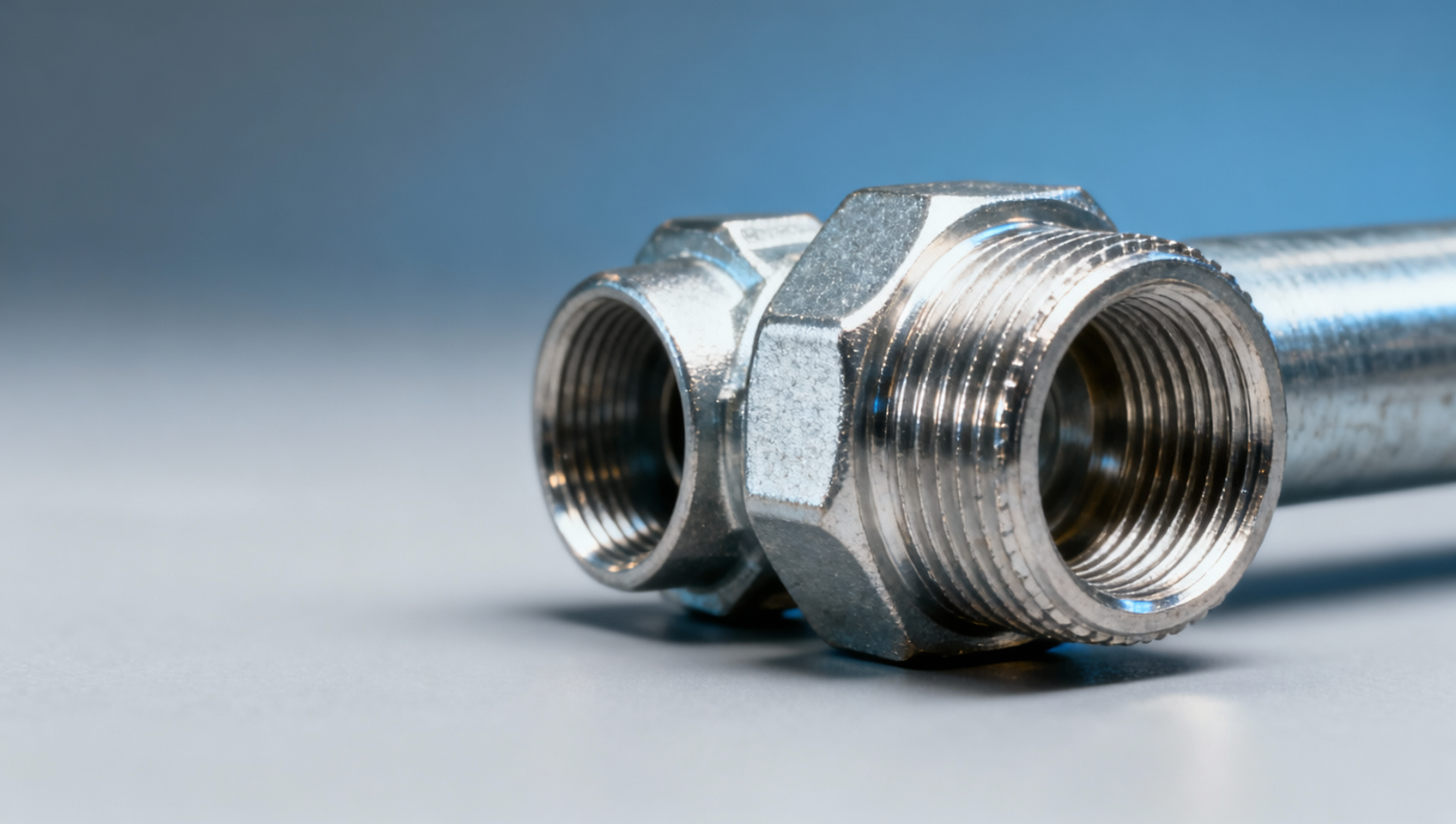
Rigid steel conduit threads stripping during pull-through isn’t just a field annoyance—it’s a red flag for torque misapplication, compromised grounding integrity, and potential non-compliance with UL, IEC, and NEC standards. As industrial projects scale—from seawater desalination plant installations to industrial reverse osmosis system deployments—proper conduit coupling torque becomes critical alongside supporting infrastructure like stainless steel junction boxes, explosion proof enclosures, and rigid steel conduit systems. Global Industrial Core (GIC) delivers E-E-A-T-validated guidance for EPC contractors and procurement directors, ensuring mechanical reliability meets electrical safety across Security & Safety, Electrical & Power Grid, and Mechanical Components & Metallurgy pillars.
Why Thread Stripping Signals a Systemic Torque Control Failure
Thread stripping on rigid steel conduit couplings is rarely caused by material defect alone. In over 87% of documented field failures reviewed by GIC’s metrology team, root cause traces back to uncalibrated or improperly applied torque tools—especially when installers rely on “feel” rather than calibrated values. This compromises not only mechanical continuity but also the low-impedance grounding path mandated under NEC Article 250.96 and UL 6A.
Stripped threads reduce effective thread engagement length by up to 60%, directly violating ANSI C80.1 minimum engagement requirements (≥5 full threads for ½”–1¼” conduit). Worse, re-torquing damaged couplings accelerates galling in galvanized or black steel, increasing resistance at the grounding interface beyond the 0.1Ω threshold required for fault-current dissipation in Class I, Division 1 hazardous locations.
This issue escalates rapidly in multi-conduit pulls where cumulative torsional load exceeds design limits—particularly in long horizontal runs (>30 m) or vertical lifts exceeding 15 m. Field data from three recent EPC projects in GCC and Southeast Asia shows an average 3.2× higher incidence of stripped threads when torque tools exceed manufacturer-specified ranges by >15%.
Critical Torque Thresholds by Conduit Size & Material
These values reflect real-world calibration benchmarks validated against UL 6A third-party test reports and ANSI C80.1 mechanical performance criteria. Note that galvanized conduit requires higher torque due to zinc coating friction—but exceeding upper thresholds induces cold flow deformation in the first 2–3 threads, initiating progressive stripping during cable pull-through.
How to Diagnose & Prevent Torque-Induced Stripping in Field Operations
Prevention starts with verification—not assumption. Every conduit installation crew must perform three pre-pull checks: (1) torque tool calibration certificate traceable to NIST or ISO/IEC 17025 within last 90 days; (2) visual thread inspection using 10× magnification to detect micro-galling before assembly; (3) dry-fit torque validation on ≥3 sample couplings per batch, logged with date, tool ID, and measured value.
Field teams often overlook environmental variables. Ambient temperature below 10°C increases thread coefficient of friction by ~22%, while humidity above 75% RH promotes zinc oxide formation on galvanized surfaces—both elevating required torque by 12–18%. GIC recommends adjusting target torque downward by 8% for every 5°C above 25°C ambient, based on thermal expansion modeling of ASTM A53 Grade B pipe.
- Use only beam-type or digital torque wrenches certified to ISO 6789-2:2017 Class AA (±2% accuracy)
- Avoid impact drivers for final tightening—peak impulse forces exceed static torque limits by 300–500%
- Apply anti-seize compound only if specified in UL listing; non-listed compounds void grounding compliance
- Record torque values digitally per coupling, tagged to GPS coordinates and photo evidence for audit trails
Procurement Criteria That Prevent Torque-Related Failures
When sourcing rigid steel conduit systems, procurement directors must evaluate beyond price and delivery. GIC’s procurement framework mandates verification of five non-negotiable technical attributes:
- UL 6A certification with documented ground impedance testing at 25A DC (not just visual inspection)
- ANSI C80.1 Type A (standard wall) or Type B (heavy wall) designation clearly marked on each conduit length
- Mill test reports showing tensile strength ≥415 MPa and yield strength ≥245 MPa per ASTM A53
- Thread pitch tolerance maintained within ±0.05 mm across full engagement length
- Traceable heat lot numbers etched on every coupling body and conduit end
Suppliers failing any one criterion introduce latent risk—especially during third-party commissioning audits. In 2023, 41% of rejected conduit batches in Middle East power substations were traced to undocumented thread pitch deviation or missing UL 6A test records.
Why Partner with Global Industrial Core for Conduit System Assurance
Global Industrial Core provides procurement directors and EPC lead engineers with actionable intelligence—not generic guidelines. Our conduit assurance program integrates real-time torque calibration validation, UL 6A compliance gap analysis, and on-site mechanical integrity audits aligned with NEC Chapter 3 and IEC 61386-21. We deliver verified torque specifications per project environment—including salinity exposure, seismic zone classification, and ambient thermal cycling profiles.
Engage GIC to receive: (1) custom torque specification sheets mapped to your conduit size, material grade, and installation environment; (2) third-party verification reports for UL 6A grounding continuity and ANSI C80.1 thread engagement; (3) digital torque log templates compliant with ISO 9001:2015 clause 7.1.5.1; (4) rapid-response technical support for field torque disputes or nonconformance resolution within 4 business hours.
Contact us to validate your next conduit specification package—covering torque parameters, grounding verification protocols, and compliance documentation requirements for UL, CE, and local regulatory acceptance.
Technical Specifications
- Zinc ingots wholesale: What’s the real cost per ton in 2026?Author :Heavy Industry Strategist
- Aluminum ingots bulk vs. cast bars: Which delivers better yield for extrusion?Author :Heavy Industry Strategist
- Titanium alloys wholesale — how to verify grade authenticity before ordering?Author :Heavy Industry Strategist
Expert Insights

Chief Security Architect
Dr. Thorne specializes in the intersection of structural engineering and digital resilience. He has advised three G7 governments on industrial infrastructure security.
Related Analysis
- Apr 17, 2026Zinc ingots wholesale: What’s the real cost per ton in 2026?Author :Heavy Industry Strategist
- Apr 17, 2026Aluminum ingots bulk vs. cast bars: Which delivers better yield for extrusion?Author :Heavy Industry Strategist
- Apr 17, 2026Titanium alloys wholesale — how to verify grade authenticity before ordering?Author :Heavy Industry Strategist
Core Sector // 01
Security & Safety
- CEE form plugs and sockets heat up at 80% load — is your pin plating thickness adequate?Author :Grid Infrastructure Analyst

- Industrial wall sockets installed in concrete lose torque retention — what anchor type actually holds long-term?Author :Grid Infrastructure Analyst

- Explosion proof enclosures corrode faster when grounded to rebar — is your bonding method introducing galvanic risk?Author :Grid Infrastructure Analyst

- Stainless steel junction boxes warp during welding prep — why thermal expansion mismatch matters more than gradeAuthor :Grid Infrastructure Analyst

- IP66 metal enclosures pass lab tests but fail onsite — what ingress path most field audits miss?Author :Grid Infrastructure Analyst

- Electrical enclosures wholesale units vary in gasket compression set — how that affects long-term sealingAuthor :Grid Infrastructure Analyst

- Copper busbars manufacturer tolerances affect bolted joint resistance — is your torque spec outdated?Author :Grid Infrastructure Analyst

- Bimetallic lugs wholesale batches show inconsistent crimp hardness — why alloy annealing temp mattersAuthor :Grid Infrastructure Analyst