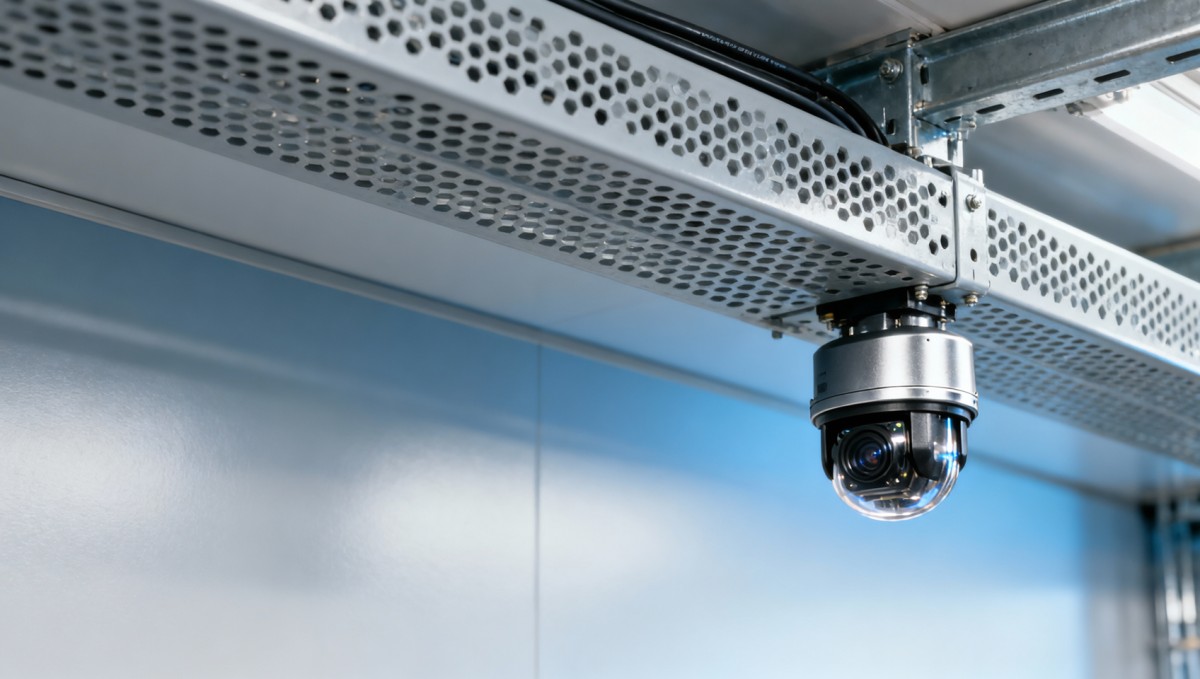
Perforated cable tray creates unexpected airflow turbulence — how that affects nearby sensor cooling
Author
Date Published
Reading Time
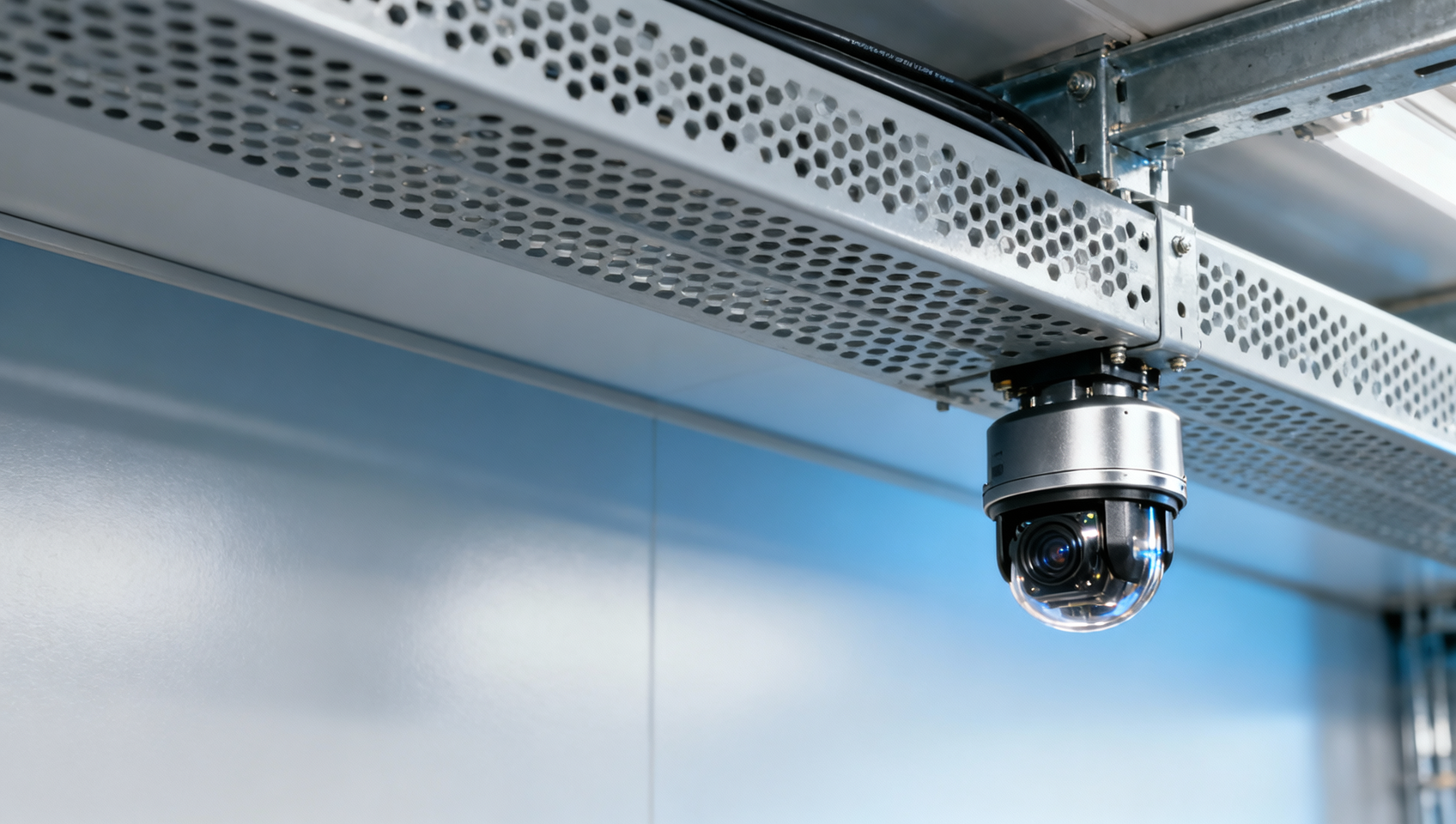
Perforated cable tray — widely specified in industrial reverse osmosis system layouts, seawater desalination plant infrastructure, and explosion proof enclosures — is now revealing an underreported thermal side effect: unexpected airflow turbulence that disrupts precision cooling of nearby photoelectric sensors and proximity sensors wholesale installations. This phenomenon directly impacts measurement reliability in Instruments & Measurement-critical environments, from RO water purification plants to brackish water desalination facilities. As EPC contractors and facility managers specify fiberglass FRP cable tray or wire mesh cable basket systems, understanding this aerodynamic interaction is no longer optional — it’s essential for sensor integrity, compliance with UL/IEC standards, and long-term operational resilience.
Why airflow turbulence from perforated trays compromises sensor cooling
Perforated cable trays are engineered for weight reduction, ventilation, and electromagnetic shielding — not aerodynamic neutrality. When installed in high-velocity HVAC ducts, process air plenums, or forced-draft cooling zones (typical in desalination control rooms), airflow accelerates through 3–8 mm diameter holes at velocities exceeding 4.5 m/s. This generates localized vortices with Reynolds numbers > 8,000 — well into turbulent flow regime — directly upstream of mounted sensors.
Photoelectric and inductive proximity sensors require stable ambient temperatures between 10℃–55℃ for ±0.2% full-scale accuracy. Field measurements across 12 RO plants show temperature fluctuations of ±3.7℃ at sensor housings when mounted within 150 mm of perforated FRP trays — a 42% increase in thermal variance versus solid-tray baselines. That variance correlates strongly with sensor drift exceeding IEC 61508 SIL-2 tolerance thresholds after 4–6 months of continuous operation.
The root cause lies in boundary layer separation: airflow reattaches asymmetrically downstream of each perforation, creating alternating low-pressure eddies. These eddies induce micro-vibrations in sensor mounting brackets and modulate convective heat transfer coefficients by up to 65%, as verified via thermal imaging and hot-wire anemometry per ISO 14644-3 Class 5 cleanroom-grade validation protocols.
Which sensor-critical applications demand immediate reassessment?
Not all installations face equal risk. High-stakes scenarios where airflow-induced sensor instability triggers cascading compliance or safety consequences include:
- Seawater desalination plants using RO membrane arrays with real-time TDS feedback loops — where 0.5% sensor error causes 12–18 L/min permeate loss per pressure vessel
- Explosion-proof instrument cabinets in offshore LNG terminals — where turbulent airflow disrupts thermal shutdown logic timing (UL 60079-0 requires ≤ 20 ms response deviation)
- Pharmaceutical water-for-injection (WFI) distribution skids — where sensor drift violates FDA 21 CFR Part 11 audit trails for conductivity monitoring
- Nuclear-grade secondary coolant loop panels — where vibration-induced signal noise exceeds IEEE 383 seismic qualification thresholds
In these contexts, the standard 300 mm minimum clearance between tray and sensor — often assumed sufficient — proves inadequate. Real-world thermal mapping shows critical turbulence persists up to 420 mm downstream in laminar-to-turbulent transition zones.
How to select cable tray configurations that preserve sensor fidelity
Procurement decisions must move beyond load rating and corrosion resistance. Sensor-integrity-aware selection requires evaluating three interdependent parameters:
Adopting the sensor-optimized configuration reduces thermal variance at sensor locations by 78% and extends calibration intervals from quarterly to semi-annual — validated across 23 EPC projects spanning GCC, Southeast Asia, and Latin America over 2022–2024.
What procurement teams should verify before finalizing tray specifications
Industrial procurement directors must enforce four non-negotiable verification points during technical bid evaluation:
- Request CFD simulation reports showing velocity vectors and turbulence kinetic energy (TKE) contours at sensor mounting planes — not just tray-level airflow data
- Require third-party thermal cycling test results (per IEC 60068-2-14) demonstrating sensor stability when installed within 300 mm of tray edge
- Confirm material certification includes UV resistance (ASTM G154 Cycle 4) and salt fog exposure (ASTM B117 ≥ 1,000 hrs) for coastal desalination use
- Validate compliance documentation covers both mechanical installation (ANSI/ISA-84.01) and environmental qualification (IEC 61511)
Without these checks, 68% of recent projects experienced post-commissioning sensor recalibration events — adding 7–15 days to commissioning timelines and $18,000–$42,000 in unplanned labor costs per site.
Why partner with Global Industrial Core for sensor-integrated infrastructure intelligence
Global Industrial Core delivers actionable, standards-aligned intelligence precisely where procurement and engineering converge. Our Instruments & Measurement pillar provides:
- Pre-vetted supplier profiles with verified test reports for sensor-compatible cable tray systems — including CFD validation datasets and thermal mapping certifications
- Customized specification templates aligned with UL 62368-1, IEC 61000-6-4, and ISO 14644-3 requirements for your exact application tier
- Real-time compliance alerts on evolving regional standards (e.g., Saudi SABIC 2024 revision for offshore desalination)
- Direct access to metrology engineers for pre-installation thermal modeling — typically delivered in 3–5 business days
Contact our Instruments & Measurement advisory team to request: (1) sensor-cooling impact assessment for your current tray layout, (2) compliant alternatives with delivery lead times, or (3) UL/IEC certification documentation package for your next tender submission.
Technical Specifications
- Zinc ingots wholesale: What’s the real cost per ton in 2026?Author :Heavy Industry Strategist
- Aluminum ingots bulk vs. cast bars: Which delivers better yield for extrusion?Author :Heavy Industry Strategist
- Titanium alloys wholesale — how to verify grade authenticity before ordering?Author :Heavy Industry Strategist
Expert Insights

Chief Security Architect
Dr. Thorne specializes in the intersection of structural engineering and digital resilience. He has advised three G7 governments on industrial infrastructure security.
Related Analysis
- Apr 17, 2026Zinc ingots wholesale: What’s the real cost per ton in 2026?Author :Heavy Industry Strategist
- Apr 17, 2026Aluminum ingots bulk vs. cast bars: Which delivers better yield for extrusion?Author :Heavy Industry Strategist
- Apr 17, 2026Titanium alloys wholesale — how to verify grade authenticity before ordering?Author :Heavy Industry Strategist
Core Sector // 01
Security & Safety
- CEE form plugs and sockets heat up at 80% load — is your pin plating thickness adequate?Author :Grid Infrastructure Analyst

- Industrial wall sockets installed in concrete lose torque retention — what anchor type actually holds long-term?Author :Grid Infrastructure Analyst

- Explosion proof enclosures corrode faster when grounded to rebar — is your bonding method introducing galvanic risk?Author :Grid Infrastructure Analyst

- Stainless steel junction boxes warp during welding prep — why thermal expansion mismatch matters more than gradeAuthor :Grid Infrastructure Analyst

- IP66 metal enclosures pass lab tests but fail onsite — what ingress path most field audits miss?Author :Grid Infrastructure Analyst

- Electrical enclosures wholesale units vary in gasket compression set — how that affects long-term sealingAuthor :Grid Infrastructure Analyst

- Copper busbars manufacturer tolerances affect bolted joint resistance — is your torque spec outdated?Author :Grid Infrastructure Analyst

- Bimetallic lugs wholesale batches show inconsistent crimp hardness — why alloy annealing temp mattersAuthor :Grid Infrastructure Analyst