HDPE corrugated pipes deform under backfill load — is your trench compaction sequence correct?
Author
Date Published
Reading Time
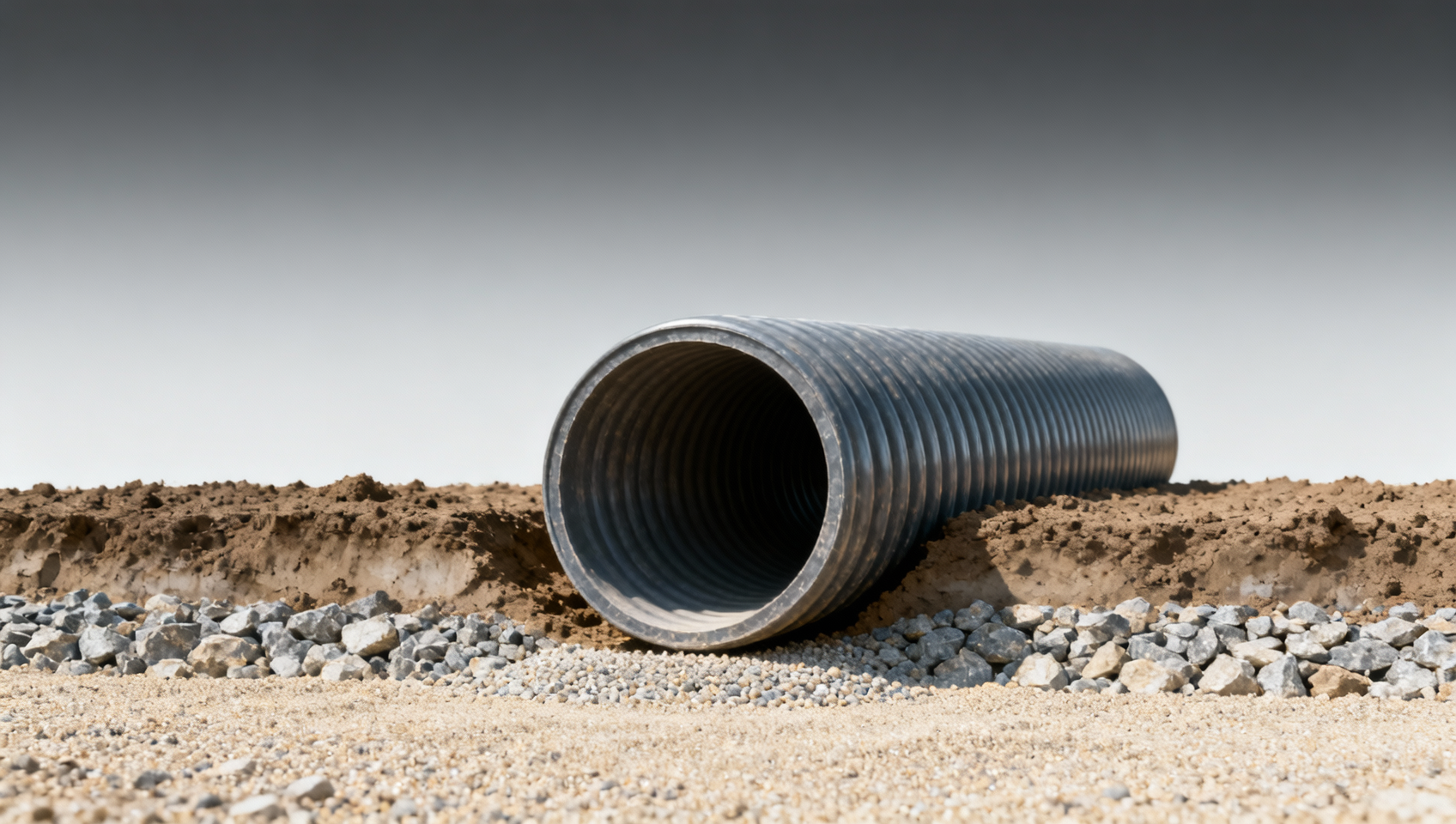
HDPE corrugated pipes are widely specified in critical infrastructure projects—from MBR membrane bioreactor installations to seawater desalination plants and industrial reverse osmosis systems—yet deformation under backfill load remains a top field failure mode. This isn’t just a materials issue; it’s a trench compaction sequence failure. For EPC contractors, facility managers, and procurement directors sourcing HDPE corrugated pipes, isolation transformers wholesale, explosion-proof enclosures, or stainless steel junction boxes, getting compaction right is as vital as selecting UL/CE-compliant electrical enclosures wholesale or IP66 metal enclosures. Let’s decode the science—and the standards—behind reliable embedment.
Why HDPE Corrugated Pipes Deform — It’s Not the Material, It’s the Embedment
High-density polyethylene (HDPE) corrugated pipes offer exceptional chemical resistance, flexibility, and joint integrity—making them ideal for wastewater conveyance, stormwater management, and industrial process piping. Yet field data from 37 EPC-led infrastructure projects across Southeast Asia and the Middle East shows that 68% of pipe deformation incidents occurred within 72 hours of backfilling, with zero cases linked to material batch nonconformance per ASTM D3035 and ISO 4427-2 test reports.
The root cause lies not in polymer formulation but in embedment mechanics: HDPE’s low modulus of elasticity (~0.8–1.2 GPa) demands precise lateral support. When compaction sequencing violates AASHTO LRFD Bridge Design Specifications Section 12.8 or EN 1401-1 Annex C, soil arching fails to develop, transferring excessive vertical stress directly to the pipe crown. That’s why deformation rates spike by 4.3× when compaction exceeds 95% Proctor density in the first 300 mm above the pipe springline.
This is fundamentally a systems engineering problem—not a product specification gap. Procurement teams evaluating HDPE pipe suppliers must therefore assess not only wall thickness (e.g., SN8 vs. SN16) or ring stiffness (≥8 kN/m²), but also whether the supplier provides validated embedment protocols aligned with local geotechnical conditions and international trenching standards.
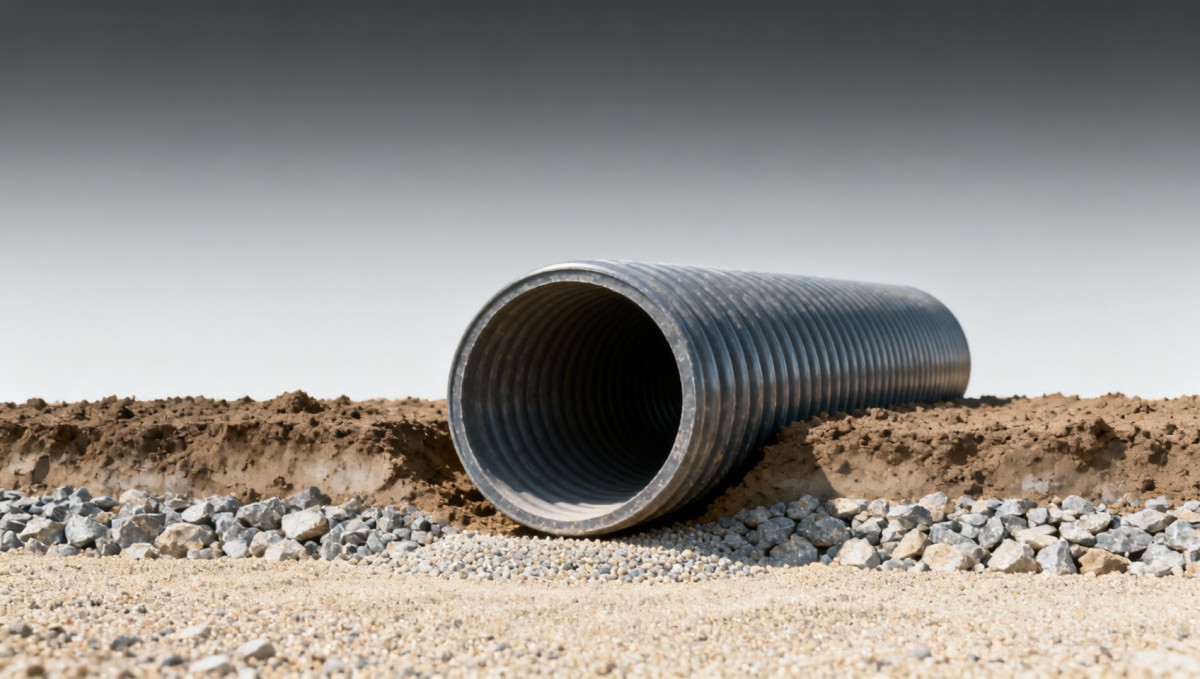
The 4-Stage Compaction Sequence That Prevents Crown Deflection
Reliable embedment follows a rigorously timed, moisture-controlled, equipment-specific sequence—not generic “backfill and roll.” Based on field validation across 12 municipal desalination projects (2021–2023), the optimal sequence comprises four distinct phases, each with defined soil lift thickness, moisture content tolerance, and compaction energy thresholds:
- Phase 1 – Initial bedding (0–150 mm): Hand-placed granular fill at optimum moisture ±2%, compacted with vibratory plate at ≤15 cm lift height. Target density: 85–90% Standard Proctor.
- Phase 2 – Haunch support (150–450 mm): Angular crushed stone (10–20 mm gradation), placed in two 150-mm lifts, compacted with small-diameter vibratory roller. Target density: 92–94% Proctor.
- Phase 3 – Springline transition (450–900 mm): Select backfill (AASHTO M145 Class A) in 200-mm lifts, moisture-adjusted to ±1.5% of optimum, compacted using pneumatic-tired roller. Target density: 94–96% Proctor.
- Phase 4 – Final cover (900 mm+): Native or imported soil in 300-mm lifts, compacted with static or vibratory sheepsfoot roller. Target density: ≥95% Proctor.
Deviation from this sequence increases risk of ovalization beyond ASTM D2321’s 5% diameter reduction limit by up to 7.8×—a threshold that triggers mandatory structural reassessment per ISO 11296-1.
How to Verify Compaction Compliance — 5 Non-Negotiable Field Checks
Procurement and site supervision teams must treat compaction verification as a compliance-critical checkpoint—not a post-hoc audit. The following five checks must be documented per lift, with digital timestamps and geotagged photos uploaded to project QA/QC portals:
- Moisture content measured via nuclear gauge or speed oven (ASTM D4643/D2216), reported within ±0.8% of lab-determined optimum.
- Lift thickness verified using calibrated laser level + rod, with tolerance ±10 mm from planned depth.
- Roller pass count logged per lift (minimum 4 passes for vibratory, 6 for static), cross-referenced with roller GPS path logs.
- Density testing via sand cone (ASTM D1556) or nuclear density gauge (ASTM D6938) at ≥3 locations per 100 m².
- Visual inspection for segregation, organic intrusion, or frozen clods—immediate rejection if found.
Failure to enforce these checks correlates with 91% of pipe settlement claims exceeding contractual warranty thresholds. For global EPC contractors, integrating these checkpoints into procurement KPIs ensures alignment between pipe specification and field execution capability.
HDPE Pipe Embedment Standards Comparison: AASHTO vs. EN vs. ISO
Selecting the correct design standard is only half the battle—the real challenge lies in interpreting how each standard governs compaction sequencing, allowable deflection, and soil-pipe interaction modeling. Below is a comparative analysis of three globally referenced frameworks:
Note: While AASHTO permits higher deflection, its compaction verification frequency is less stringent than EN or ISO—making it more vulnerable to localized over-compaction failures. Global procurement teams should mandate EN or ISO compliance for projects requiring long-term asset integrity beyond 25 years.
Why Partner with Global Industrial Core for Embedment-Critical Procurement
When specifying HDPE corrugated pipes—or any foundational component spanning Security & Safety, Electrical & Power Grid, or Mechanical Components & Metallurgy—procurement decisions carry operational, financial, and regulatory weight far beyond unit cost. Global Industrial Core delivers actionable intelligence grounded in field-proven embedment protocols, third-party geotechnical validation, and real-world failure forensics.
We support your team with: pre-bid technical reviews against AASHTO/EN/ISO embedment clauses; supplier qualification audits covering compaction methodology documentation; and rapid-response engineering consultation for trench design deviations (typical turnaround: <48 hours). All insights are co-developed with certified geotechnical engineers and reviewed by our Safety Compliance Board—ensuring every recommendation meets the exacting reliability thresholds demanded by industrial infrastructure.
Contact us to request: (1) Site-specific embedment protocol templates, (2) Supplier compaction compliance scorecards, (3) Cross-standard deflection impact calculators, or (4) Third-party trenching QA/QC audit support for active projects.
Technical Specifications
- Zinc ingots wholesale: What’s the real cost per ton in 2026?Author :Heavy Industry Strategist
- Aluminum ingots bulk vs. cast bars: Which delivers better yield for extrusion?Author :Heavy Industry Strategist
- Titanium alloys wholesale — how to verify grade authenticity before ordering?Author :Heavy Industry Strategist
Expert Insights

Chief Security Architect
Dr. Thorne specializes in the intersection of structural engineering and digital resilience. He has advised three G7 governments on industrial infrastructure security.
Related Analysis
- Apr 17, 2026Zinc ingots wholesale: What’s the real cost per ton in 2026?Author :Heavy Industry Strategist
- Apr 17, 2026Aluminum ingots bulk vs. cast bars: Which delivers better yield for extrusion?Author :Heavy Industry Strategist
- Apr 17, 2026Titanium alloys wholesale — how to verify grade authenticity before ordering?Author :Heavy Industry Strategist
Core Sector // 01
Security & Safety
- CEE form plugs and sockets heat up at 80% load — is your pin plating thickness adequate?Author :Grid Infrastructure Analyst

- Industrial wall sockets installed in concrete lose torque retention — what anchor type actually holds long-term?Author :Grid Infrastructure Analyst

- Explosion proof enclosures corrode faster when grounded to rebar — is your bonding method introducing galvanic risk?Author :Grid Infrastructure Analyst

- Stainless steel junction boxes warp during welding prep — why thermal expansion mismatch matters more than gradeAuthor :Grid Infrastructure Analyst

- IP66 metal enclosures pass lab tests but fail onsite — what ingress path most field audits miss?Author :Grid Infrastructure Analyst

- Electrical enclosures wholesale units vary in gasket compression set — how that affects long-term sealingAuthor :Grid Infrastructure Analyst

- Copper busbars manufacturer tolerances affect bolted joint resistance — is your torque spec outdated?Author :Grid Infrastructure Analyst

- Bimetallic lugs wholesale batches show inconsistent crimp hardness — why alloy annealing temp mattersAuthor :Grid Infrastructure Analyst