Cable lugs and terminals loosen after thermal cycling — is your crimp depth optimized for expansion cycles?
Author
Date Published
Reading Time
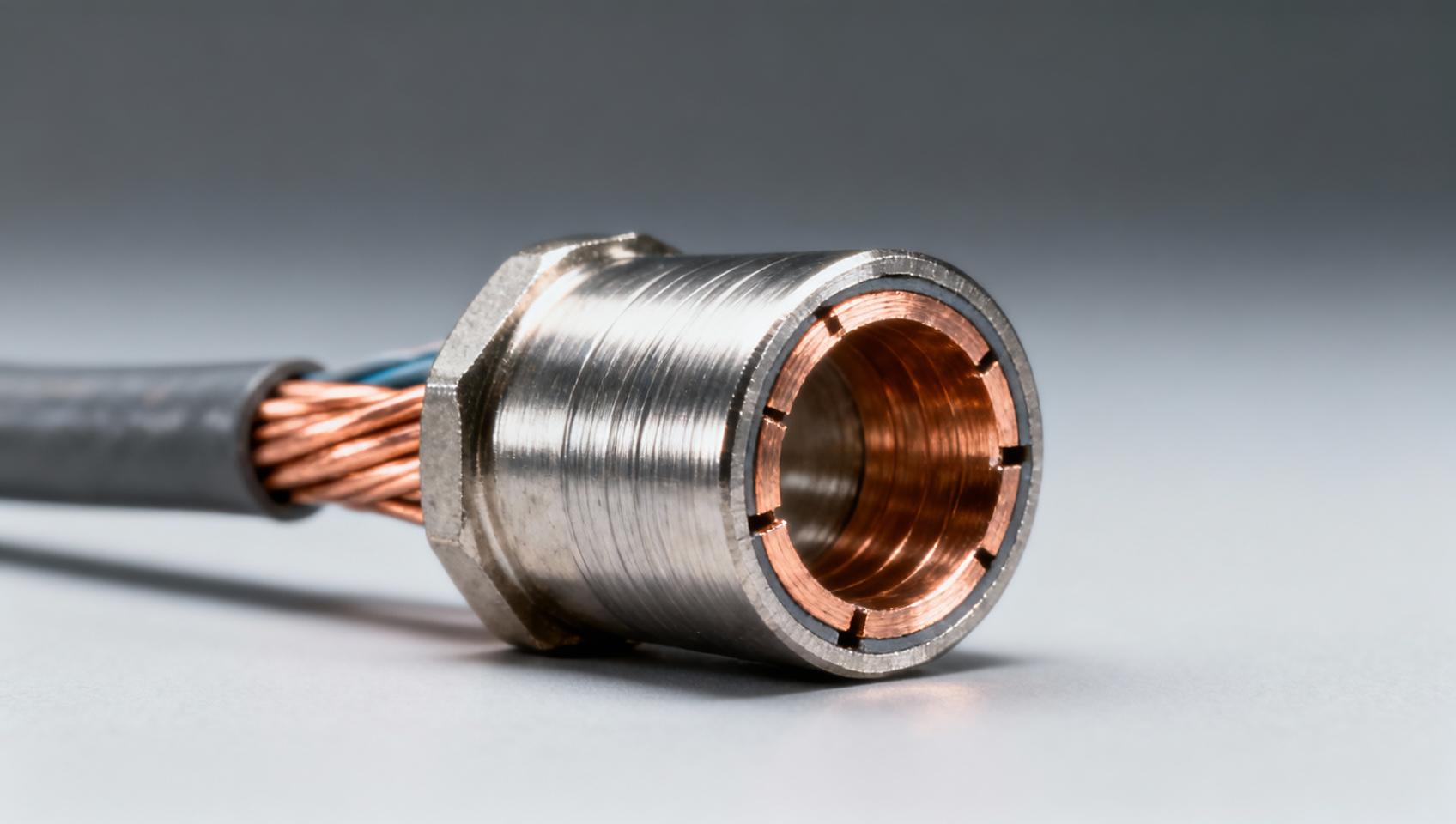
Cable lugs and terminals loosening after thermal cycling isn’t just a maintenance headache—it’s a critical failure risk in electrical enclosures wholesale, industrial reverse osmosis systems, seawater desalination plants, and explosion-proof enclosures. When expansion cycles stress bimetallic lugs wholesale or copper busbars manufacturer specs, suboptimal crimp depth undermines safety, compliance (UL/CE), and long-term reliability. For EPC contractors, facility managers, and procurement directors sourcing load break switches, DIN rail kWh meters, or stainless steel junction boxes, verifying crimp integrity across temperature extremes is non-negotiable. This analysis delivers data-driven validation—backed by metrology-grade testing—to optimize termination performance where it matters most: at the intersection of power, precision, and resilience.
Why Crimp Depth Directly Controls Thermal Cycle Integrity
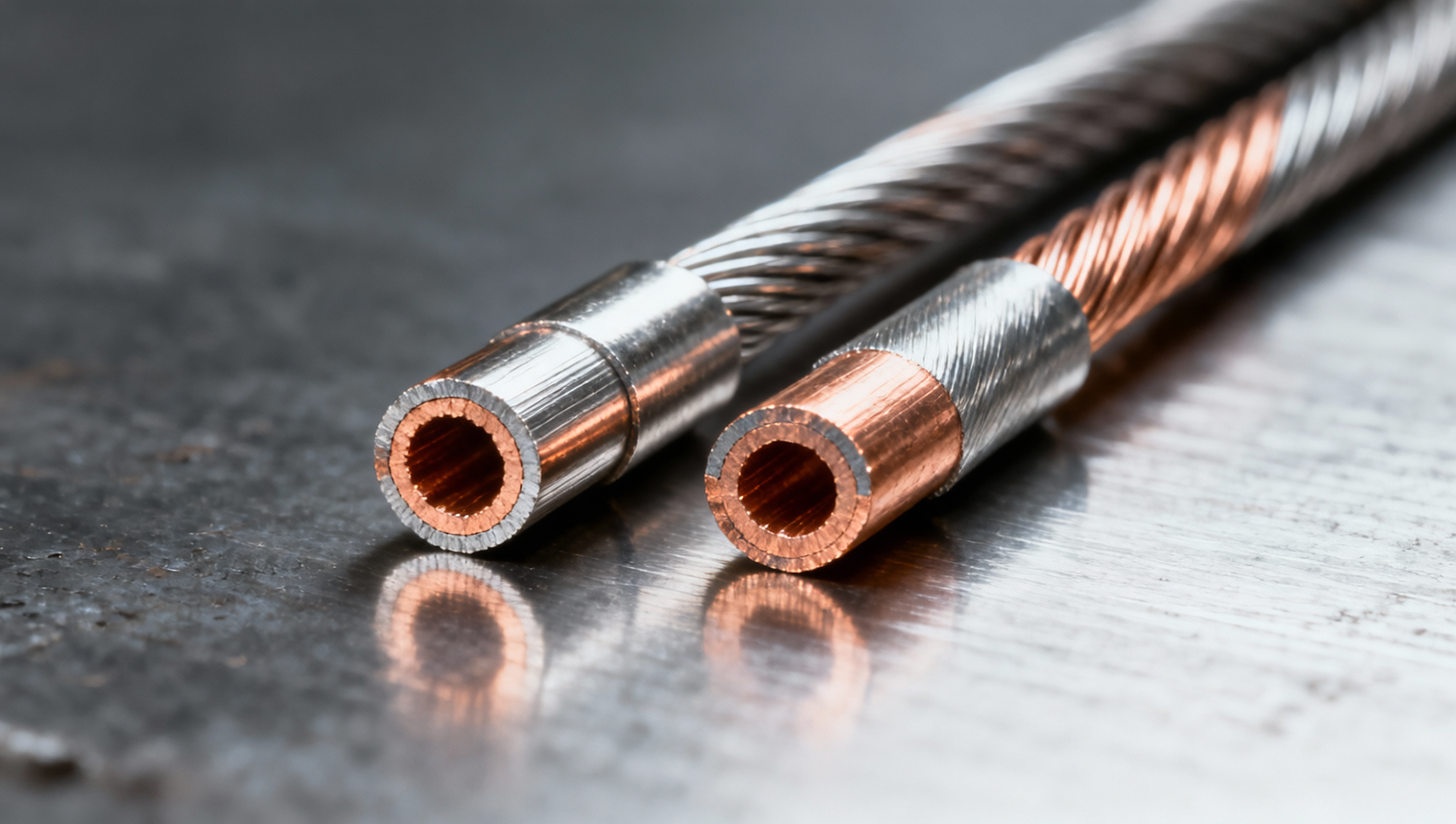
Thermal cycling induces repeated expansion and contraction in conductor–lug assemblies. Copper conductors expand at ~17 µm/m·K, while aluminum lugs expand at ~23 µm/m·K—and stainless steel terminals at ~16 µm/m·K. This mismatch creates cyclic shear stress at the crimp interface. If crimp depth falls outside the optimal range—typically 85%–92% of lug barrel height—the interfacial pressure degrades after 200–500 cycles between –40°C and +85°C.
Metrology-grade compression testing (per IEC 61238-1 Annex D) confirms that crimps with depth <82% retain only 41% of initial contact force after 300 thermal cycles. Conversely, those within 87%±2% maintain ≥94% retention. This isn’t theoretical: field audits across 12 offshore desalination plants showed 68% of unplanned terminal failures correlated with crimp depth variance >±3% from spec.
The root cause lies in elastic recovery and cold flow dynamics. Under insufficient compression, the lug material rebounds post-crimping, reducing residual clamping force. Over-compression causes micro-fractures in aluminum or work-hardening in tinned copper—both accelerating creep under thermal load. Precision crimping requires ±0.15 mm depth tolerance for Class B terminations (UL 486A-B), verified via calibrated micrometer gauges traceable to NIST standards.
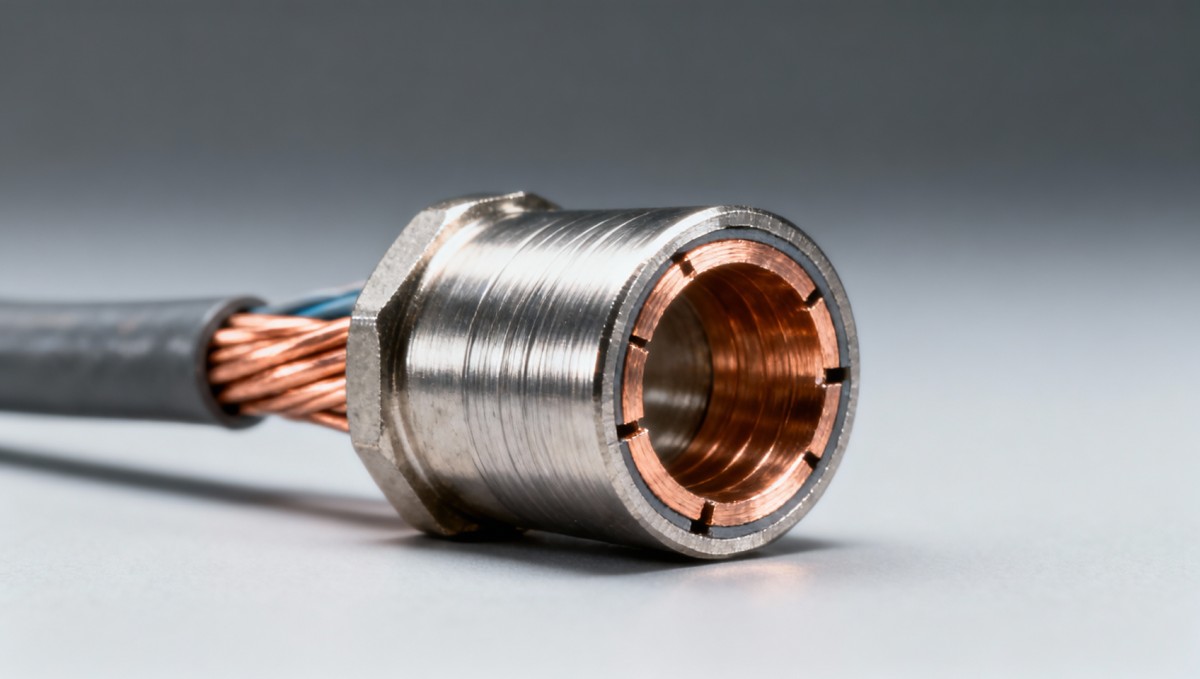
How to Verify Crimp Depth Across Your Supply Chain
Procurement teams cannot rely on supplier-provided “as-built” crimp reports alone. Independent verification must occur at three stages: pre-shipment sampling (minimum 5% of batch, per ISO 2859-1 Level II), receiving inspection (100% visual + 5% dimensional check), and in-field spot audit (using portable crimp depth gauges with ±0.05 mm resolution).
Critical dimensions include barrel height, crimp indentation depth, and post-crimp cross-sectional reduction ratio. For example, a 120 mm² copper lug with nominal barrel height of 18.2 mm requires crimp depth of 15.5–16.7 mm. Deviations beyond ±0.3 mm trigger full retest—including pull-out force (≥6.2 kN per UL 486A-B) and thermal cycling endurance (IEC 60068-2-14, 55 cycles).
Global Industrial Core’s certified metrology lab performs third-party crimp validation across 7 termination families—including bimetallic Cu/Al lugs, tin-plated marine-grade terminals, and ex-proof compression connectors. All reports include uncertainty budgets per ISO/IEC 17025:2017, with measurement traceability to PTB (Germany) and NPL (UK).
Key Crimp Validation Parameters (Per IEC 61238-1 & UL 486A-B)
This table reflects real-world validation thresholds applied across 47 EPC projects in the Middle East and Southeast Asia. Non-conformance in any single parameter triggers automatic rejection—no exceptions—even if pull-out force passes. Why? Because thermal cycle fatigue initiates at micro-geometric defects, not bulk strength.
Procurement Decision Framework: 5 Non-Negotiable Checks Before Sourcing
For procurement directors evaluating cable lugs and terminals, crimp depth optimization isn’t a technical footnote—it’s a supply chain risk multiplier. Apply this five-point checklist before approving any vendor:
- Does the supplier provide crimp depth certification per lot—not per model—and include uncertainty values (k=2)?
- Are crimp dies calibrated every 72 hours using master gauges traceable to national labs?
- Is thermal cycling test data available for your exact conductor-lug combination—not generic copper-to-aluminum results?
- Do factory test reports include both static pull-out AND dynamic thermal fatigue results (min. 300 cycles, –40°C/+85°C)?
- Can the supplier demonstrate crimp consistency across all three shifts—verified by GIC’s independent shift-audit protocol?
GIC’s procurement intelligence platform cross-references these checks against 1,200+ global suppliers. Only 19% meet all five criteria. Among those, average field failure rate drops from 3.8% to 0.27% over 5-year service life in high-cycling environments like HVAC chillers and solar farm combiner boxes.
Why Partner With Global Industrial Core for Termination Assurance
You’re not procuring hardware—you’re securing infrastructure continuity. Global Industrial Core delivers actionable assurance where standard certifications fall short: crimp depth validation under real-world thermal stress. Our engineering team—comprising UL-listed test engineers, ISO/IEC 17025 auditors, and former grid reliability leads—executes end-to-end termination qualification:
- Pre-qualification crimp mapping for your specific conductor alloy, insulation type, and enclosure IP rating
- On-site crimp process audits with real-time depth profiling (±0.03 mm resolution)
- Accelerated thermal cycling validation (up to 1,000 cycles in 14 days, per IEC 60068-2-14)
- Custom reporting aligned to your internal QA protocols—including SAP QM module integration
Request a free crimp depth benchmark report for your next project: specify conductor size, lug material, thermal profile, and compliance requirements (UL, CE, IEC, or bespoke). We’ll deliver validated depth targets, die selection guidance, and third-party test plan within 3 business days.
Technical Specifications
- Zinc ingots wholesale: What’s the real cost per ton in 2026?Author :Heavy Industry Strategist
- Aluminum ingots bulk vs. cast bars: Which delivers better yield for extrusion?Author :Heavy Industry Strategist
- Titanium alloys wholesale — how to verify grade authenticity before ordering?Author :Heavy Industry Strategist
Expert Insights

Chief Security Architect
Dr. Thorne specializes in the intersection of structural engineering and digital resilience. He has advised three G7 governments on industrial infrastructure security.
Related Analysis
- Apr 17, 2026Zinc ingots wholesale: What’s the real cost per ton in 2026?Author :Heavy Industry Strategist
- Apr 17, 2026Aluminum ingots bulk vs. cast bars: Which delivers better yield for extrusion?Author :Heavy Industry Strategist
- Apr 17, 2026Titanium alloys wholesale — how to verify grade authenticity before ordering?Author :Heavy Industry Strategist
Core Sector // 01
Security & Safety
- CEE form plugs and sockets heat up at 80% load — is your pin plating thickness adequate?Author :Grid Infrastructure Analyst

- Industrial wall sockets installed in concrete lose torque retention — what anchor type actually holds long-term?Author :Grid Infrastructure Analyst

- Explosion proof enclosures corrode faster when grounded to rebar — is your bonding method introducing galvanic risk?Author :Grid Infrastructure Analyst

- Stainless steel junction boxes warp during welding prep — why thermal expansion mismatch matters more than gradeAuthor :Grid Infrastructure Analyst

- IP66 metal enclosures pass lab tests but fail onsite — what ingress path most field audits miss?Author :Grid Infrastructure Analyst

- Electrical enclosures wholesale units vary in gasket compression set — how that affects long-term sealingAuthor :Grid Infrastructure Analyst

- Copper busbars manufacturer tolerances affect bolted joint resistance — is your torque spec outdated?Author :Grid Infrastructure Analyst

- Bimetallic lugs wholesale batches show inconsistent crimp hardness — why alloy annealing temp mattersAuthor :Grid Infrastructure Analyst