When a mechanical engineering supplier becomes a project risk
Author
Date Published
Reading Time
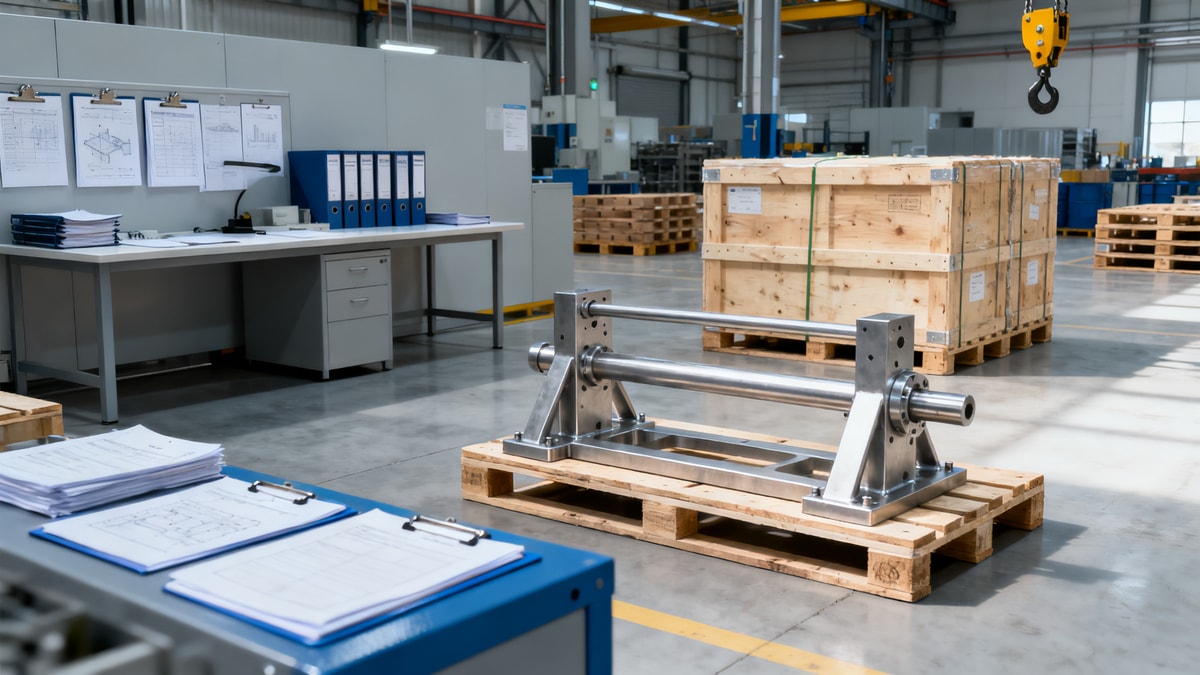
A mechanical engineering supplier can strengthen a project—or quietly become its biggest risk. For project managers and engineering leads, delays, quality failures, weak compliance, and poor technical support can quickly escalate into cost overruns and operational exposure. This article examines how to identify hidden supplier risks early and build a more resilient procurement strategy for complex industrial projects.
In EPC environments, plant upgrades, utility installations, and industrial maintenance programs, supplier failure rarely appears as a single dramatic event. More often, it starts with a 2-week documentation delay, a tolerance mismatch of ±0.8 mm where ±0.2 mm was required, or a missing material traceability file that stalls site acceptance. By the time the issue becomes visible, procurement, engineering, QA, and operations are all paying for it.
For project leaders, the real challenge is not just choosing a vendor that can quote quickly. It is selecting a mechanical engineering supplier that can perform across the full project cycle: design review, manufacturing control, inspection readiness, packaging, logistics coordination, commissioning support, and after-sales response. In industrial projects where shutdown windows may be limited to 24–72 hours and procurement mistakes can affect years of asset performance, this distinction matters.
Why a mechanical engineering supplier becomes a project risk
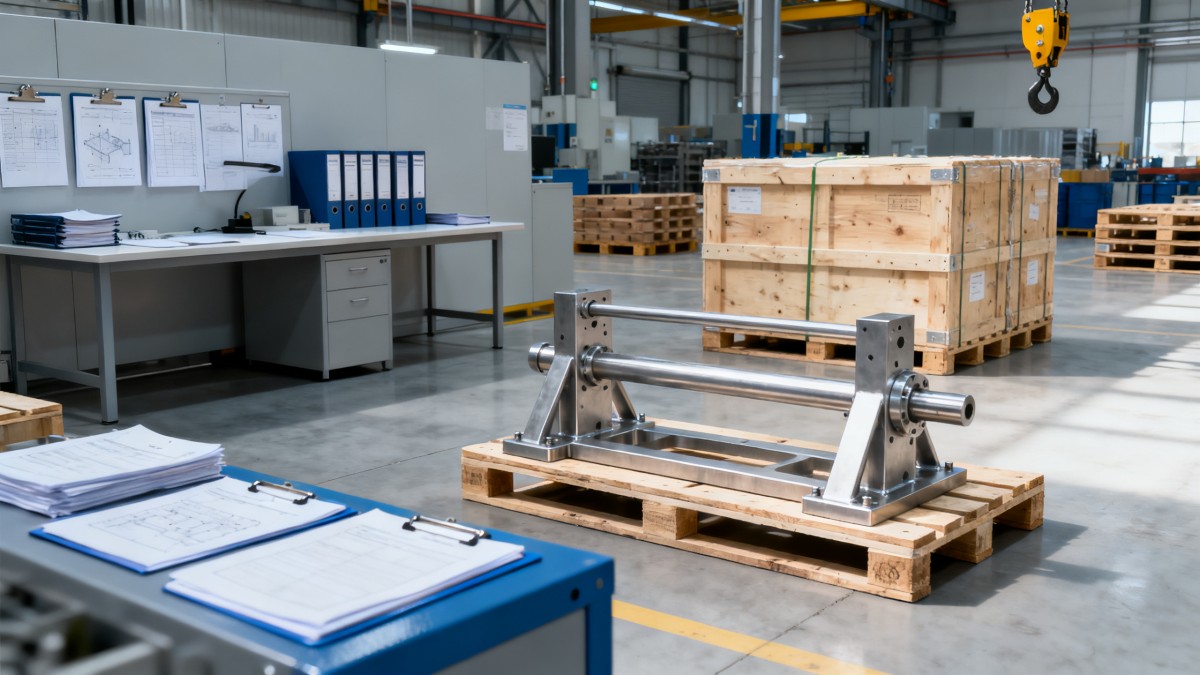
A mechanical engineering supplier is often evaluated on visible factors such as unit price, quoted lead time, and general capability statements. However, project risk usually sits in less visible areas: engineering discipline, process control, sub-supplier management, inspection records, and responsiveness under pressure. A supplier that looks competitive on paper can become a serious liability once fabrication begins.
Risk starts before manufacturing starts
Many project failures can be traced back to the first 3 stages of supplier engagement: requirement clarification, drawing review, and quality planning. If the supplier does not challenge unclear specifications, confirm applicable standards, or identify tolerances that cannot be held consistently, the project enters production with unmanaged risk already embedded.
This is especially common in mixed-scope orders that combine machined parts, fabricated assemblies, fasteners, coatings, and site-fit interfaces. A capable mechanical engineering supplier should be able to map technical dependencies, not just accept a purchase order and wait for questions later.
Common early warning signs
- Quotation returned in less than 24 hours for a technically complex package with no clarifications raised.
- Lead time promises of 7–10 days for components that normally require 3–6 weeks including inspection and logistics.
- Material certificates, welding procedures, or dimensional inspection plans discussed only after order placement.
- Design changes handled informally by email without document revision control.
- No clear point of contact for QA, engineering, and project coordination.
The table below outlines how supplier issues typically appear and how quickly they can affect cost, schedule, and commissioning readiness in industrial projects.
For project managers, the key insight is simple: supplier risk is usually operational before it becomes contractual. Once the equipment or component misses a hold point, fails fit-up, or arrives without complete documentation, the project team is forced into damage control rather than planned execution.
The hidden cost of a low-price decision
A lower purchase price can look attractive during bid comparison, but in industrial environments the true cost of a mechanical engineering supplier includes nonconformance handling, expediting effort, inspection travel, packaging losses, site standby labor, and delayed startup. A 6% saving on unit price can be erased by one failed delivery window or one batch requiring full dimensional rework.
This is why experienced procurement teams evaluate total project effect, not just line-item cost. A supplier serving critical systems, rotating equipment supports, fabricated frames, precision assemblies, or metallurgy-sensitive components must be measured against execution reliability over a 30-day, 90-day, and post-installation horizon.
How to assess a mechanical engineering supplier before award
A stronger sourcing process does not always require a long vendor qualification program. In many cases, project teams can reduce supplier risk by using a disciplined 5-point assessment model before purchase order release. The aim is to verify whether the supplier can actually deliver the required outcome under industrial project conditions.
Five areas that deserve formal review
- Technical understanding: Can the supplier explain critical tolerances, load conditions, materials, and interface requirements?
- Manufacturing control: Are machining, fabrication, heat treatment, coating, and final inspection managed through documented steps?
- Compliance readiness: Can the supplier support CE, UL-related component integration where applicable, ISO-based quality processes, and project document packages?
- Delivery realism: Is the quoted lead time aligned with routing, subcontract steps, inspection hold points, and export packing?
- Support capability: Can the supplier provide engineering response within 24–48 hours during production and installation phases?
The table below can be used as a practical pre-award scorecard for a mechanical engineering supplier in capital projects, shutdown work, and heavy industrial maintenance procurement.
A scorecard like this helps separate suppliers that can truly support execution from those that only compete well at RFQ stage. It also gives project teams a neutral basis for internal approval when price and risk are being weighed together.
Questions that reveal execution maturity
Instead of asking broad questions such as “Can you do this scope?”, ask execution-specific questions. For example: Which dimensions are designated as critical to function? What is the inspection sequence before coating? Which operations are subcontracted? How will nonconforming parts be segregated? What packing method will protect machined surfaces during a 2–5 week transit period?
A mature mechanical engineering supplier will answer with process details, decision points, and likely constraints. A weak one will stay at the level of generic assurances. For industrial buyers, this difference is often more predictive than a polished capability brochure.
Building a resilient procurement strategy for complex projects
Even a strong supplier can become a risk if the procurement model is too fragile. Resilience comes from combining supplier selection with execution safeguards: clearer specifications, stage-gate reviews, backup pathways, and document control discipline. For high-impact mechanical packages, the procurement strategy should be built as carefully as the technical scope.
Use milestone-based control instead of passive waiting
One of the most effective controls is to define 4–6 mandatory milestones from award to delivery. These usually include scope confirmation, approved drawings, raw material release, in-process inspection, final inspection, and dispatch clearance. If these points are not scheduled and tracked, teams often discover delay only when the promised ship date has already been missed.
For critical orders, a weekly 20–30 minute progress review can prevent much larger downstream issues. This is especially important when the mechanical engineering supplier is providing custom fabricated parts, machined assemblies, or project-specific retrofit components with low interchangeability.
Recommended control measures
- Freeze drawings and revision history before material cutting or machining begins.
- Define 3 acceptance layers: dimensional, material/compliance, and packaging/documentation.
- Assign one owner each from procurement, engineering, and QA for active decision-making.
- Require photo evidence or virtual inspection checkpoints for remote projects.
- For shutdown-critical items, identify at least 1 approved fallback supplier or repair path.
Align technical requirements with commercial terms
Many disputes happen because the purchase order is commercial, while the real risk is technical. The contract should define more than price and Incoterms. It should state document deliverables, inspection witness points, packaging requirements, NCR handling, and response expectations during production. When these points remain informal, accountability becomes weak exactly when the project needs control.
For example, if spare parts must remain corrosion-free for 12 months of storage, preservation requirements should be specified. If a part must interface with an existing asset that has field variation, acceptable dimensional deviation should be documented. A reliable mechanical engineering supplier can work within such controls; an unreliable one often resists them or treats them as optional.
The following table shows how procurement teams can connect commercial controls with practical risk reduction in industrial mechanical sourcing.
These controls are not bureaucratic overhead. They are practical tools for reducing ambiguity, preserving schedule confidence, and improving installation readiness across multi-party industrial projects.
Common supplier mistakes that project leaders should not ignore
Some supplier problems are obvious, but many are normalized because teams are under time pressure. That is risky. A mechanical engineering supplier does not need to fail completely to harm a project. Repeated minor failures can be enough to create cumulative schedule loss, quality drift, and strained stakeholder confidence.
Mistake 1: Treating all components as standard items
Project-specific mechanical parts often look simple but perform critical functions. A support bracket, mounting plate, shaft component, or fabricated enclosure may need exact fit, coating compatibility, vibration resistance, or high-temperature stability. When a supplier assumes “standard manufacturing” without reviewing service conditions, performance risk rises quickly.
Mistake 2: Weak control of sub-tier vendors
A supplier may machine in-house but outsource heat treatment, galvanizing, laser cutting, NDT, or packing. If these sub-tier activities are not controlled, lead time and quality can drift without early visibility. Project teams should ask which steps are outsourced and what inspection or release criteria apply at each stage.
Mistake 3: Delaying bad news
One of the most damaging behaviors is late disclosure. A supplier knows on day 5 that a material grade is delayed, but tells the buyer on day 15 after recovery options have narrowed. In a project environment, 10 lost days can be more serious than the original issue. Transparent escalation is often a better indicator of supplier maturity than perfect first-time execution.
A practical response plan for project teams
- Classify each order as standard, important, or critical within 48 hours of award.
- Apply deeper inspection and reporting only to important and critical items.
- Track three metrics: response time, milestone adherence, and document completeness.
- Review supplier performance after delivery, not only during sourcing.
- Use performance records to guide the next 6–12 months of procurement decisions.
This creates a repeatable loop. Instead of reacting to each new issue from scratch, the organization builds supplier intelligence over time and becomes less vulnerable to preventable disruption.
What project managers should look for in a dependable sourcing partner
The best supplier relationships in industrial projects are not based on low price or broad claims. They are based on predictability. A dependable mechanical engineering supplier understands that project value includes technical accuracy, document discipline, timing credibility, and support after delivery. This is what protects installation schedules and long-term asset performance.
For organizations operating across power, process, utilities, environmental systems, and heavy industrial infrastructure, that evaluation requires more than transactional sourcing. It requires market intelligence, compliance awareness, and the ability to compare suppliers against operational risk, not marketing language alone.
Global Industrial Core supports this decision process by focusing on the systems and sourcing conditions that matter most in demanding industrial environments. For project managers, engineering leads, and procurement directors, the objective is clear: reduce avoidable supplier risk before it reaches the site, the shutdown window, or the operating asset.
If you are reviewing a current supplier base, planning a complex purchase package, or need a sharper framework for vendor evaluation, now is the time to strengthen your sourcing approach. Contact Global Industrial Core to discuss your project requirements, request a tailored supplier risk perspective, or explore more resilient industrial procurement solutions.
Technical Specifications
Expert Insights

Chief Security Architect
Dr. Thorne specializes in the intersection of structural engineering and digital resilience. He has advised three G7 governments on industrial infrastructure security.
Related Analysis
- May 04, 2026When Components & Metals bulk order pricing stops being cheaperAuthor :Heavy Industry Strategist
- May 04, 2026What makes an Instruments & Measurement supplier dependableAuthor :Precision Metrology Expert
- May 04, 2026How to assess an Environment & Ecology exporter by documentationAuthor :Environmental Engineering Director
Core Sector // 01
Security & Safety
- When a mechanical engineering supplier becomes a project riskAuthor :Heavy Industry Strategist

- Conveyor Roller Belts: Early Wear Signs You Should Not IgnoreAuthor :Heavy Industry Strategist

- Gear Rack and Pinion Backlash Problems Often Start HereAuthor :Heavy Industry Strategist

- PU Timing Belts Wholesale: Why Cheap Belts Cost More LaterAuthor :Heavy Industry Strategist

- Rubber Shock Absorbers and the Hidden Cost of OverhardnessAuthor :Heavy Industry Strategist

- Stainless Steel Sprockets or Carbon Steel in Wet Lines?Author :Heavy Industry Strategist

- Beijing Non-Motor Vehicle Rules Take Effect May 1: GB 43854-2026 Applies to Industrial e-Mobility BatteriesAuthor :Heavy Industry Strategist

- Egypt SMIIC Mandates Arabic Energy Labels for Industrial PumpsAuthor :Heavy Industry Strategist