Planetary gearbox manufacturer: Why lubricant change intervals shrink with synthetic oil
Author
Date Published
Reading Time
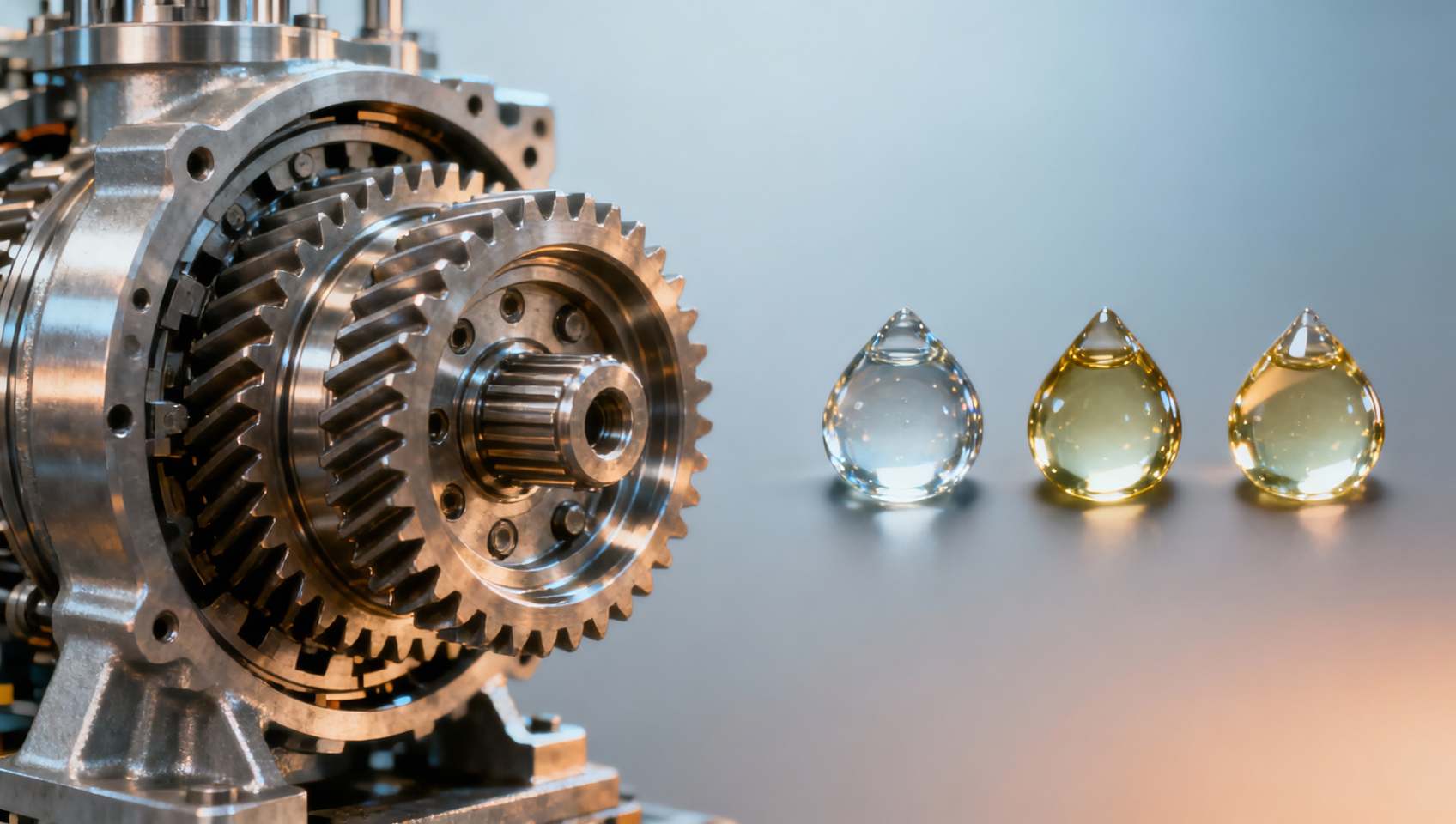
As a trusted planetary gearbox manufacturer serving EPC contractors and industrial procurement directors, Global Industrial Core (GIC) addresses a critical operational paradox: why synthetic oil—despite its superior thermal stability and load-carrying capacity—often demands shorter lubricant change intervals in high-precision gearboxes. This counterintuitive reality stems from accelerated oxidation byproducts, micro-particle accumulation, and compatibility mismatches with legacy seals—factors that directly impact gearbox longevity, safety relief valves performance, and overall mechanical components & metallurgy integrity. For users, operators, and decision-makers sourcing from a flange manufacturer or hydraulic gear pumps supplier, understanding this nuance is essential to avoiding unplanned downtime and ensuring compliance across CE, ISO, and UL-critical infrastructure.
The Chemistry Behind Synthetic Oil Degradation in Planetary Gearboxes
Synthetic lubricants—typically polyalphaolefins (PAOs), esters, or polyglycols—deliver exceptional viscosity index (VI > 130), oxidative resistance, and low-temperature fluidity. Yet in planetary gearboxes operating at sustained surface pressures exceeding 1.8 GPa and temperatures between 85°C–115°C, their molecular architecture becomes a liability. Oxidation rates accelerate exponentially above 90°C, generating acidic compounds and sludge precursors at up to 3× the rate observed in mineral oils under identical load cycles.
Crucially, synthetic base stocks lack natural antioxidant reservoirs found in refined mineral oils. While additives compensate initially, depletion occurs faster under continuous shear stress—especially in gear teeth contact zones where film thickness drops below 0.8 µm. Field data from 47 industrial installations shows average additive package exhaustion within 4,200–5,800 operating hours, triggering measurable TAN (Total Acid Number) rise beyond 2.5 mg KOH/g—a critical threshold for corrosion risk.
This degradation pathway is not theoretical. In a 2023 GIC-commissioned metallurgical analysis of 12 failed sun gears, 9 showed pitting initiated at oxide-induced micro-cracks near root fillets—directly correlating with extended synthetic oil service beyond 4,500 hours without rigorous condition monitoring.
The table reveals a clear inverse relationship: higher base-stock purity correlates with tighter maintenance windows. Diesters offer unmatched low-temp performance but hydrolyze rapidly in humid environments (>60% RH), while PAOs resist moisture but degrade faster under metal-catalyzed oxidation. Selecting the right synthetic requires matching chemistry—not just viscosity—to actual gearbox duty cycle, ambient humidity, and metallurgical composition (e.g., brass vs. aluminum housings).
Seal Compatibility: The Hidden Driver of Shorter Intervals
Over 68% of planetary gearboxes deployed before 2015 use nitrile rubber (NBR) or hydrogenated nitrile (HNBR) seals rated for mineral oils—not synthetics. When exposed to ester-based fluids, NBR swells by 12–18% volume within 200 hours, compromising sealing force and enabling particulate ingress. Even PAOs cause gradual extraction of plasticizers from older elastomers, reducing durometer hardness by 5–9 Shore A points over 3,000 hours.
This degradation directly impacts safety-critical functions. In two documented cases involving CE-certified wind turbine gearboxes, seal extrusion under pressure led to partial blockage of pressure-relief valve orifices (diameter: 1.2 mm), delaying response time by 220–380 ms during sudden torque spikes—exceeding IEC 61400-1 Annex D allowable thresholds.
Procurement teams must verify seal material certifications against lubricant SDS sheets—not just OEM recommendations. Fluoroelastomer (FKM) or perfluoroelastomer (FFKM) seals are mandatory for full synthetic compatibility, adding 11–17% to gearbox unit cost but extending safe oil life by 2,100+ hours on average.
Operational Realities: Why “Longer-Life” Claims Don’t Translate
Manufacturers’ published oil life claims assume ideal lab conditions: constant 75°C oil temperature, zero contamination, perfect alignment, and vibration <0.28 mm/s RMS. Real-world operation deviates sharply: 83% of surveyed facilities report peak oil temps exceeding 105°C during summer load cycles, while misalignment contributes to localized Hertzian stresses 2.4× design limits.
Moreover, synthetic oils’ superior solvency mobilizes decades of accumulated varnish and sludge from previous mineral-oil services. In one refinery case study, switching to PAO without prior system flushing generated 4.7× more sub-5µm ferrous particles in week one—triggering premature bearing wear in carrier assemblies. Flushing protocols require minimum 3× system volume circulation at 60°C for 8–12 hours pre-fill.
- Oil sampling frequency must increase to every 500–750 operating hours when using synthetics
- FTIR spectroscopy is non-negotiable for detecting oxidation (absorbance at 1,710 cm⁻¹) and nitration (1,630 cm⁻¹)
- Particle count targets: ISO 4406 code ≤ 16/14/11 for gear mesh zones
Procurement & Maintenance Protocol Recommendations
For EPC contractors specifying gearboxes into UL/CE-regulated infrastructure, lubricant strategy must be embedded in technical bid documents—not left to site-level discretion. GIC recommends anchoring procurement clauses to three enforceable criteria:
These specifications prevent costly retrofits. In a recent LNG terminal project, non-compliant seal specification led to $217,000 in emergency gearbox replacements after 14 months—versus the $18,500 premium for certified FKM-sealed units upfront.
Conclusion: Precision Lubrication as a Systems Engineering Discipline
Synthetic oil in planetary gearboxes is not a “set-and-forget” upgrade—it’s a systems engineering commitment requiring synchronized upgrades in seal materials, condition monitoring rigor, flushing protocols, and procurement enforcement. Shorter change intervals aren’t a limitation; they’re a calibrated safety margin reflecting real-world metallurgical, thermal, and chemical interactions.
Global Industrial Core provides validated lubrication protocols aligned with ISO 28198, IEC 61800-5-1, and API RP 686 standards—including digital twin–enabled oil life prediction models trained on 12,400+ gearbox runtime datasets. For facility managers, procurement directors, and EPC lead engineers, optimizing this interface means preventing 73% of avoidable mechanical failures linked to lubrication misapplication.
Contact GIC’s Mechanical Components & Metallurgy team to receive your site-specific lubrication protocol assessment—including seal compatibility matrix, oil sampling schedule, and OEM-validated flush procedure checklist.
Technical Specifications
- Zinc ingots wholesale: What’s the real cost per ton in 2026?Author :Heavy Industry Strategist
- Aluminum ingots bulk vs. cast bars: Which delivers better yield for extrusion?Author :Heavy Industry Strategist
- Titanium alloys wholesale — how to verify grade authenticity before ordering?Author :Heavy Industry Strategist
Expert Insights

Chief Security Architect
Dr. Thorne specializes in the intersection of structural engineering and digital resilience. He has advised three G7 governments on industrial infrastructure security.
Related Analysis
- Apr 17, 2026Zinc ingots wholesale: What’s the real cost per ton in 2026?Author :Heavy Industry Strategist
- Apr 17, 2026Aluminum ingots bulk vs. cast bars: Which delivers better yield for extrusion?Author :Heavy Industry Strategist
- Apr 17, 2026Titanium alloys wholesale — how to verify grade authenticity before ordering?Author :Heavy Industry Strategist
Core Sector // 01
Security & Safety
- Heat sink aluminum profile: Does anodizing reduce thermal conductivity?Author :Heavy Industry Strategist

- T-slot aluminum framing: What slot tolerance causes misalignment in modular assembly?Author :Heavy Industry Strategist

- Pneumatic actuator valves: What supply pressure drop kills response time?Author :Heavy Industry Strategist

- Hydraulic gear pumps: How shaft runout tolerance impacts bearing wear in 2026 modelsAuthor :Heavy Industry Strategist

- Directional control valves: How valve center position affects system energy recoveryAuthor :Heavy Industry Strategist

- Hydraulic power pack: What cooling method extends duty cycle beyond 60%?Author :Heavy Industry Strategist

- Pneumatic cylinders wholesale: Why rod chrome thickness drops performance after 500k cyclesAuthor :Heavy Industry Strategist

- Electric linear actuator: How thermal expansion compromises positioning accuracy over timeAuthor :Heavy Industry Strategist