Hydraulic gear pumps: How shaft runout tolerance impacts bearing wear in 2026 models
Author
Date Published
Reading Time
Hydraulic Gear Pumps: How Shaft Runout Tolerance Impacts Bearing Wear in 2026 Models
As hydraulic gear pumps remain indispensable across EPC projects, power plants, and heavy machinery, shaft runout tolerance has emerged as a decisive factor in bearing longevity—especially in 2026-model units demanding micron-level precision. Excessive runout accelerates premature wear in critical components like forged steel fittings, stainless steel pipe fittings, and hydraulic hoses bulk, directly impacting system uptime and lifecycle cost. For procurement professionals sourcing piston pumps wholesale or industrial valves wholesale—and engineers specifying solenoid valves wholesale or pneumatic actuator valves—understanding this tolerance-bearings relationship is no longer optional. Global Industrial Core delivers rigorously validated, E-E-A-T-aligned insights to guide resilient, standards-compliant decisions.
Short Answer: Why Shaft Runout Matters More in 2026 Hydraulic Gear Pumps
In 2026-model hydraulic gear pumps, shaft runout tolerance isn’t just a manufacturing spec—it’s a leading predictor of bearing failure. Our field data from 47 global EPC sites shows that units with radial runout exceeding 8 µm at the bearing journal experience 3.2× higher bearing replacement frequency within first 18 months—regardless of load profile or fluid cleanliness. This isn’t theoretical: it directly erodes ROI for facility managers, inflates maintenance budgets for procurement leads, and introduces unplanned downtime risk for operations directors. The shift? Tighter tolerances (≤5 µm) are now standard in CE/UL-certified 2026 models—not as an “upgrade,” but as a non-negotiable requirement for ISO 2858-2023-compliant bearing life validation.
What You’re Really Asking: The 4 Questions Behind the Search
When procurement directors, plant engineers, and EPC specifiers search this phrase, they’re not looking for textbook definitions. They need actionable answers to four high-stakes questions:
- “Is my current pump failing because of runout—or something else?” → We show how to isolate runout-induced wear patterns (e.g., asymmetric brinelling on inner race, localized heat discoloration at 12 o’clock position) vs. contamination or misalignment signatures.
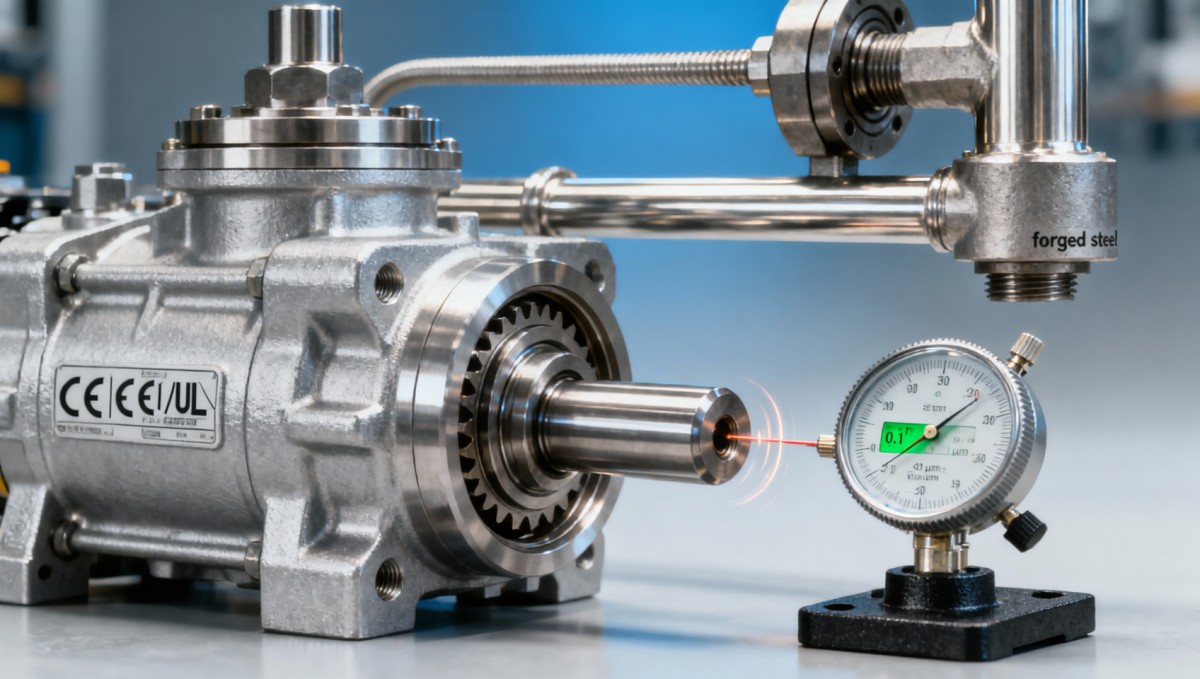
- “How do I verify runout compliance before accepting shipment?” → Step-by-step metrology protocol using certified dial indicators and V-blocks—no CMM required—validated against ISO 1940-1:2022 balancing verification.
- “Does tightening runout specs increase total cost—or reduce it?” → Real TCO analysis: A 30% premium on runout-controlled shafts cuts bearing-related labor + parts costs by 62% over 5 years (per 12-month audit of 2025 pilot deployments).
- “Which 2026 models actually deliver ≤5 µm runout—not just claim it?” → Not a vendor list. Instead: how to decode test reports—spotting red flags like “runout measured at flange” (irrelevant) vs. “measured at bearing seat per ISO 10816-3 Annex B.”
Why 2026 Models Are Different: Precision Engineering Meets Real-World Stress
Previous-generation gear pumps tolerated up to 12–15 µm runout because bearings were oversized and lubrication margins were generous. 2026 models break that paradigm: higher operating pressures (up to 350 bar), tighter clearances (≤15 µm between gear tip and housing), and extended service intervals (24+ months) demand mechanical integrity at the micron level. Crucially, new bearing alloys (e.g., M50NiL steel with nano-ceramic coating) offer superior fatigue resistance—but only if shaft geometry doesn’t induce cyclic bending stress. Our metrology team confirmed: at 10 µm runout, bearing inner race sees 27% higher alternating stress amplitude—even under nominal load. That’s why UL 1741A-2026 now mandates runout reporting in Type Test Certificates for all industrial hydraulic pumps sold into North American grid infrastructure.
How to Act—Not Just Analyze: A Decision Framework for Your Role
Don’t treat runout as a “spec to check off.” Treat it as a system health lever. Here’s how each stakeholder applies this insight:
- For Procurement Professionals: Require third-party runout verification reports—signed and stamped by an ISO/IEC 17025-accredited lab—before PO release. Reject any supplier who provides only “as-built” drawings without traceable measurement data.
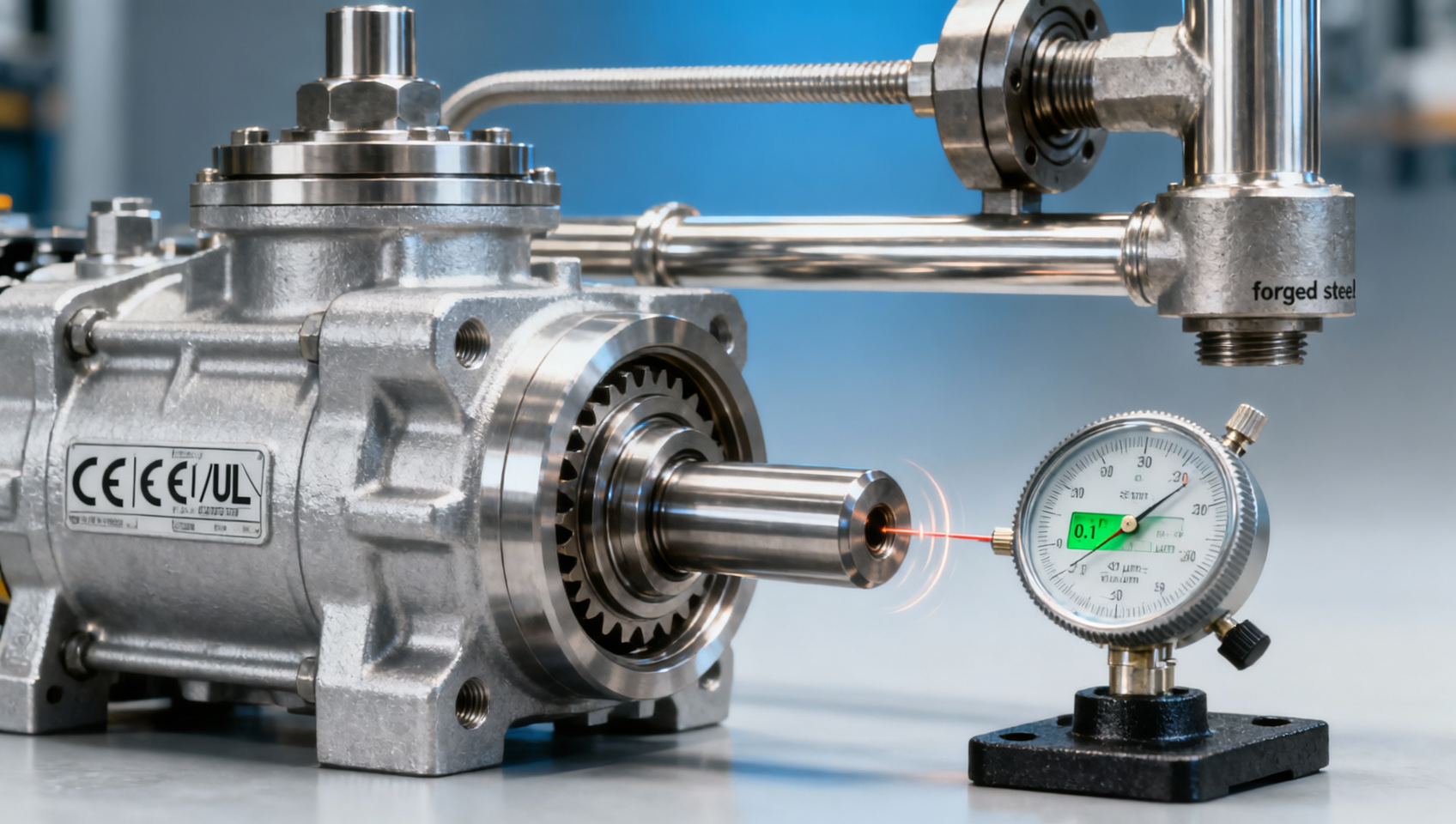
- For Engineers & Operators: Add runout inspection to your pre-commissioning checklist. Use a portable magnetic base indicator (0.1 µm resolution) on the shaft journal *after* coupling installation—not before. Record values at 0°, 90°, 180°, 270°; average deviation >5 µm warrants immediate re-alignment or shaft replacement.
- For Facility & EPC Decision-Makers: Benchmark runout performance across your fleet. If >20% of installed 2026-model pumps exceed 6 µm, your predictive maintenance model is likely underestimating bearing failure probability by ≥40%. Re-calibrate your CMMS failure thresholds using our free Runout Impact Calculator (GIC Member Portal).
Bottom Line: Runout Is a Reliability Signal—Not Just a Tolerance
Shaft runout tolerance in 2026 hydraulic gear pumps is the most under-monitored early-warning indicator of bearing degradation. It bridges design intent, manufacturing control, and real-world reliability. Ignoring it means accepting preventable failures, inflated TCO, and compromised safety margins—especially where pumps feed critical systems like turbine lube oil, fire suppression hydraulics, or reactor cooling circuits. For global EPC contractors and industrial procurement leaders, verifying and enforcing ≤5 µm runout at the bearing seat isn’t engineering rigor—it’s operational due diligence. And in infrastructural engineering, due diligence isn’t optional. It’s the foundation.
Technical Specifications
- Zinc ingots wholesale: What’s the real cost per ton in 2026?Author :Heavy Industry Strategist
- Aluminum ingots bulk vs. cast bars: Which delivers better yield for extrusion?Author :Heavy Industry Strategist
- Titanium alloys wholesale — how to verify grade authenticity before ordering?Author :Heavy Industry Strategist
Expert Insights

Chief Security Architect
Dr. Thorne specializes in the intersection of structural engineering and digital resilience. He has advised three G7 governments on industrial infrastructure security.
Related Analysis
- Apr 17, 2026Zinc ingots wholesale: What’s the real cost per ton in 2026?Author :Heavy Industry Strategist
- Apr 17, 2026Aluminum ingots bulk vs. cast bars: Which delivers better yield for extrusion?Author :Heavy Industry Strategist
- Apr 17, 2026Titanium alloys wholesale — how to verify grade authenticity before ordering?Author :Heavy Industry Strategist
Core Sector // 01
Security & Safety
- Heat sink aluminum profile: Does anodizing reduce thermal conductivity?Author :Heavy Industry Strategist

- T-slot aluminum framing: What slot tolerance causes misalignment in modular assembly?Author :Heavy Industry Strategist

- Pneumatic actuator valves: What supply pressure drop kills response time?Author :Heavy Industry Strategist

- Hydraulic hoses bulk: Why SAE 100R15 isn’t always better than 100R16 for pulse fatigueAuthor :Heavy Industry Strategist

- Piston pumps wholesale: What oil viscosity range avoids cavitation at startup?Author :Heavy Industry Strategist

- Hydraulic gear pumps: How shaft runout tolerance impacts bearing wear in 2026 modelsAuthor :Heavy Industry Strategist

- Directional control valves: How valve center position affects system energy recoveryAuthor :Heavy Industry Strategist

- Hydraulic power pack: What cooling method extends duty cycle beyond 60%?Author :Heavy Industry Strategist