What separates a reliable ring blower manufacturer from a low cost one
Author
Date Published
Reading Time
Choosing a ring blower manufacturer is not just about chasing the lowest quote. For buyers comparing reliability, compliance, efficiency, and lifecycle value across industrial systems, the real difference lies in engineering standards, testing discipline, after-sales support, and application expertise. This article explains how to identify a dependable ring blower manufacturer and avoid costly risks hidden behind low upfront pricing.
In industrial air handling, pneumatic conveying, wastewater aeration, drying, packaging, and vacuum lifting, ring blowers often operate for 8 to 24 hours per day. That operating reality changes the buying logic. A cheaper unit may save 10% to 20% at purchase, yet create far higher costs through unstable airflow, frequent bearing replacement, excessive noise, poor motor efficiency, or delayed spare parts support.
For researchers, plant operators, procurement teams, and business decision-makers, the practical question is simple: what signals show that a ring blower manufacturer can deliver dependable long-term value? The answer usually lies in measurable details such as pressure stability, material quality, balancing accuracy, insulation class, compliance documentation, and service response time rather than in catalog claims alone.
Engineering quality is the first dividing line
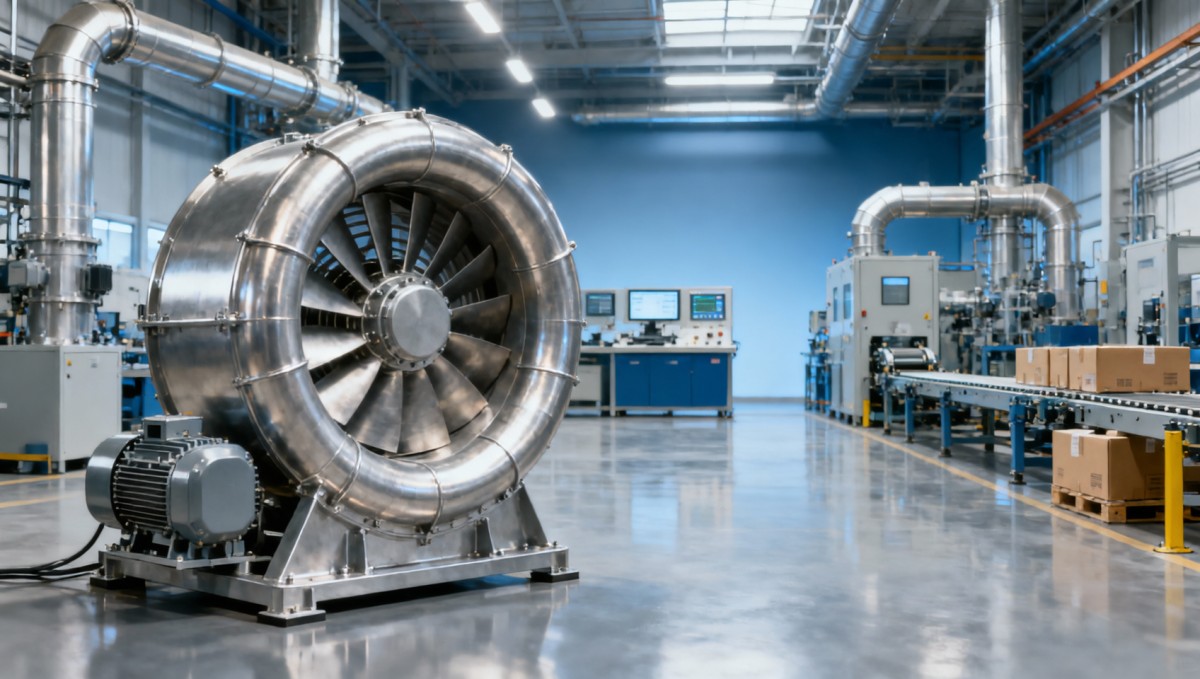
A reliable ring blower manufacturer starts with engineering discipline. In this product category, small design shortcuts can produce major downstream issues. Impeller geometry, housing machining tolerance, motor matching, shaft alignment, and thermal design all influence whether the blower can maintain stable pressure and airflow under continuous duty.
Low cost suppliers often compete by simplifying machining steps, using lower grade aluminum alloys, reducing balancing procedures, or selecting motors with narrower operating margins. These choices may not be obvious on a quotation sheet, but they can lead to vibration, efficiency loss, and premature wear after only 6 to 12 months in demanding applications.
By contrast, a dependable manufacturer usually documents core design parameters and production controls. Buyers should look for evidence of dynamic balancing, rotor concentricity control, temperature rise testing, and performance curves measured across multiple operating points rather than only at a single nominal point.
What to verify in the design stage
Before comparing prices, ask how the manufacturer defines the blower’s operating window. A serious supplier will discuss flow range, vacuum level, compression ratio, ambient temperature, altitude effect, and whether the unit is intended for intermittent or continuous service. This matters because a blower sized at the edge of its curve often draws more current and runs hotter.
It is also useful to confirm insulation class and protection rating. For many industrial sites, motors with Class F insulation and IP54 or IP55 protection are more suitable than lower configurations, especially where dust, humidity, or daily thermal cycling are common. These details are not luxury features; they are part of reliability engineering.
Core engineering checks
- Impeller balancing procedure and acceptable vibration threshold during final inspection.
- Bearing selection, lubrication method, and expected service interval under 50 Hz or 60 Hz operation.
- Motor efficiency grade, insulation class, and overload protection recommendations.
- Performance curve transparency across at least 3 operating points, not just one advertised maximum.
The table below shows how engineering quality often separates dependable suppliers from purely low-price vendors.
The key takeaway is that engineering quality shows up before installation. If a manufacturer cannot explain design limits, test methods, or component choices clearly, the price advantage may be covering technical risk rather than manufacturing efficiency.
Testing, compliance, and documentation reduce procurement risk
In industrial procurement, documentation quality is often as important as hardware quality. A reliable ring blower manufacturer understands that EPC contractors, plant managers, and sourcing teams need usable documents for approvals, audits, maintenance planning, and cross-border purchasing. Missing or vague documentation can delay projects by 1 to 3 weeks, especially when safety or electrical compliance reviews are involved.
At minimum, buyers should expect a complete technical datasheet, dimensional drawing, wiring information, performance curve, operating limits, and maintenance guidance. For international projects, suppliers may also need to support CE-related declarations, insulation and protection details, or other product conformity records aligned with the destination market.
Low price manufacturers sometimes provide incomplete curves, generic manuals, or certificates that do not clearly match the offered model. That creates problems during factory acceptance, installation, or future spare parts replacement. A dependable supplier, by comparison, can normally connect each document to a specific model, voltage option, and duty condition.
Why documentation quality matters after delivery
Operators need correct data to set relief valves, filters, pipe diameters, and thermal protection. If the blower is integrated into aeration or conveying systems, even a 5% to 10% deviation in expected airflow can alter process performance. Proper documentation reduces troubleshooting time and helps maintenance teams identify whether the issue is electrical, mechanical, or system-related.
Decision-makers should also assess how quickly the manufacturer can provide revised drawings, commercial documentation, and spare parts lists. In many industrial buying cycles, a supplier that answers technical clarification within 24 to 48 hours creates more value than one that simply starts with the cheapest quote.
Useful procurement checklist
- Confirm that test data corresponds to the exact blower series and motor frequency.
- Review whether the supplier states maximum pressure, maximum vacuum, and recommended continuous operating zone separately.
- Check if manuals include maintenance intervals, wiring diagrams, and troubleshooting logic.
- Ask whether replacement bearings, filters, and silencers can be identified by part number.
The comparison table below helps procurement teams distinguish useful compliance support from superficial paperwork.
For procurement teams, documentation is a risk control tool. A supplier that can support compliance review, installation verification, and maintenance planning is usually more reliable than one that reduces cost by reducing transparency.
Lifecycle cost matters more than the purchase price
One of the biggest mistakes in ring blower sourcing is comparing units only by purchase price. In many facilities, the blower’s electricity consumption over 12 to 36 months is much larger than the initial equipment cost. If a lower-price blower operates at poor efficiency or outside its ideal duty range, the total cost gap can exceed the original savings quickly.
Maintenance cost also matters. More frequent bearing failures, blocked filters, overheating trips, and noise complaints increase labor hours and unplanned downtime. In a packaging line or wastewater treatment process, even a few hours of stoppage can be more expensive than the difference between two supplier quotes.
A reliable ring blower manufacturer will usually discuss lifecycle variables openly: energy draw at the actual duty point, expected service interval, spare parts lead time, and noise control options. This allows procurement and operations teams to evaluate the real ownership cost rather than just the invoice amount.
Typical hidden costs behind the cheap quote
Hidden cost often comes from misapplication. For example, using a blower near its maximum vacuum limit every day can shorten bearing life and raise motor temperature. Likewise, selecting a unit without proper inlet filtration in dusty conditions may increase maintenance frequency from every 6 months to every 1 to 2 months.
Noise treatment is another example. A low-cost blower may meet airflow requirements, but if it produces 5 to 8 dB more noise than expected, the site may later need silencers, enclosure work, or operator protection measures. Those secondary expenses rarely appear in the first quote comparison.
Lifecycle review points
- Estimate yearly operating hours, such as 2,000, 4,000, or 8,000 hours.
- Compare motor efficiency and current draw at the real duty point, not just rated power.
- Review expected maintenance intervals for filters, bearings, and inspection checks.
- Include spare parts lead time, especially if critical parts require 2 to 6 weeks.
The table below illustrates how total cost can shift when reliability and operating conditions are considered.
This is why experienced buyers compare total ownership cost. A dependable ring blower manufacturer helps reduce energy waste, maintenance uncertainty, and downtime exposure, which often matters far more than the cheapest initial figure.
Application expertise and service support separate suppliers in real operations
A ring blower does not operate in isolation. It works inside a system that includes pipe length, filter resistance, valves, silencers, ambient conditions, and process load variation. A reliable manufacturer understands those interactions and asks the right application questions before confirming a model. That consultative step is one of the clearest differences between a strategic supplier and a low-price trader.
For example, wastewater aeration, pneumatic conveying, dental suction, and printing hold-down all impose different airflow patterns and backpressure characteristics. A supplier with application knowledge can recommend whether a single-stage or double-stage ring blower is more appropriate, whether a relief valve is mandatory, and how to size filters or silencers for the site environment.
Service support should also be evaluated before purchase. Many industrial buyers focus on delivery time but overlook service structure. A dependable manufacturer should be able to define response channels, troubleshooting steps, recommended spare parts, and normal lead times for consumables and repairs. Even a 48-hour technical response commitment can be meaningful for operating plants.
Questions a good manufacturer will ask you
Expect technical suppliers to ask about target airflow, pressure or vacuum, duty cycle, installation altitude, ambient temperature, gas cleanliness, inlet filtration, pipe routing, and noise limits. If a supplier recommends a blower in fewer than 5 to 10 technical questions, the selection may be too generic for industrial use.
You should also ask how the supplier handles commissioning support and fault diagnosis. Strong manufacturers usually provide a basic decision tree covering electrical checks, rotational condition, filter clogging, thermal overload, and system backpressure. That saves maintenance teams time during startup or unexpected shutdown events.
Operational signs of a service-ready supplier
- Provides pre-sales model validation based on actual duty data.
- Supplies startup guidance and operating limits for the specific installation.
- Can quote spare parts and accessories such as filters, relief valves, and silencers together.
- Explains realistic lead times, for example 7 to 15 days for standard units and longer for special voltage versions.
In practice, application expertise lowers the chance of oversizing, undersizing, overheating, or avoidable noise issues. That makes it valuable not only to operators, but also to procurement managers and business leaders who must control project risk and lifecycle cost.
A practical sourcing framework for buyers and decision-makers
To separate a reliable ring blower manufacturer from a low cost one, use a structured review process instead of a price-only comparison. In most industrial purchasing cases, 4 dimensions should be reviewed together: technical fit, production quality, documentation and compliance, and after-sales capability. Ignoring any one of these can transfer hidden risk into operations later.
A practical approach is to short-list 2 to 4 suppliers and score them against the same criteria. That allows engineering, procurement, and management teams to align around evidence rather than opinion. The process also improves negotiation quality because questions become specific: operating point verification, delivery commitment, spare parts availability, and warranty scope.
For many buyers, the best choice is not the cheapest or the most expensive offer. It is the supplier that can demonstrate stable manufacturing, clear technical communication, realistic delivery, and support that fits the application. That balance is what turns a purchase into a dependable industrial asset.
Recommended 5-step evaluation process
- Define the real duty point, including airflow, pressure or vacuum, operating hours, and site conditions.
- Request matching performance data, drawings, and motor specifications from each supplier.
- Review testing method, documentation completeness, and compliance support.
- Compare lifecycle factors such as maintenance interval, power draw, and spare parts lead time.
- Validate service responsiveness before issuing the purchase order.
FAQ for common sourcing questions
How many quotes should a buyer compare? In most projects, 3 qualified quotations are enough to reveal major differences in technical detail, support level, and commercial terms without slowing the process unnecessarily.
When is the low-cost option acceptable? It may be acceptable for light-duty, non-critical, intermittent applications with easy replacement access. It is usually riskier for continuous-duty systems, safety-sensitive processes, or sites with costly downtime.
What delivery lead time is normal? Standard ring blower configurations may ship in about 7 to 15 days, while customized voltage, frequency, or accessory packages may require 2 to 6 weeks depending on production planning.
Which specification is most often misunderstood? The most common issue is confusing maximum advertised pressure or vacuum with the recommended continuous operating zone. That misunderstanding can shorten service life and increase energy use.
Choosing the right ring blower manufacturer is ultimately a risk-management decision. Buyers who evaluate engineering rigor, test credibility, application support, and lifecycle economics usually make better long-term purchasing outcomes than those who focus only on the first price.
Reliable industrial sourcing depends on more than catalog comparisons. If you are evaluating ring blower manufacturers for continuous operation, demanding environments, or project-based procurement, focus on measurable proof: tested performance, clear documentation, service readiness, and application-specific guidance.
Global Industrial Core supports industrial buyers, operators, and decision-makers with practical sourcing intelligence across critical mechanical and infrastructure systems. To reduce selection risk, improve procurement confidence, and identify the right-fit blower solution for your operating conditions, contact us today to discuss your requirements, request a tailored evaluation framework, or explore more industrial sourcing solutions.
Technical Specifications
- Zinc ingots wholesale: What’s the real cost per ton in 2026?Author :Heavy Industry Strategist
- Aluminum ingots bulk vs. cast bars: Which delivers better yield for extrusion?Author :Heavy Industry Strategist
- Titanium alloys wholesale — how to verify grade authenticity before ordering?Author :Heavy Industry Strategist
Expert Insights

Chief Security Architect
Dr. Thorne specializes in the intersection of structural engineering and digital resilience. He has advised three G7 governments on industrial infrastructure security.
Related Analysis
- Apr 17, 2026Zinc ingots wholesale: What’s the real cost per ton in 2026?Author :Heavy Industry Strategist
- Apr 17, 2026Aluminum ingots bulk vs. cast bars: Which delivers better yield for extrusion?Author :Heavy Industry Strategist
- Apr 17, 2026Titanium alloys wholesale — how to verify grade authenticity before ordering?Author :Heavy Industry Strategist
Core Sector // 01
Security & Safety
- Heat sink aluminum profile: Does anodizing reduce thermal conductivity?Author :Heavy Industry Strategist

- T-slot aluminum framing: What slot tolerance causes misalignment in modular assembly?Author :Heavy Industry Strategist

- Pneumatic actuator valves: What supply pressure drop kills response time?Author :Heavy Industry Strategist

- Universal joints wholesale: Why angular misalignment >3° accelerates cross bearing wearAuthor :Heavy Industry Strategist

- Flexible jaw couplings: How elastomer hardness affects torsional damping in servo systemsAuthor :Heavy Industry Strategist

- Shaft couplings wholesale: What balance grade prevents vibration above 3000 RPM?Author :Heavy Industry Strategist

- Planetary gearbox manufacturer: Why lubricant change intervals shrink with synthetic oilAuthor :Heavy Industry Strategist

- What separates a reliable ring blower manufacturer from a low cost oneAuthor :Heavy Industry Strategist