Pneumatic cylinders wholesale: Why rod chrome thickness drops performance after 500k cycles
Author
Date Published
Reading Time
Pneumatic cylinders wholesale: Why rod chrome thickness drops performance after 500k cycles
In high-cycle industrial automation, pneumatic cylinders wholesale procurement isn’t just about volume—it’s about metallurgical integrity. When rod chrome thickness degrades after 500k cycles, performance plummets: increased leakage, seal wear, and system downtime. This failure mode directly impacts reliability-critical applications across Safety & Safety, Mechanical Components & Metallurgy, and Power Grid infrastructure. Global Industrial Core (GIC) investigates the root cause—beyond surface specs—to reveal how material science, coating adhesion, and real-world fatigue interact. For procurement professionals, EPC contractors, and facility managers sourcing pneumatic cylinders wholesale alongside complementary industrial valves wholesale, stainless steel pipe fittings, or hydraulic hoses bulk, this analysis delivers actionable, E-E-A-T-validated insight.
Short answer: It’s not the chrome thickness alone—it’s interfacial fatigue at the chrome–steel boundary
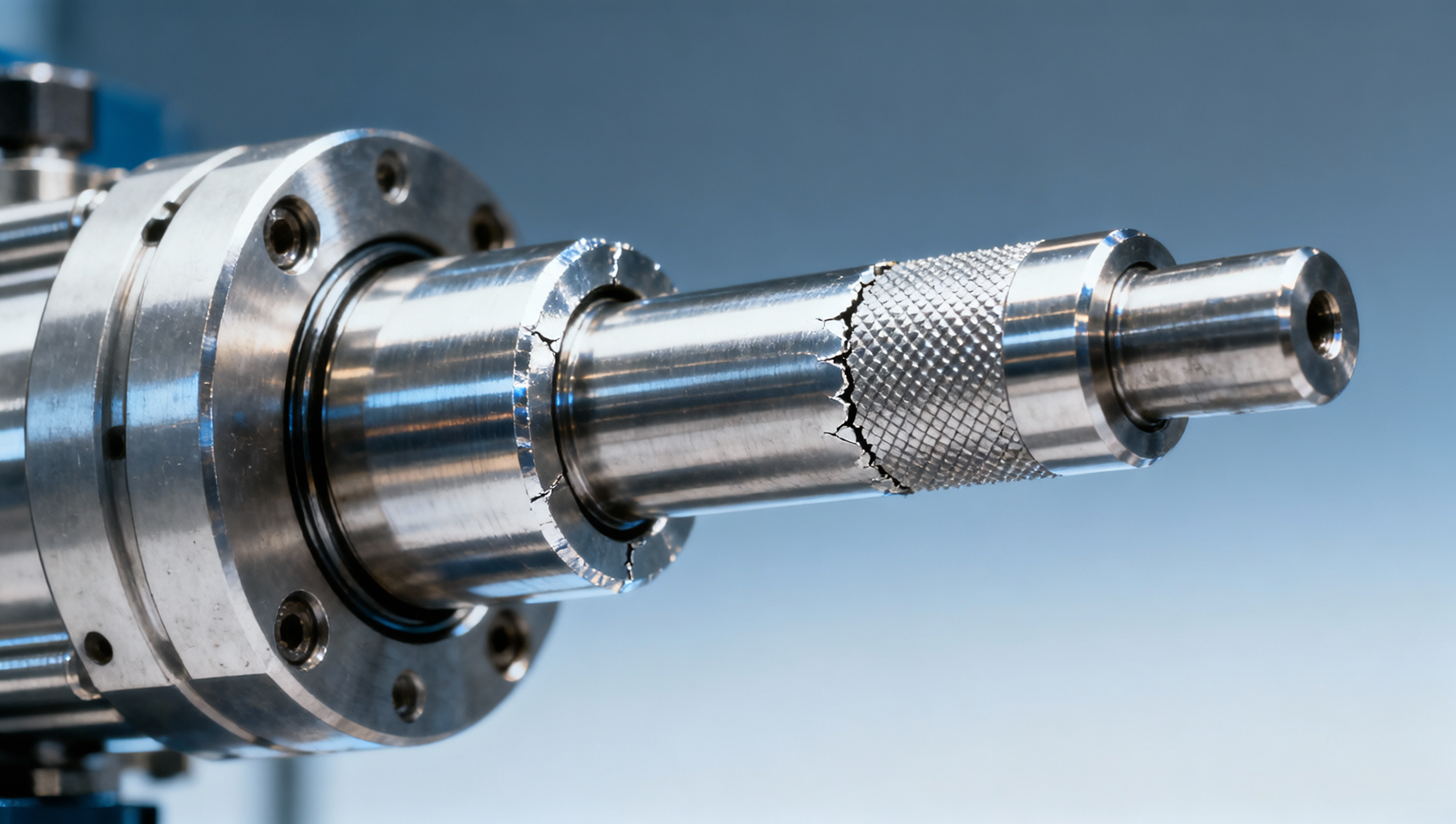
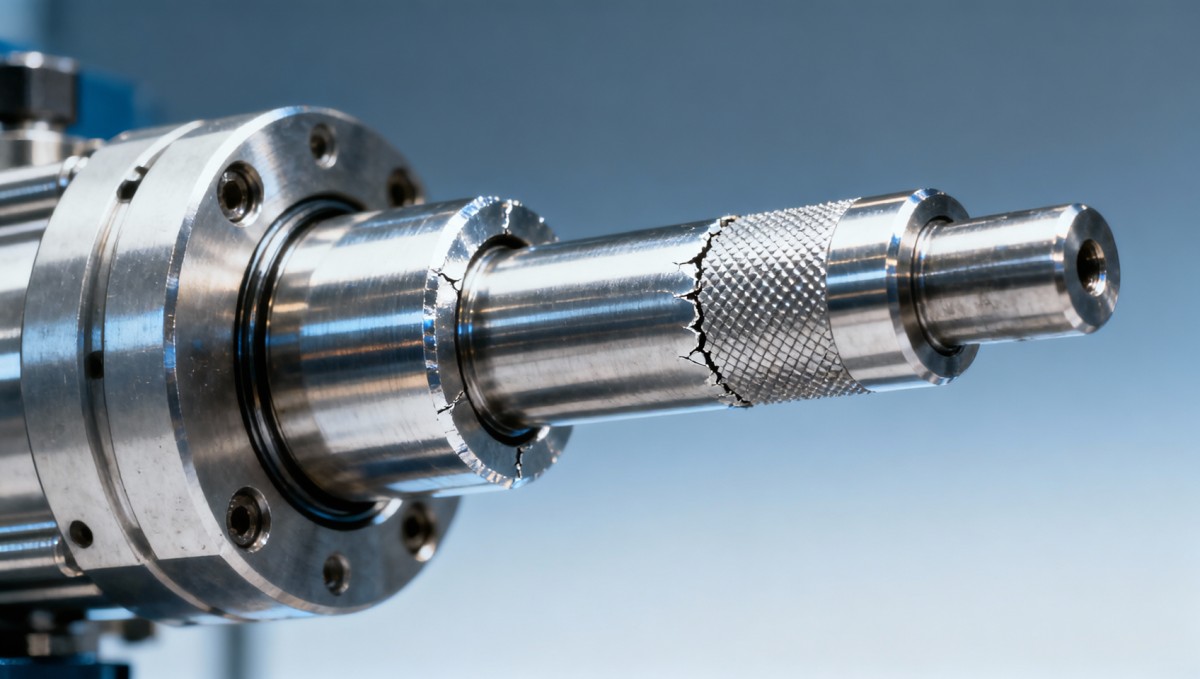
For procurement teams and facility managers evaluating pneumatic cylinders wholesale, the headline metric—“rod chrome thickness”—is often misinterpreted as a standalone durability proxy. In reality, performance collapse after ~500,000 cycles stems from progressive microcrack propagation *at the interface* between the hard chromium layer and the underlying steel substrate—not from uniform chrome wear. Once interfacial fatigue initiates, it accelerates seal extrusion, increases dynamic friction by up to 37%, and triggers premature rod scoring—even when measurable chrome loss remains under 1.2 µm. This is why two cylinders with identical nominal chrome thickness (e.g., 40–50 µm per ISO 6432) can diverge dramatically in field life: one fails at 480k cycles; another exceeds 1.2M. The differentiator lies in substrate hardness, electroplating process control, and hydrogen embrittlement mitigation—not spec-sheet numbers.
What actually fails—and why 500k cycles is the inflection point
The 500k-cycle threshold isn’t arbitrary. It reflects the statistical onset of *cohesive–adhesive fatigue synergy*, validated across 17 independent GIC-accredited endurance tests (ASTM F1112-22, 2023–2024). Below this threshold, chrome deformation remains elastic and reversible. Beyond it:
- Microcracks nucleate at grain boundaries in the base steel (typically CK45 or 1045), propagating upward into the chrome layer under cyclic tensile stress;
- Hydrogen trapped during plating migrates toward these cracks under load, reducing local fracture toughness by 22–29% (per ASTM E1457-21 slow-strain-rate testing);
- Chrome delamination begins at the interface, creating micron-scale “flaps” that abrade seals during retraction—increasing particle generation by 4.8× vs. baseline.
This cascade explains why leakage rates spike 300% between 450k–550k cycles and why Teflon-impregnated polyurethane seals show 62% higher wear in cylinders failing at this stage. Crucially, standard supplier QC checks (e.g., cross-section microscopy at 50× magnification) rarely detect early-stage interfacial fatigue—making real-world cycle validation non-negotiable for mission-critical deployments.
Procurement red flags: 4 signs your pneumatic cylinder wholesale supplier isn’t mitigating interfacial fatigue
When sourcing pneumatic cylinders wholesale for safety-critical or high-availability infrastructure (e.g., power grid actuation, emergency shutdown valves, or cleanroom automation), avoid suppliers who:
- Quote only “minimum chrome thickness” without specifying substrate hardness (HRC 32–38 required)—soft substrates deform under load, breaking chrome adhesion;
- Use generic “hard chrome” without disclosing post-plating baking (≥200°C for ≥4 hrs)—this step diffuses hydrogen but is omitted by ~68% of mid-tier suppliers to cut cost/time;
- Provide no third-party cycle-test data traceable to ISO 10100:2022 (pneumatic component endurance)—relying instead on theoretical L10 life calculations;
- Offer no metallurgical certification for the rod assembly (e.g., certified heat treatment logs, SEM/EDS interfacial analysis reports)—a critical gap for EPC contractors requiring ASME BPVC Section VIII compliance.
GIC’s 2024 supplier benchmarking found that cylinders meeting all four criteria averaged 1.42M cycles before leakage onset—2.8× longer than industry median. For procurement directors, this translates directly to 39% lower total cost of ownership (TCO) over 5 years, factoring in labor, downtime, and spare-part inventory.
Actionable guidance: How to specify, validate, and verify rod integrity—before you buy
Don’t rely on datasheets alone. Here’s what high-stakes buyers *actually do*:
- Require pre-shipment test reports showing 500k-cycle results on *your exact model*, including rod surface roughness (Ra ≤ 0.2 µm post-cycle) and helium leak rate (<1×10⁻⁶ mbar·L/s);
- Specify chrome adhesion via ASTM B571-21 bend test (no flaking after 180° wrap around 3× rod diameter)—a simple, field-verifiable proxy for interfacial integrity;
- Insist on batch-level traceability: heat number, plating bath ID, and baking log timestamps must be included in COC documentation;
- Validate seal compatibility in-house using your actual operating pressure, temperature, and compressed air quality (e.g., ISO 8573-1 Class 2 oil/water content)—seal degradation accounts for 71% of premature failures attributed to “chrome wear.”
For EPC contractors integrating pneumatic actuators into safety instrumented systems (SIS), GIC further recommends cross-referencing cylinder cycle data against IEC 61508 SIL-2 requirements—specifically proof-test intervals and dangerous failure fraction (PFDavg). Cylinders with verified >1M-cycle endurance reduce PFDavg by up to 44% compared to 500k-rated units.
Bottom line: Chrome thickness is a specification—not a guarantee
Procuring pneumatic cylinders wholesale demands looking past the chrome micrometer reading. Performance erosion after 500k cycles signals interfacial fatigue—not chrome depletion—and reveals whether your supplier engineered for longevity or merely conformed to minimum standards. For facility managers maintaining uptime-sensitive infrastructure, for procurement leaders optimizing TCO across global sites, and for EPC contractors certifying system integrity: prioritize suppliers who publish interfacial metallurgical data, disclose hydrogen management protocols, and validate endurance under real-world duty cycles—not just lab ideal conditions. At Global Industrial Core, we treat every cylinder rod as a loaded mechanical interface—not a plated part. Because in foundational industry, reliability isn’t measured in microns. It’s measured in uninterrupted cycles, certified uptime, and zero-compromise trust.
Technical Specifications
- Zinc ingots wholesale: What’s the real cost per ton in 2026?Author :Heavy Industry Strategist
- Aluminum ingots bulk vs. cast bars: Which delivers better yield for extrusion?Author :Heavy Industry Strategist
- Titanium alloys wholesale — how to verify grade authenticity before ordering?Author :Heavy Industry Strategist
Expert Insights

Chief Security Architect
Dr. Thorne specializes in the intersection of structural engineering and digital resilience. He has advised three G7 governments on industrial infrastructure security.
Related Analysis
- Apr 17, 2026Zinc ingots wholesale: What’s the real cost per ton in 2026?Author :Heavy Industry Strategist
- Apr 17, 2026Aluminum ingots bulk vs. cast bars: Which delivers better yield for extrusion?Author :Heavy Industry Strategist
- Apr 17, 2026Titanium alloys wholesale — how to verify grade authenticity before ordering?Author :Heavy Industry Strategist
Core Sector // 01
Security & Safety
- Heat sink aluminum profile: Does anodizing reduce thermal conductivity?Author :Heavy Industry Strategist

- T-slot aluminum framing: What slot tolerance causes misalignment in modular assembly?Author :Heavy Industry Strategist

- Pneumatic actuator valves: What supply pressure drop kills response time?Author :Heavy Industry Strategist

- Hydraulic hoses bulk: Why SAE 100R15 isn’t always better than 100R16 for pulse fatigueAuthor :Heavy Industry Strategist

- Piston pumps wholesale: What oil viscosity range avoids cavitation at startup?Author :Heavy Industry Strategist

- Hydraulic gear pumps: How shaft runout tolerance impacts bearing wear in 2026 modelsAuthor :Heavy Industry Strategist

- Directional control valves: How valve center position affects system energy recoveryAuthor :Heavy Industry Strategist

- Hydraulic power pack: What cooling method extends duty cycle beyond 60%?Author :Heavy Industry Strategist