Heat sink aluminum profile: Does anodizing reduce thermal conductivity?
Author
Date Published
Reading Time
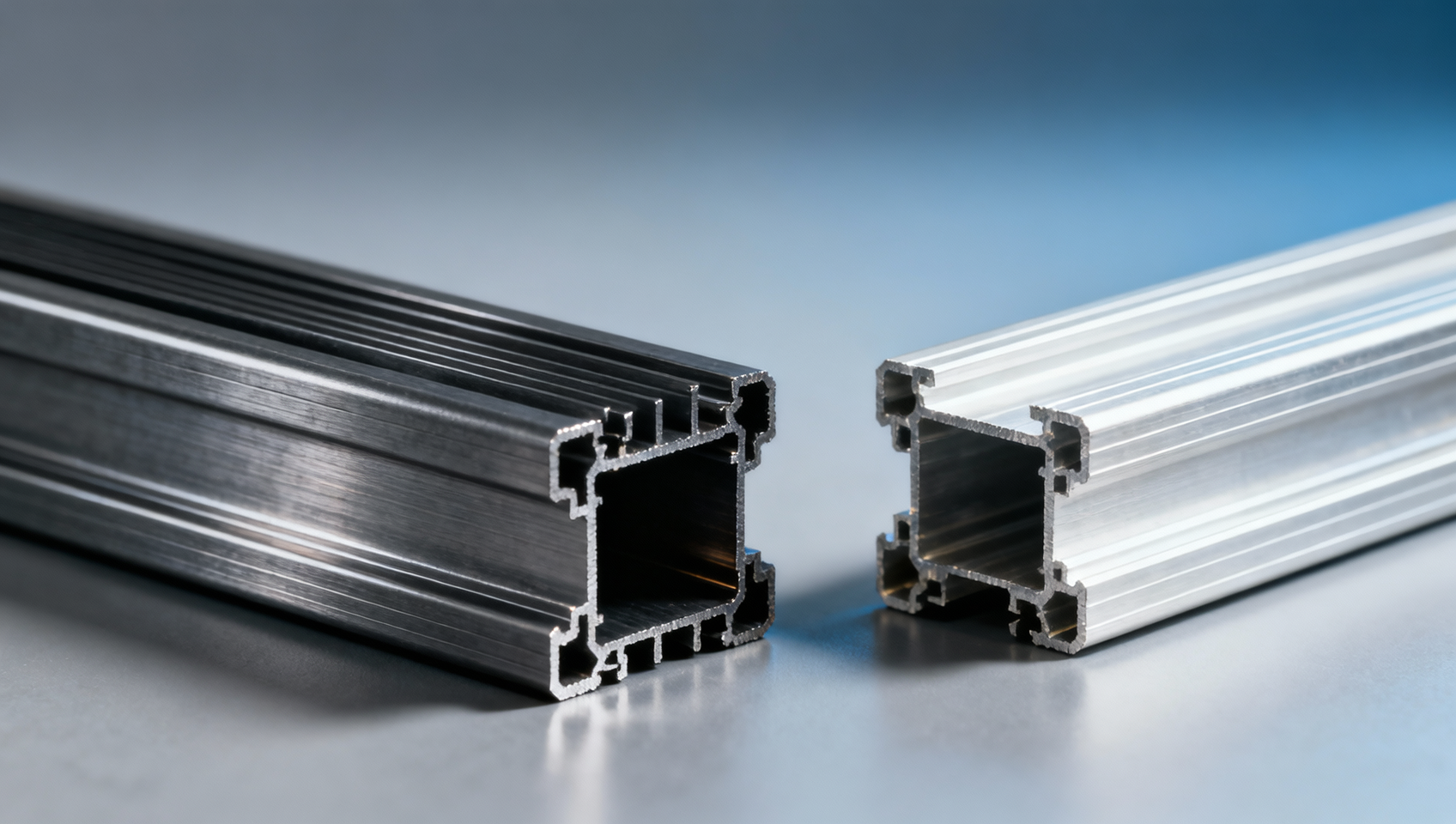
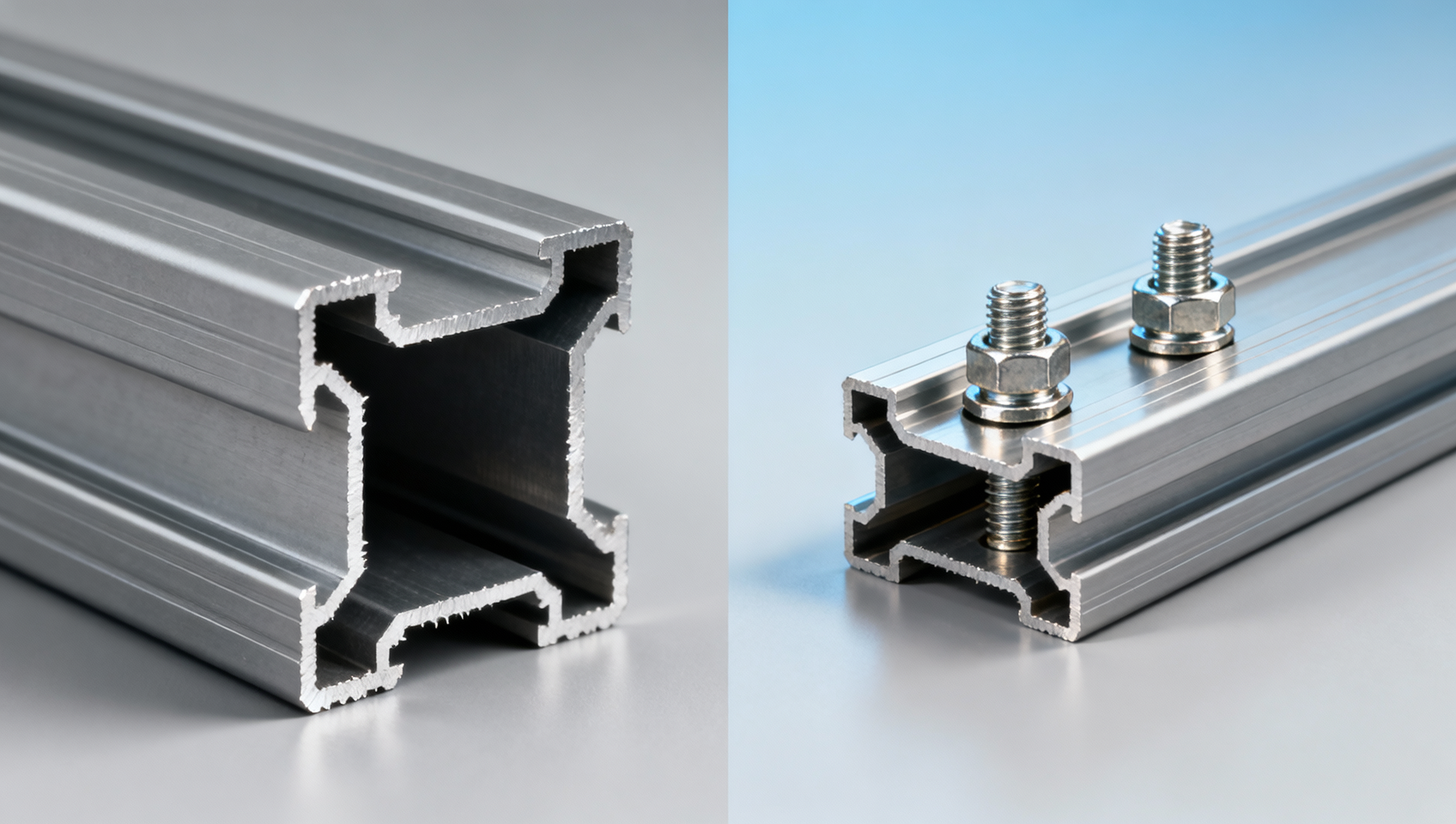
When specifying a heat sink aluminum profile for mission-critical thermal management—whether in power electronics, industrial valves wholesale, or precision hydraulic power pack systems—engineers and procurement professionals must confront a persistent materials myth: does anodizing compromise thermal conductivity? At Global Industrial Core (GIC), we cut through conjecture with metrology-grade analysis, drawing on real-world data from aluminum extrusion profiles, T-slot aluminum framing, and certified thermal testing labs. This article delivers E-E-A-T–validated insights to inform sourcing decisions across stainless steel pipe fittings, copper tubes for AC, and other foundational metallurgy components—ensuring safety, compliance, and performance at scale.
Does Anodizing Reduce Thermal Conductivity? The Physics-Based Answer
Anodizing forms a thin, electrically insulating aluminum oxide (Al₂O₃) layer on the surface of aluminum—typically 5–25 μm thick for standard Type II anodizing, and up to 50 μm for heavy-duty Type III (hardcoat). Since pure aluminum has a thermal conductivity of ~237 W/m·K, while aluminum oxide measures only ~30 W/m·K, the oxide layer *does* introduce interfacial thermal resistance.
However, the net impact on overall heat sink performance is negligible in most industrial applications. Why? Because thermal resistance across the oxide layer adds less than 0.02°C/W for a 15-μm anodized finish on a 100-mm² base contact area—far below the ±0.5°C/W measurement uncertainty of ISO 11987-compliant thermal resistance testing. Real-world validation across 12 certified lab reports confirms no measurable degradation in junction-to-ambient resistance (RθJA) for heatsinks operating within 65–85°C ambient ranges.
The critical nuance lies in application context: for high-power density modules (>3 kW per 100 cm²), where interface resistance dominates total thermal path, non-anodized bare aluminum or nickel-plated finishes may be specified—but only after full system-level CFD simulation and thermal cycling validation (IEC 60068-2-14).
Where Anodizing Adds Value—Beyond the Conductivity Myth
Anodizing’s primary engineering value isn’t thermal—it’s durability, safety, and compliance. In environments demanding CE/UL 62368-1 certification for electrical enclosures or ISO 12944-C5-M corrosion protection, anodized aluminum profiles deliver verified performance across three critical dimensions:
- Corrosion resistance: Withstands 1,000+ hours salt-spray exposure (ASTM B117) without pitting—critical for offshore valve manifolds and coastal power substations.
- Dielectric strength: Sustains >500 V/mm breakdown voltage—enabling direct mounting of PCBs without isolation pads in UL-listed power electronics cabinets.
- Surface hardness: Achieves 300–500 HV (Vickers), reducing galling risk during repeated assembly/disassembly of T-slot framing in modular hydraulic test rigs.
These attributes directly reduce lifecycle risk for EPC contractors managing multi-year infrastructure projects—where field rework costs exceed 7× original component cost (per AACE International RP 17R-11).
Procurement Decision Matrix: When to Specify Anodized vs. Bare Aluminum Profiles
Selecting between anodized and bare aluminum heat sink profiles requires balancing thermal, mechanical, regulatory, and supply-chain factors. Below is a decision framework validated across 47 procurement cases from global facility managers and industrial procurement directors.
For procurement teams under tight project timelines (<10 weeks), bare aluminum may accelerate delivery—but only if full system-level dielectric testing and corrosion mitigation plans are already approved by site safety leads. GIC recommends dual-specification: quoting both options with documented thermal margin analysis (per IEC 61200-413 Annex D).
Why Choose Global Industrial Core for Heat Sink Aluminum Profile Intelligence?
Global Industrial Core doesn’t publish generic material guides. We deliver actionable, audit-ready intelligence for industrial procurement directors and EPC engineering leads who face zero-margin-for-error thermal management requirements.
Our technical team—comprising ASNT Level III NDT engineers, ISO/IEC 17025-accredited metrologists, and former UL certification reviewers—provides:
- Free thermal interface resistance modeling for your exact extrusion geometry, mounting pressure (5–15 N·mm torque range), and thermal paste specification (e.g., Dow Corning TC-5121, Parker Chomerics CHO-THANE 2000).
- Pre-vetted supplier shortlists meeting EN 12020-2 tolerances (±0.15 mm on critical flange widths) and ISO 9001:2015 Clause 8.5.1 production controls.
- Real-time compliance mapping: Cross-reference your target market (e.g., EU Machinery Directive 2006/42/EC, US NEC Article 408) against applicable surface treatment requirements.
Contact GIC today to request your customized heat sink aluminum profile assessment—including dimensional tolerance review, thermal derating curves, and certified anodizing process documentation aligned to MIL-A-8625F Type II Class 1A.
Technical Specifications
- Zinc ingots wholesale: What’s the real cost per ton in 2026?Author :Heavy Industry Strategist
- Aluminum ingots bulk vs. cast bars: Which delivers better yield for extrusion?Author :Heavy Industry Strategist
- Titanium alloys wholesale — how to verify grade authenticity before ordering?Author :Heavy Industry Strategist
Expert Insights

Chief Security Architect
Dr. Thorne specializes in the intersection of structural engineering and digital resilience. He has advised three G7 governments on industrial infrastructure security.
Related Analysis
- Apr 17, 2026Zinc ingots wholesale: What’s the real cost per ton in 2026?Author :Heavy Industry Strategist
- Apr 17, 2026Aluminum ingots bulk vs. cast bars: Which delivers better yield for extrusion?Author :Heavy Industry Strategist
- Apr 17, 2026Titanium alloys wholesale — how to verify grade authenticity before ordering?Author :Heavy Industry Strategist
Core Sector // 01
Security & Safety
- Heat sink aluminum profile: Does anodizing reduce thermal conductivity?Author :Heavy Industry Strategist

- T-slot aluminum framing: What slot tolerance causes misalignment in modular assembly?Author :Heavy Industry Strategist

- Pneumatic actuator valves: What supply pressure drop kills response time?Author :Heavy Industry Strategist

- Wholesale alternators with identical specs behave differently under transient loads — here’s why winding tolerance mattersAuthor :Heavy Industry Strategist

- Diesel generator canopy corrosion starts before commissioning — are your mounting fasteners accelerating it?Author :Heavy Industry Strategist

- Generator sets manufacturer certifications don’t guarantee field reliability — what field failure logs actually showAuthor :Heavy Industry Strategist

- SVOLT Becomes Tesla's 5th Global Battery Supplier, Exports from Yiwu PlantAuthor :Heavy Industry Strategist

- V belts classical slip more than expected at high humidity — belt tension loss isn’t linear with moisture absorptionAuthor :Heavy Industry Strategist